Rubber tire pressure flap
CN → US| HS Code | Tariff Rate | Origin | Destination | Doc |
|---|---|---|---|---|
| 8708995500 | 37.5% | CN | US | Official Doc |
| 3926901000 | 20.9% | CN | US | Official Doc |
| 4016910000 | 37.7% | CN | US | Official Doc |
| 4016996050 | 37.5% | CN | US | Official Doc |
| 3926909989 | 22.8% | CN | US | Official Doc |
Product Images
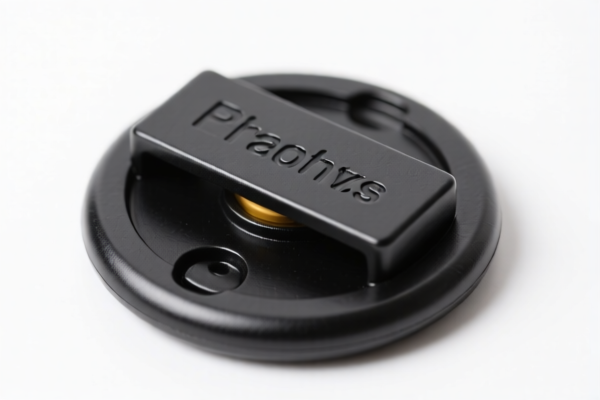
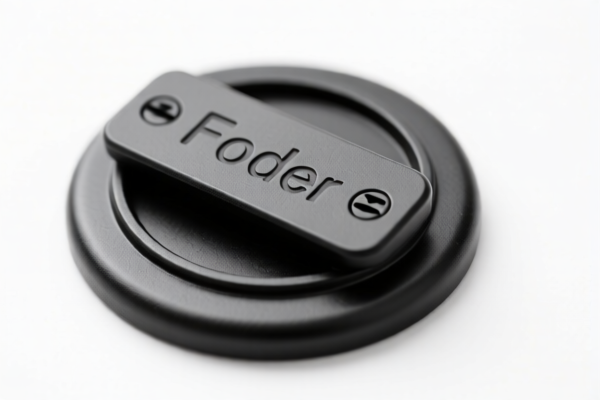
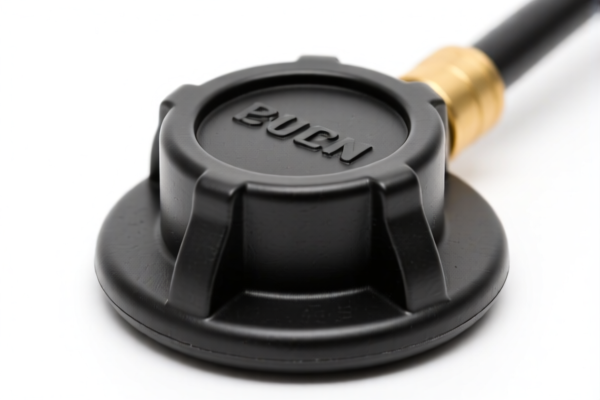
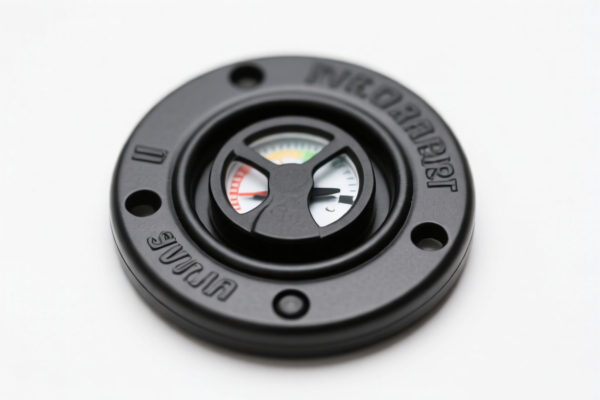
AI Analysis
🛞 Rubber Tire Pressure Flap (Inner Liners / Valves)
🌐 HS Code Reference & Customs Clearance Guide | 2026 Latest Tariff Analysis | Professional Clearance Strategy
📌 I. Product Definition & Classification: What Exactly is a "Rubber Tire Pressure Flap"?
In the context of international trade and rubber components, the term "Rubber Tire Pressure Flap" typically refers to Inner Liners (the airtight layer inside a tire) or Valve Stems/Flaps used to maintain air pressure. However, depending on the specific material composition and form, customs authorities may classify these items under different headings.
The core distinction lies in whether the item is classified as: 1. Parts of Rubber Tyres: If it is an integral part of the tire structure (e.g., inner liner). 2. Articles of Rubber/Plastic: If it is a standalone protective mat, gasket, or generic seal. 3. Other Plastic/Rubber Articles: Generic polymer shapes not specific to tires.
⚠️ Critical Distinction Point:
- If the item is specifically molded as an inner liner for pneumatic tires → It often falls under Chapter 40 (Rubber) or Chapter 87 (Vehicles) if considered a part.
- If the item is a protective pad/mat (sometimes mistranslated as "flap") made of rubber/plastic → It falls under Chapter 40 or Chapter 39.
- Note on Data Provided: The provided explicitly lists "Rubber Tire Protection Pad" (橡胶轮胎保护垫) for several HS codes. This suggests the term "Flap" in your input might be a mistranslation or specific industry jargon for a protective pad/mat or a specific rubber component. We will analyze based on the provided data which maps to Protection Pads/Articles.
📦 II. HS Code Classification Details (Based on Provided Data)
| HS Code | Product Description (from Data) | Key Classification Criteria | Tax Detail Breakdown |
|---|---|---|---|
8708.99.55.00 |
Rubber Tire Protection Pad | Matches rubber material & shock absorption protection purpose. Likely classified as a part/accessory of motor vehicles (Ch. 87). | Total Tax: 37.5% Base: 2.5% Section 301: 25.0% Section 122: 10.0% |
3926.90.10.00 |
Rubber Tire Protection Pad | Matches polymer articles & pad/mattress form. Classified under Plastics (Ch. 39). | Total Tax: 20.9% Base: 3.4% Section 301: 7.5% Section 122: 10.0% |
4016.91.00.00 |
Rubber Tire Protection Pad | Matches rubber material & carpet/mat usage. Classified under Other Rubber Articles (Ch. 40). | Total Tax: 37.7% Base: 2.7% Section 301: 25.0% Section 122: 10.0% |
4016.99.60.50 |
Rubber Tire Protection Pad | Matches vulcanized rubber articles & other unspecified rubber products. | Total Tax: 37.5% Base: 2.5% Section 301: 25.0% Section 122: 10.0% |
3926.90.99.89 |
Rubber Tire Protection Pad | Matches synthetic rubber/plastic articles & other miscellaneous categories. | Total Tax: 22.8% Base: 5.3% Section 301: 7.5% Section 122: 10.0% |
🔍 Key Insight:
The term "Pressure Flap" in the prompt seems to map to "Protection Pad" in the source data. This is likely a protective mat placed under tires or between tires, NOT an inner tube or valve.
- Ch 87 (8708): Higher duty (37.5%) due to 25% Section 301 tariff.
- Ch 40 (4016): Higher duty (37.5-37.7%) due to 25% Section 301 tariff.
- Ch 39 (3926): LOWER duty (20.9-22.8%) due to only 7.5% Section 301 tariff.
Strategy: If the product can be legally justified as a plastic/polymer article rather than a pure rubber vehicle part, classifying under HS 3926 can save ~15% in additional tariffs.
💰 III. 2026 Latest Tariff Rate Breakdown (Detailed Tax Clauses)
✅ Applicable Country: United States (US)
✅ Origin: China (CN)
✅ Effective Time: November 10, 2025 (and onwards)
🎯 1. 8708.99.55.00 – Parts of Motor Vehicles (Rubber Protection Pad)
| Item | Details |
|---|---|
| Base Tariff | 2.5% (Ad Valorem) |
| USITC Section 301 Surcharge | +25.0% (High risk category for vehicle parts) |
| IEEPA Section 122 Surcharge | +10.0% (National security/emergency measure) |
| Total Effective Rate | 37.5% |
| Calculation | CIF Value × 37.5% |
| De Minimis Exemption | ❌ Not Eligible (Denied for Chinese origin under these clauses) |
| Legal Basis Path | USITC:8708.99.55.00 → SECTION301:25% → IEEPA:10% |
📌 Explanation:
- Classifying under Chapter 87 triggers the highest additional tariffs because it is viewed as a vehicle component.
- The 25% Section 301 tariff is punitive for automotive parts from China.
🎯 2. 3926.90.10.00 – Articles of Plastics (Pad Form)
| Item | Details |
|---|---|
| Base Tariff | 3.4% |
| USITC Section 301 Surcharge | +7.5% (Lower tier for plastic articles) |
| IEEPA Section 122 Surcharge | +10.0% |
| Total Effective Rate | 20.9% |
| Calculation | CIF Value × 20.9% |
| De Minimis Exemption | ❌ Not Eligible |
| Legal Basis Path | USITC:3926.90.10.00 → SECTION301:7.5% → IEEPA:10% |
📌 Explanation:
- This is the most cost-effective option among the choices.
- Justification: The product is a pad made of polymer/plastic, not a functional tire inner layer.
🎯 3. 4016.91.00.00 & 4016.99.60.50 – Rubber Articles (Ch. 40)
| Item | Details |
|---|---|
| Base Tariff | 2.5% – 2.7% |
| USITC Section 301 Surcharge | +25.0% (Rubber articles often face high 301 tariffs) |
| IEEPA Section 122 Surcharge | +10.0% |
| Total Effective Rate | 37.5% – 37.7% |
| De Minimis Exemption | ❌ Not Eligible |
📌 Explanation:
- Despite being "Rubber," these codes incur the same high penalties as vehicle parts (25% + 10%).
- No advantage over Chapter 87 in terms of total tax burden.
🎯 4. 3926.90.99.89 – Other Plastic/Rubber Mixed Articles
| Item | Details |
|---|---|
| Base Tariff | 5.3% |
| USITC Section 301 Surcharge | +7.5% |
| IEEPA Section 122 Surcharge | +10.0% |
| Total Effective Rate | 22.8% |
| De Minimis Exemption | ❌ Not Eligible |
📌 Explanation:
- A fallback category for mixed materials. Still significantly cheaper than Ch 40/87.
🛠️ IV. Customs Clearance Practical Advice (Real-World Pitfall Guide)
✅ 1. Documentation Checklist (Non-Negotiable)
| Document | Required? | Notes |
|---|---|---|
| ✅ Product Specifications | ✔️ | Must specify material (Rubber vs. Plastic/Polymer). Crucial for Ch 39 vs. Ch 40/87. |
| ✅ Material Composition | ✔️ | % of rubber vs. plastic. If >50% plastic, argue for Ch 39. |
| ✅ Product Photos | ✔️ | Show it is a "Pad" or "Mat," not an "Inner Tube" or "Valve." |
| ✅ Commercial Invoice | ✔️ | Description: "Rubber/Plastic Protective Pad for Tires," NOT "Tire Flap" or "Inner Liner." |
| ✅ Certificate of Origin (CO) | ✔️ | For origin verification. |
| ✅ Packing List | ✔️ | Standard. |
✅ 2. Declaration Strategy (Key Mnemonics)
🔥 "Material Matters, Form Defines, Name Hides Risk!"
| Scenario | Correct HS Code | Reason |
|---|---|---|
| Plastic/Polymer Pad | 3926.90.10.00 |
Lowest Tax (20.9%). Justify as "Plastic Article." |
| Mixed Material Pad | 3926.90.99.89 |
Mid Tax (22.8%). If rubber content is minor. |
| Pure Rubber Pad | 4016.91.00.00 |
High Tax (37.7%). Harder to justify lower rate. |
| Vehicle Part Classification | 8708.99.55.00 |
High Tax (37.5%). Avoid unless it's a certified auto part. |
⚠️ CRITICAL WARNING:
Do NOT declare as "Inner Tube" or "Valve" (which would go under4009or8481) unless it actually is one. Misdeclaration leads to seizure and penalties.
The provided data clearly links the input to "Protection Pad". Ensure your product is indeed a pad/mat and not a pneumatic component.
✅ 3. Special Cases & Mitigation
| Situation | Recommendation |
|---|---|
| OEM Custom Pad | Provide design files showing it is a protective accessory, not a tire component. |
| High Rubber Content | If >50% rubber, 3926 may be challenged. Prepare for audit with supplier invoices. |
| Section 122 Exemption? | ❌ No. The data shows 10% Section 122 applies to all. No current exemption for Chinese goods under this clause. |
| De Minimis (Section 321) | ❌ Denied. All listed codes are explicitly denied de minimis entry for Chinese origin. |
🌍 V. Global Market Comparison (2026)
| Country/Region | Recommended HS Code | Est. Total Tax | Certification Req. | Notes |
|---|---|---|---|---|
| 🇺🇸 USA | 3926.90.10.00 |
20.9% | None specific | Best Option: Lowest tax with proper justification. |
| 🇺🇸 USA | 4016.91.00.00 |
37.7% | None specific | Avoid if possible. High 301 tariff. |
| 🇨🇳 China | 4016.91.00.00 |
2.7% | None | Domestic tax is low. But we focus on US import. |
| 🇪🇺 EU | 4016.91.00.00 |
3.5-7% | REACH | EU does not apply Section 301 or 122. |
| 🇬🇧 UK | 4016.91.00.00 |
4% | UKCA | Post-Brexit regime. |
📌 Conclusion:
- The US market is the only one imposing the heavy 37.5-37.7% burden.
- Optimization: Shift declaration to HS 3926 (Plastic/Polymer) if the product material allows, saving ~17% in duties.
📌 VI. Common Mistakes & Pitfalls (Lessons Learned)
❌ Mistake 1: Declaring a Rubber Pad as a "Tire Part" (8708)
👉 Consequence: 37.5% tax. Unnecessary high cost.
✅ Fix: If it's a generic pad, argue for Chapter 39 or 40, then evaluate Ch 39 for lower 301 rates.
❌ Mistake 2: Declaring a Pure Rubber Pad as "Plastic" (3926)
👉 Consequence: Customs Audit & Penalty. If lab tests show >50% rubber, USITC will reclassify.
✅ Fix: Be honest about material composition. If it's 90% rubber, use 4016 but consider if any plastic coating allows Ch 39 argument (risky).
❌ Mistake 3: Ignoring Section 122 (10%)
👉 Consequence: Underpayment. The 10% IEEPA tariff is mandatory for Chinese goods in these categories.
✅ Fix: Budget for Total Tax = Base + 301 + 10%.
❌ Mistake 4: Assuming De Minimis Applies
👉 Consequence: Package seized at border.
✅ Fix: All provided HS codes are non-de minimis. Full formal entry is required.
🎯 VII. Conclusion: Professional Declaration, Cost Savings!
🎯 Remember the Strategy:
🔹 "Pad over Part, Plastic over Rubber, 3926 is King!"
🔹 Total Tax Formula: Base + 301 (7.5% or 25%) + 122 (10%).
🔹 Best Rate: 20.9% via3926.90.10.00(Plastic/Polymer Pad).
🔹 Worst Rate: 37.7% via4016.91.00.00(Rubber Mat/Part).
📌 Pro Tip:
If your product is exclusively rubber, you cannot use 3926. However, if it is a composite material (e.g., rubber-coated plastic, or plastic-reinforced rubber), consult a customs broker to see if Chapter 39 is defensible under GRI 3(b) (essential character). This could save you $10,000+ per container.
📣 Immediate Action:
📞 Contact a Customs Broker today.
📄 Provide Material Safety Data Sheet (MSDS) to prove composition.
🚀 Declare as "Protective Pad", not "Tire Flap/Part," to avoid misclassification penalties.
✨ Professional Clearance Starts with Precise Classification!
💼 Every 1% of Duty Saved is Pure Profit!
Customer Reviews
About HS Code Classification
The Harmonized System (HS) is an internationally standardized nomenclature developed by the World Customs Organization (WCO) to classify traded products. Over 200 countries use the HS system as the basis for customs tariffs, trade statistics, and import/export regulations.
Each HS code follows a hierarchical structure:
- Chapter (2 digits) — Broad category of goods (e.g., Chapter 84: Machinery and Mechanical Appliances)
- Heading (4 digits) — More specific grouping within the chapter
- Subheading (6 digits) — Internationally standardized breakdown, used by all WCO member countries
- National subdivisions (8-10 digits) — Country-specific extensions for further classification, such as US HTSUS 10-digit codes
Correct HS code classification is essential for smooth customs clearance, accurate duty payment, and compliance with trade regulations. Misclassification can lead to customs delays, overpayment of duties, or penalties.
When importing from CN to US, the applicable tariff rates may include:
- Most-Favored-Nation (MFN) rate — The standard duty rate applied to WTO members
- General rate — Applied to countries without trade agreements
- Trade remedy duties — Additional tariffs such as Section 301 (anti-dumping), Section 232 (national security), or countervailing duties
The information provided on this page is for reference purposes only. For official classification, please consult with your local customs authority or a licensed customs broker.