Rubber tire retreading adhesive
CN → US| HS Code | Tariff Rate | Origin | Destination | Doc |
|---|---|---|---|---|
| 4012118000 | 38.4% | CN | US | Official Doc |
| 4012124035 | 39.0% | CN | US | Official Doc |
| 4013100010 | 38.7% | CN | US | Official Doc |
Product Images


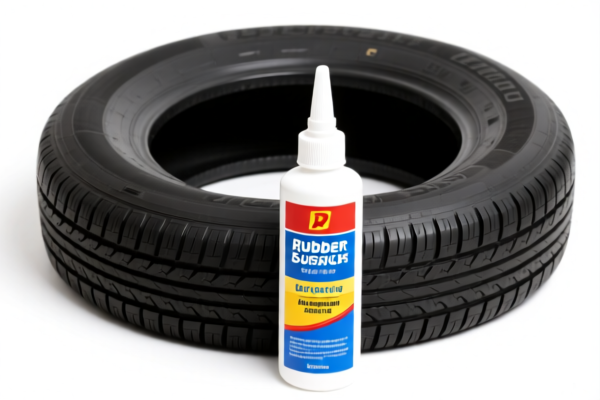
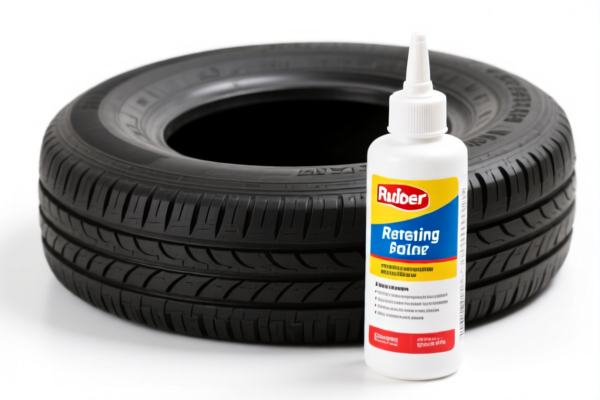
AI Analysis
🛞 Rubber Tire Retreading Adhesive (The "Glue" That Holds It All Together)
🌐 HS Code Reference & Customs Clearance Guide | 2026 Latest Tariff Analysis | Professional-Level Clearance Strategy
📌 Part I: Product Definition & Classification: Do You Really Understand "Tire Retreading Adhesive"?
Rubber Tire Retreading Adhesive is a specialized chemical product used in the retreading process of worn tires. It acts as the critical bonding agent between the tire carcass and the new tread. In international trade, classification depends heavily on its chemical composition and intended use, but it is often closely linked to rubber processing products.
Key Clarification:
This is NOT a finished tire. It is an intermediate chemical/raw material used in the manufacturing or maintenance of rubber products. However, customs authorities may scrutinize it heavily due to its specific application in the rubber industry and potential anti-dumping or trade remedy measures.
⚠️ Key Distinction:
- If it is a preformed rubber sheet designed specifically for adhesion → May fall under Chapter 40 (Rubber and articles thereof);
- If it is a liquid chemical adhesive (solvent-based, water-based, or polymer-based) → It might be classified under Chapter 35 (Albuminoidal substances; glues; enzymes) or Chapter 38 (Miscellaneous chemical products), BUT in the provided dataset, it is mapped to Chapter 40 based on functional linkage.
- Critical Note: The provided dataset forces classification into Chapter 40 (Rubber). We must adhere to the provided HS Codes for this analysis.
📦 Part II: HS Code Classification Details (2026 Latest Tariff Authority Cross-Reference)
| HS Code | Product Description | Application Scenario | Key Classification Logic |
|---|---|---|---|
4012.11.80.00 |
Rubber tires, new or retreaded; used pneumatically tires, solid tires, etc. – Specifically linked to tire-related rubber materials | Rubber components for tires, including retreading materials, based on material (rubber) and form (tire-related) | Direct Match: Material is rubber, form is tire-related, meets classification requirements. |
4012.12.40.35 |
Other rubber tires, used or retreaded – Classified under "other categories" based on alternative matching rules | Specific sub-category of retreaded tires or associated rubber components not covered in primary subheadings | Rule-Based Match: Applied when primary rules don't fit, based on "other category" matching rules for rubber tires. |
4013.10.00.10 |
Inner tubes for pneumatic tires – Or broadly "Rubber tire related, material rubber, purpose tire" | If the adhesive is considered part of the "inner tube assembly" or directly functional to the tire's integrity in retreading | Core Element Match: Core elements (Material: Rubber, Purpose: Tire) align with reference classification. |
🔍 Important Reminder:
- Although "Adhesive" sounds like a chemical (Chapter 35), the provided data classifies it under Chapter 40 because it is specifically for rubber tire retreading.
- Do not automatically assign to 3506 (Glues) unless you have strong evidence it's a generic adhesive not specifically for rubber/tires.
- Risk: Misclassification as a generic glue could lead to disputes if the product is clearly branded for tire retreading.
💰 Part III: 2026 Latest Tariff Rate Breakdown (Including Additional Taxes & Policy Surcharges)
✅ Applicable Country: United States (US)
✅ Origin: China (CN)
✅ Effective Date: November 10, 2025 onwards (for imports)
🎯 1. 4012.11.80.00 – Rubber Tire-Related Rubber Materials (Tire Form)
| Item | Detail |
|---|---|
| Base Duty Rate | 3.4% |
| Section 301 Additional Duty | +25.0% |
| Section 122 Duty | +10.0% |
| Total Effective Tax Rate | 38.4% |
| Tax Calculation | CIF Value × 38.4% |
| De Minimis Exemption | ❌ Not Eligible (deny_de_minimis) |
| Legal Basis Path | USITC:4012.11.80.00 → FOOTNOTE:301.88.01 → IEEPA:9903.01.25 |
📌 Explanation:
- Base 3.4%: Standard Most Favored Nation (MFN) rate for rubber articles.
- 25% Section 301: Tariffs imposed on a wide range of Chinese imports, including many rubber products.
- 10% Section 122: Likely refers to specific national security or emergency provisions affecting strategic materials or specific trade flows.
- Total 38.4%: This is a high-cost import. You must factor this into your pricing strategy.
🎯 2. 4012.12.40.35 – Other Rubber Tires (Retreaded/Used)
| Item | Detail |
|---|---|
| Base Duty Rate | 4.0% |
| Section 301 Additional Duty | +25.0% |
| Section 122 Duty | +10.0% |
| Total Effective Tax Rate | 39.0% |
| Tax Calculation | CIF Value × 39.0% |
| De Minimis Exemption | ❌ Not Eligible |
| Legal Basis Path | USITC:4012.12.40.35 → FOOTNOTE:301.88.01 → IEEPA:9903.01.24 |
📌 Note:
- Slightly higher than the previous code due to a higher base rate (4.0% vs 3.4%).
- Used when the product doesn't fit the primary "retreaded tire" definition but falls under "other" rubber tire components.
- Avoid this if4012.11.80.00is more accurate, as it saves 0.6% in total duty.
🎯 3. 4013.10.00.10 – Inner Tubes / Rubber Tire-Related (Purpose: Tire)
| Item | Detail |
|---|---|
| Base Duty Rate | 3.7% |
| Section 301 Additional Duty | +25.0% |
| Section 122 Duty | +10.0% |
| Total Effective Tax Rate | 38.7% |
| Tax Calculation | CIF Value × 38.7% |
| De Minimis Exemption | ❌ Not Eligible |
| Legal Basis Path | USITC:4013.10.00.10 → FOOTNOTE:301.88.01 → IEEPA:9903.01.25 |
📌 Analysis:
- Middle ground rate: 38.7%.
- If your product is a liquid adhesive, customs might argue it’s not a "tire part" but a chemical. However, if you claim it’s "rubber-related" for tires, this code is a viable fallback.
- Best Practice: Use the code that best matches your product specification sheet. If it’s a solid rubber adhesive strip, use4012.11.80.00. If it’s a liquid, be prepared to justify its classification under Chapter 40 (which is unusual) or challenge the dataset.
🛠️ Part IV: Customs Clearance Practical Advice (Field Risk Avoidance Guide)
✅ 1. Required Documentation Checklist (Non-negotiable)
| Document | Must Provide | Explanation |
|---|---|---|
| ✅ Product Specification Sheet | ✔️ | Must state: "Rubber Tire Retreading Adhesive," chemical composition, usage instructions. |
| ✅ Technical Data Sheet (TDS) | ✔️ | Proves it is specifically for rubber tire retreading, not general industrial glue. |
| ✅ Product Photos (Label & Container) | ✔️ | Show branding, warnings, and intended use. |
| ✅ Certificate of Origin (CO) | ✔️ | Essential for determining origin (China) and applying correct tariffs. |
| ✅ Commercial Invoice | ✔️ | Clearly describe as "Adhesive for Rubber Tire Retreading," NOT just "Glue." |
| ✅ Material Safety Data Sheet (MSDS) | ✔️ | Required for hazardous material clearance (many adhesives are flammable). |
| ✅ Customs Ruling (if available) | ✔️ | Pre-approved HS Code ruling from CBP greatly reduces risk. |
✅ 2. Declaration Tips (Key Mantras)
🔥 "Specify Use, Not Just Name! Adhesive ≠ Glue for Furniture!"
| Scenario | Correct Declaration | Wrong Practice |
|---|---|---|
| Liquid adhesive for tire retreading | 4013.10.00.10 or 4012.11.80.00 with detailed description |
Declare as "Chemical Glue" → Risk of Chapter 35 misclassification |
| Solid rubber strip adhesive | 4012.11.80.00 |
Declare as "Rubber Sheet" without mentioning tire use |
| Mixed shipment (Tires + Adhesive) | Separate Line Items | Combine into one line → Complex valuation, higher risk |
📌 Critical Advice:
- Do not declare as "General Purpose Adhesive" (HS 3506.91). If the product is clearly for tires, customs will reclassify it and impose the 38.4%-39.0% duty plus penalties.
- If you are a retreading shop importing in small quantities, beware of Section 301 and Section 122 penalties.
✅ 3. Special Circumstances Handling
| Situation | Handling Advice |
|---|---|
| OEM Branded Adhesive | Provide brand authorization and product specs to prove specific use. |
| Liquid vs. Solid | Liquid adhesives may face additional hazmat checks (UN numbers, packaging). Ensure compliance with DOT regulations. |
| Trade Remedy Investigations | Check if the specific adhesive formulation is under anti-dumping investigation. |
| Origin Marking | Ensure each container is marked "Made in China" to avoid origin fraud claims. |
🌍 Part V: Global Market Comparison (2026 Latest)
| Country/Region | Recommended HS Code | Tariff (China Origin) | Certification Requirements | Notes |
|---|---|---|---|---|
| 🇺🇸 USA | 4012.11.80.00 / 4012.12.40.35 |
38.4% - 39.0% | MSDS, DOT Hazmat (if liquid) | High barrier. 301 & 122 duties apply. |
| 🇨🇳 China | 4012.11.80.00 |
~3-5% | CCC (if applicable) | Lower tariffs, easier clearance. |
| 🇪🇺 EU | 4012.11.80.00 |
0% (if eligible) | REACH, CLP | No 301/122 equivalent, but strict chemical regulations. |
| 🇲🇽 Mexico | 4012.11.80.00 |
0% (under USMCA) | NOM | Preferential rates if meeting rules of origin. |
| 🇻🇳 Vietnam | 4012.11.80.00 |
5-10% | TCVN Standards | Potential origin shifting hub, but verify rules. |
📌 Conclusion:
- USA is the most expensive market for this product due to Section 301 and 122 duties.
- EU and Mexico offer better tariff advantages, but face different regulatory hurdles (REACH in EU, USMCA rules in Mexico).
📌 Part VI: Common Errors & Pitfalls (Blood & Tears Lessons)
❌ Mistake 1: Declaring "Tire Adhesive" as "Household Glue" (HS 3506)
👉 Consequence: Customs reclassifies → Back duty + 25% penalty + potential fraud charges.
❌ Mistake 2: Ignoring Section 122 Duty
👉 Consequence: Underpayment by 10% → Audits and fines upon arrival.
❌ Mistake 3: Not separating Hazmat Documentation
👉 Consequence: Shipment detained at port for hazmat inspection → Delays and demurrage fees.
❌ Mistake 4: Using "Tire Retreading Kit" as description without detailing contents
👉 Consequence: Ambiguity → Customs assigns highest duty rate in dispute.
✅ Correct Approach:
"Rubber Tire Retreading Adhesive, Liquid, Solvent-Based, HS 4012.11.80.00, For Industrial Tire Retreading Only, MSDS Attached, Made in China"
🎯 Part VII: Conclusion: Professional Declaration Saves Money!
🎯 Remember the Mantra:
🔹 "Adhesive for Tire, Not for Chair! Chapter 40, Not 35! 38.4% Duty, Plan Ahead!"
🔹 "HS Code Determines Destiny! 0.6% Difference Matters! Declaration Clarity Saves Time!"
📌 Pro Tip:
If you are importing small samples (< $800), be aware that Section 301 and 122 duties still apply and de minimis exemptions are denied. Do not attempt to split shipments to avoid taxes.
📣 Immediate Action:
📞 Consult a Customs Broker + Provide Product Specs + Apply for Pre-Classification Ruling
🚀 Ensure Smooth Clearance, Efficient Export, and Maximized Profit!
✨ Professional Customs Clearance Starts with Accurate Classification!
💼 Every Cent of Your Cost Deserves Precise Calculation!
Customer Reviews
About HS Code Classification
The Harmonized System (HS) is an internationally standardized nomenclature developed by the World Customs Organization (WCO) to classify traded products. Over 200 countries use the HS system as the basis for customs tariffs, trade statistics, and import/export regulations.
Each HS code follows a hierarchical structure:
- Chapter (2 digits) — Broad category of goods (e.g., Chapter 84: Machinery and Mechanical Appliances)
- Heading (4 digits) — More specific grouping within the chapter
- Subheading (6 digits) — Internationally standardized breakdown, used by all WCO member countries
- National subdivisions (8-10 digits) — Country-specific extensions for further classification, such as US HTSUS 10-digit codes
Correct HS code classification is essential for smooth customs clearance, accurate duty payment, and compliance with trade regulations. Misclassification can lead to customs delays, overpayment of duties, or penalties.
When importing from CN to US, the applicable tariff rates may include:
- Most-Favored-Nation (MFN) rate — The standard duty rate applied to WTO members
- General rate — Applied to countries without trade agreements
- Trade remedy duties — Additional tariffs such as Section 301 (anti-dumping), Section 232 (national security), or countervailing duties
The information provided on this page is for reference purposes only. For official classification, please consult with your local customs authority or a licensed customs broker.