Ruler
CN → US| HS Code | Tariff Rate | Origin | Destination | Doc |
|---|---|---|---|---|
| 4421999880 | 38.3% | CN | US | Official Doc |
| 4421919880 | 38.3% | CN | US | Official Doc |
| 9017800000 | 40.3% | CN | US | Official Doc |
| 9017208080 | 39.6% | CN | US | Official Doc |
| 3926909989 | 22.8% | CN | US | Official Doc |
| 3926100000 | 15.3% | CN | US | Official Doc |
Product Images

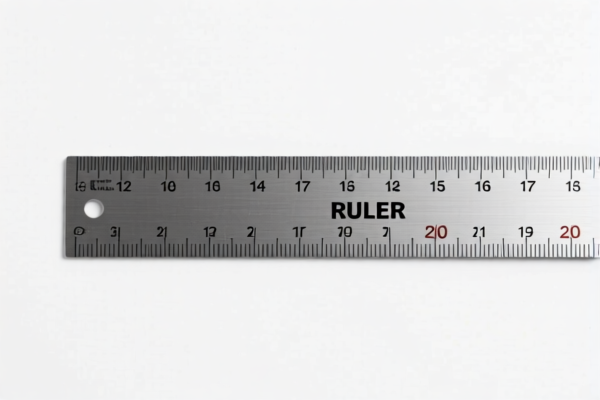
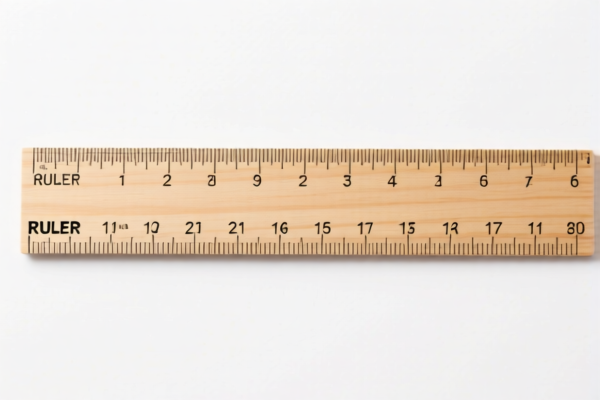
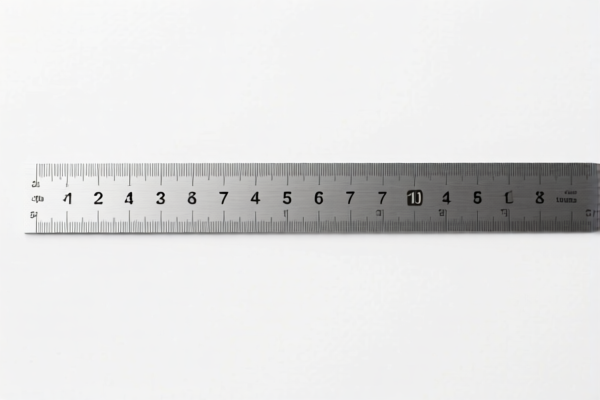
AI Analysis
📏 Ruler: The Ultimate HS Code & Tax Clearance Guide (2026 Edition)
🌐 HS Code Reference & Clearance Strategy | 2026 Tax Regime Deep Dive | Professional通关 Protocol
📌 1. Product Definition & Classification: What Exactly Is a "Ruler"?
A Ruler is a simple yet critical instrument used for measuring length, drawing straight lines, and performing geometric calculations in education, drafting, engineering, and daily office tasks. In international trade, the classification of a ruler depends strictly on material composition and intended function:
- 🪵 Wooden/Bamboo Rulers: Traditional tools made of wood or bamboo, often used in schools or as stationery accessories.
- 📐 Plastic Rulers: Modern, durable, often transparent or colored, used for general drafting and measurement.
- 🔧 Precision/Scientific Instruments: Rulers that serve as specialized measuring devices (e.g., protractors, specialized scales) often fall under "scientific instruments" rather than simple stationery.
⚠️ Critical Classification Logic:
- Material Driven: If made of wood/bamboo → Chapter 44 (Wood).
- Material Driven: If made of plastic → Chapter 39 (Plastics).
- Function Driven: If specifically categorized as a "measuring instrument" → Chapter 90 (Optical/Medical/Measuring Instruments).
📦 2. HS Code Classification Matrix (2026 Latest Tariff Authority)
| HS Code | Material/Description | Classification Logic | Typical Scenario |
|---|---|---|---|
4421.99.98.80 |
Wooden Small Ruler | "Other articles of wood" | Traditional wooden ruler, contains wood parts. |
4421.91.98.80 |
Wood/Bamboo Stationery | "Wood/Bamboo stationery accessories" | Wooden ruler without conflicting material specs. |
9017.80.00.00 |
Hand-held Measuring Instrument | "Other hand instruments for length measurement" | Any ruler classified as a drafting/math instrument. |
9017.20.80.80 |
Measuring Instrument (General) | "Drawing/Marking/Math calculation instruments" | Generic hand-measuring tool, no material conflict. |
3926.90.99.89 |
Plastic Other Articles | "Plastic-made other articles" | Inferred plastic material, no other category conflict. |
🔍 Key Insight:
- Wooden/Bamboo items fall under 4421; Plastic items under 3926.
- Precision/Function-based rulers (even if wood/plastic) can be diverted to 9017 if they are explicitly designed as "scientific instruments" rather than simple stationery.
- Classification Impact: A shift from4421to9017can increase the base tax rate from ~3.3% to ~5.3%.
💰 3. 2026 Tariff Rate Breakdown (Detailed Tax Logic)
✅ Applicable Country: United States (US)
✅ Country of Origin: China (CN)
✅ Effective Date: November 10, 2025 (Current Import Regime)
🎯 A. Wooden & Bamboo Rulers (4421.99.98.80 & 4421.91.98.80)
| Tax Component | Rate | Legal Basis | Explanation |
|---|---|---|---|
| Base Tariff | 3.3% | USITC Base Rate | Standard tariff for wood articles. |
| Section 301 (Additional) | +25.0% | Section 301 (1035/1036) | "Additional" tariff for Chinese goods. |
| Section 122 (Retaliatory) | +10.0% | Section 122 / IEEPA | Retaliatory tariff on Chinese imports. |
| Total Effective Rate | 38.3% | Calculation: 3.3 + 25 + 10 | High Cost: Must be factored into FOB/CIF pricing. |
| De Minimis Exemption | ❌ No | deny_de_minimis |
Cannot be shipped via小包 (e.g., AliExpress) tax-free. |
📌 Why 38.3%?
- 3.3% is the standard duty for wood products.
- 25% is the permanent Section 301 "Additional Tariff" targeting Chinese manufacturing.
- 10% is the Section 122 tariff (often linked to specific trade actions).
- Combined, these make wooden rulers a high-cost commodity.
🎯 B. Scientific/Measuring Rulers (9017.80.00.00 & 9017.20.80.80)
| Tax Component | Rate | Legal Basis | Explanation |
|---|---|---|---|
| Base Tariff | 4.6% - 5.3% | USITC Base Rate | Slightly higher base for "instruments." |
| Section 301 (Additional) | +25.0% | Section 301 | Applies to all targeted Chinese goods. |
| Section 122 (Retaliatory) | +10.0% | Section 122 / IEEPA | Retaliatory measure. |
| Total Effective Rate | 39.6% - 40.3% | Calculation: Base + 25 + 10 | Highest Tier: Slightly more expensive than wood. |
| De Minimis Exemption | ❌ No | deny_de_minimis |
Strict enforcement on instruments. |
📌 Why ~40%?
- These are classified as precision instruments, attracting a higher Base Tariff (4.6% or 5.3%) compared to simple wood products (3.3%).
- The 25% and 10% surcharges remain fixed.
- Total: 39.6% to 40.3%.
🎯 C. Plastic Rulers (3926.90.99.89)
| Tax Component | Rate | Legal Basis | Explanation |
|---|---|---|---|
| Base Tariff | 5.3% | USITC Base Rate | Standard for plastic articles. |
| Section 301 (Additional) | +7.5% | Section 301 | Lowered "Additional" rate for some plastic categories (varies by subheading). |
| Section 122 (Retaliatory) | +10.0% | Section 122 / IEEPA | Retaliatory measure. |
| Total Effective Rate | 22.8% | Calculation: 5.3 + 7.5 + 10 | Lowest Tier: Most cost-effective option. |
| De Minimis Exemption | ❌ No | deny_de_minimis |
Still subject to full duty calculation. |
📌 Why Only 22.8%?
- Plastic rulers benefit from a lower Section 301 rate (+7.5%) compared to the standard +25% (likely due to specific subheading nuances or exemptions).
- Result: 22.8% total. This is the most tax-efficient classification for plastic rulers.
🛠️ 4. Clearance Strategy & Risk Mitigation (2026 Action Plan)
✅ Step 1: Material Verification (The "Golden Rule")
Rule: "Material determines the HS Code, Function determines the Tax Tier." - Scenario A: You sell a Wooden Ruler. - Risk: 38.3% tax. - Action: Verify it is truly wood. If it has a plastic coating, it might shift to
3926(22.8%) if the plastic coating is the primary functional component. - Scenario B: You sell a Plastic Ruler. - Risk: 22.8% tax. - Action: Keep it at 22.8%. Do NOT classify as9017(40.3%) unless it is a precision engineering tool. - Scenario C: You sell a Metal/Alloy Ruler. - Risk: Not listed in data (likely Chapter 82 or 83). Check separately.
✅ Step 2: Declaration Best Practices
📝 Correct Declaration Template: "Plastic Ruler, 30cm, Transparent, Model X123, HS Code: 3926.90.99.89, Origin: China"
❌ Wrong Declaration: "Ruler, Measuring Tool, HS Code: 9017.80.00.00" (Over-classifying as instrument = +17.5% extra tax!)
✅ Step 3: Special Handling for "Scientific" Claims
⚠️ Warning: If your ruler has graduations (mm/inch markings) and is sold as a "drawing instrument," Customs may push it to 9017. - Strategy: Emphasize the stationery nature in the commercial invoice. Use terms like "School Supply," "Stationery Item," "Office Accessory" rather than "Measuring Instrument" unless it is a specialized engineering tool.
✅ Step 4: Cost Calculation Formula
Total Duty = CIF Value × (Base Rate + Section 301 + Section 122) - Plastic Example: $100 CIF → $100 × 22.8% = $22.80 Duty. - Wood Example: $100 CIF → $100 × 38.3% = $38.30 Duty. - Instrument Example: $100 CIF → $100 × 40.3% = $40.30 Duty.
🌍 5. Global Market Comparison (2026)
| Region | Recommended HS Code | Est. Total Tax (China Origin) | Key Requirement |
|---|---|---|---|
| 🇺🇸 USA | 3926.90.99.89 (Plastic) |
22.8% | Must prove material is plastic. |
| 🇺🇸 USA | 4421.99.98.80 (Wood) |
38.3% | Must prove material is wood. |
| 🇺🇸 USA | 9017.80.00.00 (Instrument) |
40.3% | Avoid unless truly precision. |
| 🇨🇳 China | 9017 or 4421 |
~5-10% | Lower base rates, no 301/122. |
| 🇪🇺 EU | 9017 |
~0-6% | CE Marking required. |
| 🇬🇧 UK | 3926 |
~6-10% | Post-Brexit checks. |
📌 Conclusion: Plastic rulers (
3926) are the most cost-effective for US export, saving you up to 17.5% in duties compared to wood or instrument classifications.
📌 6. Common Pitfalls & "How-To-Avoid"
❌ Pitfall 1: Over-Classifying as "Instruments" (9017)
* Mistake: Labeling a standard plastic school ruler as a "Scientific Measuring Instrument."
* Consequence: Tax jumps from 22.8% to 40.3%.
* Fix: Use "Stationery" or "Plastic Artifacts" in the description unless it's a specialized tool.
❌ Pitfall 2: Mixed Material Confusion
* Mistake: A ruler with a wooden body and plastic coating claiming "Plastic."
* Consequence: Customs may classify as Wood (4421) → 38.3% tax.
* Fix: Ensure the primary material is clearly documented. If plastic is >50%, argue for 3926.
❌ Pitfall 3: Ignoring Section 122 * Mistake: Calculating only Base + 301. * Consequence: Underpaying by 10% → Penalty + Interest. * Fix: Always add the 10% Section 122 surcharge to your cost model.
✅ Pro Tip:
"Check the Material First, Then the Function."
If Plastic → 3926 (Save 17.5%).
If Wood → 4421 (Accept 38.3%).
If Precision Instrument → 9017 (Avoid unless necessary).
🎯 7. Final Verdict & Action Items
🚀 Action Plan for Exporters: 1. Audit Inventory: Separate plastic vs. wood rulers. 2. Update Invoice: Use "Plastic Ruler" or "Wooden Ruler" explicitly. Avoid generic "Ruler." 3. Target
3926.90.99.89: Push for the 22.8% rate. It is the most competitive. 4. Avoid9017: Unless you are selling a high-end drafting tool, do not risk the 40%+ tax.📣 Bottom Line:
"Material is King, Function is Queen. In the US Market, Plastic Wins, Wood Pays, Instruments Overpay."
✨ Professional Clearance, Precision Cost Control
💼 Every Percentage Point Counts. Secure Your Margin Today!
Disclaimer: Tariff rates are subject to change by US Customs and Border Protection (CBP). Always verify with a licensed customs broker before shipment.
Customer Reviews
About HS Code Classification
The Harmonized System (HS) is an internationally standardized nomenclature developed by the World Customs Organization (WCO) to classify traded products. Over 200 countries use the HS system as the basis for customs tariffs, trade statistics, and import/export regulations.
Each HS code follows a hierarchical structure:
- Chapter (2 digits) — Broad category of goods (e.g., Chapter 84: Machinery and Mechanical Appliances)
- Heading (4 digits) — More specific grouping within the chapter
- Subheading (6 digits) — Internationally standardized breakdown, used by all WCO member countries
- National subdivisions (8-10 digits) — Country-specific extensions for further classification, such as US HTSUS 10-digit codes
Correct HS code classification is essential for smooth customs clearance, accurate duty payment, and compliance with trade regulations. Misclassification can lead to customs delays, overpayment of duties, or penalties.
When importing from CN to US, the applicable tariff rates may include:
- Most-Favored-Nation (MFN) rate — The standard duty rate applied to WTO members
- General rate — Applied to countries without trade agreements
- Trade remedy duties — Additional tariffs such as Section 301 (anti-dumping), Section 232 (national security), or countervailing duties
The information provided on this page is for reference purposes only. For official classification, please consult with your local customs authority or a licensed customs broker.