Rural Willow Mat
CN → US| HS Code | Tariff Rate | Origin | Destination | Doc |
|---|---|---|---|---|
| 4602191200 | 40.8% | CN | US | Official Doc |
| 4602193500 | 35.0% | CN | US | Official Doc |
Product Images
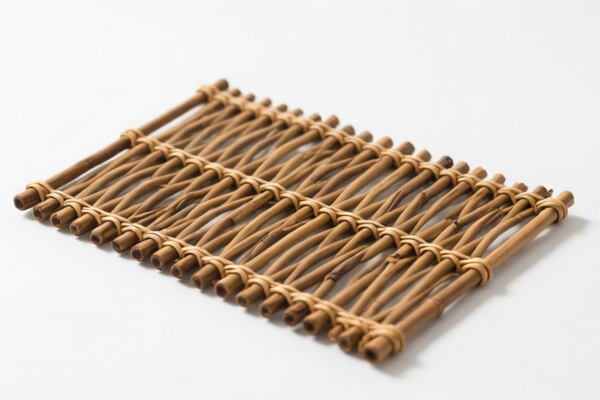
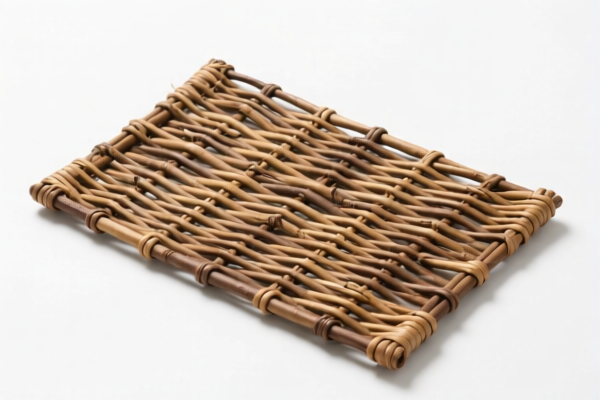
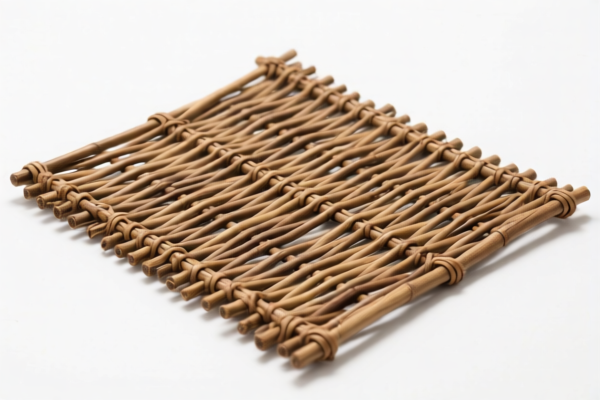
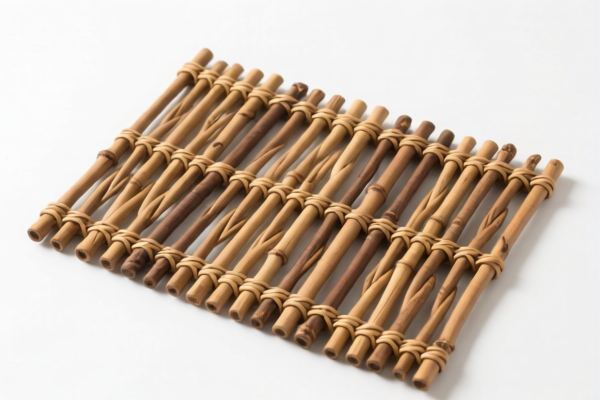
AI Analysis
🌿 Rural Willow Mat (Wickerwork & Basketwork from Vegetable Materials)
🌐 HS Code Reference & Customs Clearance Guide | 2026 Latest Tariff Analysis | Professional Level Clearance Strategy
📌 I. Product Definition & Classification: What Exactly is a "Rural Willow Mat"?
Rural Willow Mats are traditional, handcrafted articles made from plaiting materials, specifically willow branches. In international trade, these goods fall under Chapter 46 (Articles of wood charcoal; vegetal plaiting materials; wickerwork baskets and other articles).
They are strictly defined by two criteria: 1. Material: Must be of vegetable origin (specifically Willow in this context). 2. Form: Made directly to shape from plaiting materials or made up from articles of heading 4601.
⚠️ Critical Distinction:
- If the item is a flat mat used for flooring, seating, or decorative wall hanging, it is classified under 4602.19.12.00.
- If the item is structured into a 3D wickerwork article (even if it resembles a flat basket base or specific shaped container), it may fall under 4602.19.35.00.
- Key Check: Does it have depth/structure beyond a simple flat plait? Is it explicitly "wickerwork"?
📦 II. HS Code Classification Details (2026 Latest Tariff Authority Cross-Reference)
| HS Code | Product Description | Applicable Scenario | Tax Rate (China Origin to US) |
|---|---|---|---|
4602.19.12.00 |
Other baskets and bags, whether or not lined: Of willow (Includes flat mats, woven willow products not strictly "wickerwork" structure) |
Floor mats, picnic mats, wall hangings, flat woven willow sheets | 0.0% (Base: 0%, Additional: 0%) |
4602.19.35.00 |
Other: Of willow or wood: Wickerwork (Structured wicker items, baskets, boxes) |
3D willow baskets, structured wicker trays, shaped containers | 25.0% (Base: 0%, Additional: 25%) |
🔍 Key Reminder:
- Flat Mats vs. Wickerwork: Customs often scrutinize the physical structure. A "mat" that is purely flat and flexible typically falls under 4602.19.12.00.
- "Wickerwork" implies a stiffer, often 3D structure. If your "mat" has rigid framing or is part of a basket structure, it risks being classified as 4602.19.35.00.
- Misclassification Risk: Declaring a structured willow basket as a "mat" to avoid the 25% tax is high-risk.
💰 III. 2026 Latest Tariff Rate Detailed Explanation (Including Additional Taxes)
✅ Applicable Country: United States (US)
✅ Origin: China (CN)
✅ Effective Date: November 10, 2025 (and subsequent imports)
🎯 1. 4602.19.12.00 —— Other Baskets and Bags, Whether or Not Lined: Of Willow
| Item | Content |
|---|---|
| Base Tariff | 0.0% (ad valorem) |
| Additional Tariff (Section 301) | 0.0% |
| IEEPA Additional Tariff | 0.0% |
| Total Tax Rate | 0.0% |
| Tax Calculation | CIF Value × 0% = $0 |
| De Minimis Eligibility | ✅ Yes (If value <$800) |
| Legal Basis Path | HTSUS:4602.19.12.00 → No Footnote Exclusions |
📌 Explanation:
- This code benefits from preferential treatment or lack of Section 301/IEEPA inclusion for specific "other" willow articles.
- Zero Duty Advantage: This is a significant cost-saving opportunity compared to structured wickerwork.
- Requirement: Must prove the item is "of willow" and not classified as general "wickerwork" under the higher-tariff subheading.
🎯 2. 4602.19.35.00 —— Other: Of Willow or Wood: Wickerwork
| Item | Content |
|---|---|
| Base Tariff | 0.0% |
| Additional Tariff (Section 301) | +25.0% |
| IEEPA Additional Tariff | 0.0% (Note: Data shows only 25% total) |
| Total Tax Rate | 25.0% |
| Tax Calculation | CIF Value × 25% |
| De Minimis Eligibility | ❌ No (Subject to 301 tariffs) |
| Legal Basis Path | IEEPA:9903.01.24 (if applicable) → USITC:4602.19.35.00 → FOOTNOTE:301 |
📌 Note:
- The 25% additional tariff is a penalty for importing structured wickerwork from China.
- Even though the base rate is 0%, the effective duty is 25%.
- This makes structured willow products significantly more expensive to import than flat willow mats.
🛠️ IV. Customs Clearance Practical Advice (Field Avoidance Guide)
✅ 1. Documentation Checklist (Indispensable)
| Document | Must Provide | Description |
|---|---|---|
| ✅ Product Specification Sheet | ✔️ | Must specify: "Willow" (Salix), "Plaiting Material", "Flat Mat" or "Basket" |
| ✅ High-Resolution Photos | ✔️ | Show flexibility (for mats) vs. rigidity (for wicker). Highlight weave pattern. |
| ✅ Commercial Invoice | ✔️ | Describe accurately: "Woven Willow Floor Mat" NOT "Wicker Basket Base" |
| ✅ Material Certificate | ✔️ | Prove material is Vegetable (Willow), not bamboo, rattan, or synthetic. |
| ✅ Packing List | ✔️ | Ensure quantity matches invoice. |
✅ 2. Declaration Tips (Key Mantra)
🔥 "Flat is Free, Structured is Fee! Name it Right, Pay Lightly!"
| Scenario | Correct Declaration | Wrong Practice |
|---|---|---|
| Flat Willow Mat (Floor/Wall) | 4602.19.12.00Desc: "Flat Woven Willow Mat" |
Declaring as "Wicker Basket" → 25% Tax |
| 3D Willow Basket/Box | 4602.19.35.00Desc: "Wickerwork Basket" |
Declaring as "Mat" → Risk of Penalty & Back Taxes |
| Synthetic Willow Look-Alike | Wrong Chapter (Likely 4601/4602 or 39/60) | Declaring as "Natural Willow" → Customs Seizure |
| Willow with Metal Frame | Mixed Material (Check Note to Chapter 46) | Declaring purely as wicker → Misclassification |
⚠️ Critical Warning:
- Do NOT use vague terms like "Bamboo Mat" if it is Willow. Willow (Salix) and Bamboo are different materials with different supply chains.
- Ensure the product is "made directly to shape". If it is just a roll of weaving material, it goes to 4601. Once shaped, it goes to 4602.
✅ 3. Special Case Handling
| Situation | Handling Advice |
|---|---|
| "Rural" Style Design | Emphasize natural willow. Avoid implying "handmade labor" as a value-add that might trigger different scrutiny; stick to material facts. |
| Lined Mats | If the willow mat is lined with fabric or plastic, it still falls under 4602.19.12.00 as per the HS description ("whether or not lined"). |
| Mixed Materials | If the mat has metal handles or wooden frames attached, the essential character may shift. Consult a broker. Pure willow plaiting is key for these codes. |
🌍 V. Global Market Customs Comparison (2026 Latest)
| Country/Region | Recommended HS Code | Tariff Rate (China Origin) | Certification | Notes |
|---|---|---|---|---|
| 🇺🇸 USA | 4602.19.12.00 |
0.0% | None | Best Market for Flat Mats |
| 🇺🇸 USA | 4602.19.35.00 |
25.0% | None | Avoid if possible due to tax |
| 🇪🇺 EU | 4602.19 |
0% - 6% | FSC (if forestry) | No Section 301 equivalent |
| 🇨🇳 China | 4602.19 |
0% - 10% | N/A | Export rebate available |
📌 Conclusion:
- The US market offers a zero-duty advantage specifically for flat willow mats (4602.19.12.00).
- Structured wickerwork suffers a 25% penalty.
- Strategy: Design products as flat, flexible mats to utilize the 0% rate. Avoid rigid structures unless necessary.
📌 VI. Common Errors & Pitfalls (Lessons Learned)
❌ Error 1: Calling a rigid basket a "Mat"
👉 Consequence: Customs inspects and finds 3D structure → Re-classifies to 4602.19.35.00 → 25% tax + penalties.
❌ Error 2: Claiming Synthetic Willows are "Vegetable Materials"
👉 Consequence: Misdeclaration of material → Seizure of goods + FDA/Customs fines.
❌ Error 3: Ignoring the "Lined" Aspect
👉 Consequence: No issue if declared correctly, but omitting "lined" in specs can cause delays in verification. Always mention "Lined Willow Mat" if applicable.
✅ Correct Practice:
"100% Natural Willow Woven Floor Mat, 24x36 inches, Flat Plaiting, No Structural Frame, Model WM-001"
🎯 VII. Conclusion: Professional Declaration Saves Money!
🎯 Remember the Mantra:
🔹 "Flat Willow = 0% Tax! Structured Wicker = 25% Tax!"
🔹 "Check the Shape, Check the Tax, Don't Let a Basket Cost You More!"
📌 Pro Tip:
If your product is on the border between "Flat Mat" and "Shallow Basket," provide detailed structural diagrams to Customs Broker to argue for the 0% rate. A slight curvature does not always make it "wickerwork"; emphasis on flexibility and flat utility is key.
📣 Immediate Action:
📞 Consult Customs Broker with product photos.
📝 Ensure Invoice Description matches4602.19.12.00exactly if flat.
🚀 Save 25% on every shipment by correct classification!
✨ Professional Clearance Starts with Precise Classification!
💼 Every Percent of Tax Saved is Profit Increased!
Customer Reviews
About HS Code Classification
The Harmonized System (HS) is an internationally standardized nomenclature developed by the World Customs Organization (WCO) to classify traded products. Over 200 countries use the HS system as the basis for customs tariffs, trade statistics, and import/export regulations.
Each HS code follows a hierarchical structure:
- Chapter (2 digits) — Broad category of goods (e.g., Chapter 84: Machinery and Mechanical Appliances)
- Heading (4 digits) — More specific grouping within the chapter
- Subheading (6 digits) — Internationally standardized breakdown, used by all WCO member countries
- National subdivisions (8-10 digits) — Country-specific extensions for further classification, such as US HTSUS 10-digit codes
Correct HS code classification is essential for smooth customs clearance, accurate duty payment, and compliance with trade regulations. Misclassification can lead to customs delays, overpayment of duties, or penalties.
When importing from CN to US, the applicable tariff rates may include:
- Most-Favored-Nation (MFN) rate — The standard duty rate applied to WTO members
- General rate — Applied to countries without trade agreements
- Trade remedy duties — Additional tariffs such as Section 301 (anti-dumping), Section 232 (national security), or countervailing duties
The information provided on this page is for reference purposes only. For official classification, please consult with your local customs authority or a licensed customs broker.