Rust Preventive Agent for Casting (Vanadium based)
CN → US| HS Code | Tariff Rate | Origin | Destination | Doc |
|---|---|---|---|---|
| 2841901000 | 40.5% | CN | US | Official Doc |
| 2826199000 | 38.9% | CN | US | Official Doc |
| 2841905000 | 38.7% | CN | US | Official Doc |
| 2826120000 | 35.0% | CN | US | Official Doc |
| 2841901000 | 40.5% | CN | US | Official Doc |
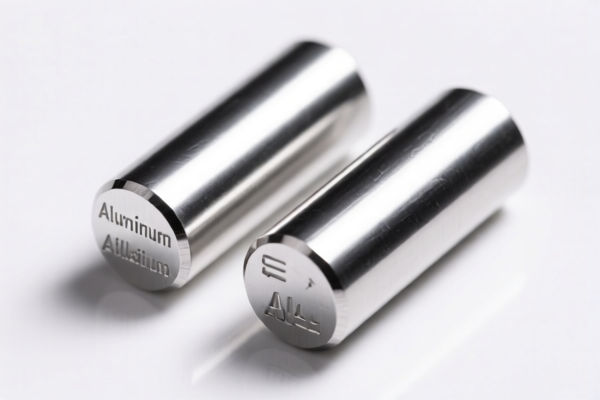
Product Images
AI Analysis
🛡️ Rust Preventive Agent for Casting (Vanadium based)
🌐 HS Code Reference & Customs Clearance Guide | 2026 Tariff Structure Analysis | Strategic Compliance Strategy
📌 I. Product Definition & Classification: What is "Vanadium-Based Rust Preventive Agent"?
Rust Preventive Agents are chemical formulations applied to metal surfaces to inhibit corrosion during storage, transportation, or processing.
For Casting applications, these agents are critical for protecting cast iron, steel, or alloy components from oxidation before further machining or assembly.
When the active ingredient is Vanadium-based, the classification depends heavily on the chemical structure: * Vanadium Oxides/Salts (Oxy-salts): Inorganic compounds where vanadium is bonded with oxygen (e.g., vanadates). These fall under Chapter 28. * Vanadium Fluorides/Complex Salts: Inorganic compounds containing fluorine or specific complex structures. These also fall under Chapter 28 but in different subheadings.
⚠️ Key Distinction Point:
- If the product is primarily a Vanadate (Vanadium-Oxygen compound) →归入 2841.90 series.
- If the product is primarily a Fluoride/Complex Salt or unlisted Vanadium compound → 归入 2826.19 or 2826.12.
📦 II. HS Code Classification Details (2026 Latest Tariff Authority)
Based on the chemical composition and customs descriptions, here are the four most likely HS Codes for Vanadium-based Rust Preventive Agents:
| HS Code | Product Description | Chemical Logic | Total Tax Rate (China to US) |
|---|---|---|---|
2841.90.10.00 |
Vanadium-based rust preventive, meeting vanadate material requirements; classified as derivatives of oxygenated metal acids. | Vanadates (Oxy-salts): Vanadium bonded with Oxygen. Falls under "Other salts of oxyacids of non-metals". | 40.5% |
2826.19.90.00 |
Vanadium-based rust preventive; categorized under Fluorides/Complex Salts as "Other" fluorides or related compounds not explicitly listed. | Fluorides/Other Inorganics: Vanadium compounds involving Fluorine or complex inorganic structures not covered elsewhere. | 38.9% |
2841.90.50.00 |
Vanadium-based rust preventive; categorized under Oxygenated Metal Salts, aligning with the "Other" category logic. | Other Vanadium Salts: Broad category for vanadium salts not specifically named in "10.00". | 38.7% |
2826.12.00.00 |
Vanadium-based rust preventive; properties of Vanadium compounds/Metal Salts; logic consistent with additives and metal salts. | Fluorides (Specific): Specifically categorized under Vanadium Fluorides or similar specific inorganic derivatives. | 35.0% |
🔍 Focus Reminder:
- The core difference lies in whether the vanadium is primarily in the form of a Vanadate (Oxygen-based) or a Fluoride/Other Inorganic Salt. - All options above attract significant Section 301 Additional Tariffs and IEEPA Surcharge Tariffs.
💰 III. 2026 Latest Tariff Rate Breakdown (Including Surtaxes & Policy Add-ons)
✅ Applicable Country: United States (US)
✅ Origin: China (CN)
✅ Effective Time: Post-2025 import scenarios (Current prevailing rates)
🎯 1. 2841.90.10.00 —— Vanadate-Based Rust Preventive
| Item | Content |
|---|---|
| Base Duty Rate | 5.5% (ad valorem) |
| Section 301 Surcharge | +25.0% |
| IEEPA Surcharge (122) | +10.0% |
| Total Rate | 40.5% |
| Tax Calculation | CIF Value × 40.5% |
| De Minimis Exemption | ❌ Not Eligible (High duty rate disqualifies) |
| Legal Basis Path | USITC:2841.90.10.00 → 301:25% → IEEPA:122:10% |
📌 Explanation:
- Base 5.5%: Standard MFN duty for "Other salts of oxyacids". - 25% Additional: Standard Section 301 tariff for Chapter 28 chemicals from China. - 10% IEEPA: Additional surcharge for specific Chinese-origin industrial chemicals. - Total 40.5%: High cost impact. Must be factored into pricing.
🎯 2. 2826.19.90.00 —— Other Fluorides/Complex Salts
| Item | Content |
|---|---|
| Base Duty Rate | 3.9% (ad valorem) |
| Section 301 Surcharge | +25.0% |
| IEEPA Surcharge (122) | +10.0% |
| Total Rate | 38.9% |
| Tax Calculation | CIF Value × 38.9% |
| De Minimis Exemption | ❌ Not Eligible |
| Legal Basis Path | USITC:2826.19.90.00 → 301:25% → IEEPA:122:10% |
📌 Note:
- Base 3.9%: Lower base duty than vanadates. - However, the total rate (38.9%) is still very high due to surtaxes. - Suitable if the product contains significant Fluoride components or is a complex salt not defined as a simple vanadate.
🎯 3. 2841.90.50.00 —— Other Oxygenated Metal Salts
| Item | Content |
|---|---|
| Base Duty Rate | 3.7% (ad valorem) |
| Section 301 Surcharge | +25.0% |
| IEEPA Surcharge (122) | +10.0% |
| Total Rate | 38.7% |
| Tax Calculation | CIF Value × 38.7% |
| De Minimis Exemption | ❌ Not Eligible |
| Legal Basis Path | USITC:2841.90.50.00 → 301:25% → IEEPA:122:10% |
📌 Note:
- This is the "Catch-all" for Vanadium oxy-salts not specifically listed as2841.90.10.00. - Offers the lowest total rate (38.7%) among the Vanadate options, but requires careful chemical justification.
🎯 4. 2826.12.00.00 —— Vanadium Fluorides/Specific Inorganics
| Item | Content |
|---|---|
| Base Duty Rate | 0.0% (ad valorem) |
| Section 301 Surcharge | +25.0% |
| IEEPA Surcharge (122) | +10.0% |
| Total Rate | 35.0% |
| Tax Calculation | CIF Value × 35.0% |
| De Minimis Exemption | ❌ Not Eligible |
| Legal Basis Path | USITC:2826.12.00.00 → 301:25% → IEEPA:122:10% |
📌 Note:
- Base 0.0%: This is the most advantageous base rate. - Total 35.0%: The lowest total effective rate among all options. - Condition: Must prove the product is primarily a Fluoride or falls under this specific "Other" inorganic compound category for Vanadium. If misclassified, customs may re-classify to2841with higher taxes.
🛠️ IV. Customs Clearance Practical Advice (Field Pitfall Guide)
✅ 1. Preparation Checklist (Essential Documents)
| Document | Required? | Explanation |
|---|---|---|
| ✅ Technical Data Sheet (TDS) | ✔️ | Must specify Vanadium content, Chemical Formula (e.g., NaVO3 vs. VF3), and CAS Number. |
| ✅ MSDS (Safety Data Sheet) | ✔️ | Confirms physical state and hazards. |
| ✅ Chemical Structure Diagram | ✔️ | Critical for customs to distinguish between Oxy-salts (2841) and Fluorides/Other (2826). |
| ✅ Commercial Invoice | ✔️ | Must clearly state "Vanadium-based Rust Preventive for Casting" and HS Code. |
| ✅ Packing List | ✔️ | Detail net/gross weight. |
| ✅ Origin Certificate | ✔️ | To confirm CN origin (subject to surtaxes). |
✅ 2. Declaration Strategy (Key Mnemonics)
🔥 "Check Vanadium Bond: Oxygen = 2841, Fluorine = 2826; Base 0% saves money, but evidence is key!"
| Scenario | Correct Declaration | Risk of Error |
|---|---|---|
| Product is Vanadate (NaVO3, etc.) | 2841.90.50.00 (Lower total tax than 10.00) |
Misclassifying as 2841.90.10.00 → 40.5% vs 38.7% |
| Product is Vanadium Fluoride | 2826.12.00.00 |
Misclassifying as 2841 → ~38-40% vs 35.0% |
| Product is Complex Salt | 2826.19.90.00 |
Ambiguous chemical structure leads to customs re-classification delays |
| Mixture with Organic Solvents | ⚠️ Caution | If >50% organic solvent, may shift to Chapter 38 (Misc. Chemical Products). Check TDS! |
✅ 3. Special Circumstances Handling
| Situation | Handling Advice |
|---|---|
| High Organic Content | If the rust preventive is a mixture with >50% organic components (oils, esters), it may fall under 3819 or 3824. These may have different tax structures. Get a pre-ruling! |
| Customs Inquiry | If customs questions the HS Code, provide a Chemist's Letter explaining why the vanadium is classified as a specific inorganic salt. |
| Cost Optimization | 2826.12.00.00 (35.0%) is the cheapest. Can you adjust the formulation to be fluoride-based or meet the criteria for 2826.12? (Consult R&D). |
🌍 V. Global Market Comparison (2026 Update)
| Region | Recommended HS Code | Est. Total Duty (China Origin) | Notes |
|---|---|---|---|
| 🇺🇸 USA | 2826.12.00.00 |
35.0% | Highest surtaxes. Optimize base duty. |
| 🇨🇳 China (Export) | See Above | N/A | Export from China is free (0% export duty), but import cost is high. |
| 🇪🇺 EU | Varies | ~6-8% | No Section 301/IEEPA. Standard duty applies. Lower overall cost. |
| 🇲🇽 Mexico | Varies | ~5-10% | Potential USMCA benefits if processed in NAFTA. |
📌 Conclusion:
- USA is the most expensive market for Vanadium-based rust preventives due to layered surtaxes. - Optimizing the HS Code from2841.90.10.00(40.5%) to2826.12.00.00(35.0%) saves 5.5% on the CIF value. For a $100,000 shipment, this is $5,500 savings.
📌 VI. Common Mistakes & Pitfalls (Lessons Learned)
❌ Mistake 1: Assuming all Vanadium chemicals are in 2841.
👉 Consequence: Overpaying duty by 2-5% if fluoride/complex salts are used.
Fix: Analyze chemical structure. Fluorides → 2826.
❌ Mistake 2: Ignoring Organic Content.
👉 Consequence: If the product is a solution with organic carriers, it might be classified under Chapter 38. Chapter 38 may have different surtax rates or exclusions.
Fix: Provide full ingredient breakdown.
❌ Mistake 3: Using "Rust Preventive Oil" as the description.
👉 Consequence: Customs may classify under 3819 (Chemical preparations for rust prevention), which has different duty rates.
Fix: Be specific: "Vanadium-based Inorganic Salt Rust Preventive".
🎯 VII. Conclusion: Precise Classification Saves Costs!
🎯 Key Takeaway:
🔹 "Vanadium + Oxygen = 2841 (38-40%)"
🔹 "Vanadium + Fluorine/Complex = 2826 (35-38%)"
🔹 "Always check for Organic Carriers → Could be Chapter 38!"🔹 "HS Code determines duty. 5% difference is $5,500 per $100k!"
📌 Pro Tip:
If your formulation allows, consult with R&D to see if the product can be optimized to fit 2826.12.00.00 (0% base duty) to achieve the lowest total tax rate of 35.0%.
If not, ensure your Chemical Structure Diagram supports 2841.90.50.00 (3.7% base) over 2841.90.10.00 (5.5% base) to save 2% total.
📣 Immediate Action:
📞 Engage a Customs Broker to review your TDS and MSDS.
📝 Apply for a Pre-Ruling (ISF 10+2) if importing large volumes.
🚀 Optimize Formulation or Declaration to minimize the 35-40% tariff burden.
✨ Professional Clearance Starts with Accurate Classification!
💼 Every Percentage Point Saved is Pure Profit!
Customer Reviews
About HS Code Classification
The Harmonized System (HS) is an internationally standardized nomenclature developed by the World Customs Organization (WCO) to classify traded products. Over 200 countries use the HS system as the basis for customs tariffs, trade statistics, and import/export regulations.
Each HS code follows a hierarchical structure:
- Chapter (2 digits) — Broad category of goods (e.g., Chapter 84: Machinery and Mechanical Appliances)
- Heading (4 digits) — More specific grouping within the chapter
- Subheading (6 digits) — Internationally standardized breakdown, used by all WCO member countries
- National subdivisions (8-10 digits) — Country-specific extensions for further classification, such as US HTSUS 10-digit codes
Correct HS code classification is essential for smooth customs clearance, accurate duty payment, and compliance with trade regulations. Misclassification can lead to customs delays, overpayment of duties, or penalties.
When importing from CN to US, the applicable tariff rates may include:
- Most-Favored-Nation (MFN) rate — The standard duty rate applied to WTO members
- General rate — Applied to countries without trade agreements
- Trade remedy duties — Additional tariffs such as Section 301 (anti-dumping), Section 232 (national security), or countervailing duties
The information provided on this page is for reference purposes only. For official classification, please consult with your local customs authority or a licensed customs broker.