S166 Drone Three Batteries
CN → US| HS Code | Tariff Rate | Origin | Destination | Doc |
|---|---|---|---|---|
| 8507600020 | 0.0% | CN | US | Official Doc |
| 8507808200 | 38.4% | CN | US | Official Doc |
| 8806920000 | 35.0% | CN | US | Official Doc |
| 8806220000 | 35.0% | CN | US | Official Doc |
Product Images
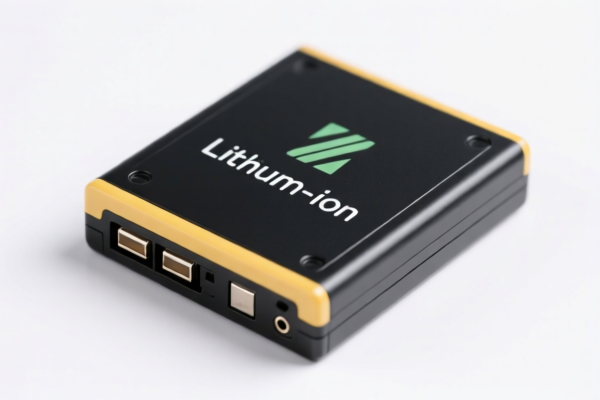
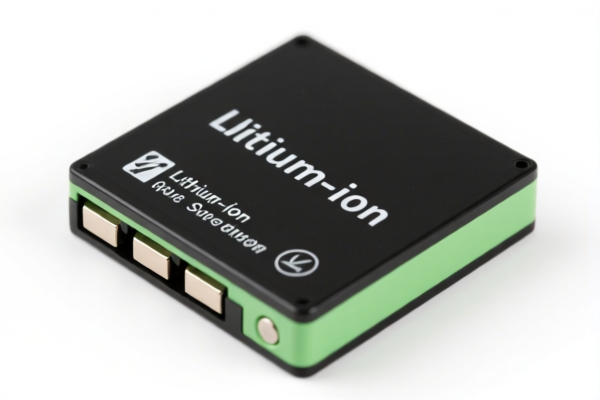
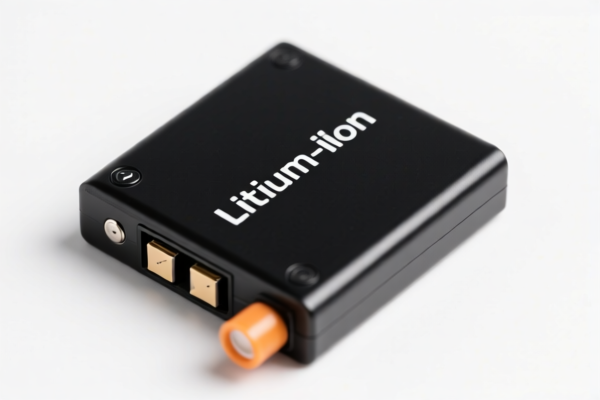
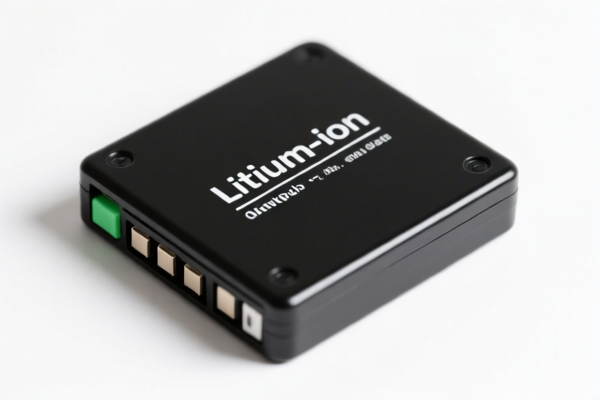
AI Analysis
🚁 S166 Drone with Three Batteries (Electric Storage & UAVs)
🌐 HS Code Reference & Customs Clearance Guide | 2026 Latest Tariff Analysis | Professional Strategy
📌 I. Product Definition & Classification: Do You Understand the "Drone + Battery" Combo?
The S166 Drone is a consumer-grade Unmanned Aerial Vehicle (UAV). In international trade, it is not treated as a single monolithic item but is often split into two critical components for customs and tax purposes:
- The Drone (UAV): The airframe, motors, controller, and electronics.
- The Batteries: Specifically, Lithium-ion electric storage batteries included with the drone.
⚠️ Key Distinction for Customs:
- If shipping alone or declared separately: Batteries go to 8507.60.00.20.
- If shipping as a complete kit (Drone + Batteries): The drone itself typically falls under 8806.92.00.00 (or 8806.22.00.00 if strictly remote-controlled).
- Crucial Warning: Lithium-ion batteries are classified as Dangerous Goods (Class 9). Improper declaration can lead to rejection by airlines, fines, or seizure.
📦 II. HS Code Classification Details (2026 Latest Tariff Authority Match)
Based on the provided data, here is the exact breakdown for the S166 Drone and its Three Batteries.
| HS Code | Product Description | Component | Applicable Scenario | Key Tax Implication |
|---|---|---|---|---|
8507.60.00.20 |
Electric storage batteries... Lithium-ion batteries | The 3 Batteries | Used as power source for the drone. Must be declared separately or as part of the total weight/volume. | ❌ Tax Error: Failed to retrieve tax info. Action Required: Manual Verification Needed. |
8806.92.00.00 |
Unmanned aircraft: Other... Max take-off weight >250g but ≤7kg | The S166 Drone (Airframe) | Consumer toy drone, remote-controlled. | ✅ Total Tax: 25.0% |
8806.22.00.00 |
Unmanned aircraft: Other, for remote-controlled flight only... >250g but ≤7kg | The S166 Drone (Alternative) | Specific classification for RC drones. | ✅ Total Tax: 25.0% |
🔍 Important Note:
- The S166 is typically a small consumer drone. Ensure its Maximum Take-Off Weight (MTOW) is between 250g and 7kg.
- If <250g: Different classification (not in data).
- If >7kg: Different classification (not in data).
- Both drone codes (8806.92.00.00and8806.22.00.00) carry the same 25% tax rate in this dataset.
💰 III. 2026 Latest Tariff Rate Details (Detailed Breakdown)
✅ Applicable Country: USA (US)
✅ Origin: China (CN) (Implied by "Additional Tax" context in data)
✅ Effective Date: Current 2026 Tariff Schedule
🎯 1. 8507.60.00.20 — Lithium-ion Batteries
| Item | Content |
|---|---|
| Description | Electric storage batteries, Lithium-ion |
| Tax Status | ⚠️ ERROR: Failed to Retrieve Tax Information |
| Total Tax | Unknown/Error |
| Action | Do NOT assume 0%. This field indicates a missing data point in the system. |
| Recommendation | Contact a customs broker to verify if these batteries are subject to Section 301 tariffs or IEEPA provisions. Typically, Li-ion batteries may face 7.5% - 25% depending on specific subheadings and origin. Do not clear without confirmed tax rate. |
📌 Explanation:
- The system flagged an error. This is common for newer HS codes or specific battery configurations.
- Risk: If you assume it's 0% and it’s actually 25%, you face back taxes + penalties.
- Best Practice: Declare batteries separately with detailed specs (Voltage, Capacity, Material) to trigger a manual review.
🎯 2. 8806.92.00.00 & 8806.22.00.00 — Unmanned Aircraft (Drones)
| Item | Content |
|---|---|
| Description | Unmanned Aircraft (RC Drone) |
| Weight Range | >250g to ≤7kg |
| Base Tariff | 0.0% |
| Additional Tariff | 25.0% |
| Total Tax | 25.0% |
| Calculation | CIF Value × 25% |
| De Minimis Exemption | ❌ Not Applicable for this HS Code under typical Section 301 rules |
| Legal Basis | USITC Footnotes related to Section 301 (List 4A/4B) |
📌 Explanation:
- The base tariff is 0%, but the 25% additional tariff (Section 301) applies.
- Total Cost Impact: For a $100 drone, you pay $25 in duties.
- Why 25%? Drones are often subject to retaliatory tariffs under US-China trade agreements.
- No Exemption: Unlike small packages under $800, commercial shipments of drones are fully taxable.
🛠️ IV. Customs Clearance Practical Advice (Avoiding Pitfalls)
✅ 1. Documentation Checklist (Non-Negotiable)
| Document | Required | Notes |
|---|---|---|
| Commercial Invoice | ✔️ | Must list Drone and Batteries separately. |
| Packing List | ✔️ | Specify weight of drone vs. weight of 3 batteries. |
| Battery MSDS | ✔️ | Mandatory for Lithium-ion batteries. |
| UN38.3 Test Report | ✔️ | Mandatory to prove battery safety for transport. |
| Product Photos | ✔️ | Show the drone, model number (S166), and battery label. |
| ICAO/DOT Compliance | ✔️ | If applicable, show FCC ID for remote control. |
🚀 Pro Tip: Clearly state: "S166 Drone (HS 8806.92.00.00) + 3x Lithium-ion Batteries (HS 8507.60.00.20)" on the invoice. Do not lump them together without itemization.
✅ 2. Declaration Strategy (Key Phrases)
| Scenario | Correct Declaration | Incorrect Declaration |
|---|---|---|
| Drone Only | Unmanned Aerial Vehicle, Remote Controlled, 0.5kg, Model S166 |
"Toy" or "Gadget" |
| Batteries Only | Lithium-ion Rechargeable Battery, 11.1V, 2000mAh, For Drone Use |
"Power Bank" or "Battery Pack" (Vague) |
| Kit (Drone + Batteries) | Split Line Items: 1. Drone... 2. Batteries... |
Single line: "Drone Kit" (Ambiguous → High Risk) |
🔥 Golden Rule:
"Separate Line Items, Separate HS Codes."
Combining them risks misclassification. If the drone is 25% taxed and batteries are uncertain, you need clear separation for audit purposes.
✅ 3. Special Considerations for Lithium Batteries
| Issue | Solution |
|---|---|
| Air Freight Restriction | Lithium batteries are Class 9 Dangerous Goods. Must be shipped via IATA-compliant carriers. |
| Labeling | Each battery must have UN3481 label (if Li-ion) and Lithium Battery Handle label. |
| SoC (State of Charge) | For air transport, batteries must be charged to ≤30% unless protected against short circuit. |
| Customs Inspection | Expect physical inspection. Have MSDS ready in digital format. |
🌍 V. Global Market Comparison (2026)
| Country | HS Code (Drone) | Tariff on Drone | Tariff on Batteries | Notes |
|---|---|---|---|---|
| 🇺🇸 USA | 8806.92.00.00 |
25% | Error/Verify | High tariff due to Section 301. Batteries need special attention. |
| 🇪🇺 EU | 8806.29 (Est.) |
0% | 3.7% | No Section 301. Easier clearance. |
| 🇨🇳 China | 8806.21 |
5-10% | 0% | Import duties apply, but no additional retaliatory tariffs. |
| 🇬🇧 UK | 8806.29 |
0% | 3.7% | Post-Brexit, aligned with EU for many goods. |
📌 Conclusion:
- The USA is the most expensive market for S166 drones due to the 25% additional tariff.
- Batteries are the unknown variable in the US market. Verify before shipping.
📌 VI. Common Errors & Pitfalls (Blood Lessons)
❌ Error 1: Declaring the entire kit as one HS Code (8806.92.00.00)
👉 Consequence: Batteries may be misclassified. If caught, fines for misdeclaration.
👉 Fix: Split into two line items.
❌ Error 2: Ignoring the "Failed to retrieve tax" error for batteries
👉 Consequence: Assuming 0% tax when it’s 25% → Underpayment of duties.
👉 Fix: Contact a customs broker to get a binding tariff classification for 8507.60.00.20.
❌ Error 3: Shipping without UN38.3 Report
👉 Consequence: Shipment rejected by airline or customs. Return or destruction.
👉 Fix: Ensure all 3 batteries have valid UN38.3 certification.
❌ Error 4: Declaring "Weight <250g" for a 0.5kg drone
👉 Consequence: Customs Penalty for false declaration.
👉 Fix: Accurate weight declaration. S166 is likely >250g.
✅ Correct Approach:
"Line 1: S166 Drone, HS 8806.92.00.00, 25% Duty
Line 2: 3x Li-ion Batteries, HS 8507.60.00.20, Verify Duty
Attach: MSDS, UN38.3, FCC ID"
🎯 VII. Conclusion: Precise Classification, Smooth Clearance!
🎯 Remember the Mantra:
🔹 "Drone is 25%, Batteries are Unknown."
🔹 "Split the Items, Save the Headache."
🔹 "UN38.3 & MSDS are Your Ticket to Fly."
📌 Action Plan for Importers:
1. Confirm Battery Tax Rate: Use a customs broker to resolve the 8507.60.00.20 tax error. Do not guess.
2. Separate Line Items: Invoice must list Drone and Batteries separately.
3. Check Weight: Ensure S166 MTOW is documented correctly (>250g).
4. Prepare Safety Docs: UN38.3 and MSDS are mandatory for lithium batteries.
📣 Immediate Action:
📞 Consult a Customs Broker to verify the tax rate for Lithium-ion batteries (
8507.60.00.20).
🚀 Get Pre-Ruling: Apply for an Advance Ruling if shipping in volume to mitigate risk.
✨ Professional Clearance Starts with Accurate Classification!
💼 Don’t Let "Tax Error" Cost You Your Profit Margin!
Customer Reviews
About HS Code Classification
The Harmonized System (HS) is an internationally standardized nomenclature developed by the World Customs Organization (WCO) to classify traded products. Over 200 countries use the HS system as the basis for customs tariffs, trade statistics, and import/export regulations.
Each HS code follows a hierarchical structure:
- Chapter (2 digits) — Broad category of goods (e.g., Chapter 84: Machinery and Mechanical Appliances)
- Heading (4 digits) — More specific grouping within the chapter
- Subheading (6 digits) — Internationally standardized breakdown, used by all WCO member countries
- National subdivisions (8-10 digits) — Country-specific extensions for further classification, such as US HTSUS 10-digit codes
Correct HS code classification is essential for smooth customs clearance, accurate duty payment, and compliance with trade regulations. Misclassification can lead to customs delays, overpayment of duties, or penalties.
When importing from CN to US, the applicable tariff rates may include:
- Most-Favored-Nation (MFN) rate — The standard duty rate applied to WTO members
- General rate — Applied to countries without trade agreements
- Trade remedy duties — Additional tariffs such as Section 301 (anti-dumping), Section 232 (national security), or countervailing duties
The information provided on this page is for reference purposes only. For official classification, please consult with your local customs authority or a licensed customs broker.