SBR Solution for Adhesive Applications
CN → US| HS Code | Tariff Rate | Origin | Destination | Doc |
|---|---|---|---|---|
| 3913901000 | 35.0% | CN | US | Official Doc |
| 3506915000 | 37.1% | CN | US | Official Doc |
| 4002190016 | 35.0% | CN | US | Official Doc |
| 3506990000 | 37.1% | CN | US | Official Doc |
Product Images
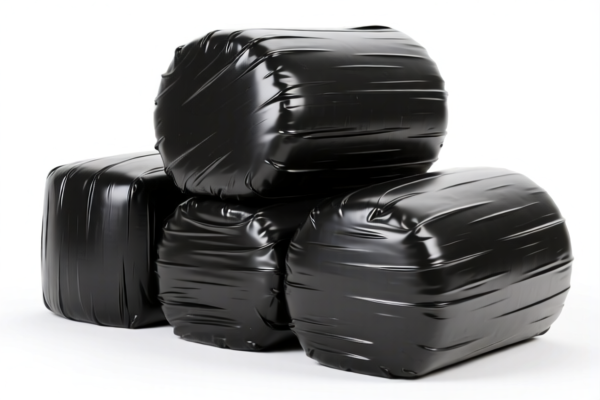
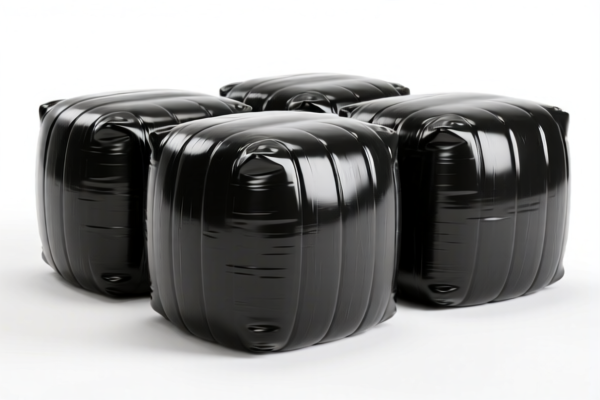
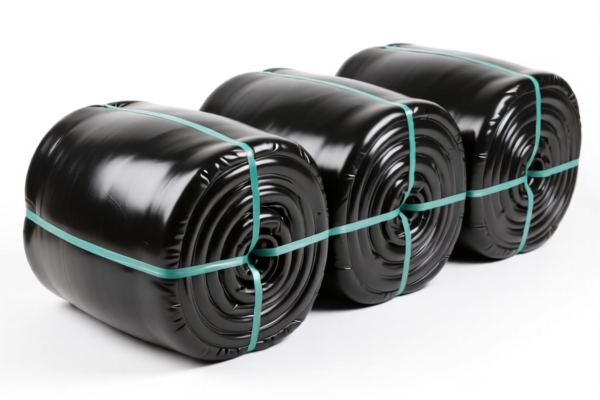
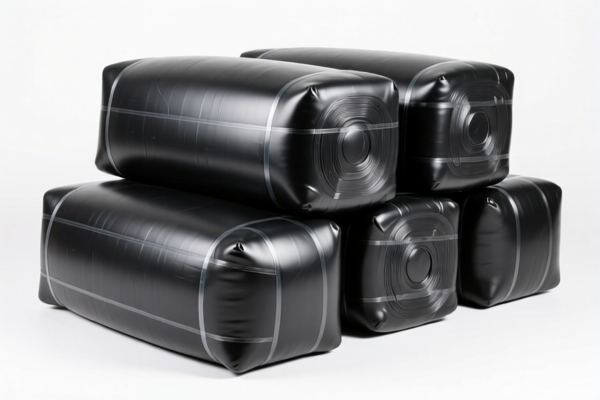
AI Analysis
🧪 SBR Solution for Adhesive Applications (Styrene-Butadiene Rubber)
🌐 HS Code Reference & Customs Clearance Guide | 2026 Latest Tariff Analysis | Professional Clearance Strategy
📌 1. Product Definition & Classification: What Exactly is "SBR Solution"?
SBR Solution for Adhesive Applications refers to Styrene-Butadiene Rubber produced via solution polymerization, specifically formulated or designated for use in adhesives. In international trade, this material sits at a crossroads between raw rubber materials and prepared adhesives.
The classification depends heavily on whether the product is declared as: 1. Raw Material (Unprepared Rubber): The SBR latex or solid rubber concentrate before final adhesive formulation. 2. Prepared Adhesive: The SBR already mixed with solvents, resins, or additives to form a ready-to-use adhesive or a specific adhesive base.
⚠️ Key Distinction Point:
- If it is pure SBR rubber (latex or solid) intended for adhesive manufacturing → It is a Rubber Product (Chapter 40).
- If it is SBR mixed with solvents/additives to be used as an adhesive → It is a Prepared Adhesive (Chapter 35).
📦 2. HS Code Classification Details (2026 Latest Tariff Authority对照)
Based on the provided data, there are four primary HS Codes applicable, split between Raw Rubber and Prepared Adhesives.
| HS Code | Product Description | Category | Tax Rate | Basis for Classification |
|---|---|---|---|---|
4002.19.00.16 |
Solution Polymerized SBR for Adhesive Use | Raw Rubber | 35.0% | Material is Styrene-Butadiene Rubber. Form is solution-polymerized. Used for adhesives but classified as the raw polymer material. |
3913.90.10.00 |
SBR (Chemical Derivative of Natural Rubber) for Adhesive Use | Raw Rubber | 35.0% | Material is SBR. Form is solution-method. Classified under chemical derivatives of natural rubber for adhesive applications. |
3506.91.50.00 |
Prepared Adhesive Containing SBR Solution | Prepared Adhesive | 37.1% | Material contains SBR but is defined as a "prepared adhesive" (mixture). Meets polymer/rubber requirements for adhesive formulation. |
3506.99.00.00 |
SBR Solution Used as Adhesive | Prepared Adhesive | 37.1% | Defined as "Other prepared adhesives." SBR solution is the base, but the product is functionally an adhesive. |
🔍 Critical Note:
- HS 4002/3913 (Raw Rubber): Lower tax rate (35%). Choose if you are importing the pure rubber polymer to manufacture adhesives later.
- HS 3506 (Prepared Adhesive): Higher tax rate (37.1%). Choose if you are importing a mixture that is already ready for adhesive use.
- Misclassification Risk: Declaring a pre-mixed adhesive as raw rubber (3506 vs 4002) can lead to audits and penalties.
💰 3. 2026 Latest Tariff Rate Breakdown (Including Surcharge & Policy Additions)
✅ Applicable Country: United States (US)
✅ Origin: China (CN)
✅ Effective Date: November 10, 2025 (and subsequent imports)
🎯 1. Raw Rubber Classification (4002.19.00.16 & 3913.90.10.00)
| Item | Content |
|---|---|
| Base Duty Rate | 0.0% (ad valorem) |
| Section 301 Surcharge | +25.0% (USITC Footnote 9903.88.01 equivalent for chemicals/rubbers) |
| 122 Clause Tariff | +10.0% (Specific Chinese trade policy surcharge) |
| Total Tax Rate | 35.0% |
| Tax Calculation | CIF Value × 35% |
| De Minimis Eligibility | ❌ No (deny_de_minimis) |
| Legal Basis Path | IEEPA:9903.01.25 → Section 301: 9903.88.01 → 122 Clause → HS Code |
📌 Explanation:
- The 0% base rate is offset by high political surcharges.
- Total 35% is a significant cost factor for raw material importers.
- This rate applies if the product is strictly SBR rubber (latex or solid) without additional adhesive formulations.
🎯 2. Prepared Adhesive Classification (3506.91.50.00 & 3506.99.00.00)
| Item | Content |
|---|---|
| Base Duty Rate | 2.1% (ad valorem) |
| Section 301 Surcharge | +25.0% |
| 122 Clause Tariff | +10.0% |
| Total Tax Rate | 37.1% |
| Tax Calculation | CIF Value × 37.1% |
| De Minimis Eligibility | ❌ No (deny_de_minimis) |
| Legal Basis Path | IEEPA:9903.01.25 → Section 301: 9903.88.01 → 122 Clause → HS Code |
📌 Explanation:
- Prepared adhesives have a slightly higher base duty (2.1% vs 0%).
- Total 37.1% is the cost for ready-to-use or semi-finished adhesive products.
- Warning: Even if the product is "just SBR in solution," if it is marketed as an "Adhesive Solution," Customs may classify it under Chapter 35, increasing the tax by 2.1%.
🛠️ 4. Customs Clearance Practical Advice (Real-World Pitfall Guide)
✅ 1. Required Documentation Checklist (Non-Negotiable)
| Document | Must Provide | Explanation |
|---|---|---|
| ✅ Product Specification Sheet | ✔️ | Must clearly state: "Styrene-Butadiene Rubber, Solution Polymerized." Include % Solids, Solvent Type (if any). |
| ✅ Formula/Composition Report | ✔️ | Critical for distinguishing between Raw Rubber (Chapter 40/39) and Prepared Adhesive (Chapter 35). |
| ✅ MSDS (Material Safety Data Sheet) | ✔️ | Must list chemical composition. If solvents/resins are added, it leans toward Chapter 35. |
| ✅ Commercial Invoice | ✔️ | Description must match HS Code logic: e.g., "SBR Latex for Adhesive Manufacturing" vs. "SBR Adhesive Solution." |
| ✅ Certificate of Origin | ✔️ | To confirm China origin for surcharge application. |
| ✅ Production Process Description | ✔️ | Explain if the product is "Unprepared" or "Prepared." |
✅ 2. Declaration Strategy (Key Mantra)
🔥 "Raw Rubber = Chapter 40/39 (35%); Prepared Adhesive = Chapter 35 (37.1%)! Misclassification = Penalty!"
| Scenario | Correct Declaration | Wrong Practice |
|---|---|---|
| Importing pure SBR latex/solids to mix later | 4002.19.00.16 or 3913.90.10.00 |
Declaring as "Adhesive" → Higher tax |
| Importing SBR mixed with solvents for direct use | 3506.91.50.00 or 3506.99.00.00 |
Declaring as "Raw Rubber" → Audit risk |
| SBR in Solution (Solvent + Rubber) | Check Formula: If only solvent+rubber, may be Chapter 35. | Assuming all "solution" products are Chapter 40 |
✅ 3. Special Cases Handling
| Case | Handling Advice |
|---|---|
| OEM Custom Adhesive | Provide customer formula + design specs. Avoid generic "Adhesive" names; use specific chemical names. |
| SBR Latex vs. Solid Rubber | Latex is often 4002.19. Solid rubber may be 4002.51 or 3913.90. Confirm physical state. |
| Duty Drawback | If imported as Raw Rubber (35%) and later exported as finished goods, potential for duty drawback exists. |
| Section 301 Exemption | No general exemption for SBR from China. Check for specific UFLPA compliance if supply chain is complex. |
🌍 5. Global Market Comparison (2026 Latest)
| Country/Region | Recommended HS Code | Tariff (China Origin) | Certification Requirements | Notes |
|---|---|---|---|---|
| 🇺🇸 USA | 4002.19.00.16 / 3506.91.50.00 |
35.0% - 37.1% | TSCA (Toxic Substances Control Act) | High surcharges due to 301 & 122 Clauses. |
| 🇨🇳 China | 4002.19.00.00 / 3506.91.00.00 |
Low (2-5%) | CCC (if applicable) | No 301 surcharges. |
| 🇪🇺 EU | 4002.19.00 / 3506.91.00 |
Varies (0-5%) | REACH Registration | REACH compliance is critical for chemicals. |
| 🇦🇺 Australia | 4002.19.00 / 3506.91.00 |
5% | ADR (Transport) | Generally lower tariffs than US. |
📌 Conclusion:
- The USA is the most expensive market for SBR due to Section 301 + 122 Clause surcharges.
- Chapter 35 (Prepared Adhesives) is slightly more expensive than Chapter 40 (Raw Rubber).
- Ensure your MSDS and Formula align perfectly with the declared HS Code.
📌 6. Common Errors & Pitfalls (Blood & Tears Lessons)
❌ Error 1: Declaring Prepared Adhesive as Raw Rubber
👉 Consequence: Customs may assess 37.1% instead of 35%, plus penalties for misclassification.
👉 Avoid: Provide a detailed formula showing if it is "prepared" or "unprepared."
❌ Error 2: Misidentifying Solution Polymerized SBR as Emulsion SBR
👉 Consequence: Different HS Code subheadings. Solution SBR is often 4002.19 or 3913.90. Emulsion is 4002.51.
👉 Avoid: Specify "Solution Polymerized" in the description.
❌ Error 3: Ignoring the 122 Clause
👉 Consequence: Failing to account for the 10% surcharge leads to budget miscalculations.
👉 Avoid: Always include 122 Clause in cost analysis for China-origin goods.
❌ Error 4: Vague Product Description ("SBR Rubber")
👉 Consequence: Customs detention for unclear classification.
👉 Avoid: Use precise terms: "Solution Polymerized Styrene-Butadiene Rubber, Latex Form."
✅ Correct Practice:
"SBR Solution Rubber, Solution Polymerized, Latex Form, For Adhesive Manufacturing, TSCA Compliant, HS: 4002.19.00.16"
🎯 7. Conclusion: Professional Declaration, Cost Optimization!
🎯 Remember the Mantra:
🔹 "Raw Rubber = 35%, Prepared Adhesive = 37.1%. 301+122 = 35%+."
🔹 "Chapter 40 vs 35: One small shift, big tax difference!"
📌 Pro Tip:
If your SBR solution is originating from Vietnam, Malaysia, or Thailand, you may qualify for IEEPA Exemptions, reducing tariffs to 0-5%.
Recommend applying for an Advance Ruling with US Customs if your product is on the borderline between Chapter 40 and 35.
📣 Immediate Action:
📞 Contact a licensed Customs Broker + Provide MSDS/Formula + Apply for HS Code Advance Ruling
🚀 Ensure smooth clearance, avoid audits, and protect your profit margins!
✨ Professional clearance starts with precise classification!
💼 Every cent of cost must be accurately calculated!
Customer Reviews
About HS Code Classification
The Harmonized System (HS) is an internationally standardized nomenclature developed by the World Customs Organization (WCO) to classify traded products. Over 200 countries use the HS system as the basis for customs tariffs, trade statistics, and import/export regulations.
Each HS code follows a hierarchical structure:
- Chapter (2 digits) — Broad category of goods (e.g., Chapter 84: Machinery and Mechanical Appliances)
- Heading (4 digits) — More specific grouping within the chapter
- Subheading (6 digits) — Internationally standardized breakdown, used by all WCO member countries
- National subdivisions (8-10 digits) — Country-specific extensions for further classification, such as US HTSUS 10-digit codes
Correct HS code classification is essential for smooth customs clearance, accurate duty payment, and compliance with trade regulations. Misclassification can lead to customs delays, overpayment of duties, or penalties.
When importing from CN to US, the applicable tariff rates may include:
- Most-Favored-Nation (MFN) rate — The standard duty rate applied to WTO members
- General rate — Applied to countries without trade agreements
- Trade remedy duties — Additional tariffs such as Section 301 (anti-dumping), Section 232 (national security), or countervailing duties
The information provided on this page is for reference purposes only. For official classification, please consult with your local customs authority or a licensed customs broker.