SBR Waterborne Dispersion
CN → US| HS Code | Tariff Rate | Origin | Destination | Doc |
|---|---|---|---|---|
| 4002110000 | 35.0% | CN | US | Official Doc |
| 3910000000 | 38.0% | CN | US | Official Doc |
| 4002910000 | 35.0% | CN | US | Official Doc |
| 4002190015 | 35.0% | CN | US | Official Doc |
| 4002110000 | 35.0% | CN | US | Official Doc |
Product Images
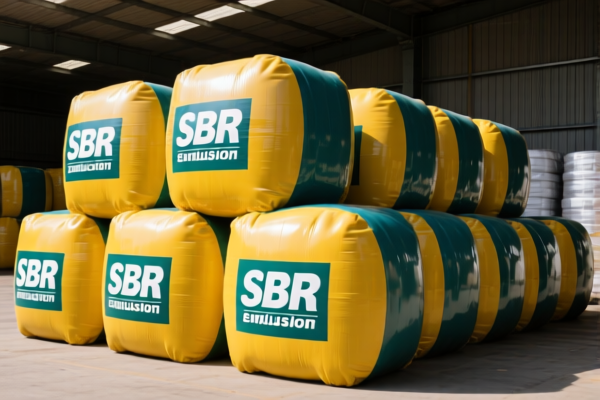
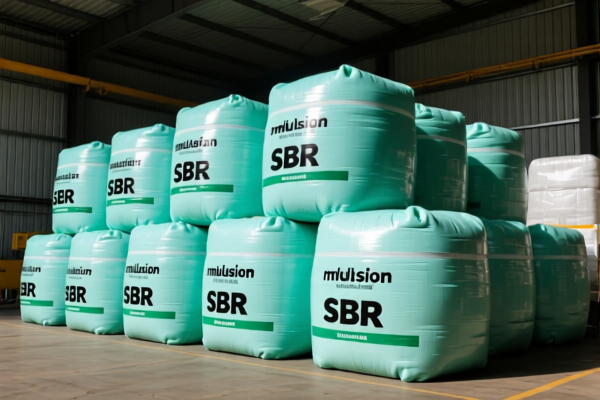
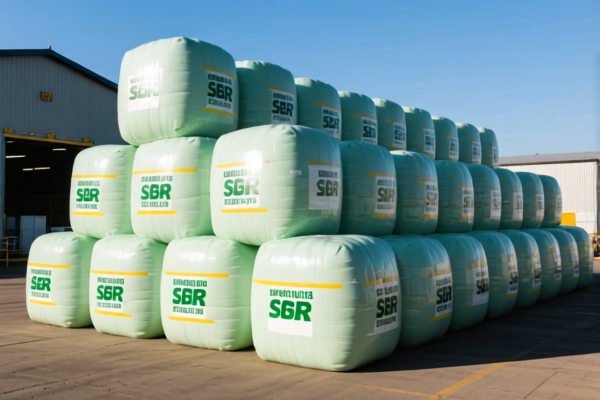

AI Analysis
🧪 SBR Waterborne Dispersion (Styrene-Butadiene Rubber)
🌐 HS Code Reference & Customs Clearance Guide | 2026 Latest Tariff Analysis | Professional Clearance Strategy
📌 I. Product Definition & Classification: Do You Really Understand "SBR Waterborne Dispersion"?
SBR Waterborne Dispersion is a synthetic rubber latex, typically produced via emulsion polymerization. It is a critical raw material in the construction, tire manufacturing, and adhesives industries. In international trade, it is classified based on its material composition (Synthetic Rubber) and physical form (Emulsion/Latex).
⚠️ Key Distinction Point:
- If it is SBR (Styrene-Butadiene Rubber) in emulsion form → It falls under Chapter 40 (Rubber and Articles Thereof).
- It is NOT classified as a general plastic resin (Chapter 39), despite being a polymer, because rubber has its specific heading (40.02).
- It is NOT a finished product (like tires), but a raw material.
📦 II. HS Code Classification Details (2026 Latest Tariff Authority Comparison)
Based on the provided data, the most accurate classifications for SBR Waterborne Dispersion are listed below. Note that multiple codes may apply depending on the specific sub-type (e.g., tire-grade vs. construction-grade).
| HS Code | Product Description | Application Scenario | Key Matching Criteria |
|---|---|---|---|
4002.11.00.00 |
SBR Latex, for tire-grade or building materials | Tire manufacturing, asphalt modification, cement additives | Material: SBR (Styrene-Butadiene Rubber) Form: Emulsion/Latex |
3910.00.00.00 |
Synthetic Rubber, Primary Forms, Liquid/Polymer | Less Preferred but Possible | Material: Synthetic Rubber Polymer Form: Liquid/Emulsion ⚠️ Note: Often considered incorrect if 40.02 applies directly |
4002.91.00.00 |
Other Synthetic Rubber, Latex/Emulsion | General industrial use, non-tire SBR | Material: Synthetic Rubber Form: Emulsion (Latex) |
4002.19.00.15 |
Other SBR, Emulsion Polymerization | Specific SBR variants not covered by 4002.11 | Material: SBR Form: Emulsion Polymer Definition: Core definition of emulsion polymerization matches |
🔍 Critical Reminder:
- HS Code4002.11.00.00is the most precise match for standard SBR emulsion used in tires or construction. The summary explicitly states: "SBR latex for building or tire grade, form is emulsion, material is SBR, match successful."
- HS Code3910.00.00.00is a fallback for "Primary Forms of Polymers," but Chapter 40 is more specific for Rubber. Customs may challenge3910if4002is applicable.
- HS Code4002.91.00.00and4002.19.00.15are also valid depending on the exact SBR specification (e.g., styrene content, viscosity). All fall under Chapter 40.
💰 III. 2026 Latest Tariff Rate Breakdown (Including Surcharges, Policy Surcharges)
✅ Applicable Country: United States (US)
✅ Origin: China (CN)
✅ Effective Date: From November 10, 2025 (including subsequent imports)
🎯 1. HS Code 4002.11.00.00 —— SBR Latex, Tire/Building Grade
| Item | Content |
|---|---|
| Base Duty Rate | 0.0% (ad valorem) |
| USITC Section 301 Surcharge | +25.0% (From USITC Footnote for Chinese Goods) |
| IEEPA Section 122 Surcharge | +10.0% (For Chinese Products, effective from Nov 10, 2025) |
| Total Duty Rate | 35.0% |
| Tax Calculation | CIF Value × 35% |
| De Minimis Exemption Eligible? | ❌ NO (Deny de minimis) |
| Legal Basis Path | IEEPA:9903.01.25 → IEEPA:9903.01.24 → USITC:4002.11.00.00 → FOOTNOTE:9903.88.01 |
📌 Explanation:
- "USITC Surcharge 25%" comes from the "Section 301 Tariffs" under US Trade Law against China.
- "IEEPA Surcharge 10%" is an additional tariff under the International Emergency Economic Powers Act targeting Chinese goods.
- Total 35% is a high tariff rate. Pre-calculation is essential for cost control!
🎯 2. HS Code 4002.91.00.00 —— Other Synthetic Rubber Latex
| Item | Content |
|---|---|
| Base Duty Rate | 0.0% |
| USITC Surcharge | +25.0% |
| IEEPA Surcharge | +10.0% |
| Total Duty Rate | 35.0% |
| Tax Calculation | CIF × 35% |
| De Minimis Exemption Eligible? | ❌ NO |
| Legal Basis Path | IEEPA:9903.01.25 → IEEPA:9903.01.24 → USITC:4002.91.00.00 → FOOTNOTE:9903.88.01 |
📌 Note:
- Same rate as4002.11. The base duty is 0%, but the 35% surcharge is unavoidable for Chinese-origin SBR latex.
🎯 3. HS Code 3910.00.00.00 —— Synthetic Rubber (Primary Forms)
| Item | Content |
|---|---|
| Base Duty Rate | 3.0% |
| USITC Surcharge | +25.0% |
| IEEPA Surcharge | +10.0% |
| Total Duty Rate | 38.0% |
| Tax Calculation | CIF × 38% |
| De Minimis Exemption Eligible? | ❌ NO |
| Legal Basis Path | IEEPA:9903.01.25 → IEEPA:9903.01.24 → USITC:3910.00.00.00 → FOOTNOTE:9903.88.01 |
📌 Warning:
- If misclassified under Chapter 39 (Plastics), the base duty increases to 3%, making the total 38%.
- This is higher than the correct Chapter 40 classification (35%). Misclassification leads to higher costs.
🎯 4. HS Code 4002.19.00.15 —— Other SBR Emulsion
| Item | Content |
|---|---|
| Base Duty Rate | 0.0% |
| USITC Surcharge | +25.0% |
| IEEPA Surcharge | +10.0% |
| Total Duty Rate | 35.0% |
| Tax Calculation | CIF × 35% |
| De Minimis Exemption Eligible? | ❌ NO |
| Legal Basis Path | IEEPA:9903.01.25 → IEEPA:9903.01.24 → USITC:4002.19.00.15 → FOOTNOTE:9903.88.01 |
📌 Note:
- Matches the core definition of emulsion polymerization for SBR.
- Same 35% rate as4002.11.
🛠️ IV. Customs Clearance Practical Advice (Real-World Pitfall Guide)
✅ 1. Documentation Checklist (Missing Items Will Cause Delays)
| Document | Required | Explanation |
|---|---|---|
| ✅ Product Specification Sheet | ✔️ | Must detail: Styrene content, Butadiene content, Viscosity, pH, Solid Content. |
| ✅ Safety Data Sheet (SDS) | ✔️ | Critical for liquid/emulsion chemicals. Shows flammability, toxicity, handling. |
| ✅ Certificate of Analysis (COA) | ✔️ | Proves the product matches the declared HS Code parameters. |
| ✅ Commercial Invoice | ✔️ | Must clearly state: "Styrene-Butadiene Rubber (SBR) Latem, Emulsion Form, For Tire/Construction Use." Avoid vague terms like "Glue" or "Rubber Compound." |
| ✅ Packing List | ✔️ | Specify net/gross weight, volume, and container type (usually IBC tanks or drums for emulsion). |
| ✅ Bill of Lading | ✔️ | Ensure no contamination from other goods. |
✅ 2. Declaration Tips (Key Mnemonic)
🔥 “Emulsion SBR, Chapter 40, 35% Tax, No De Minimis!”
| Scenario | Correct Declaration | Wrong Practice |
|---|---|---|
| SBR Latex for Tires | 4002.11.00.00 |
Misdeclare as "Plastic Resin" → 3910 → 38% Tax |
| SBR Latex for Cement | 4002.11.00.00 |
Declare as "Adhesive" → Potential classification dispute |
| Bulk Liquid SBR | Use proper UN Number & Packaging | Undeclare hazard class → Safety inspection hold |
| Small Sample (< $800) | Still Declared | Try de minimis → Rejected (SBR is not exempt) |
✅ 3. Special Cases Handling
| Scenario | Handling Advice |
|---|---|
| OEM/White Label | Provide contract + spec sheet. Do not use third-party brand names unless authorized. |
| Mixed with Other Polymers | If >50% SBR, still 4002. If mixed with acrylics, may shift to 3906 (Acrylic Polymers). Check composition! |
| Frozen Emulsion | Still 4002. No change in classification. |
| Additives Present | If additives change the fundamental nature, consult customs. Usually, minor stabilizers don't change classification. |
🌍 V. Global Market Comparison (2026 Latest)
| Country/Region | Recommended HS Code | Tariff | Certification | Note |
|---|---|---|---|---|
| 🇺🇸 USA | 4002.11.00.00 |
35% (China Origin) | SDS, MSDS | High tariff due to 301 + IEEPA |
| 🇨🇳 China | 4002.11.00.00 |
0% - 5% (Import) | None | Main consumer of SBR |
| 🇪🇺 EU | 4002.11.00.00 |
0% - 6% | REACH Registration | Requires REACH compliance |
| 🇬🇧 UK | 4002.11.00.00 |
0% - 6% | UK REACH | Post-Brexit rules apply |
| 🇯🇵 Japan | 4002.11.00.00 |
0% - 4% | JIS Standards | No major surcharges |
📌 Conclusion:
- USA has the highest barrier due to the 35% total tariff.
- EU/UK require REACH registration, which is costly and time-consuming but avoids tariffs.
- China is a major producer and consumer; export to US is expensive, but domestic trade is low-tariff.
📌 VI. Common Errors & Pitfall Guide (Blood Lesson)
❌ Error 1: Declaring SBR Latex as "Adhesive" or "Glue"
👉 Consequence: Customs may reclassify to Chapter 35 (Albuminous Substances) or 39 (Plastics), leading to audits and penalties.
❌ Error 2: Claiming De Minimis ($800) for Small Shipments
👉 Consequence: Rejected. SBR latex is subject to Section 301 and IEEPA, which override de minimis exemptions.
❌ Error 3: Misdeclaring Base Duty as 3% (Using 3910)
👉 Consequence: Overpaying 3% on CIF value. While small, it’s inefficient. Correct code 4002 has 0% base duty.
❌ Error 4: Ignoring SDS/MSDS Requirements
👉 Consequence: Detention at Port. Liquids require strict safety documentation. No SDS = No Entry.
✅ Correct Practice:
“Styrene-Butadiene Rubber (SBR) Latex, Emulsion Form, 50% Solid Content, For Tire Industry Use, UN 3082 (if applicable), Model XYZ”
🎯 VII. Conclusion: Professional Declaration, Save Time, Cut Costs!
🎯 Remember the Mnemonic:
🔹 “SBR Latex, Chapter 40, Base 0%, Surcharges 35%!”
🔹 “No De Minimis, SDS is Key, Declaring Correct Saves Money!”
📌 Pro Tip:
If your SBR latex is originating from Vietnam, Thailand, or Malaysia, you may apply for IEEPA Exemptions, reducing tariffs to 0%~5%.
Recommend applying for Advance Ruling (Provisional Classification) before shipment to avoid customs disputes.
📣 Take Action Now:
📞 Contact a licensed customs broker + Provide SDS + Apply for HS Code Advance Ruling
🚀 Let your SBR Latex clear customs smoothly, efficiently, and profitably!
✨ Professional Clearance Starts with Precise Classification!
💼 Every dollar saved is a dollar earned!
Customer Reviews
About HS Code Classification
The Harmonized System (HS) is an internationally standardized nomenclature developed by the World Customs Organization (WCO) to classify traded products. Over 200 countries use the HS system as the basis for customs tariffs, trade statistics, and import/export regulations.
Each HS code follows a hierarchical structure:
- Chapter (2 digits) — Broad category of goods (e.g., Chapter 84: Machinery and Mechanical Appliances)
- Heading (4 digits) — More specific grouping within the chapter
- Subheading (6 digits) — Internationally standardized breakdown, used by all WCO member countries
- National subdivisions (8-10 digits) — Country-specific extensions for further classification, such as US HTSUS 10-digit codes
Correct HS code classification is essential for smooth customs clearance, accurate duty payment, and compliance with trade regulations. Misclassification can lead to customs delays, overpayment of duties, or penalties.
When importing from CN to US, the applicable tariff rates may include:
- Most-Favored-Nation (MFN) rate — The standard duty rate applied to WTO members
- General rate — Applied to countries without trade agreements
- Trade remedy duties — Additional tariffs such as Section 301 (anti-dumping), Section 232 (national security), or countervailing duties
The information provided on this page is for reference purposes only. For official classification, please consult with your local customs authority or a licensed customs broker.