SSD Heat Sink
CN → US| HS Code | Tariff Rate | Origin | Destination | Doc |
|---|---|---|---|---|
| 7616995170 | 37.5% | CN | US | Official Doc |
| 7326908688 | 87.9% | CN | US | Official Doc |
| 8473301180 | 35.0% | CN | US | Official Doc |
| 8473309100 | 35.0% | CN | US | Official Doc |
Product Images
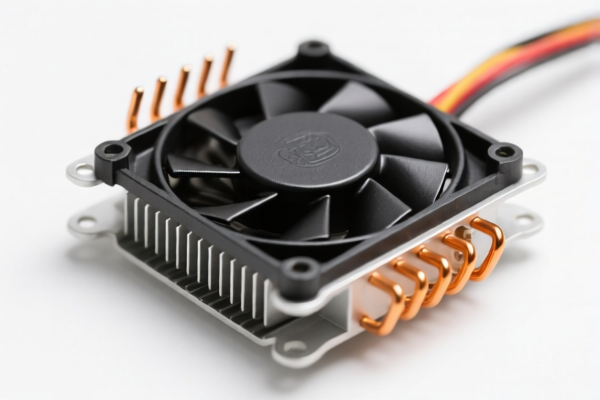
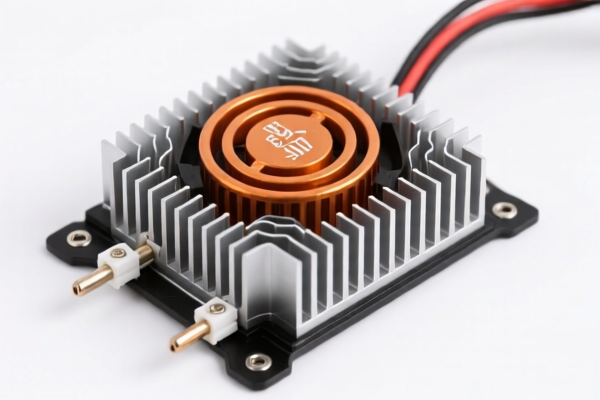
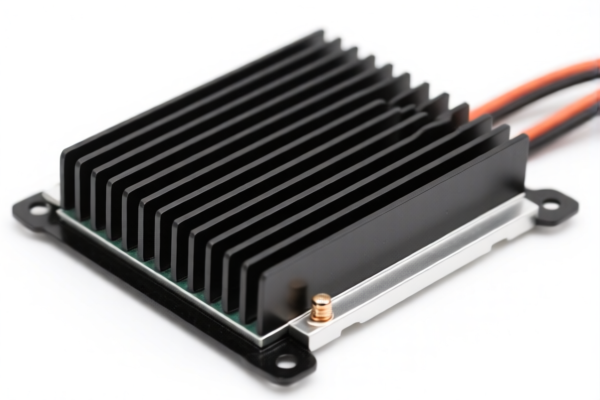
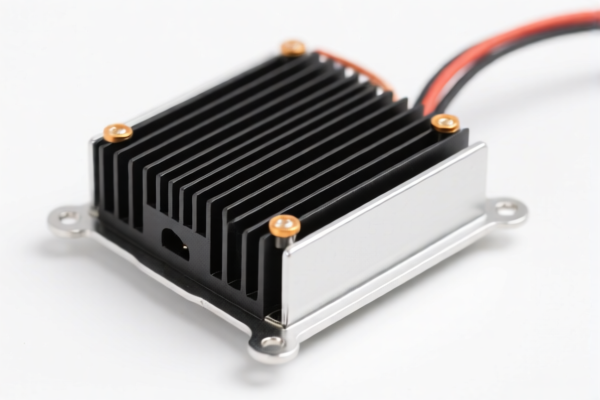
AI Analysis
🔥 SSD Heat Sink: The Silent Killer of Performance & Profits
🌐 HS Code Reference & Customs Clearance Guide | 2026 Latest Tariff Analysis | Professional-Level Clearance Strategy
📌 I. Product Definition & Classification: Do You Really Understand the "SSD Heat Sink"?
An SSD Heat Sink is a critical thermal management component for Solid State Drives (SSDs). In the high-speed era of NVMe and enterprise computing, SSDs generate significant heat, and without effective cooling, performance throttles or hardware failure occurs.
In international trade, these components are classified based on their material composition and functional integration. They are not merely "parts of a computer" but distinct industrial products depending on whether they are metallic structures or functional electronic sub-assemblies.
⚠️ Key Distinction Point:
- If it is a raw metal block/fin structure designed solely for heat dissipation without active electronic components (fans/pumps) → Classify by material (Aluminum/Steel).
- If it is an integrated circuit module or specifically designed as a generic computer part without material specificity → Classify under Chapter 84 (Machinery/Equipment Parts).
📦 II. HS Code Classification Details (2026 Latest Tariff Authority Comparison)
Based on the provided data, here are the four potential classifications for Metal SSD Heat Sinks, along with their specific tax implications for imports into the United States (US) from China (CN).
| HS Code | Product Description | Applicable Scenario | Material/Function | Total Tax Rate |
|---|---|---|---|---|
| 7616.99.51.70 | Other articles of aluminum | Aluminum-based SSD heat sinks | 🏗️ Aluminum Alloy | 37.5% |
| 7326.90.86.88 | Other articles of iron/steel | Steel-based SSD heat sinks | 🔩 Steel/Iron | 87.9% |
| 8473.30.11.80 | Parts and accessories for circuit boards | Generic electronic parts (if classified as PCB accessories) | ⚡ Electronic Component | 35.0% |
| 8473.30.91.00 | Parts for machines of heading 8471 | Parts for Automatic Data Processing (ADP) machines | 💻 ADP Machine Part | 35.0% |
🔍 Crucial Analysis:
- Material Matters Most: The difference between 37.5% (Aluminum) and 87.9% (Steel) is massive due to the specific "Steel, Aluminum, and Copper" additional tariff clause mentioned in the data.
- Function vs. Material: While 8473 codes suggest "Parts for ADP Machines," customs often scrutinize structural metal parts (like heatsinks) under their material heading (73xx/76xx) unless they are complex integrated assemblies.
- The "Steel Penalty": Note the 87.9% rate for Steel. This includes a 50% additional tariff on top of base + 301 + 122 tariffs, making steel heatsinks prohibitively expensive for US importation unless sourced from exempt countries.
💰 III. 2026 Latest Tariff Rate Breakdown (Including Surtaxes & Policy Add-ons)
✅ Applicable Country: United States (US)
✅ Country of Origin: China (CN)
✅ Effective Date: 2025/2026 Period (Post-2024 Tariff Adjustments)
🎯 1. 7616.99.51.70 — Aluminum Articles (Most Common)
| Item | Content |
|---|---|
| Base Rate | 2.5% (Ad Valorem) |
| Section 301 Surtax | +25.0% |
| Section 122 Tariff | +10.0% |
| Total Rate | 37.5% |
| Calculation Basis | CIF Value × 37.5% |
| De Minimis Exemption | ❌ Not Eligible (Deny De Minimis) |
| Legal Path | HTSUS:7616.99.51.70 → Section 301 List 4 → IEEPA:122 |
📌 Explanation:
- Aluminum products are subject to Section 301 (25%) and Section 122 (10%).
- The base rate is low (2.5%), but the surcharges drive the total to 37.5%.
- This is the recommended classification for most standard aluminum SSD heatsinks due to cost efficiency compared to steel.
🎯 2. 7326.90.86.88 — Steel/Iron Articles (High Risk)
| Item | Content |
|---|---|
| Base Rate | 2.9% (Ad Valorem) |
| Section 301 Surtax | +25.0% |
| Section 122 Tariff | +10.0% |
| Steel/Al/Cu Surtax | +50.0% |
| Total Rate | 87.9% |
| Calculation Basis | CIF Value × 87.9% |
| De Minimis Exemption | ❌ Not Eligible |
| Legal Path | HTSUS:7326.90.86.88 → Section 232 (Steel) + Section 301 + 122 |
📌 Warning:
- The 50% additional tariff is triggered by the specific "Steel, Aluminum, and Copper" provision in the provided data.
- Avoid this classification if possible. The tax burden is nearly double that of aluminum.
- Only use this if the product is strictly steel and cannot be substituted by aluminum or another classification.
🎯 3. & 4. 8473.30.11.80 / 8473.30.91.00 — ADP Machine Parts
| Item | Content |
|---|---|
| Base Rate | 0.0% (Ad Valorem) |
| Section 301 Surtax | +25.0% |
| Section 122 Tariff | +10.0% |
| Total Rate | 35.0% |
| Calculation Basis | CIF Value × 35.0% |
| De Minimis Exemption | ❌ Not Eligible |
| Legal Path | HTSUS:8473.30 → Section 301 → IEEPA:122 |
📌 Explanation:
- If the heat sink is considered a functional part of an ADP machine (like a CPU/SSD assembly) rather than a raw material article, the base rate drops to 0%.
- Total tax is 35.0%, which is slightly lower than aluminum (37.5%) but significantly lower than steel (87.9%).
- Customs Risk: CBP may reclassify this as a steel/aluminum article (Chapter 73/76) if it lacks electronic integration. Use this only if you have strong justification (e.g., sold as a "module" or "kit").
🛠️ IV. Customs Clearance Practical Advice (Battle-Tested Pitfall Guide)
✅ 1. Documentation Checklist (Mandatory)
| Document | Must Provide | Description |
|---|---|---|
| ✅ Product Specification Sheet | ✔️ | Material (Aluminum vs. Steel), Dimensions, Weight, Heat Dissipation Capacity (Watts). |
| ✅ Material Declaration | ✔️ | Explicitly state alloy composition (e.g., "6063 Aluminum Alloy"). Critical for avoiding Steel tariffs. |
| ✅ HS Code Justification Letter | ✔️ | Explain why it is a "part of ADP" vs. "metal article." Include function and end-use. |
| ✅ Commercial Invoice | ✔️ | Must match HS Code description exactly. Do not use generic terms like "Metal Part." |
| ✅ Packing List | ✔️ | Itemize heatsinks separately from SSDs if shipped separately. |
✅ 2. Classification Strategy (Key Mantra)
🔥 “Material First, Function Second, Avoid Steel, Justify ADP.”
| Scenario | Recommended HS Code | Tax Rate | Risk Level |
|---|---|---|---|
| Standard Aluminum Heatsink | 7616.99.51.70 |
37.5% | 🟢 Low |
| Steel Heatsink | 7326.90.86.88 |
87.9% | 🔴 Extreme |
| Integrated Heat Sink Module (with fan/pump) | 8473.30.11.80 / 91.00 |
35.0% | 🟡 Medium (Requires Proof) |
| Raw Aluminum Extrusion (No specific shape) | 7610.90 / 7616.99 |
37.5%+ | 🟢 Low |
💡 Pro Tip:
- If your product is aluminum, stick to 7616.99.51.70. It is safe and widely accepted.
- If you attempt 8473, be prepared for CBP queries. You must prove it is an "essential part" of a computer system. A standalone heatsink might be viewed as a "metal article."
✅ 3. Special Case Handling
| Situation | Handling Advice |
|---|---|
| OEM Custom Shapes | Provide CAD drawings to prove it is a specialized part, not a generic metal article. |
| Mixed Materials | If aluminum fins are glued to a steel base, CBP may classify by dominant material or the material that defines the essential character. Avoid mixed materials to prevent disputes. |
| Shipped with SSDs | If shipped as a "Kit" (SSD + Heat Sink), the entire kit may be classified under the SSD code (usually 8471.80.01.00, 0% base + 25% surtax = 25%). This is the optimal strategy! |
| Third-Party Logistics | Ensure the 3PL warehouse does not mislabel items as "Metal Scrap" or "General Hardware," which triggers higher duties. |
🌍 V. Global Market Customs Comparison (2026)
| Country/Region | Recommended HS Code | Est. Duty (China Origin) | Key Requirements |
|---|---|---|---|
| 🇺🇸 USA | 7616.99.51.70 |
37.5% (Al) / 87.9% (Steel) | Section 301 + 122 Tariffs. No De Minimis. |
| 🇨🇳 China | 7616.99.90.00 |
2.5% - 5% | Standard Import Duty. |
| 🇪🇺 EU | 7616.99.90 |
2.5% + VAT | CE Marking, REACH Compliance. No Section 301. |
| 🇯🇵 Japan | 7616.99.90 |
3.0% - 5.0% | PSE Certification (if active). |
📌 Conclusion:
- USA is the most challenging market due to layered surtaxes.
- Steel heatsinks are financially unviable for US import from China. Switch to aluminum.
- Bundling with SSDs is the best cost-saving strategy for the US market.
📌 VI. Common Mistakes & Pitfall Guide (Blood & Tears Lessons)
❌ Mistake 1: Declaring an Aluminum Heatsink as 7616.99.90.00 (General Aluminum) without the correct sub-heading.
👉 Result: Misclassification, delays, potential penalty. Use 7616.99.51.70 for specific articles.
❌ Mistake 2: Declaring a Steel Heatsink as 8473.30 (ADP Part) to avoid 87.9% tax.
👉 Result: CBP will reclassify it as 7326.90.86.88 + 50% surtax + penalties. Do not lie about material.
❌ Mistake 3: Shipping Aluminum and Steel in the same container without proper segregation.
👉 Result: If commingled, CBP may apply the higher tariff (87.9%) to the entire shipment if documentation is unclear.
❌ Mistake 4: Ignoring Section 122 Tariff (10%).
👉 Result: Underpayment. Even with 0% base, the 10% surtax applies to most goods.
✅ Correct Approach:
“Aluminum Alloy SSD Heat Sink, Passive Cooling, Model X, For NVMe 2280 SSDs, Made in China, Harmonized Tariff Code 7616.99.51.70.”
🎯 VII. Conclusion: Precision Classification Saves Money!
🎯 Remember the Mantra:
🔹 “Steel is Death, Aluminum is Life, ADP is the Hope!”
🔹 “Don’t split the SSD; Ship the Kit! 25% vs 37.5%!”
🔹 “Tax Rate = 35% - 88%, One Letter Changes Everything!”
📌 Pro Tip:
- If you are importing SSD + Heatsink as a bundle, classify the entire bundle under the SSD code (8471.80.01.00). The base rate is 0%, plus 25% Section 301 = 25% Total.
- 25% < 37.5% (Al) < 87.9% (Steel).
- Bundling is the ultimate cost-saving strategy.
📣 Immediate Action:
📞 Verify Material Composition (Al vs. Steel).
📦 Consider Bundling with SSDs for lower duty.
📄 Apply for Advance Ruling if unsure about8473vs7616classification.
✨ Professional Clearance Starts with Accurate Classification!
💼 Your Bottom Line Depends on These Decimal Points!
Customer Reviews
About HS Code Classification
The Harmonized System (HS) is an internationally standardized nomenclature developed by the World Customs Organization (WCO) to classify traded products. Over 200 countries use the HS system as the basis for customs tariffs, trade statistics, and import/export regulations.
Each HS code follows a hierarchical structure:
- Chapter (2 digits) — Broad category of goods (e.g., Chapter 84: Machinery and Mechanical Appliances)
- Heading (4 digits) — More specific grouping within the chapter
- Subheading (6 digits) — Internationally standardized breakdown, used by all WCO member countries
- National subdivisions (8-10 digits) — Country-specific extensions for further classification, such as US HTSUS 10-digit codes
Correct HS code classification is essential for smooth customs clearance, accurate duty payment, and compliance with trade regulations. Misclassification can lead to customs delays, overpayment of duties, or penalties.
When importing from CN to US, the applicable tariff rates may include:
- Most-Favored-Nation (MFN) rate — The standard duty rate applied to WTO members
- General rate — Applied to countries without trade agreements
- Trade remedy duties — Additional tariffs such as Section 301 (anti-dumping), Section 232 (national security), or countervailing duties
The information provided on this page is for reference purposes only. For official classification, please consult with your local customs authority or a licensed customs broker.