SUV Rubber Radial Tires
CN → US| HS Code | Tariff Rate | Origin | Destination | Doc |
|---|---|---|---|---|
| 4012194000 | 39.0% | CN | US | Official Doc |
| 4016996010 | 37.5% | CN | US | Official Doc |
| 4012909000 | 37.7% | CN | US | Official Doc |
Product Images
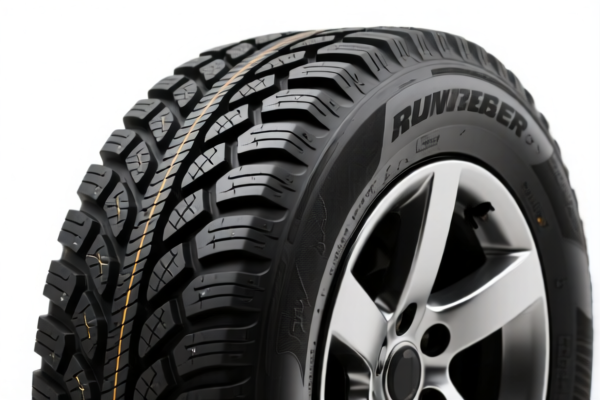
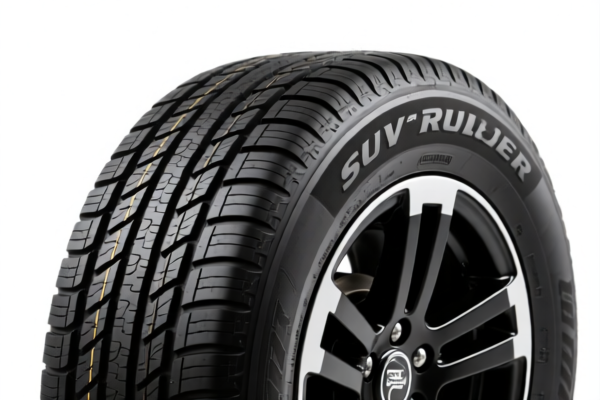
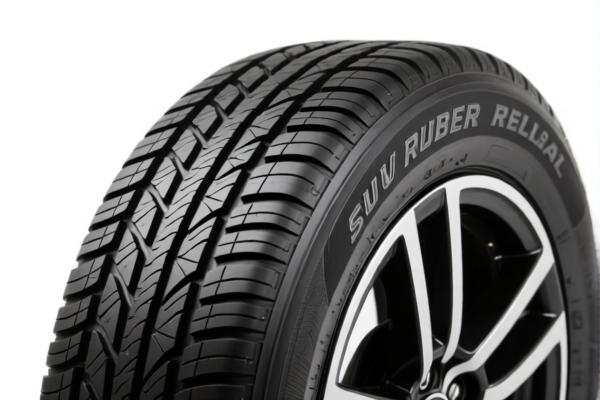
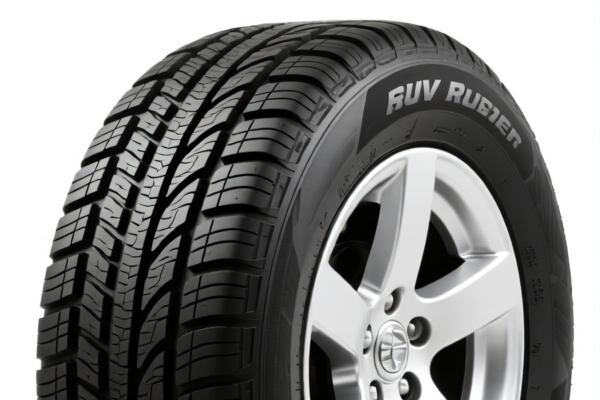
AI Analysis
🚙 SUV Rubber Radial Tires: HS Code Classification & US Customs Clearance Guide (2026)
🌐 HS Code Reference & Customs Clearance Strategy | 2026 Tariff Analysis | Professional Transit Guide
📌 I. Product Definition & Classification: Do You Truly Understand "Radial Tires"?
SUV Radial Tires are critical automotive components designed for Sports Utility Vehicles. In international trade, classification depends heavily on the construction type ("Radial" vs. "Bias") and the state of the rubber ("Retreaded/Regenerated" vs. "New").
Key Distinction: * "Radial" (子午线/径向): Refers to the internal ply orientation. This is a crucial keyword for HS Code grouping (Chapter 40, Heading 40.12). * "Regenerated Rubber/Retreaded" (再生橡胶/翻新): If the tire is made from recycled/regenerated rubber or is a retread, it often falls under specific subheadings related to "Retreaded" or "Used" tires, which attract higher scrutiny and specific tax rates.
⚠️ Critical Classification Point:
- If the product is a New Radial Tire made from regenerated rubber, it may still fall under 4012.19 (Other pneumatic tires, new) depending on specific national interpretations, but often triggers the "Retreaded/Regenerated" logic in duty calculations.
- If it is a Retreaded Tire (recovered from old carcasses), it falls strictly under 4012.11 or 4012.19 with specific "Retreaded" tags.
- Note: The provided data suggests classifications focusing on "Regenerated Rubber" materials aligning with "Retreaded" or "Specific Rubber Goods" categories.
📦 II. HS Code Classification Details (Based on Provided Data)
The following HS Codes are derived strictly from the provided data JSON, which maps "SUV Rubber Radial Tires" (specifically noting "Regenerated Rubber") to three potential classifications.
| HS Code | Product Description | Matching Logic Summary | Total Tax Rate |
|---|---|---|---|
| 4012.19.40.00 | Other Pneumatic Tires, New (Regenerated/Retreaded Focus) | Match Basis: "Radial" matches "Radial Tires"; "Regenerated Rubber" matches "Rubber Retreaded". Material and form fully comply. | 39.0% |
| 4016.99.60.10 | Other Articles of Vulcanized Rubber Other Than Hard Rubber | Match Basis: Material is "Regenerated Rubber" (fits vulcanized rubber category 4016.99); Form is "Tire", a vulcanized rubber product; inferred use as auto mechanical parts. | 37.5% |
| 4012.90.90.00 | Other Pneumatic Tires, Other (Retreaded/Used) | Match Success: Material "Regenerated Rubber", Form "Tire". Fits "Rubber-made" and "Tread/Bead" related categories; specific subtype under this subdivision. | 37.7% |
🔍 Key Insight:
- 4012.19.40.00 is the most direct match for "Radial Tires" made from/associated with regenerated rubber, carrying the highest total tax (39.0%).
- 4016.99.60.10 represents a riskier classification (Chapter 40.16 is "Other Rubber Goods"), potentially viewed as a "part" or "accessory" rather than a finished tire, but still carries high tariffs due to US-China trade policies.
- 4012.90.90.00 is a fallback for "Other" pneumatic tires, often used for retreaded tires that don't fit the "New" category perfectly.
💰 III. 2026 Latest Tariff Rate Breakdown (Including Surcharges)
✅ Applicable Country: United States (US)
✅ Origin: China (CN)
✅ Effective Date: Post-2025 policies (Section 301 & IEEPA)
🎯 1. 4012.19.40.00 —— Other Pneumatic Tires, New (Regenerated/Retreaded)
| Item | Detail |
|---|---|
| Base Duty Rate | 4.0% (Standard MFN Rate) |
| Section 301 Surcharge | +25.0% (US Trade Enhancement Act) |
| IEEPA Surcharge | +10.0% (China-specific Additional Tariff) |
| Total Duty Rate | 39.0% |
| Calculation Base | CIF Value (Cost + Insurance + Freight) × 39.0% |
| De Minimis Exemption | ❌ NOT APPLICABLE (Deny de minimis for Chinese tires) |
| Legal Reference Path | USITC:4012.19.40.00 → FOOTNOTE:301 → IEEPA:9903.01.25 |
📌 Explanation:
- The 4.0% is the base tariff for pneumatic tires.
- The 25% is the Section 301 tariff, which applies to a vast majority of Chinese rubber products.
- The 10% is an additional IEEPA tariff specific to certain Chinese goods.
- Total 39% is extremely high. This classification is likely chosen because the input mentions "Regenerated Rubber" (再生橡胶), which often pushes products into higher-duty "Retreaded" or special "Rubber Goods" buckets.
🎯 2. 4016.99.60.10 —— Other Vulcanized Rubber Articles (Non-Tire Specific)
| Item | Detail |
|---|---|
| Base Duty Rate | 2.5% |
| Section 301 Surcharge | +25.0% |
| IEEPA Surcharge | +10.0% |
| Total Duty Rate | 37.5% |
| Calculation Base | CIF Value × 37.5% |
| De Minimis Exemption | ❌ NOT APPLICABLE |
| Legal Reference Path | USITC:4016.99.60.10 → FOOTNOTE:301 → IEEPA:9903.01.25 |
📌 Note:
- This code is for "Other Rubber Goods." Classifying a tire here is high-risk for customs audits. It implies the item is not a standard "pneumatic tire" but a "rubber article."
- While the rate is slightly lower (37.5% vs 39.0%), the risk of classification error penalties is significant.
🎯 3. 4012.90.90.00 —— Other Pneumatic Tires (Retreaded/Used)
| Item | Detail |
|---|---|
| Base Duty Rate | 2.7% |
| Section 301 Surcharge | +25.0% |
| IEEPA Surcharge | +10.0% |
| Total Duty Rate | 37.7% |
| Calculation Base | CIF Value × 37.7% |
| De Minimis Exemption | ❌ NOT APPLICABLE |
| Legal Reference Path | USITC:4012.90.90.00 → FOOTNOTE:301 → IEEPA:9903.01.25 |
📌 Note:
- This code is typically for retreaded tires. If your product is new but made with regenerated rubber, using this code might be contested if it doesn't meet the "retread" definition (recovering an old carcass).
- However, if the "Regenerated Rubber" implies a recycled process similar to retreading in customs eyes, this code applies.
🛠️ IV. Customs Clearance Practical Advice (Avoid Pitfalls)
✅ 1. Required Documentation Checklist
| Document | Mandatory | Description |
|---|---|---|
| ✅ Product Specification Sheet | ✔️ | Must specify: "Radial Construction," "Tire Size (e.g., 225/65R17)," "Type: Regenerated Rubber/Retreaded." |
| ✅ Material Declaration | ✔️ | Explicitly state: "100% Regenerated Rubber" or "Recycled Rubber Compound." Do NOT simply say "Rubber." |
| ✅ HS Code Binding Ruling | ✔️ | Highly recommended. Request a pre-ruling from CBP to lock in 4012.19.40.00 vs 4012.90.90.00. |
| ✅ Commercial Invoice | ✔️ | Must match packing list and bill of lading. Description: "SUV Radial Tire, Regenerated Rubber." |
| ✅ Packing List | ✔️ | Detail number of tires per pallet, weight, dimensions. |
| ✅ Certificate of Origin | ✔️ | Proves Chinese origin, triggering Section 301 and IEEPA tariffs. |
✅ 2. Declaration Strategy
🔥 "Be Precise: Specify 'Regenerated' and 'Radial' to Avoid Re-Classification!"
| Scenario | Correct Declaration | Incorrect Declaration | Risk |
|---|---|---|---|
| New Tire, Regenerated Material | 4012.19.40.00 |
4012.11.00.00 (Bias Tire) |
High: Misclassification. Bias tires are different. |
| Retreaded Tire | 4012.90.90.00 |
4012.19.40.00 (New) |
Medium: If not a true retread, customs may penalize. |
| Rubber Part (Not Tire) | 4016.99.60.10 |
4012.19.40.00 |
High: If it's a full tire, this is wrong. If it's a tread block, this is correct. |
✅ 3. Special Handling for "Regenerated Rubber"
| Issue | Solution |
|---|---|
| Ambiguity in "Regenerated" | Provide lab reports showing the rubber is recycled/regenerated. This confirms the material composition. |
| Customs Scrutiny on Retreads | If using 4012.90.90.00, ensure you can prove the tire is a retread (if applicable). If it's new but made of recycled rubber, 4012.19.40.00 is safer. |
| Tariff Engineering | Can you adjust the product to be "100% New Virgin Rubber"? If so, the tariff rate might still be high (39%) due to Section 301, but the classification might shift to a standard new tire code (e.g., 4012.11.00.00 or 4012.13.00.00), which may have different base rates. Check current USITC data for new tire base rates. |
🌍 V. Global Market Comparison (2026)
| Country | Recommended HS Code | Est. Total Tax (China Origin) | Key Requirement |
|---|---|---|---|
| 🇺🇸 USA | 4012.19.40.00 |
39.0% | Section 301 + IEEPA Apply |
| 🇨🇳 China | 4012.19.40.00 |
Low/Variable | Check import tax rebates for recycled materials |
| 🇪🇺 EU | 4012.19.40 |
~5-10% | No Section 301. Check REACH compliance for recycled rubber. |
| 🇯🇵 Japan | 4012.19.40 |
~5-7% | No Section 301. JIS Certification required. |
📌 Conclusion:
- The USA is the most expensive market for Chinese-made SUV Radial Tires, especially those made from regenerated rubber, due to the 39% total duty.
- EU and Japan do not apply Section 301 or IEEPA tariffs, making them more favorable for cost optimization if supply chain allows.
📌 VI. Common Errors & Pitfalls
❌ Error 1: Misidentifying "Radial" as "Bias"
👉 Consequence: Wrong HS Code (4012.11 vs 4012.19/4012.90). Potential penalty and duty miscalculation.
👉 Fix: Always specify "Radial Ply" in documentation.
❌ Error 2: Hiding "Regenerated Rubber" Origin
👉 Consequence: If customs discovers the material is recycled, they may reclassify to 4012.90.90.00 (if it looks like a retread) or penalize for misdeclaration.
👉 Fix: Transparently declare material composition.
❌ Error 3: Assuming De Minimis Applies
👉 Consequence: Trying to ship small batches under $800 to avoid duties.
👉 Reality: Tires are EXCLUDED from de minimis for China-origin goods. All shipments are subject to full duty.
👉 Fix: Budget for 39% duty from day one.
🎯 VII. Conclusion: Strategic Clearance Advice
🎯 Key Takeaway:
"Regenerated Rubber Radial Tires to the US Face a 39% Total Duty. Plan Ahead!"
- Pre-Order Risk Assessment: Calculate the 39% duty into your landed cost. If the margin is thin, consider sourcing from non-China countries (e.g., Vietnam, Thailand) to avoid Section 301/IEEPA tariffs.
- Precise Classification: Use 4012.19.40.00 if the product is new but made of regenerated rubber. Use 4012.90.90.00 only if it is a true retreaded tire. Do not guess.
- Documentation is King: Ensure your invoice, packing list, and material specs are perfectly aligned. Discrepancies will lead to delays and audits.
📣 Immediate Action:
📞 Consult a Licensed Customs Broker:
Provide the sample and material SDS (Safety Data Sheet).
📝 Apply for a CBP Pre-Ruling:
Lock in the HS Code before shipment.
💡 Explore Tariff Engineering:
Can you modify the product to qualify for a lower base rate?
✨ Precision in Classification = Profit in Clearance!
💼 Every percentage point of duty impacts your bottom line. Don't leave it to chance.
Customer Reviews
About HS Code Classification
The Harmonized System (HS) is an internationally standardized nomenclature developed by the World Customs Organization (WCO) to classify traded products. Over 200 countries use the HS system as the basis for customs tariffs, trade statistics, and import/export regulations.
Each HS code follows a hierarchical structure:
- Chapter (2 digits) — Broad category of goods (e.g., Chapter 84: Machinery and Mechanical Appliances)
- Heading (4 digits) — More specific grouping within the chapter
- Subheading (6 digits) — Internationally standardized breakdown, used by all WCO member countries
- National subdivisions (8-10 digits) — Country-specific extensions for further classification, such as US HTSUS 10-digit codes
Correct HS code classification is essential for smooth customs clearance, accurate duty payment, and compliance with trade regulations. Misclassification can lead to customs delays, overpayment of duties, or penalties.
When importing from CN to US, the applicable tariff rates may include:
- Most-Favored-Nation (MFN) rate — The standard duty rate applied to WTO members
- General rate — Applied to countries without trade agreements
- Trade remedy duties — Additional tariffs such as Section 301 (anti-dumping), Section 232 (national security), or countervailing duties
The information provided on this page is for reference purposes only. For official classification, please consult with your local customs authority or a licensed customs broker.