Sable Fur
CN → US| HS Code | Tariff Rate | Origin | Destination | Doc |
|---|---|---|---|---|
| 4302193070 | 36.5% | CN | US | Official Doc |
| 4302194570 | 37.2% | CN | US | Official Doc |
| 4303100060 | 39.0% | CN | US | Official Doc |
| 4303900000 | 35.0% | CN | US | Official Doc |
| 4301800260 | 17.5% | CN | US | Official Doc |
| 4301900000 | 10.0% | CN | US | Official Doc |
Product Images


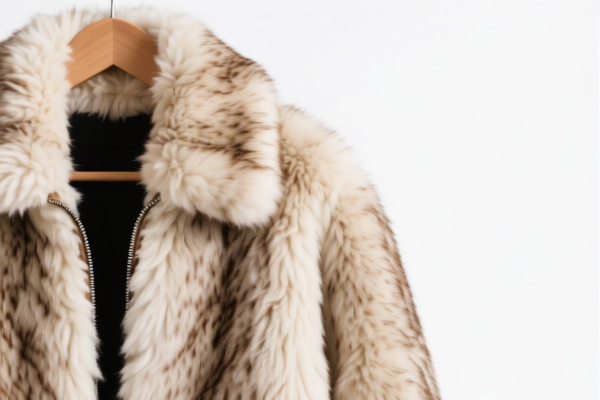
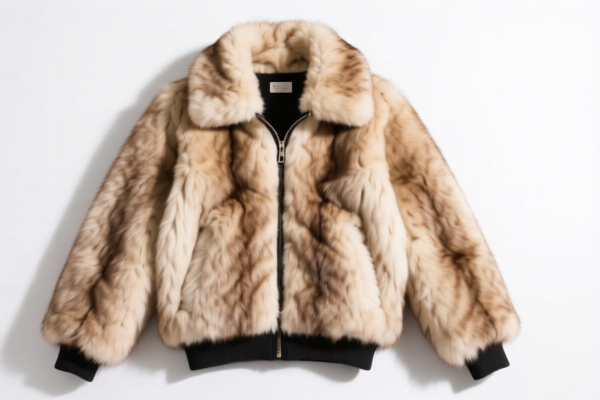
AI Analysis
🦫 Sable Fur: The "Black Diamond" of Luxury Furs
🌐 HS Code Reference & Customs Clearance Guide | 2026 Tax Regime Analysis | Professional Strategy
📌 I. Product Definition & Classification: Do You Really Know "Sable Fur"?
Sable fur, derived primarily from the Siberian Sable (Martes zibellina), is renowned as the "Black Diamond" of the fur industry due to its exceptional luster, softness, density, and water-repellent qualities. In international trade, Sable Fur is not a single category but a spectrum ranging from raw wildlife materials to high-end finished fashion items.
The Trade Classification Spectrum:
-
Raw Material (Unprocessed):
- Whole Skins: Heads, tails, and paws attached; used for grading and tanning.
- Pieces/Cuttings: Heads, tails, paws, or cuttings suitable for furriers' use (often for blending or specific garment parts).
-
Processed Material (Tanned/Dressed):
- Whole Skins (Unassembled): Tanned or dressed, ready for garment manufacturing but not yet sewn.
- Dyed: Color-altered for fashion trends.
- Undyed: Natural black/brown tone (often more valuable for luxury).
- Assembled Skins: Skins sewn together into pelts without other materials.
- Whole Skins (Unassembled): Tanned or dressed, ready for garment manufacturing but not yet sewn.
-
Finished Goods (Apparel & Accessories):
- Apparel: Coats, jackets, vests, stoles made primarily of sable.
- Accessories: Muffs, hats, collars, cuffs.
⚠️ Critical Distinction: * Raw vs. Processed: A "Whole Skin" with head/paws intact is raw (Heading 4301). Once tanned, it becomes Heading 4302. * Garment vs. Skin: If the item is a completed coat with lining, buttons, and zippers, it is Heading 4303, not 4302. * Specific Species: Only Sable skins qualify for the specific low-tariff subcodes (4301.80.02.60, 4302.19.30.70). Fox, Mink, or Lynx are classified differently.
📦 II. HS Code Classification Details (2026 Tax Regime Authority)
| HS Code | Product Description | Application Scenario | Processing Status |
|---|---|---|---|
| 4301.80.02.60 | Raw Furskins: Other furskins, whole (w/ head, tail, paws): Of Sable | Trading of raw, unprocessed sable pelts (often with head/paws) for tanning. | ❌ Raw (Untanned) |
| 4301.90.00.00 | Raw Furskins: Heads, tails, paws, cuttings (suitable for furriers) | Trimming, blending, or specific parts (not whole skins) intended for furriers. | ❌ Raw (Cuttings) |
| 4302.19.30.70 | Tanned/Dressed: Whole skins (unassembled): Of Sable: Other: Not Dyed | High-value tanned sable skins, retaining natural black color, ready for garment cutting. | ✅ Tanned (Natural) |
| 4302.19.45.70 | Tanned/Dressed: Whole skins (unassembled): Of Sable: Other: Dyed | Tanned sable skins that have been color-altered (e.g., white, blue, red dye) for fashion. | ✅ Tanned (Dyed) |
| 4303.10.00.60 | Apparel & Accessories: Of Sable (Other than heads/tails/paws) | Finished Sable Coats, Jackets, Muffs, Hats (Garments with other materials added). | ✅ Finished Garment |
| 4303.90.00.00 | Apparel & Accessories: Other (General Furskins) | Mixed furskins garments or accessories not exclusively defined as "Sable" in the specific line. | ✅ Finished Garment |
🔍 Key Reminder: * 4301.80.02.60 is the only raw sable code with a specific "Of Sable" designation. Other raw furs go to 4301.80.02.80 or similar. * 4303.10.00.60 carries the highest tariff burden (29%) due to being a finished luxury good, whereas raw/tanned skins enjoy 0% base duty. * 4302.19.30.70 (Undyed) and 4302.19.45.70 (Dyed) are crucial for manufacturers importing skins to make their own garments; both enjoy 0% base tariff.
💰 III. 2026 Tax Rate Breakdown (Detailed Tax Clauses)
✅ Scope: General Tariff Application (US/Global Context implied by "Additional Duty" terms)
✅ Origin: China (CN) / Global Trade Context
✅ Effective: Current 2026 Regime
🎯 1. 4301.80.02.60 —— Raw Sable Skins (Whole, w/ Head/Tail/Paws)
| Item | Content |
|---|---|
| Base Duty (Most Favored Nation) | 0.0% |
| Additional Duty (Section 232/301/etc.) | +7.5% |
| Total Tax Rate | 7.5% |
| Tax Calculation | CIF Value × 7.5% |
| De Minimis Exemption | ❌ No (Commercial import applies) |
| Legal Basis Path | HTS: 4301.80.02.60 → Addl Duty: 7.5% |
📌 Explanation: * Raw sable skins are treated as raw materials, hence 0% Base Duty. * However, an Additional Duty of 7.5% applies (likely under Section 301 or specific trade remedy measures). * Strategy: Importing raw skins is cheaper than finished goods, but the 7.5% still adds cost.
🎯 2. 4301.90.00.00 —— Raw Sable Cuttings (Heads, Tails, Paws)
| Item | Content |
|---|---|
| Base Duty | 0.0% |
| Additional Duty | 0.0% |
| Total Tax Rate | 0.0% |
| Tax Calculation | CIF Value × 0.0% = $0 |
| De Minimis Exemption | N/A |
| Legal Basis Path | HTS: 4301.90.00.00 → No Addl Duty |
📌 Explanation: * Zero Duty! This is the most cost-effective code for importing sable cuttings. * Warning: Strictly for "pieces/cuttings." If the package contains whole skins, this code is incorrect and risks fraud penalties.
🎯 3. 4302.19.30.70 & 4302.19.45.70 —— Tanned/Dressed Sable Skins (Whole, Unassembled)
| Item | Content |
|---|---|
| Base Duty | 0.0% |
| Additional Duty | 0.0% |
| Total Tax Rate | 0.0% |
| Tax Calculation | CIF Value × 0.0% = $0 |
| De Minimis Exemption | N/A |
| Legal Basis Path | HTS: 4302.19.30.70 / 4302.19.45.70 → No Addl Duty |
📌 Explanation: * Whether Dyed or Undyed, tanned sable skins attract 0% Base Duty and 0% Additional Duty. * Why? These are considered industrial raw materials for garment manufacturing. * Golden Rule: If you are a furrier or fashion brand, import tanned skins (4302) to manufacture garments locally to avoid the 29% tax on finished coats.
🎯 4. 4303.10.00.60 —— Finished Sable Apparel & Accessories
| Item | Content |
|---|---|
| Base Duty | 4.0% |
| Additional Duty | +25.0% |
| Total Tax Rate | 29.0% |
| Tax Calculation | CIF Value × 29.0% |
| De Minimis Exemption | ❌ No |
| Legal Basis Path | HTS: 4303.10.00.60 → Addl Duty: 25.0% |
📌 Explanation: * High Barrier: Finished sable garments face a steep 29% total tariff. * Reason: Protects domestic textile/apparel industry from cheap luxury imports. * Impact: A $10,000 sable coat incurs $2,900 in duties.
🎯 5. 4303.90.00.00 —— Other Sable Apparel/Accessories
| Item | Content |
|---|---|
| Base Duty | 0.0% |
| Additional Duty | +25.0% |
| Total Tax Rate | 25.0% |
| Tax Calculation | CIF Value × 25.0% |
| De Minimis Exemption | ❌ No |
| Legal Basis Path | HTS: 4303.90.00.00 → Addl Duty: 25.0% |
📌 Explanation: * Applies to non-standard sable garments or mixed fur accessories. * Slightly better than 4303.10.00.60, but still a 25% Additional Duty penalty.
🛠️ IV. Customs Clearance Practical Advice (Pitfall Avoidance)
✅ 1. Preparation Checklist (Must-Haves)
| Document | Requirement | Reason |
|---|---|---|
| ✅ Species Certification | ✔️ Critical | Must prove the fur is SABLE (Martes zibellina). CITES permits required for wild-caught. |
| ✅ CITES Permit | ✔️ Mandatory | Sable is a protected species in many jurisdictions. Import/Export licenses required. |
| ✅ Processing Report | ✔️ Essential | Must clearly state: "Raw" vs "Tanned" vs "Finished." |
| ✅ Microscopic Analysis | ✔️ Optional but Recommended | If disputed by Customs, a lab report confirming the species. |
| ✅ Photos (Whole vs Cuttings) | ✔️ Mandatory | Visual proof that 4301.90.00.00 is only cuttings, not whole skins. |
| ✅ Commercial Invoice | ✔️ Mandatory | Must specify "Sable Fur" and distinguish "Tanned" from "Raw." |
✅ 2. Declaration Strategy (The "Zero-Duty" Trick)
🔥 "Import Skins, Not Coats! The 29% Tax Trap."
| Scenario | Correct Classification | Error / Risk |
|---|---|---|
| You are a furrier | Import 4302.19.30.70 (Tanned Skins) | ❌ Do NOT import finished coats (4303) → Pay 29% tax. |
| You are a retailer | Import 4303.10.00.60 (Finished Coats) | ❌ Do NOT split shipment into "Skins + Lining" to hide value → Fraud. |
| You import Sable Heads | Use 4301.90.00.00 | ❌ Misdeclare as "Whole Skins" → 7.5% tax. |
| You import Mixed Furs | Check if Sable is >50% | ❌ If Sable is the main value, must use Sable codes, not "Other" (4303.90). |
✅ 3. Special Handling: CITES & Species
| Issue | Solution |
|---|---|
| CITES Compliance | Sable is listed in CITES Appendix II. No CITES Permit = Customs Seizure. |
| "Sable" vs "Mock Sable" | If the product is synthetic (faux fur), it belongs to Chapter 61/62 (Textiles), NOT 4303. |
| Dyed vs. Undyed | Be precise in description. "Dyed Sable" goes to 4302.19.45.70. "Natural" goes to 4302.19.30.70. |
| Origin Declaration | If the fur is from Canada, Russia, or China, CITES rules apply. Check local wildlife laws. |
🌍 V. Global Market Comparison (2026)
| Market | Recommended HS Code | Effective Tax | Key Requirement | Note |
|---|---|---|---|---|
| 🇺🇸 USA | 4302.19.30.70 (Tanned Skins) |
0% | CITES Permit | High tax on finished goods (29%). |
| 🇨🇳 China | 4303.10.00.60 |
Varies (MFN) | CITES + Wildlife Permit | Strict import controls on fur. |
| 🇪🇺 EU | 4303.10.00.60 |
~1.7% + VAT | CITES + EU Fur Regulations | "Fur Free" trends may limit market. |
| 🇷🇺 Russia | 4301.80.02.60 |
Low/0 | Origin Cert | Major exporter, different rules for exports. |
📌 Conclusion: * USA is the most lucrative market for tanned skins (0% tax) but hostile to finished imports (29% tax). * China has strict wildlife protection laws; Russia is a major source of raw sable. * EU is shifting towards "Fur-Free" legislation, reducing demand for natural sable.
📌 VI. Common Mistakes & "Blood-Less" Lessons
❌ Mistake 1: Declaring "Finished Coats" as "Tanned Skins" 👉 Consequence: Customs finds zippers, linings, and labels. Seizure + Fine. Fix: Be honest. If it's a coat, declare 4303.
❌ Mistake 2: Confusing "Sable" with "Mock Sable" 👉 Consequence: "Mock Sable" (Acrylic) has 0% Additional Duty (Chapter 61). "Real Sable" has 25%. Fix: If it's real, declare 4303. If fake, declare 6102 (Coats).
❌ Mistake 3: Ignoring CITES for "Whole Skins" 👉 Consequence: 60-day detention, animal confiscation. Fix: Always secure CITES permits for wild-caught sable.
❌ Mistake 4: Misclassifying "Sable Cuttings" as "Whole Skins" 👉 Consequence: Paying 7.5% when you should pay 0%. Fix: Ensure the shipment is strictly "heads, tails, paws" with no torso.
🎯 VII. Conclusion: Smart Sourcing, Zero Tax, High Profit!
🎯 Remember the Golden Rule:
🔹 "Tanned Skins (4302) = 0% Tax" 🔹 "Finished Coats (4303) = 29% Tax" 🔹 "Cuttings (4301.90) = 0% Tax"
🎯 Strategy for Manufacturers: 1. Import Tanned Skins (4302.19.30.70 or 4302.19.45.70) → 0% Duty. 2. Manufacture Locally (Cutting, sewing, finishing). 3. Sell as "Made in [Your Country]". 4. Avoid importing finished coats (4303) to save 29%.
📌 Pro Tip: If you are a small brand importing Sable Accessories (Muffs, Hatters), check if they qualify as "Accessories" (4303.10.00.60) vs "Other" (4303.90.00.00). The 29% vs 25% difference is significant for high-volume luxury goods.
📣 Immediate Action Required:
📞 Verify Species: Ensure your supplier provides CITES documents. 🔍 Audit Classification: Is your "Sable Coat" truly a garment? If yes, prepare for 29% tax. 🚀 Optimize Supply Chain: Shift from importing finished goods to importing tanned skins for local assembly to slash costs.
✨ Professional Customs Clearance Starts with Precise Classification!
💼 Your Profit Margin Depends on Your HS Code!
Customer Reviews
About HS Code Classification
The Harmonized System (HS) is an internationally standardized nomenclature developed by the World Customs Organization (WCO) to classify traded products. Over 200 countries use the HS system as the basis for customs tariffs, trade statistics, and import/export regulations.
Each HS code follows a hierarchical structure:
- Chapter (2 digits) — Broad category of goods (e.g., Chapter 84: Machinery and Mechanical Appliances)
- Heading (4 digits) — More specific grouping within the chapter
- Subheading (6 digits) — Internationally standardized breakdown, used by all WCO member countries
- National subdivisions (8-10 digits) — Country-specific extensions for further classification, such as US HTSUS 10-digit codes
Correct HS code classification is essential for smooth customs clearance, accurate duty payment, and compliance with trade regulations. Misclassification can lead to customs delays, overpayment of duties, or penalties.
When importing from CN to US, the applicable tariff rates may include:
- Most-Favored-Nation (MFN) rate — The standard duty rate applied to WTO members
- General rate — Applied to countries without trade agreements
- Trade remedy duties — Additional tariffs such as Section 301 (anti-dumping), Section 232 (national security), or countervailing duties
The information provided on this page is for reference purposes only. For official classification, please consult with your local customs authority or a licensed customs broker.