Sad Light Therapy Lamp
CN → US| HS Code | Tariff Rate | Origin | Destination | Doc |
|---|---|---|---|---|
| 9405692000 | 40.7% | CN | US | Official Doc |
| 8539490040 | 37.4% | CN | US | Official Doc |
| 8539520091 | 12.0% | CN | US | Official Doc |
| 9405994090 | 91.0% | CN | US | Official Doc |
| 9018200040 | 35.0% | CN | US | Official Doc |
Product Images
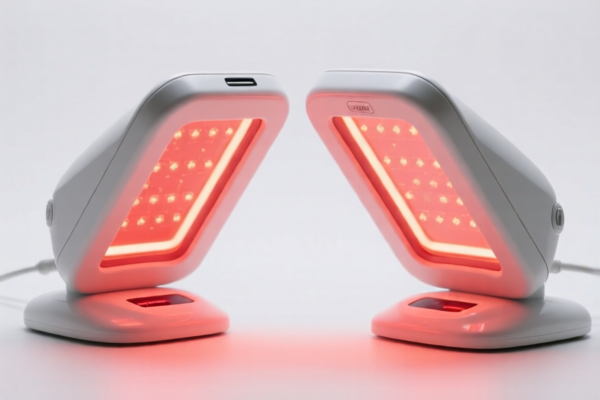
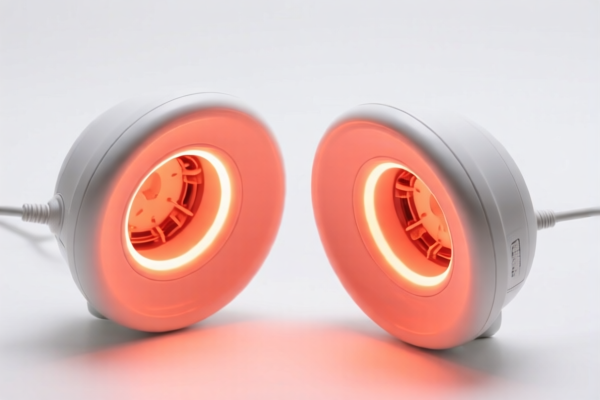
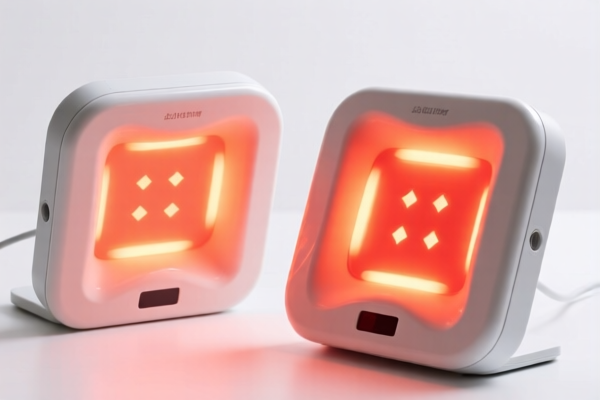
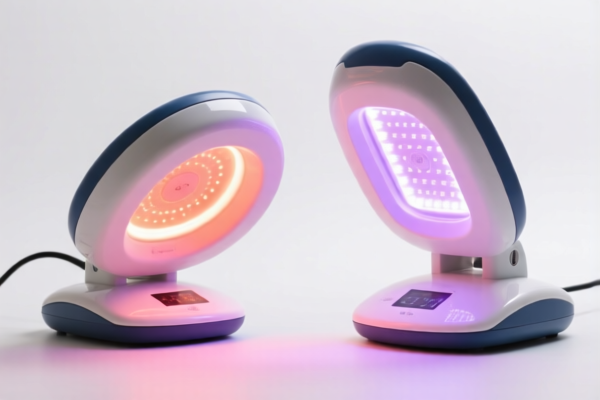
AI Analysis
🌞 SAD Light Therapy Lamp (Seasonal Affective Disorder Device)
🌐 HS Code Reference & Customs Clearance Guide | 2026 Latest Tariff Analysis | Professional-Level Strategy
📌 1. Product Definition: What Exactly Is a "SAD Light Therapy Lamp"?
A SAD light therapy lamp is a specialized medical or wellness device designed to mimic natural outdoor light. It is primarily used to treat Seasonal Affective Disorder (SAD) by exposing users to bright light (usually 10,000 lux) for a specific duration. It may also be marketed for skin therapy (vitiligo, psoriasis) or sleep regulation.
In international trade, the classification depends heavily on whether it is viewed as a general lighting fixture or a specialized medical/radiation device.
⚠️ Key Classification Divergence:
- If classified as a general lighting appliance (e.g., a desk lamp with special bulbs) → Chapter 94 (9405).
- If classified as a medical apparatus emitting ultraviolet/infrared rays → Chapter 90 (9018).
- If classified as a semiconductor light source (LED-based) → Chapter 85 (8539).
📦 2. HS Code Classification Details (Based on Provided Data)
Below are the five potential HS codes from your data, with detailed explanations for why each applies, along with the corresponding tax implications.
| HS Code | Product Description & Rationale | Total Tax Rate | Tax Breakdown |
|---|---|---|---|
| 9405.99.40.90 | General Lighting Appliance Rationale: The lamp is viewed as a standard "lamp or lighting fitting" under Chapter 94. It does not meet the strict definition of a medical ray-emitting device but rather a consumer lighting device for therapeutic ambiance. |
91.0% | - Base: 6.0% - Section 301: 25.0% - Section 232 (Steel/Aluminum): 50.0% Note: High tax due to metal components triggering Section 232. |
| 9018.20.00.40 | Medical UV/IR Apparatus Rationale: The device is inferred to be a therapeutic apparatus emitting ultraviolet or infrared rays for medical treatment (tending to health). It fits the definition of medical instruments in Chapter 90. |
35.0% | - Base: 0.0% - Section 301: 25.0% - Section 232: 10.0% |
| 9018.20.00.80 | Other Medical Radiation Devices Rationale: Similar to above, but classified under "Other" within the UV/IR medical device category. Core function is UV/IR therapy. |
35.0% | - Base: 0.0% - Section 301: 25.0% - Section 232: 10.0% |
| 9405.69.20.00 | LED Lighting Fitting (Metal Base) Rationale: Matches the use as a lighting device. Specifically assumes the lamp has a metal casing/body (base metal), triggering specific lighting subheadings. |
40.7% | - Base: 5.7% - Section 301: 25.0% - Section 232: 10.0% |
| 8539.49.00.40 | Ultraviolet/Electrodeless Lamp Rationale: Focuses on the bulb/light source itself. UV lamps used for therapeutic purposes fall under this specific semiconductor/light source category. |
37.4% | - Base: 2.4% - Section 301: 25.0% - Section 232: 10.0% |
| 8539.52.00.91 | UV/IR LED Lamp (Lowest Tax Option) Rationale: Classified as a "UV or IR lamp and LED lamp" using semiconductors. If the device relies primarily on LED technology for its specific wavelength therapy, this is often the most favorable classification. |
12.0% | - Base: 2.0% - Section 301: 0.0% - Section 232: 10.0% |
🔍 Critical Observation:
- 9405.99.40.90 is the most expensive (91.0%) due to the aggregation of multiple punitive tariffs (Base + 301 + 232 Steel/Aluminum).
- 8539.52.00.91 is the most economical (12.0%) because it benefits from a 0% Section 301 rate.
- 9018.20 variants sit in the middle (35.0%) but are technically safer for medical-grade claims.
💰 3. Detailed Tax Clause Analysis (2026 Outlook)
✅ Applicable Jurisdiction: USA (Importing from China)
✅ Effective Date: Current tariffs apply under Section 301 (China) and Section 232 (Steel/Aluminum).
🎯 Scenario A: The "Medical Device" Approach (HS 9018)
- Why choose this? If your product is FDA-registered, marketed as a medical treatment for SAD, and has a prescription or doctor recommendation context.
- Tax Structure:
- Base Duty: 0% (Most medical instruments have low base duties).
- Section 301 (China-specific): +25%.
- Section 232 (Steel/Aluminum): +10% (If the housing contains steel/aluminum parts).
- Total: 35%.
- Pros: Legally robust for medical claims.
- Cons: Requires FDA registration; higher than the LED option.
🎯 Scenario B: The "Consumer LED" Approach (HS 8539.52.00.91)
- Why choose this? If the product is sold as a wellness device, not a medical device, and uses LED arrays.
- Tax Structure:
- Base Duty: 2.0%.
- Section 301: 0% (Note: Some LED categories are exempt or have lower rates in this specific subheading).
- Section 232: +10% (Metal components).
- Total: 12.0%.
- Pros: Lowest tax burden.
- Cons: Cannot make medical claims (e.g., "Treats Depression") without risking reclassification to 9018 or FDA violation.
🎯 Scenario C: The "General Lamp" Approach (HS 9405)
- Why choose this? If marketed purely as a "Desk Lamp with Blue Light Filter" or "Sleep Aid Lamp."
- Tax Structure:
- Base Duty: 5.7% - 6.0%.
- Section 301: +25%.
- Section 232: +10% to +50% (Depending on exact metal content and classification ambiguity).
- Total: 40.7% - 91.0%.
- Pros: No FDA/Medical regulatory hurdles.
- Cons: Extremely high risk of Section 232 penalties, especially if the lamp has a metal stand or housing. The 91% rate is punitive and should be avoided.
🛠️ 4. Customs Clearance Practical Advice (Risk Mitigation)
✅ 1. Documentation Strategy
| Document | Requirement | Why It Matters |
|---|---|---|
| Product Description | Must be precise. Avoid "Medical" if using HS 8539. Use terms like "LED Light Therapy Device" or "Wellness Lamp." | Mislabeling can lead to FDA penalties or misclassification. |
| Technical Specs | Include wattage, lux level (e.g., 10,000 lux), bulb type (LED vs. Fluorescent), and dimensions. | Customs uses this to distinguish between 9405 (Lamp) and 8539 (Light Source). |
| FDA Status | If claiming medical benefits, provide FDA 510(k) number or OTC Monograph reference. | Required for HS 9018 classification. Without it, customs may default to 9405 (higher tax). |
| Material Declaration | Explicitly state the materials of the casing (e.g., "Plastic Housing" vs. "Steel Base"). | Critical for avoiding the 50% Section 232 steel tariff under HS 9405.99.40.90. |
✅ 2. Classification Strategy: How to Save Money
🔥 "Claim Wellness, Use LEDs, Avoid Steel!"
| Strategy | Action | Outcome |
|---|---|---|
| Avoid "Medical" Claims | Do not use words like "Cure," "Treat," or "Prescription" in marketing if you want to use HS 8539. | Allows use of HS 8539.52.00.91 (12% tax). |
| Material Substitution | Use Plastic or Aluminum-Free materials where possible, or clearly declare plastic housing. | Reduces risk of Section 232 Steel Tariff (up to 50%). |
| Technology Focus | Emphasize LED Technology over Fluorescent/Bulb. | Aligns with HS 8539 (Semiconductor/Lamp) rather than HS 9405 (Fixture). |
| Pre-Ruling Request | File an Advance Ruling with CBP using samples. | Locks in the 12% or 35% rate before shipment. Avoids surprise 91% assessments. |
✅ 3. Red Flags & Pitfalls
| Mistake | Consequence | Prevention |
|---|---|---|
| Using "Lamp" in Name + Steel Base | Customs assigns 9405.99.40.90 → 91% Tax. | Rename to "Light Therapy Device" + Use Plastic Housing. |
| Making Medical Claims without FDA | Product held at port, potential FDA Detention. | Ensure marketing matches the HS Code (Wellness vs. Medical). |
| Vague Description "Light Box" | CBP may assign highest reasonable duty. | Provide exact Lux output, LED count, and spectral wavelength (e.g., "460nm Blue Light"). |
🌍 5. Global Market Comparison (Quick Reference)
| Market | Recommended HS Code | Est. Duty | Key Requirement |
|---|---|---|---|
| 🇺🇸 USA | 8539.52.00.91 | 12.0% | Avoid Steel; LED-based. |
| 🇺🇸 USA | 9018.20.00.40 | 35.0% | FDA Registration required. |
| 🇺🇸 USA | 9405.99.40.90 | 91.0% | AVOID. High Steel Tariff. |
| 🇨🇳 China | 9405.41.00.00 | ~5-10% | Standard lighting import. |
| 🇪🇺 EU | 9405.42.00.00 | 0-4% | CE Marking (LVD/EMC). |
| 🇯🇵 Japan | 9405.42.00.00 | 0-8% | PSE Marking. |
📌 Conclusion for USA Imports:
The 12.0% tariff (HS 8539.52.00.91) is the optimal path IF the device is marketed as a wellness/LED product and avoids medical claims.
The 35.0% tariff (HS 9018) is appropriate IF you are an FDA-registered medical device manufacturer.
Avoid 9405.99.40.90 unless you have no other choice, as the 91% tax is prohibitive.
📌 6. Common Errors & Blood-Soaked Lessons
❌ Error 1: Calling it a "Medical Lamp" in the invoice but classifying it under 8539.
👉 Result: Customs rejects it for misalignment, forcing a reclassification to 9018 or causing delays.
✅ Fix: Ensure HS Code matches the intent and regulatory status.
❌ Error 2: Using a heavy metal stand (Steel) and declaring it as "Plastic."
👉 Result: Seizure for false declaration + 50% Section 232 penalty.
✅ Fix: Declare accurately. If metal, check if it qualifies for lower Section 232 rates under 9018/8539.
❌ Error 3: Ignoring the "Lux" specification.
👉 Result: Customs cannot distinguish between a regular desk lamp (9405) and a therapy lamp (8539/9018).
✅ Fix: Always include "10,000 Lux" or "Therapeutic Light Output" in technical specs.
🎯 7. Final Recommendation: Action Plan
-
Decide on Positioning:
- Wellness/Consumer: Go for HS 8539.52.00.91 (12%).
- Action: Use plastic housing, LED tech, marketing says "Relaxation/Sleep," no FDA claims.
- Medical/Therapeutic: Go for HS 9018.20.00.40 (35%).
- Action: Get FDA clearance, use technical medical language, justify 9018 classification.
- Wellness/Consumer: Go for HS 8539.52.00.91 (12%).
-
Optimize Physical Product:
- Replace steel bases with aluminum or plastic to mitigate Section 232 risks (though 8539/9018 have lower Section 232 rates, it's still good practice).
-
Pre-Arrival Preparation:
- Apply for an Advance Ruling from CBP using the 12% HS code if positioning as wellness.
- Prepare a Comparison Chart showing why it is NOT a 9405 lamp (e.g., "No decorative function, purely therapeutic spectrum").
📣 Immediate Action:
📞 Contact your freight forwarder to confirm the "LED vs. Medical" positioning.
📄 Update your Commercial Invoice to match the chosen HS Code (e.g., "LED Light Therapy Device, 10,000 Lux, Plastic Housing").
🚀 Optimize for 12% Duty by leveraging LED technology and wellness positioning!
✨ Precision Classification Saves 79% in Taxes!
💼 Don't let a "Lamp" cost you 91%. Call it a "Device" and pay 12%.
Customer Reviews
About HS Code Classification
The Harmonized System (HS) is an internationally standardized nomenclature developed by the World Customs Organization (WCO) to classify traded products. Over 200 countries use the HS system as the basis for customs tariffs, trade statistics, and import/export regulations.
Each HS code follows a hierarchical structure:
- Chapter (2 digits) — Broad category of goods (e.g., Chapter 84: Machinery and Mechanical Appliances)
- Heading (4 digits) — More specific grouping within the chapter
- Subheading (6 digits) — Internationally standardized breakdown, used by all WCO member countries
- National subdivisions (8-10 digits) — Country-specific extensions for further classification, such as US HTSUS 10-digit codes
Correct HS code classification is essential for smooth customs clearance, accurate duty payment, and compliance with trade regulations. Misclassification can lead to customs delays, overpayment of duties, or penalties.
When importing from CN to US, the applicable tariff rates may include:
- Most-Favored-Nation (MFN) rate — The standard duty rate applied to WTO members
- General rate — Applied to countries without trade agreements
- Trade remedy duties — Additional tariffs such as Section 301 (anti-dumping), Section 232 (national security), or countervailing duties
The information provided on this page is for reference purposes only. For official classification, please consult with your local customs authority or a licensed customs broker.