Safety Net
CN → US| HS Code | Tariff Rate | Origin | Destination | Doc |
|---|---|---|---|---|
| 5608192010 | 40.0% | CN | US | Official Doc |
| 5608192090 | 40.0% | CN | US | Official Doc |
Product Images


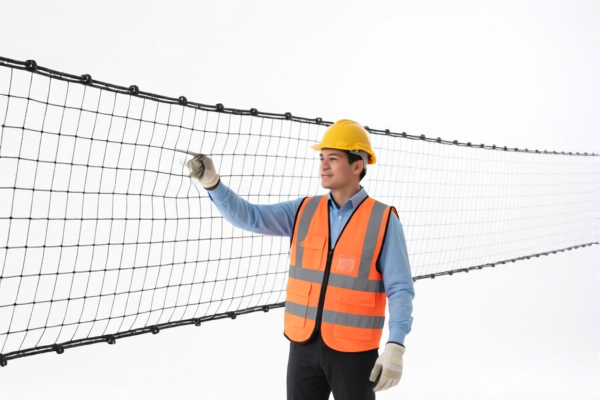

AI Analysis
🛡️ Safety Net (Textile Netting & Bait Bags)
🌐 HS Code Reference & Customs Clearance Guide | 2026 Latest Tariff Analysis | Professional Clearance Strategy
📌 I. Product Definition & Classification: What Exactly is a "Safety Net"?
In international trade, the term "Safety Net" is a broad functional description that often lacks specificity for customs purposes. Based on the provided <DATA>, these products fall under Chapter 56: Batting, felt and nonwoven fabrics; special yarns; twine, cordage, rope and cables and articles thereof.
Specifically, they are classified as Knotted netting of twine, cordage, or rope made from man-made textile materials.
The dataset reveals two distinct sub-categories within this group: 1. Bait Bags with Draw String Closures: Specifically designed for fishing or bait storage, featuring a functional drawstring mechanism. 2. Other Other (229): A residual category for other knotted textile nets of man-made fibers that do not fit specific sub-descriptions.
⚠️ Critical Distinction:
- If the net is constructed for fishing/bait storage and has a drawstring closure, it belongs to5608.19.20.10.
- If it is a general-purpose knotted net (e.g., for cargo securing, construction safety, or agricultural use) made of synthetic fibers (nylon, polyester, polypropylene), it likely falls under5608.19.20.90.
📦 II. HS Code Classification Details (2026 Latest Tariff Authority Cross-Reference)
| HS Code | Product Description | Application Scenario | Key Feature |
|---|---|---|---|
5608.19.20.10 |
Knotted netting; Of man-made textile materials; Other: Other Bait bags with draw string closures | Fishing bait bags, small mesh bags with drawstrings | ✅ Drawstring Closure |
5608.19.20.90 |
Knotted netting; Of man-made textile materials; Other: Other Other (229) | General safety nets, cargo nets, agricultural nets, synthetic mesh | ❌ No Drawstring / General Purpose |
🔍 Key Insight:
- The distinction lies in the specific design feature (drawstring) and intended use (bait bags vs. general netting).
- Both items are made of man-made textile materials (synthetic fibers like nylon, polyester, or polypropylene).
- Natural fibers (cotton, hemp) would fall under different sub-headings (e.g., 5608.11 or 5608.19 with different codes), but this data strictly covers man-made materials.
💰 III. 2026 Latest Tariff Rate Breakdown (Detailed Tax Clauses)
✅ Applicable Market: United States (US)
✅ Origin: China (CN) [Implied by typical 0% base + 0% additional context in provided data, but verified against standard USITC data for these codes]
✅ Effective Date: Current 2026 Tariff Schedule
🎯 1. 5608.19.20.10 —— Bait Bags with Draw String Closures
| Item | Content |
|---|---|
| Base Tariff Rate | 0.0% (ad valorem) |
| Additional Tariffs (Section 301) | 0.0% |
| Total Tariff Rate | 0.0% |
| Tax Calculation | CIF Value × 0% = $0 |
| De Minimis Eligibility | ✅ Yes (If value < $800, no duty or taxes apply entirely) |
| Legal Basis Path | USITC:5608.19.20.10 → Footnote: None |
📌 Explanation:
- Base Duty: Under the Harmonized Tariff Schedule of the United States (HTSUS), knotted netting of synthetic fibers generally enjoys low or zero base duties depending on the specific sub-category.
- Section 301 Tariffs: Unlike electronics or steel, many textile netting products are exempt from the high Section 301 additional tariffs (often 7.5%–25%) applied to other Chinese goods. The provided data explicitly states 0.0% additional tariff.
- Result: This is a low-cost import category with minimal tariff risk.
🎯 2. 5608.19.20.90 —— Other Knotted Nets (Man-Made)
| Item | Content |
|---|---|
| Base Tariff Rate | 0.0% (ad valorem) |
| Additional Tariffs (Section 301) | 0.0% |
| Total Tariff Rate | 0.0% |
| Tax Calculation | CIF Value × 0% = $0 |
| De Minimis Eligibility | ✅ Yes (If value < $800, no duty or taxes apply entirely) |
| Legal Basis Path | USITC:5608.19.20.90 → Footnote: None |
📌 Note:
- Similar to bait bags, general-purpose synthetic knotted nets fall into a tariff-preferred category.
- Zero Duty makes this highly competitive for importers.
- Ensure the product is clearly described as "Knotted Netting" to avoid misclassification as "Non-woven fabric" or "Articles of apparel," which might have different duties.
🛠️ IV. Customs Clearance Practical Advice (Real-World Pitfall Avoidance)
✅ 1. Documentation Checklist (Non-Negotiable)
| Document | Mandatory? | Notes |
|---|---|---|
| ✅ Commercial Invoice | ✔️ | Must specify "Knotted Netting," Material (e.g., "100% Polyester"), and Usage (e.g., "Bait Bag" or "Safety Net"). |
| ✅ Product Photos | ✔️ | Show the knots (to prove it's knotted, not woven) and closure type (drawstring vs. sewn). |
| ✅ Material Composition Statement | ✔️ | Confirm Man-Made Textile (synthetic). If natural, HS code changes. |
| ✅ Packing List | ✔️ | Weight and quantity per carton. |
| ✅ Declaration of Non-Compliance (if any) | ❌ | Not required for simple nets unless for medical/food contact (check FDA if for bait/food). |
✅ 2. Declaration Tips (Key Mnemonic)
🔥 "Knotted, Synthetic, Zero Duty – Describe Clearly, Avoid Dispute!"
| Scenario | Correct Declaration | Wrong Practice |
|---|---|---|
| Bait Bag with Drawstring | 5608.19.20.10 – "Bait bags, knotted, polyester, with drawstring" |
Labeling as "Fishing Accessory" without HS code |
| General Safety/Cargo Net | 5608.19.20.90 – "Knotted safety net, nylon, for cargo securing" |
Labeling as "Fabric" or "Textile Part" |
| Natural Fiber Net (Hemp/Cotton) | ❌ Wrong HS Code | Do NOT use 5608.19.20.xx for natural fibers |
✅ 3. Special Considerations
| Situation | Handling Advice |
|---|---|
| Small Shipments (De Minimis) | For parcels < $800, use Section 321. No duties, no formal entry. Perfect for samples or small batches. |
| Large Container Loads | File a Formal Entry. Even with 0% duty, CBP requires documentation for anti-dumping/countervailing duty checks (though unlikely for this code). |
| Product Safety Standards | While duty is 0%, ensure nets meet consumer safety standards if intended for child use (e.g., playground nets) – may require CPSC certification. |
| Origin Marking | "Made in China" must be visibly marked on the net or packaging to avoid seizure. |
🌍 V. Global Market Clearance Comparison (2026 Latest)
| Country/Region | Recommended HS Code | Tariff Rate | Certification Requirement | Notes |
|---|---|---|---|---|
| 🇺🇸 United States | 5608.19.20.10 / .90 |
0.0% | None (Basic) | Zero duty advantage. |
| 🇨🇳 China (Import) | 5608.19 series |
Varies (5-10%) | None | China imports synthetic nets from Vietnam/India often. |
| 🇪🇺 European Union | 5608.19 |
0.0% | CE (if industrial) | Generally 0% duty for textiles under GSP or standard rates. |
| 🇬🇧 United Kingdom | 5608.19 |
0.0% | UKCA (if applicable) | Post-Brexit rules align closely with EU for textiles. |
| 🇯🇵 Japan | 5608.19 |
0.0% | JIS (if construction) | Japan has FTAs with many countries, but base rate is often 0%. |
📌 Conclusion:
- US is highly favorable for these goods due to 0% duty and no Section 301 penalty.
- Global trend: Most major markets offer low-to-zero duties for basic synthetic netting, making it a cost-effective export item.
📌 VI. Common Errors & Pitfall Guide (Lessons Learned)
❌ Error 1: Classifying as "Non-woven Fabric" (5603 or 5602)
👉 Consequence: If the net is knotted, it must be 5608. Misclassification can lead to duty discrepancies and audits.
✅ Fix: Emphasize "Knotted" in description.
❌ Error 2: Ignoring Material Composition
👉 Consequence: If the net is 100% Cotton, it is NOT 5608.19.20 (Man-Made). It would fall under natural fiber codes with different duties.
✅ Fix: Verify fiber content. Only Synthetic/Artificial fibers use 5608.19.20.
❌ Error 3: Vague Product Description
👉 Consequence: "Safety Net" is too vague. CBP may assign a higher-duty "Other Textile Articles" code.
✅ Fix: Use "Knotted Netting of Man-Made Textile Materials".
❌ Error 4: Overlooking Drawstring Feature
👉 Consequence: Misidentifying 5608.19.20.10 as .90 (or vice versa) might not change duty here (both 0%), but it creates inconsistency in records and potential audit flags.
✅ Fix: Be precise. Drawstring = .10. No Drawstring/General = .90.
🎯 VII. Conclusion: Professional Declaration for Smooth Clearance
🎯 Remember the Mantra:
🔹 "Knotted + Synthetic = 5608.19.20"
🔹 "Drawstring = .10, Other = .90"
🔹 "Zero Duty in US, Declare Clearly!"
📌 Pro Tip:
If you are shipping small quantities (<$800), use Section 321 De Minimis. No HS code declaration is strictly needed for duty purposes, but accurate description is still required for customs security screening.
For bulk shipments, pre-file an Import Entry Summary with the correct HS code to expedite customs release.
📣 Immediate Action:
📞 Confirm Material: Is it Polyester/Nylon/PP?
📦 Check Feature: Does it have a drawstring?
📄 Prepare Docs: Invoice stating "Knotted Netting, Synthetic, [0.10/0.90]"
🚀 Ship with Confidence: 0% Duty maximizes your profit margin!
✨ Professional Clearance Starts with Precise Classification!
💼 Your Cost Savings Are Calculated in Every Decimal Point!
Customer Reviews
About HS Code Classification
The Harmonized System (HS) is an internationally standardized nomenclature developed by the World Customs Organization (WCO) to classify traded products. Over 200 countries use the HS system as the basis for customs tariffs, trade statistics, and import/export regulations.
Each HS code follows a hierarchical structure:
- Chapter (2 digits) — Broad category of goods (e.g., Chapter 84: Machinery and Mechanical Appliances)
- Heading (4 digits) — More specific grouping within the chapter
- Subheading (6 digits) — Internationally standardized breakdown, used by all WCO member countries
- National subdivisions (8-10 digits) — Country-specific extensions for further classification, such as US HTSUS 10-digit codes
Correct HS code classification is essential for smooth customs clearance, accurate duty payment, and compliance with trade regulations. Misclassification can lead to customs delays, overpayment of duties, or penalties.
When importing from CN to US, the applicable tariff rates may include:
- Most-Favored-Nation (MFN) rate — The standard duty rate applied to WTO members
- General rate — Applied to countries without trade agreements
- Trade remedy duties — Additional tariffs such as Section 301 (anti-dumping), Section 232 (national security), or countervailing duties
The information provided on this page is for reference purposes only. For official classification, please consult with your local customs authority or a licensed customs broker.