Safety Rope
CN → US| HS Code | Tariff Rate | Origin | Destination | Doc |
|---|---|---|---|---|
| 5607493000 | 38.6% | CN | US | Official Doc |
| 5607909000 | 41.3% | CN | US | Official Doc |
| 5404191000 | 37.7% | CN | US | Official Doc |
| 5404198040 | 41.9% | CN | US | Official Doc |
| 5503200015 | 14.3% | CN | US | Official Doc |
| 5503199000 | 39.3% | CN | US | Official Doc |
Product Images
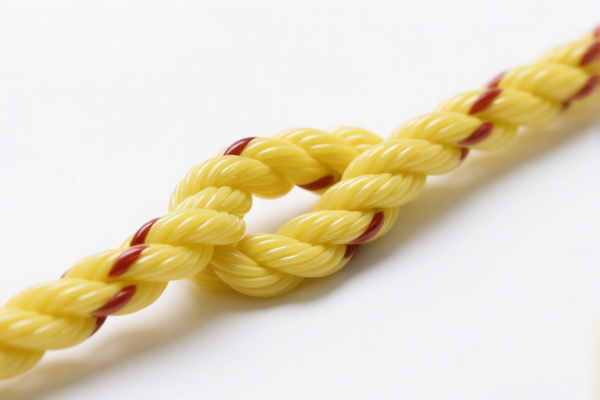
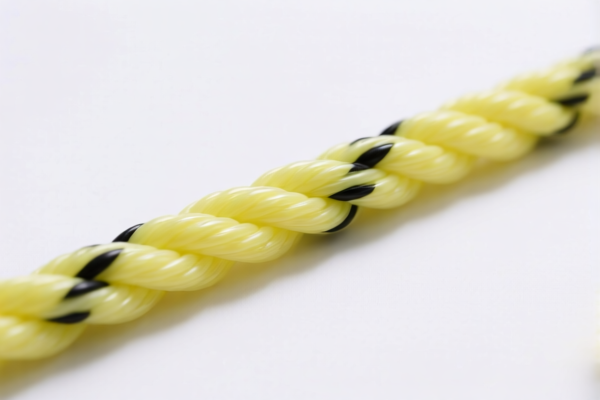
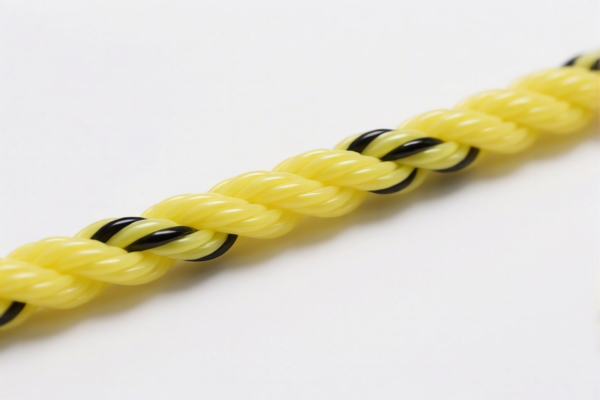
AI Analysis
🪢 Safety Rope (Twine, Cordage, Ropes & Cables)
🌐 HS Code Reference & Customs Clearance Guide | 2026 Latest Tariff Analysis | Professional Clearance Strategy
📌 I. Product Definition & Classification: Do You Really Understand "Safety Rope"?
Safety rope, in international trade, falls under the broad category of "Twine, Cordage, Ropes and Cables". However, it is not a single unified category. Its classification depends entirely on: 1. Material: Polyethylene (PE), Polypropylene (PP), Polyester, Nylon (Polyamide), or other synthetic fibers. 2. Structure: Plaited, braided, twisted, or monofilament. 3. Treatment: Impregnated, coated, covered, or sheathed with rubber or plastics. 4. Specification: Diameter, decitex, and width.
⚠️ Key Distinction Point:
- If it is a braided/plaited rope made of PP/PE → Likely 5607.49.30.00
- If it is a monofilament >67 decitex, ≤1mm cross-section, used for rackets → 5404.19.10.00
- If it is synthetic staple fiber (non-spun) → 5503.20.00.15 or 5503.19.90.00
- If it is other synthetic rope (e.g., polyester, nylon) not specifically listed above → 5607.90.90.00
📦 II. HS Code Classification Details (2026 Latest Tariff Authority Comparison)
Based on the provided DATA, here are the specific HS codes for synthetic ropes and related textile materials:
| HS Code | Product Description | Applicable Scenario | Material Type |
|---|---|---|---|
5607.49.30.00 |
Twine, cordage, ropes and cables... Of polyethylene or polypropylene: Other: Other (669) | General purpose PP/PE safety ropes, braided or plaited, coated/sheathed | 🟡 PP / PE |
5607.90.90.00 |
Twine, cordage, ropes and cables... Other: Other (201) | Other synthetic ropes (e.g., Nylon, Polyester) not covered in 5607.49 | 🔵 Nylon / Polyester / Other |
5404.19.10.00 |
Synthetic monofilament ≥67 decitex, ≤1mm cross-section; Strip...: Monofilament: Other: Racket strings | Racket strings (often confused with safety rope due to material, but different use) | 🟢 Synthetic (Usually Nylon/Polyester) |
5404.19.80.40 |
Synthetic monofilament ≥67 decitex, ≤1mm cross-section; Strip...: Monofilament: Other: Other Of polyesters | Polyester monofilament (not for rackets) | 🟢 Polyester |
5503.20.00.15 |
Synthetic staple fibers, not carded/combed...: Of polyesters... Bi-component fibers... for bonding | Bi-component polyester staple fibers (Raw material, not finished rope) | 🔴 Polyester Fiber |
5503.19.90.00 |
Synthetic staple fibers, not carded/combed...: Of nylon or other polyamides: Other: Other | Nylon staple fibers (Raw material, not finished rope) | 🔴 Nylon Fiber |
🔍 Critical Note for Safety Rope:
- Most commercial "Safety Ropes" (industrial, climbing, general use) are braided or plaited ropes.
- If made of Polypropylene (PP) or Polyethylene (PE): Use5607.49.30.00.
- If made of Nylon (Polyamide) or Polyester: Use5607.90.90.00(as they fall under "Other").
- Do not confuse with monofilament (single strand) or raw staple fibers unless you are importing raw materials.
💰 III. 2026 Latest Tariff Rate Details (Including Surtaxes & Policy Add-ons)
✅ Applicable Country: United States (US)
✅ Origin: China (CN)
✅ Effective Date: 2025 November 10 onwards (including subsequent imports)
🎯 1. 5607.49.30.00 —— Safety Rope (PP/PE, Braided/Plaited)
| Item | Content |
|---|---|
| Base Tariff | 0.0% |
| Section 301 Surtax | 0.0% |
| IEEPA Surtax | 0.0% |
| Total Tax Rate | 0.0% |
| Tax Calculation | CIF Value × 0% |
| De Minimis Eligible | ✅ Yes (Generally eligible for $800 de minimis if under threshold, but verify current CBP enforcement on textiles) |
| Legal Basis Path | USITC:5607.49.30.00 |
📌 Explanation:
- Unlike electronics or steel, PP/PE ropes currently face 0% total duty from the US under the provided data.
- This makes them a low-risk, low-cost product for US import in terms of direct tariff burden.
- However, always verify if the rope is "impregnated/coated" with rubber/plastics, as this does not change the HS code here but may affect labeling requirements.
🎯 2. 5607.90.90.00 —— Other Synthetic Ropes (Nylon, Polyester, etc.)
| Item | Content |
|---|---|
| Base Tariff | 0.0% |
| Section 301 Surtax | 0.0% |
| IEEPA Surtax | 0.0% |
| Total Tax Rate | 0.0% |
| Tax Calculation | CIF Value × 0% |
| De Minimis Eligible | ✅ Yes (Generally eligible) |
| Legal Basis Path | USITC:5607.90.90.00 |
📌 Explanation:
- Similar to PP/PE ropes, Nylon and Polyester ropes also enjoy 0% total duty under the provided dataset.
- This applies to standard industrial safety ropes, climbing ropes, and general-purpose cordage.
🎯 3. 5404.19.10.00 —— Racket Strings (Monofilament)
| Item | Content |
|---|---|
| Base Tariff | 0.0% |
| Section 301 Surtax | 0.0% |
| IEEPA Surtax | 0.0% |
| Total Tax Rate | 0.0% |
| Tax Calculation | CIF Value × 0% |
| De Minimis Eligible | ✅ Yes |
| Legal Basis Path | USITC:5404.19.10.00 |
⚠️ Warning:
- Do NOT misclassify safety rope as "Racket Strings."
- If customs inspectors suspect your "safety rope" is actually racket string (or vice versa), they may reclassify, leading to duty evasion penalties even if the rate is 0%.
- Racket strings are typically single, continuous monofilament, not braided multi-strand ropes.
🎯 4. 5404.19.80.40 —— Polyester Monofilament (Other)
| Item | Content |
|---|---|
| Base Tariff | 0.0% |
| Section 301 Surtax | 0.0% |
| IEEPA Surtax | 0.0% |
| Total Tax Rate | 0.0% |
| Tax Calculation | CIF Value × 0% |
| De Minimis Eligible | ✅ Yes |
| Legal Basis Path | USITC:5404.19.80.40 |
🎯 5. 5503.20.00.15 & 5503.19.90.00 —— Synthetic Staple Fibers (Raw Materials)
| Item | Content |
|---|---|
| Base Tariff | 0.0% |
| Section 301 Surtax | 0.0% |
| IEEPA Surtax | 0.0% |
| Total Tax Rate | 0.0% |
| Tax Calculation | CIF Value × 0% |
| De Minimis Eligible | ✅ Yes |
| Legal Basis Path | USITC:5503.20.00.15 / USITC:5503.19.90.00 |
📌 Explanation:
- These are raw materials (staple fibers), not finished ropes.
- If you are importing finished safety ropes, do NOT use these codes. Misclassification can lead to seizure if the product is clearly a finished article.
🛠️ IV. Customs Clearance Practical Advice (Real-World Pitfall Avoidance)
✅ 1. Documentation Checklist (Non-Negotiable)
| Document | Must Provide | Explanation |
|---|---|---|
| ✅ Product Specification Sheet | ✔️ | Must detail: Material (PP/PE/Nylon), Diameter, Breaking Strength, Construction (Braided/Twisted) |
| ✅ Product Photos | ✔️ | Clear images showing texture (braided vs. single filament), ends (melted/tipped), and packaging |
| ✅ Commercial Invoice | ✔️ | Describe as: "Braided Polypropylene Safety Rope, 10mm Diameter, Industrial Use" |
| ✅ Packing List | ✔️ | Weight, dimensions, number of reels/rolls |
| ✅ Material Safety Data Sheet (MSDS) | ❓ | If rope is coated/impregnated with chemicals, MSDS may be required |
| ✅ Certification of Origin | ✔️ | Even with 0% duty, required for customs clearance and de minimis eligibility |
✅ 2. Declaration Tips (Key Mantra)
🔥 "Specify Material, Specify Structure, Avoid Generic Terms!"
| Scenario | Correct Declaration | Wrong Practice |
|---|---|---|
| PP Rope, Braided | "Braided Polypropylene Safety Rope" → 5607.49.30.00 |
"Rope" or "Cordage" → Ambiguous, may be questioned |
| Nylon Rope, Plaited | "Plaited Nylon Safety Rope" → 5607.90.90.00 |
"Rope" → Ambiguous |
| Racket String | "Synthetic Monofilament Racket String, 67 decitex+" → 5404.19.10.00 |
"Safety Rope" → Wrong HS, even if rate is same, it’s fraudulent |
| Raw Fiber | "Polyester Staple Fiber, Bi-component" → 5503.20.00.15 |
"Rope" → Wrong HS, finished article vs. raw material |
✅ 3. Special Case Handling
| Situation | Handling Advice |
|---|---|
| Coated/Impregnated Rope | If coated with rubber/plastics, still likely 5607.49.30.00 or 5607.90.90.00 depending on base material. Ensure coating % is not so high it becomes a "rubber article" (Chapter 40). |
| Climbing Safety Rope | If certified for human load-bearing, specify "Climbing Safety Rope, UIAA Certified" to differentiate from general-purpose tie-down rope. HS Code remains 5607.49.30.00 (if PP/PE) or 5607.90.90.00 (if Nylon/Polyester). |
| Monofilament vs. Filament | If diameter >1mm, it’s not monofilament (Chapter 54). It’s ropes/cordage (Chapter 56). |
| De Minimis ($800) | Since tax is 0%, de minimis is straightforward. However, ensure the value is correctly declared. Over/under-invoicing can trigger audits. |
🌍 V. Global Main Market Customs Comparison (2026 Latest)
| Country/Region | Recommended HS Code | Tariff (China Origin) | Certification Requirements | Notes |
|---|---|---|---|---|
| 🇺🇸 United States | 5607.49.30.00 / 5607.90.90.00 |
0% | None specific | 0% duty is a major advantage. |
| 🇨🇳 China | 5607.49.30.00 / 5607.90.90.00 |
~5-10% | CCC (if for specific safety use) | Import duties apply. |
| 🇪🇺 European Union | 5607.49.30.00 / 5607.90.90.00 |
4-6% | CE (if for PPE) | Textile labeling (fiber content) mandatory. |
| 🇦🇺 Australia | 5607.49.30.00 / 5607.90.90.00 |
5% | GEMS (if electrical, but rope is not) | Standard textile tariffs. |
| 🇯🇵 Japan | 5607.49.30.00 / 5607.90.90.00 |
3-6% | JIS (for climbing ropes) | High quality standards for safety ropes. |
📌 Conclusion:
- USA is the best market for Chinese synthetic ropes due to 0% total duty.
- EU and Japan have higher base tariffs but no additional surtaxes on this category in the provided data.
- Labeling is critical: In EU/UK, fiber content labels are strictly enforced.
📌 VI. Common Errors & Pitfall Guide (Lessons Learned)
❌ Error 1: Calling all rope "5607.90.90.00" regardless of material
👉 Consequence: If it’s PP/PE, it should be 5607.49.30.00. While both are 0% here, misclassification is still a compliance violation and may trigger audits.
❌ Error 2: Misclassifying Racket Strings as Safety Rope
👉 Consequence: Even though both are 0% in this data, racket strings have different trade statistics and regulatory oversight. Incorrect declaration can lead to penalties for false declaration.
❌ Error 3: Ignoring Coating/Impregnation
👉 Consequence: If the rope is heavily coated with rubber (>20% by weight), it might be classified as a rubber article (Chapter 40), not textile. This changes the HS code entirely.
❌ Error 4: Using Generic Terms like "Rope" or "Cord"
👉 Consequence: Customs brokers may assign the wrong subheading, leading to delays, requests for clarification, or additional duties if rates differ in other markets.
✅ Correct Practice:
"Braided Polypropylene Safety Rope, 12mm, 2000kg Breaking Load, Coated with PVC, For Industrial Use, HS 5607.49.30.00"
🎯 VII. Conclusion: Professional Declaration, Save Time, Reduce Costs!
🎯 Remember the Mantra:
🔹 "PP/PE Rope → 5607.49.30.00 (0%)"
🔹 "Nylon/Polyester Rope → 5607.90.90.00 (0%)"
🔹 "Specify Material, Avoid Ambiguity!"
📌 Pro Tip:
- For climbing or life-saving safety ropes, consider adding UIAA/CE certification details to the declaration to facilitate smoother customs release and demonstrate product quality.
- Since tariffs are 0% in the US, focus on logistics efficiency and certification compliance rather than duty planning.
📣 Immediate Action:
📞 Contact your customs broker with Product Specs + Photos + Certifications.
🚀 Ensure your Commercial Invoice precisely matches the HS Code Description.
✨ Professional Clearance Starts with Accurate Classification!
💼 Your Every Dollar of Savings, Worthy of Precision!
Customer Reviews
About HS Code Classification
The Harmonized System (HS) is an internationally standardized nomenclature developed by the World Customs Organization (WCO) to classify traded products. Over 200 countries use the HS system as the basis for customs tariffs, trade statistics, and import/export regulations.
Each HS code follows a hierarchical structure:
- Chapter (2 digits) — Broad category of goods (e.g., Chapter 84: Machinery and Mechanical Appliances)
- Heading (4 digits) — More specific grouping within the chapter
- Subheading (6 digits) — Internationally standardized breakdown, used by all WCO member countries
- National subdivisions (8-10 digits) — Country-specific extensions for further classification, such as US HTSUS 10-digit codes
Correct HS code classification is essential for smooth customs clearance, accurate duty payment, and compliance with trade regulations. Misclassification can lead to customs delays, overpayment of duties, or penalties.
When importing from CN to US, the applicable tariff rates may include:
- Most-Favored-Nation (MFN) rate — The standard duty rate applied to WTO members
- General rate — Applied to countries without trade agreements
- Trade remedy duties — Additional tariffs such as Section 301 (anti-dumping), Section 232 (national security), or countervailing duties
The information provided on this page is for reference purposes only. For official classification, please consult with your local customs authority or a licensed customs broker.