Safety Vest
CN → US| HS Code | Tariff Rate | Origin | Destination | Doc |
|---|---|---|---|---|
| 6217108500 | 24.6% | CN | US | Official Doc |
| 6114909070 | 15.6% | CN | US | Official Doc |
| 6217109550 | 32.1% | CN | US | Official Doc |
Product Images


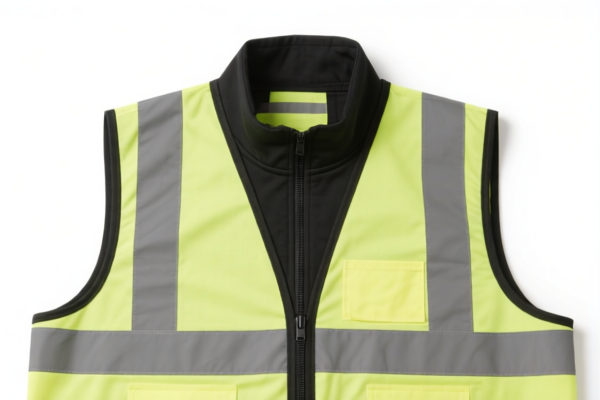

AI Analysis
🦺 Safety Vest (High-Visibility Workwear)
🌐 HS Code Reference & Customs Clearance Guide | 2026 Latest Tariff Breakdown | Professional Entry Strategy
📌 Section I: Product Definition & Classification: Do You Really Know "Safety Vest"?
The Safety Vest is a critical personal protective equipment (PPE) used in construction, traffic control, logistics, and industrial sectors to ensure worker visibility. In international trade, its classification hinges on two decisive factors:
1. Knitting vs. Woven: Is it a knitted/garment fabric (e.g., jersey, mesh) or a woven fabric (e.g., polyester ripstop, nylon tape)?
2. Function & Structure: Is it a standalone garment (Class A/B/C reflective vest) or an accessory/attachment (e.g., reflective tape only, or a vest meant to be attached to other gear)?
⚠️ Critical Distinction:
- Knitted Garment (Section 61): If the vest is made from knitted fabric (e.g., mesh, jersey) and forms a complete garment → HS Code 6114.90.90.70
- Woven Accessory (Section 62): If it is made of woven fabric or classified as an "article of clothing" (not a full garment) → HS Code 6217 series
- Accessory vs. Garment: Is it a "wearable vest" or just an "attachment" (like a reflective band)? This determines whether it falls under 6217.10.95.50 (Other accessories) or 6217.10.85.00 (Other clothing accessories).
📦 Section II: HS Code Classification Details (2026 Latest Tariff Authority)
| HS Code | Product Description | Applicable Scenario | Material / Form |
|---|---|---|---|
6114.90.90.70 |
Safety Vest (Knitted/Garment) | Full-coverage vests made of knitted material, functioning as a standalone garment. | Knitted textile, "Other" category. |
6217.10.95.50 |
Safety Vest (Accessory - High Tax) | Classified as "Other clothing accessories" (e.g., non-standard woven vests, high-tariff reflective attachments). | Woven fabric/Chemical fiber, Accessory category. |
6217.10.85.00 |
Safety Vest (Accessory - Moderate Tax) | Standard woven vests or clothing accessories intended for general use, lower tariff bracket. | Woven fabric/Chemical fiber, Garment accessory. |
🔍 Key Reminder:
- Knitted = 6114: If the fabric is knitted (e.g., T-shirt material), it must go to 6114.90.90.70 (5.6% base + 10% Section 301 = 15.6%).
- Woven/Accessory = 6217: If woven, it splits between 6217.10.85.00 (14.6% base + 10% Section 301 = 24.6%) and 6217.10.95.50 (14.6% base + 7.5% USITC + 10% Section 301 = 32.1%).
- Do not mix: A knitted vest misdeclared as woven will trigger a 16.5% tax gap and potential fines.
💰 Section III: 2026 Latest Tariff Rate Breakdown (Including Surtaxes & Policy Add-ons)
✅ Applicable Country: USA (US)
✅ Country of Origin: China (CN)
✅ Effective Date: November 10, 2025 (and subsequent imports)
🎯 1. 6114.90.90.70 —— Safety Vest (Knitted Garment)
| Item | Details |
|---|---|
| Base Tariff | 5.6% (General Rate) |
| USITC Surtax | 0.0% (No specific surtax for this knitted garment code) |
| Section 301 (122) Surtax | +10.0% (China-specific) |
| Total Tax Rate | 15.6% |
| Calculation Method | CIF Value × 15.6% |
| De Minimis Eligibility | ❌ No (Not eligible for low-value exemption if >$800) |
| Legal Path | Base Tariff: 5.6% → Section 301: 10% → Total 15.6% |
📌 Explanation:
- This is the lowest tax bracket for safety vests if the material is knitted.
- The "Section 122" tariff (10%) applies strictly to Chinese origin.
- Strategy: If possible, switch to knitted mesh material to save ~16.5% compared to the highest woven category.
🎯 2. 6217.10.85.00 —— Safety Vest (Woven Accessory - Standard)
| Item | Details |
|---|---|
| Base Tariff | 14.6% |
| USITC Surtax | 0.0% |
| Section 301 (122) Surtax | +10.0% |
| Total Tax Rate | 24.6% |
| Calculation Method | CIF Value × 24.6% |
| De Minimis Eligibility | ❌ No |
| Legal Path | Base Tariff: 14.6% → Section 301: 10% → Total 24.6% |
📌 Explanation:
- Applies to woven vests that are clearly "accessories" but fall into the standard "Other Clothing Accessories" sub-category.
- Higher base rate (14.6%) reflects the "accessory" classification for woven goods.
🎯 3. 6217.10.95.50 —— Safety Vest (Woven Accessory - High Tax)
| Item | Details |
|---|---|
| Base Tariff | 14.6% |
| USITC Surtax | +7.5% (Section 301 Add-on) |
| Section 301 (122) Surtax | +10.0% |
| Total Tax Rate | 32.1% |
| Calculation Method | CIF Value × 32.1% |
| De Minimis Eligibility | ❌ No |
| Legal Path | Base Tariff: 14.6% → USITC: 7.5% → Section 301: 10% → Total 32.1% |
📌 Explanation:
- This is the highest tax bracket for safety vests.
- The 7.5% USITC surtax is the killer here. It applies to specific "Other" woven accessories not covered by the standard 6217.10.85.00.
- Risk: Misclassification from 85.00 to 95.50 results in a 7.5% penalty (nearly $75 per $1,000 invoice).
🛠️ Section IV: Customs Clearance Practical Advice (Pitfall Avoidance)
✅ 1. Preparation Checklist (Non-Negotiable)
| Document | Required? | Purpose |
|---|---|---|
| Material Composition Cert | ✅ | Crucial! Must state "100% Knitted Polyester" vs "100% Woven Polyester". |
| Product Photos (Real) | ✅ | Show the fabric texture (knitted loops vs. woven threads) to Customs officers. |
| Function Description | ✅ | "Safety Vest" vs. "Reflective Tape Accessory" changes the HS code. |
| Bill of Lading | ✅ | Must clearly mark "Safety Vests" (not "Clothing Parts"). |
| Origin Certificate | ✅ | Prove China origin to calculate the 10% Section 301 surtax. |
✅ 2. Declaration Strategy (Key Mantra)
🔥 "Knitted = 6114 (15.6%), Woven = 6217 (24.6% or 32.1%)"
| Scenario | Correct Declaration | Incorrect (Risky) |
|---|---|---|
| Mesh Knitted Vest | 6114.90.90.70 |
Declaring as 6217.10.85.00 → Overpay 9% |
| Woven Reflective Vest | 6217.10.85.00 |
Declaring as 6217.10.95.50 → Overpay 7.5% |
| Reflective Tape Only | 6217.10.95.50 |
Declaring as "Garment" → Under-declaration Risk |
| Vest + Belt Set | Separate HS Codes | Mixed declaration → Audit Trigger |
✅ 3. Special Circumstances
| Situation | Recommendation |
|---|---|
| OEM Private Label | Provide the client's design specs. If the vest is "knitted by the OEM," still use 6114. |
| High-Visibility (Class 3) | Classification depends on material, not visibility level. Knitted = 6114. |
| Woven with Knitted Trims | If the main body is woven, use 6217. Do not claim "knitted" just because of the trim. |
| Samples | Even samples are subject to the 32.1% rate if misclassified as woven accessories. |
🌍 Section V: Global Market Comparison (2026 Update)
| Region | Recommended HS Code | Tariff (China Origin) | Notes |
|---|---|---|---|
| 🇺🇸 USA | 6114.90.90.70 (Knitted) |
15.6% | Best Option. Avoid 6217.10.95.50 (32.1%). |
| 🇺🇸 USA | 6217.10.85.00 (Woven) |
24.6% | Standard woven rate. |
| 🇺🇸 USA | 6217.10.95.50 (Woven) |
32.1% | Highest Tax. Only if mandatory accessory. |
| 🇨🇳 China | 6114.90.90.70 |
~13% | Domestic entry. |
| 🇪🇺 EU | 6114.90.90 |
~12% | Lower Section 301 impact. |
| 🇨🇦 Canada | 6114.90.90 |
~13% | CPTAA preferred if applicable. |
📌 Conclusion:
- USA is the most punitive market for safety vests due to the combination of Base + USITC + Section 301.
- Knitted vests (6114) are the gold standard for minimizing tax burden.
- Woven vests require careful distinction between 85.00 and 95.50 to avoid the 7.5% USITC penalty.
📌 Section VI: Common Mistakes & Pitfalls (Lessons Learned)
❌ Mistake 1: Declaring a knitted mesh vest as a "woven accessory" (6217.10.85.00).
👉 Consequence: Overpaying 9% (from 15.6% to 24.6%). No refund possible if not caught early.
❌ Mistake 2: Declaring a woven vest as a "garment" (6114).
👉 Consequence: Customs may reject the declaration, delay shipment, or demand a re-declaration with the higher 24.6% or 32.1% rate.
❌ Mistake 3: Misclassifying high-risk woven vests into the 85.00 code to avoid the 95.50 surtax.
👉 Consequence: Audit Trigger. If US Customs finds the 7.5% USITC surtax is due, they will demand it + interest.
✅ Correct Action:
"High-Visibility Safety Vest, 100% Knitted Polyester, Reflective Strips, Class 2, Model XYZ, CN Origin."
→ Declare under6114.90.90.70for the lowest 15.6% rate.
🎯 Section VII: Conclusion: Precision is Profit!
🎯 Remember the Rule:
🔹 "Knitted = 6114 (15.6%) - The Safe Path"
🔹 "Woven = 6217 (24.6% or 32.1%) - Check the Sub-code!"
🔹 "Don't guess the material, prove it!"📌 Pro Tip:
If your safety vests are knitted, ensure the commercial invoice explicitly states "Knitted Fabric". If they are woven, double-check the HTS sub-category (85.00 vs. 95.50) to avoid the 7.5% USITC penalty.Customs Clearance Strategy:
- Step 1: Confirm material (Knit vs. Woven).
- Step 2: If Woven, verify if it fits "Other Clothing Accessories" (85.00) or "Other" (95.50).
- Step 3: Declare with full tax breakdown (Base + 10% + 7.5% if applicable).
📣 Take Action Now:
📞 Contact a Licensed Customs Broker + Provide Fabric Swatch + Request HTS Ruling
🚀 Avoid the 32.1% Trap, Secure the 15.6% Rate, Maximize Your Margin!
✨ Professional Classification Saves You Money!
💼 Every percentage point counts in the global supply chain!
Customer Reviews
About HS Code Classification
The Harmonized System (HS) is an internationally standardized nomenclature developed by the World Customs Organization (WCO) to classify traded products. Over 200 countries use the HS system as the basis for customs tariffs, trade statistics, and import/export regulations.
Each HS code follows a hierarchical structure:
- Chapter (2 digits) — Broad category of goods (e.g., Chapter 84: Machinery and Mechanical Appliances)
- Heading (4 digits) — More specific grouping within the chapter
- Subheading (6 digits) — Internationally standardized breakdown, used by all WCO member countries
- National subdivisions (8-10 digits) — Country-specific extensions for further classification, such as US HTSUS 10-digit codes
Correct HS code classification is essential for smooth customs clearance, accurate duty payment, and compliance with trade regulations. Misclassification can lead to customs delays, overpayment of duties, or penalties.
When importing from CN to US, the applicable tariff rates may include:
- Most-Favored-Nation (MFN) rate — The standard duty rate applied to WTO members
- General rate — Applied to countries without trade agreements
- Trade remedy duties — Additional tariffs such as Section 301 (anti-dumping), Section 232 (national security), or countervailing duties
The information provided on this page is for reference purposes only. For official classification, please consult with your local customs authority or a licensed customs broker.