Sailboat
CN → US| HS Code | Tariff Rate | Origin | Destination | Doc |
|---|---|---|---|---|
| 8906900010 | 35.0% | CN | US | Official Doc |
| 8906900090 | 35.0% | CN | US | Official Doc |
| 8901100000 | 35.0% | CN | US | Official Doc |
| 8903210030 | 36.5% | CN | US | Official Doc |
| 8901900000 | 35.0% | CN | US | Official Doc |
Product Images
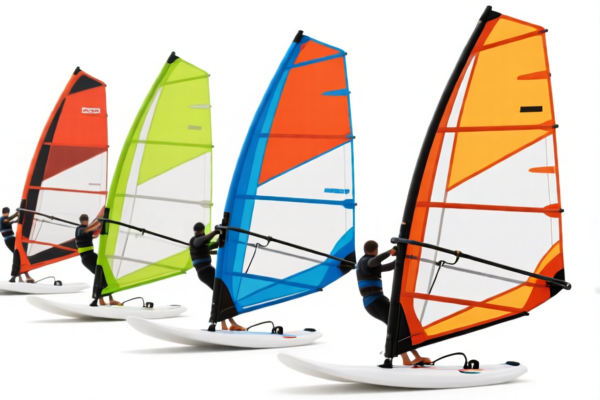
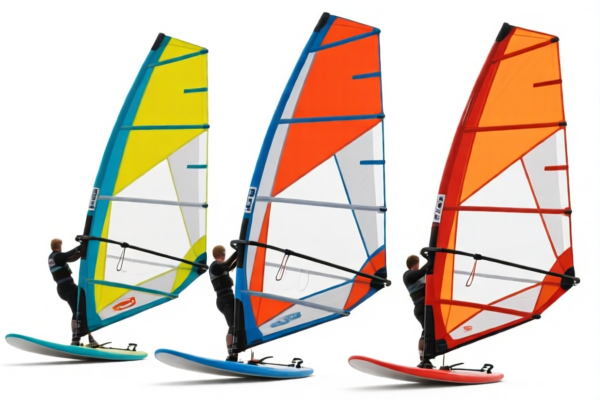
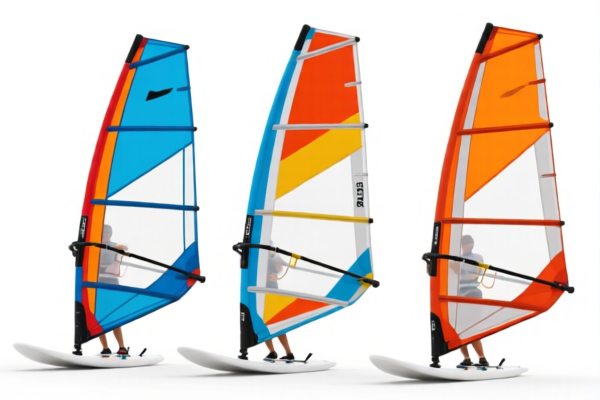
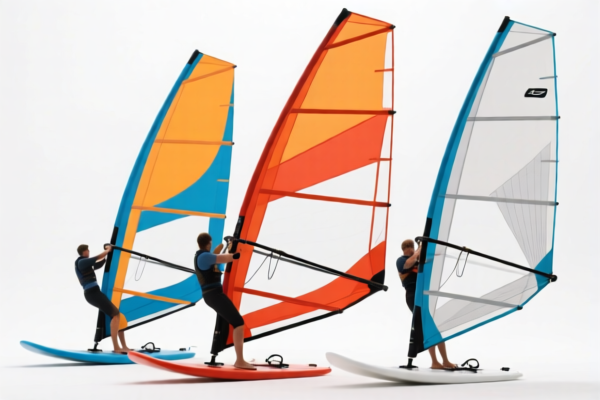
AI Analysis
🛥️ Sailboat (Sailing Yachts & Recreational Craft)
🌐 HS Code Reference & Customs Clearance Guide | 2026 Latest Tariff Analysis | Professional Entry Strategies
📌 I. Product Definition & Classification: What Exactly is a "Sailboat"?
A sailboat is a watercraft propelled primarily or partially by wind energy acting on sails. In international trade, the classification hinges entirely on its primary purpose:
- Recreational/Sport Use: Vessels designed for leisure, racing, or sport. These fall under specific chapters for "Yachts and other vessels for pleasure or sports."
- Transport/Commercial Use: Vessels designed primarily for carrying passengers or cargo, even if they use sails as an auxiliary or primary propulsion method. These fall under "Other vessels for the transport of persons or goods."
⚠️ Critical Distinction Point:
- If the vessel is explicitly for pleasure, sport, or recreation → It aligns with 8903.21.00.30
- If the vessel is a general transport vessel (passengers/cargo) using sails → It aligns with 8901 series or 8906
- Misclassification Risk: Classifying a pleasure yacht as a transport vessel (or vice versa) leads to massive tariff discrepancies due to differing base rates and附加税 (additional duties).
📦 II. HS Code Classification Details (2026 Latest Tariff Authority Comparison)
| HS Code | Product Description | Applicable Scenario | Primary Purpose |
|---|---|---|---|
8903.21.00.30 |
Sailboats (Recreational/Sport) | Leisure sailing, racing yachts, personal watercraft | ✅ Pleasure/Sport |
8901.90.00.00 |
Other vessels for transport of persons/goods | Cargo ships, ferries, or general transport vessels with sail capability | ✅ Transport |
8906.90.00.10 |
Other vessels | General category for vessels not specifically mentioned elsewhere | ✅ General/Other |
8906.90.00.90 |
Other vessels | Vessels not falling under specific sub-categories; excludes hulls-only | ✅ General/Other |
8901.10.00.00 |
Vessels for transport of persons/goods (incl. rowing) | Traditional transport vessels, including those propelled by oars/sails if used for transport | ✅ Transport |
🔍 Key Insight:
- 8903.21.00.30 is the most precise fit for commercially sold recreational sailboats. It carries a higher base tariff (1.5%) but is the legally correct category for leisure craft. - Codes like 8901 and 8906 are broader "catch-all" categories for transport or unspecified vessels. They often have 0% base tariffs but are only appropriate if the vessel is genuinely for transport/commerce, not personal recreation. - Warning: Customs authorities scrutinize the "purpose" declaration. A "sailboat" declared as "transport" (8901) without evidence of cargo/passenger transport capacity may be reclassified and penalized.
💰 III. 2026 Latest Tariff Rate Details (Including Additional Taxes & Policy Surcharges)
✅ Applicable Country: United States (US)
✅ Origin: China (CN)
✅ Effective Date: From November 10, 2025 (including subsequent imports)
🎯 1. 8903.21.00.30 —— Sailboats (Recreational/Sport)
| Item | Detail |
|---|---|
| Base Tariff | 1.5% (ad valorem) |
| Additional Duty (Section 301) | +25.0% |
| IEEPA Additional Duty | +10.0% (For products from China/HK, effective Nov 10, 2025) |
| Total Effective Rate | 36.5% |
| Tax Calculation | CIF Value × 36.5% |
| De Minimis Exemption Available? | ❌ No (deny_de_minimis) |
| Legal Basis Path | USITC:8903.21.00.30 → USITC:9903.88.01 (Footnote) → IEEPA:9903.01.25 |
📌 Explanation:
- This is the standard category for recreational sailboats. - The 25% Section 301 duty applies to all vessels under Chapter 89 from China. - The 10% IEEPA duty is a new surcharge for Chinese-origin goods under the International Emergency Economic Powers Act. - Total 36.5% is significant. However, it is the legally compliant rate for pleasure crafts.
🎯 2. 8901.90.00.00 & 8901.10.00.00 & 8906.90.00.10 & 8906.90.00.90 —— Transport/Other Vessels
| Item | Detail |
|---|---|
| Base Tariff | 0.0% |
| Additional Duty (Section 301) | +25.0% |
| IEEPA Additional Duty | +10.0% (For products from China/HK, effective Nov 10, 2025) |
| Total Effective Rate | 35.0% |
| Tax Calculation | CIF Value × 35.0% |
| De Minimis Exemption Available? | ❌ No (deny_de_minimis) |
| Legal Basis Path | USITC:8901.xxxx/8906.xxxx → USITC:9903.88.01 → IEEPA:9903.01.25 |
📌 Explanation:
- These codes offer a slightly lower total rate (35.0% vs. 36.5%) because the base tariff is 0%. - HOWEVER, using these codes for a recreational sailboat is high-risk. - Customs Enforcement: If CBP (Customs and Border Protection) determines the vessel is for "pleasure" (not transport), they will reclassify it to8903.21.00.30and demand the difference + penalties + interest. - Strategic Advice: Only use these codes if the sailboat is genuinely designed and marketed for transport (e.g., a cargo sailing barge, a passenger ferry with sails, or a work vessel). Do not use them for consumer yachts.
🛠️ IV. Customs Clearance Practical Advice (Real-World Pitfall Guide)
✅ 1. Required Documentation Checklist (Non-Negotiable)
| Document | Mandatory? | Explanation |
|---|---|---|
| ✅ Product Specifications | ✔️ | Must clearly state: Length, Hull Material, Propulsion Type (Sail/Motor), Intended Use (Pleasure/Transport). |
| ✅ Catalog/Photos | ✔️ | Show interior layout. If it has cabins, galley, heads (bathrooms), it’s likely Pleasure (8903). If it has cargo holds, crew quarters, no leisure amenities → Transport (8901). |
| ✅ Bill of Lading | ✔️ | Must match HS Code description. Avoid vague terms like "Boat." Use "Sailboat for Recreational Use" or "Cargo Vessel." |
| ✅ Commercial Invoice | ✔️ | Clearly declare value and purpose. |
| ✅ Certificate of Origin | ✔️ | Required for origin determination. |
| ✅ Engineering Drawings | ✔️ | Useful if classification is disputed. Proves structural design intent. |
✅ 2. Declaration Strategy (Key Mantra)
🔥 "Purpose Defines Code: Pleasure=8903, Transport=8901/8906. Don’t Lie!"
| Scenario | Correct Declaration | Wrong Action |
|---|---|---|
| Private Owner's Sailing Yacht | 8903.21.00.30 |
Declaring as 8901 to save 1.5% → High Risk of Rejection & Penalties |
| Commercial Cargo Sailboat | 8901.90.00.00 |
Declaring as 8903 → Unnecessary higher base tax, but lower risk of reclassification penalty if actually used for cargo |
| Unspecified/Other Vessel | 8906.90.00.90 |
Only if it doesn’t fit standard categories. Rare for sailboats. |
✅ 3. Special Handling Cases
| Case | Handling Advice |
|---|---|
| Hybrid Vessels (Sail + Motor) | Classification depends on primary design intent. If built for leisure with motor backup → 8903. If built for transport with sail as backup → 8901. |
| Sailboat Kits | If imported as parts, check if it’s "assembled." If it arrives as a complete vessel → Vessel code. If parts → Possible Chapter 89 sub-parts or other chapters. |
| Used Sailboats | Same HS Code rules apply. Condition does not change classification. |
| High-Value Yachts | Ensure insurance and value declarations are accurate. CBP may request valuation support. |
🌍 V. Global Market Comparison (2026 Latest)
| Country/Region | Recommended HS Code | Tariff (China Origin) | Certification Requirements | Notes |
|---|---|---|---|---|
| 🇺🇸 USA | 8903.21.00.30 |
36.5% | No specific safety cert for import, but Coast Guard compliance may be needed for operation | Highest tariff due to 301+IEEPA |
| 🇨🇳 China | 8903.21.00.30 |
~2-5% (Import) | CCC (if applicable) | Lower base duty, no 301/IEEPA |
| 🇪🇺 EU | 8903.21.00.00 |
0-4% (Depending on size) | CE Marking, Recreational Craft Directive (RCD) | No Section 301/IEEPA equivalent |
| 🇬🇧 UK | 8903.21.00.00 |
0-4% | UKCA Marking | Post-Brexit rules apply |
| 🇦🇺 Australia | 8903.21.00.00 |
5% | No special safety cert for import | Moderate duty |
📌 Conclusion:
- The USA is the most expensive market for importing Chinese sailboats due to the 36.5% effective rate. - EU/UK/Australia are significantly more cost-effective (~0-5%). - Strategy: If targeting the US, consider assembly in a third country (Vietnam, Mexico, Thailand) to potentially avoid 301/IEEPA duties, provided substantial transformation occurs.
📌 VI. Common Errors & Pitfall Guide (Lessons Learned)
❌ Error 1: Declaring a pleasure yacht as 8901.90.00.00 to save 1.5% base tariff.
👉 Consequence: CBP will reclassify it, charge the difference, plus penalties and interest. The risk is NOT worth saving 1.5%.
❌ Error 2: Ignoring the 10% IEEPA Duty.
👉 Consequence: Since Nov 10, 2025, this is mandatory. Failure to pay leads to seizure or refusal of entry.
❌ Error 3: Vague Description "Sailing Boat."
👉 Consequence: CBP may assign the worst-case code (e.g., 8906.90.00.90 or even a higher-duty code if confused). Always specify "Recreational" or "Transport."
❌ Error 4: Assuming "De Minimis" ($800) applies.
👉 Consequence: Deny. Vessels are explicitly excluded from de minimis thresholds. All duties must be paid.
✅ Correct Approach:
"Sailboat, 40ft, Fiberglass Hull, Designed for Recreational Use, Model XYZ, Certified for International Waters"
🎯 VII. Conclusion: Precise Classification Saves Money & Time
🎯 Remember:
🔹 "Pleasure = 8903 (36.5%), Transport = 8901/8906 (35.0%)."
🔹 "Misclassification Costs More Than the Tariff Difference."
🔹 "IEEPA 10% is Real – Plan Your Supply Chain."
📌 Pro Tip:
For high-value sailboats, apply for a Binding Ruling (Advance Ruling) from CBP before shipment. This provides legal certainty on the HS Code and prevents post-entry audits.
📣 Immediate Action:
📞 Consult with a licensed customs broker.
📦 Prepare detailed specs proving intended use.
🌍 Consider third-country assembly if targeting the US market to mitigate 301/IEEPA costs.
✨ Professional clearance starts with accurate classification!
💼 Every tariff point counts in the boat-building industry!
Customer Reviews
About HS Code Classification
The Harmonized System (HS) is an internationally standardized nomenclature developed by the World Customs Organization (WCO) to classify traded products. Over 200 countries use the HS system as the basis for customs tariffs, trade statistics, and import/export regulations.
Each HS code follows a hierarchical structure:
- Chapter (2 digits) — Broad category of goods (e.g., Chapter 84: Machinery and Mechanical Appliances)
- Heading (4 digits) — More specific grouping within the chapter
- Subheading (6 digits) — Internationally standardized breakdown, used by all WCO member countries
- National subdivisions (8-10 digits) — Country-specific extensions for further classification, such as US HTSUS 10-digit codes
Correct HS code classification is essential for smooth customs clearance, accurate duty payment, and compliance with trade regulations. Misclassification can lead to customs delays, overpayment of duties, or penalties.
When importing from CN to US, the applicable tariff rates may include:
- Most-Favored-Nation (MFN) rate — The standard duty rate applied to WTO members
- General rate — Applied to countries without trade agreements
- Trade remedy duties — Additional tariffs such as Section 301 (anti-dumping), Section 232 (national security), or countervailing duties
The information provided on this page is for reference purposes only. For official classification, please consult with your local customs authority or a licensed customs broker.