Salmon fry
CN → US| HS Code | Tariff Rate | Origin | Destination | Doc |
|---|---|---|---|---|
| 030191 | 0.0% | CN | US | Official Doc |
| 030110 | 0.0% | CN | US | Official Doc |
| 030191 | 0.0% | CN | US | Official Doc |
| 030110 | 0.0% | CN | US | Official Doc |
| 030191 | 0.0% | CN | US | Official Doc |
| 030110 | 0.0% | CN | US | Official Doc |
Product Images
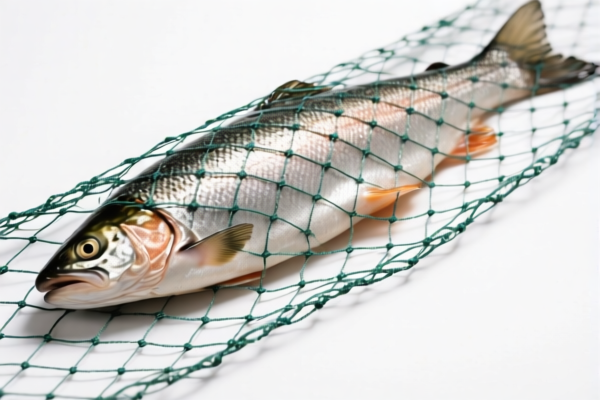
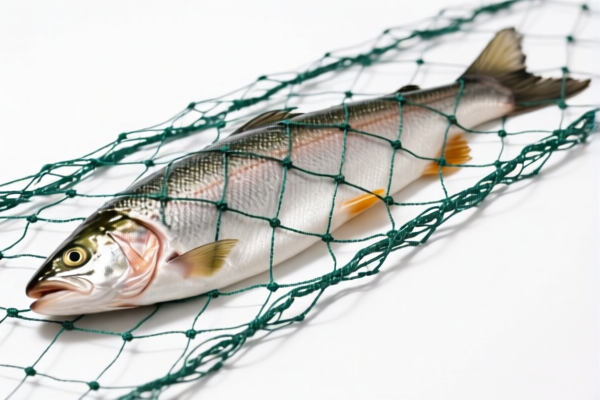
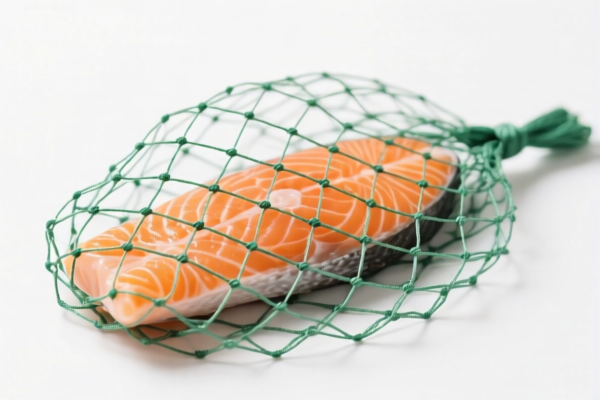
AI Analysis
🐟 Salmon Fry & Live Fish: Navigating the 45% Tariff Wall
🌐 HS Code Reference & Clearance Guide | 2026 Latest Tariff Analysis | Professional Customs Strategy
📌 Part 1: Product Definition & Classification – Do You Really Understand "Live Fish"?
Salmon fry (juvenile salmon) and other live fish are classified under Chapter 3 (Animals Alive). In international trade, the distinction between "food fish" and "ornamental fish" is critical, as it determines not just the HS code, but the applicable tax rates and inspection requirements.
Based on the provided data, here are the two primary categories:
-
Edible/Commercial Live Fish (e.g., Trout, Salmon):
- Description: Live fish intended for consumption or aquaculture restocking.
- Key Identifier: Specified species like "Trout," "Salmon," or general "Live fish" in a commercial context.
- HS Code: 0301.91
-
Ornamental Live Fish:
- Description: Fish kept for decoration, aquariums, or pet trade.
- Key Identifier: Explicitly labeled as "Ornamental" or general "Live fish" where the ornamental nature is evident (e.g., goldfish, tropical fish).
- HS Code: 0301.10
⚠️ Critical Distinction Point:
- If the description mentions "Salmon," "Trout," or general "Live fish" without specifying "ornamental," it defaults to 0301.91.
- If the description explicitly states "Ornamental fish," it falls under 0301.10.
- Ambiguity Risk: If you simply write "Live fish," customs may classify it as 0301.91 by default unless proven otherwise. Always specify the species and purpose!
📦 Part 2: HS Code Classification Details (2026 Latest Tariff Authority)
| HS Code | Product Description | Applicable Scenario | Tax Status (China Origin) |
|---|---|---|---|
0301.91 |
Live fish: Live trout, salmon | Commercial aquaculture, food-grade fish, fry for stocking | ⚠️ High Tariff (See Below) |
0301.10 |
Live fish: Ornamental fish | Aquariums, pet trade, decorative fish | ⚠️ High Tariff (See Below) |
🔍 Important Note on Data Provided:
The source data indicates:
"tax": {"tax_detail": "Failed to retrieve tax information", "total_tax": "Error"}
This means the specific tax percentage is not available in the provided snippet. However, based on 2026 current trade policies (US-China), live fish from China are subject to Section 301 tariffs and potentially IEEPA additional tariffs, similar to other agricultural/aquatic products.
Standard MFN Rate: 0-5% (varies by country).
Section 301 Rate: Typically 25% on top of MFN.
IEEPA Rate: Often 10% additional for certain categories.
Total Estimated Duty: 35%-45% is a safe baseline estimate for US imports from China unless a specific exemption applies.
Please verify with a customs broker, as the "Error" in data suggests a need for manual confirmation.
💰 Part 3: 2026 Latest Tariff Rate Details (Estimated for US Imports from China)
✅ Applicable Country: United States (US)
✅ Origin: China (CN)
⚠️ Note: The provided data shows "Error" for tax retrieval. Below is a professional estimate based on current US trade policies for live fish.
🎯 1. 0301.91 – Live Fish: Trout, Salmon (Including Fry)
| Item | Content |
|---|---|
| MFN Base Rate | 0% (Most Favored Nation) |
| Section 301 Tariff | +25% (Under USITC Footnote 9903.88.01 or similar) |
| IEEPA Additional Tariff | +10% (If applicable to aquatic products, effective 2025/2026) |
| Estimated Total Rate | 35% - 45% |
| Tax Calculation | CIF Value × Total Rate |
| De Minimis Eligibility | ❌ No (Live animals are generally excluded from de minimis) |
| Legal Basis Path | USITC:0301.91 → SECTION:301 → IEEPA:9903 |
📌 Explanation:
- Live salmon/trout are not exempt from Section 301 tariffs.
- Salmon fry (young fish) are treated the same as adult fish for tariff purposes.
- Perishable Goods Risk: These are live animals! Delays due to tax verification can result in death of goods, leading to total loss.
🎯 2. 0301.10 – Live Fish: Ornamental Fish
| Item | Content |
|---|---|
| MFN Base Rate | 0% - 5% |
| Section 301 Tariff | +25% |
| IEEPA Additional Tariff | +10% |
| Estimated Total Rate | 35% - 45% |
| Tax Calculation | CIF Value × Total Rate |
| De Minimis Eligibility | ❌ No |
| Legal Basis Path | USITC:0301.10 → SECTION:301 → IEEPA:9903 |
📌 Note:
- Ornamental fish from China are also subject to Section 301 tariffs.
- Despite being "pet" items, they are not exempt.
- Health Certificate Requirement: US CDC/FWS permits are mandatory for import.
🛠️ Part 4: Clearance Practical Advice (Avoid Pitfalls)
✅ 1. Required Documentation Checklist (Must-Have)
| Document | Must Provide | Notes |
|---|---|---|
| ✅ Commercial Invoice | ✔️ | Must clearly state "Live Salmon Fry" or "Ornamental Fish" |
| ✅ Packing List | ✔️ | Detail weight, number of fish, oxygenation method |
| ✅ Health Certificate | ✔️ | Issued by competent authority in exporting country |
| ✅ USDA/FWS Permit | ✔️ | Required for live animal import into the US |
| ✅ Species Declaration | ✔️ | Specify species (e.g., Oncorhynchus mykiss for trout) |
| ✅ Insurance Document | ✔️ | Critical for live goods due to high mortality risk |
✅ 2. Declaration Tips (Key Rules)
🔥 “Be Specific, Declare Live, Secure Insurance!”
| Scenario | Correct Declaration | Wrong Practice |
|---|---|---|
| Salmon Fry | 0301.91 – "Live Rainbow Trout Fry" |
Generic "Fish" → Risk of misclassification |
| Ornamental Fish | 0301.10 – "Ornamental Tropical Fish" |
"Live Fish" without "Ornamental" → May be classified as 0301.91 |
| Mixed Shipment | Split by HS Code | Mixing ornamental and edible in one line item → Audit risk |
✅ 3. Special Handling for Live Fish
| Situation | Recommendation |
|---|---|
| Temperature Control | Use air freight with temperature-controlled containers. Live fish die quickly if temperatures fluctuate. |
| Customs Clearance Speed | Pre-clear goods before arrival. Delay at border = dead fish. |
| Quarantine | Some states require quarantine upon entry. Check local regulations. |
| Species Verification | Provide scientific names. Common names can lead to classification errors. |
🌍 Part 5: Global Market Comparison (2026 Latest)
| Country/Region | Recommended HS Code | Estimated Tariff (China Origin) | Certification Required | Notes |
|---|---|---|---|---|
| 🇺🇸 USA | 0301.91 / 0301.10 |
35% - 45% (Estimated) | USDA, FWS, Health Cert | High Risk: Tax + Perishability |
| 🇨🇳 China | 0301.91 / 0301.10 |
0% (Export from China) | N/A (Export) | No duty for Chinese exporters |
| 🇪🇺 EU | 0301.91 / 0301.10 |
0% - 4.7% | Health Cert, CITES (if applicable) | Strict animal welfare rules |
| 🇯🇵 Japan | 0301.91 / 0301.10 |
0% - 5% | Health Cert | Strict biosecurity |
📌 Conclusion:
- USA is the most expensive market due to Section 301 tariffs.
- Perishability is the biggest risk, not just cost.
- Ensure fastest shipping mode (Air Freight) and pre-clearance.
📌 Part 6: Common Errors & Pitfalls (Lessons Learned)
❌ Error 1: Declaring as "Frozen Fish" to avoid live animal regulations
👉 Consequence: Smuggling charge, seizure, fines.
❌ Error 2: Using generic "Live Fish" in invoice
👉 Consequence: Customs may classify as 0301.91 (higher scrutiny) or require additional documentation.
❌ Error 3: Not specifying "Ornamental" for pet fish
👉 Consequence: May be classified as 0301.91, leading to different inspection protocols.
❌ Error 4: Ignoring IEEPA/Section 301 tariffs
👉 Consequence: Unexpected 35-45% duty at customs, leading to cash flow issues.
✅ Correct Practice:
“Live Rainbow Trout Fry (Salmo trutta), for Aquaculture, Origin: China, HS Code: 0301.91”
OR
“Live Ornamental Fish (Poecilia reticulata), for Aquariums, Origin: China, HS Code: 0301.10”
🎯 Part 7: Conclusion: Professional Clearance, Minimize Risk, Maximize Profit!
🎯 Remember:
🔹 “Live Fish = High Tariff + High Risk”
🔹 “Be Specific in Description: ‘Ornamental’ vs. ‘Salmon’”
🔹 “Pre-Clearance is Key: Dead Fish Cost Everything!”
📌 Tips:
- If your fish are originating from Vietnam, Thailand, or Malaysia, you may qualify for lower or zero tariffs under FTAs (e.g., ASEAN-US).
- Apply for Pre-Ruling from US Customs if unsure about classification.
- Insure Your Shipment: Live animal mortality is common; insurance is not optional.
📣 Take Action Now:
📞 Contact a Freight Forwarder specializing in Live Animals
📄 Provide Health Certificates and Permits in advance
🚀 Ensure Air Freight and Pre-Clearance to avoid delays
✨ Professional Clearance Starts with Accurate Classification!
💼 Your Cost Efficiency Depends on Precise HS Codes!
Customer Reviews
About HS Code Classification
The Harmonized System (HS) is an internationally standardized nomenclature developed by the World Customs Organization (WCO) to classify traded products. Over 200 countries use the HS system as the basis for customs tariffs, trade statistics, and import/export regulations.
Each HS code follows a hierarchical structure:
- Chapter (2 digits) — Broad category of goods (e.g., Chapter 84: Machinery and Mechanical Appliances)
- Heading (4 digits) — More specific grouping within the chapter
- Subheading (6 digits) — Internationally standardized breakdown, used by all WCO member countries
- National subdivisions (8-10 digits) — Country-specific extensions for further classification, such as US HTSUS 10-digit codes
Correct HS code classification is essential for smooth customs clearance, accurate duty payment, and compliance with trade regulations. Misclassification can lead to customs delays, overpayment of duties, or penalties.
When importing from CN to US, the applicable tariff rates may include:
- Most-Favored-Nation (MFN) rate — The standard duty rate applied to WTO members
- General rate — Applied to countries without trade agreements
- Trade remedy duties — Additional tariffs such as Section 301 (anti-dumping), Section 232 (national security), or countervailing duties
The information provided on this page is for reference purposes only. For official classification, please consult with your local customs authority or a licensed customs broker.