Salted Lamb Skin with Wool
CN → USProduct Images
AI Analysis
🐑 Salted Lamb Skin with Wool (Raw Hides)
🌐 HS Code Reference & Customs Clearance Guide | 2026 Latest Tariff Analysis | Professional-Level Entry Strategy
📌 I. Product Definition & Classification: Do You Really Know "Salted Lamb Skin"?
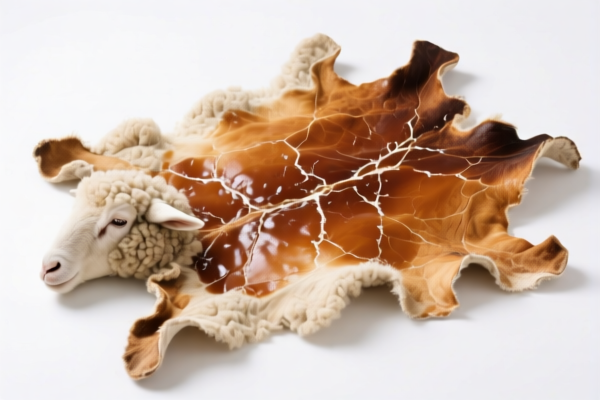
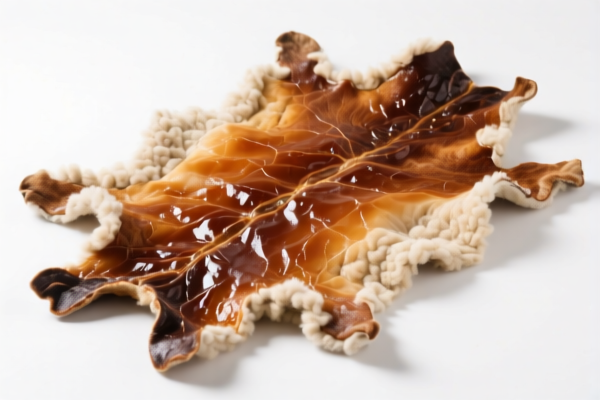
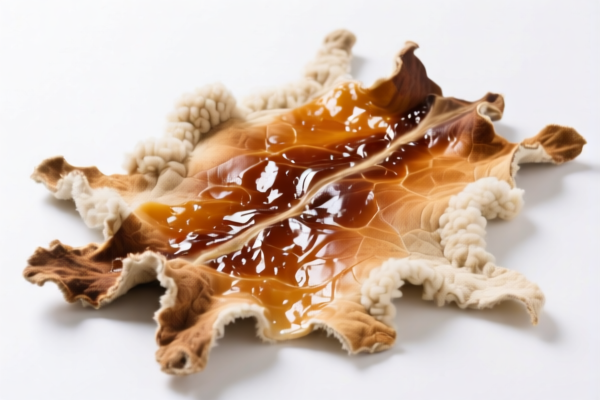
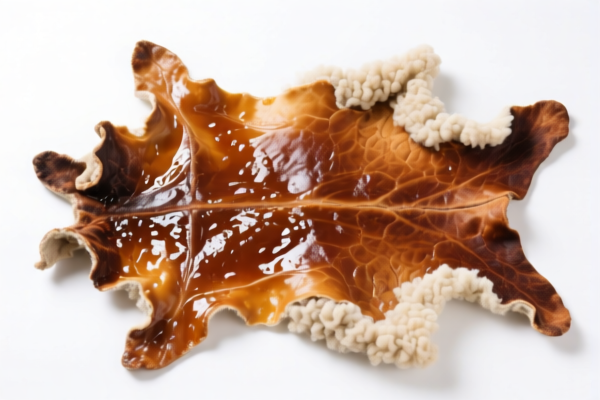
Salted Lamb Skin with Wool refers to sheep or lamb skins that have been preserved using salt (wet salting) to prevent decomposition during transport. They are primarily used in the manufacturing of sheepskin coats, gloves, rugs, and automotive interiors.
In international trade, they are strictly classified as raw hides of sheep or lamb, distinguished by two key factors: 1. State: Raw (freshly slaughtered) or Salted (preserved). 2. Wool: Retained (with wool) vs. Skinned (wool removed).
⚠️ Critical Distinction:
- If the skin has been salted and wool is retained → Classified under Chapter 41 (Raw Hides and Skins).
- If the skin has been dried, limed, or tanned → It may fall under Chapter 41 or 43 depending on processing, but salted specifically locks it into Chapter 41.
- If it is salted but wool is removed → It is still Chapter 41, but the subheading changes slightly based on weight/thickness.
📦 II. HS Code Classification Details (2026 Latest Tariff Authority)
| HS Code | Product Description | Application Scenario | Wool Status | Preservation |
|--------|----------|----------|----------------|
| 4101.20.00.00 | Sheep or Lamb Skins, Not Withered or Split, Raw or Salted | Most common raw material for sheepskin coats, gloves, and fur garments | ✅ With Wool | Salted / Fresh |
| 4101.21.00.00 | Sheep or Lamb Skins, Weight ≤ 0.5 kg each | Lighter skins, often for lining or smaller accessories | ✅ With Wool | Salted / Fresh |
| 4101.29.00.00 | Sheep or Lamb Skins, Not Withered or Split | Skins heavier than 0.5 kg, not otherwise specified | ✅ With Wool | Salted / Fresh |
| 4101.50.00.00 | Sheep or Lamb Skins, Split or Wool Removed | Skins where the wool has been sheared off; used for leather goods instead of fur | ❌ No Wool | Salted / Fresh |
🔍 Key Reminder:
-4101.20.00.00is the most accurate general code for Salted Lamb Skin with Wool unless the individual skin weighs less than 0.5 kg (then4101.21) or is split (4101.50).
- Do not confuse with4303(Manufactured Fur), as these are raw materials, not finished or processed fur products.
- Do not confuse with0505(Feathers/Down), as skins are clearly excluded from Chapter 5.
💰 III. 2026 Latest Tariff Rate Details (Including Surcharges & Policy Add-ons)
✅ Applicable Country: United States (US)
✅ Country of Origin: China (CN)
✅ Effective Date: From November 10, 2025 (and subsequent imports)
🎯 1. 4101.20.00.00 —— Sheep/Lamb Skins, Raw or Salted, with Wool
| Item | Content |
|---|---|
| Base Rate | 0% (ad valorem) |
| USITC Surtax | +25% (from USITC Footnote 9903.88.01) |
| IEEPA Surtax | +10% (for China/HK products, starting Nov 10, 2025) |
| Total Tariff Rate | 45% |
| Tax Calculation | CIF Value × 45% |
| De Minimis Eligibility | ❌ Not Eligible (deny_de_minimis) |
| Legal Basis Path | IEEPA:9903.01.25 → IEEPA:9903.01.24 → USITC:4101.20.00.00 → FOOTNOTE:9903.88.01 |
📌 Explanation:
- The 25% USITC surtax stems from Section 301 of the U.S. Trade Act, targeting specific raw agricultural and industrial products.
- The 10% IEEPA surtax is an additional levy under the International Emergency Economic Powers Act for Chinese-origin goods.
- Total 45% is extremely high for a raw material, significantly impacting profit margins. Must be factored into cost calculations immediately.
🎯 2. 4101.21.00.00 —— Sheep/Lamb Skins, ≤ 0.5 kg, with Wool
| Item | Content |
|---|---|
| Base Rate | 0% |
| USITC Surtax | +25% |
| IEEPA Surtax | +10% |
| Total Tariff Rate | 45% |
| Tax Calculation | CIF × 45% |
| De Minimis Eligibility | ❌ Not Eligible |
| Legal Basis Path | IEEPA:9901.25 → IEEPA:9903.01.24 → USITC:4101.21.00.00 → FOOTNOTE:9903.88.01 |
📌 Note:
- Even if the skins are light, the surtaxes still apply.
- Ensure accurate weight declaration to avoid misclassification penalties.
🎯 3. 4101.50.00.00 —— Sheep/Lamb Skins, Split or Wool Removed
| Item | Content |
|---|---|
| Base Rate | 0% |
| USITC Surtax | +25% |
| IEEPA Surtax | +10% |
| Total Tariff Rate | 45% |
| Tax Calculation | CIF × 45% |
| De Minimis Eligibility | ❌ Not Eligible |
📌 Note:
- If the wool is removed during processing before export, the code changes, but the tariff rate remains the same.
- This code is not for "Salted Lamb Skin with Wool" as described in the user prompt. Use only if wool is absent.
🛠️ IV. Customs Clearance Practical Advice (Battle-Tested Pitfall Guide)
✅ 1. Required Documentation Checklist (None Can Be Skipped)
| Document | Mandatory | Description |
|---|---|---|
| ✅ Commercial Invoice | ✔️ | Must explicitly state: "Salted Sheep/Lamb Skins, Raw, With Wool" |
| ✅ Packing List | ✔️ | Detail weight per skin, total skins per bale, bale dimensions |
| ✅ Bill of Lading/Air Waybill | ✔️ | Standard transport document |
| ✅ Certificate of Origin (CO) | ✔️ | Required for origin determination; if from Vietnam/Mexico, may seek exemption |
| ✅ Health/Sanitary Certificate | ✔️ | Issued by country of origin government, confirming no contagious diseases |
| ✅ Salted Preservation Declaration | ✔️ | Confirming preservation method (salted) to distinguish from fresh (perishable) |
| ✅ Photos of Goods | ✔️ | Clear images showing wool retention, salt application, and bale packaging |
✅ 2. Declaration Tips (Key Mnemonics)
🔥 "Wool Stay, Code 4101, Salted Not Fresh, Docs Ready!"
| Scenario | Correct Declaration | Wrong Action |
|---|---|---|
| Salted skin, wool retained | 4101.20.00.00 |
Misdeclare as "Leather" → 4104 (higher scrutiny) |
| Fresh (unsalted) skin | Still 4101.20.00.00 |
Misdeclare as food item → Chapter 2 (illegal) |
| Skins with wool removed | 4101.50.00.00 |
Use 4101.20 → Incorrect classification |
| Tanned/Dyed skins | 4104 or 4303 |
Use 4101 → Wrong chapter, penalties |
✅ 3. Special Case Handling
| Scenario | Handling Advice |
|---|---|
| Moisture Content | Ensure skins are properly salted. Excessive moisture can lead to odor, bacterial growth, and rejection by CBP for sanitary reasons. |
| Bale Packaging | Skins must be packed in secure bales. Loose skins may be deemed improper for transport, leading to delays. |
| Veterinary Inspection | CBP may require USDA inspection for raw animal products. Ensure the supplier has valid health certificates. |
| Environmental Compliance | Salted skins may trigger EPA scrutiny regarding brine disposal at the destination. Ensure compliance with local environmental laws. |
🌍 V. Global Market Customs Comparison (2026 Latest)
| Country/Region | Recommended HS Code | Tariff | Certification | Remarks |
|---|---|---|---|---|
| 🇺🇸 United States | 4101.20.00.00 |
45% (CN) | USDA Health Cert | High tariff due to Section 301 & IEEPA |
| 🇨🇳 China | 4101.20.00.00 |
5-8% | N/A | Standard import tariff for raw materials |
| 🇪🇺 European Union | 4101.20.00 |
0% (if no surplus) | Veterinary Cert | EU has strict veterinary controls |
| 🇬🇧 United Kingdom | 4101.20.00 |
0-5% | Veterinary Cert | Post-Brexit rules may vary slightly |
| 🇯🇵 Japan | 4101.20.00 |
2.5-5% | Health Cert | Strict animal disease prevention laws |
📌 Conclusion:
- USA is the highest-cost market for this product due to combined surtaxes.
- EU and UK focus heavily on sanitary and phytosanitary (SPS) measures rather than high tariffs.
- China imports these skins for domestic tanning/fur industries with moderate tariffs.
📌 VI. Common Mistakes & Pitfall Guide (Lessons Learned)
❌ Mistake 1: Declaring as "Leather" (4104) before it is tanned
👉 Consequence: Goods may be rejected or subject to higher tariffs and different regulations. Raw hides are not leather.
❌ Mistake 2: Failing to declare "Salted" status
👉 Consequence: If declared as "Fresh," it may be considered perishable and require cold chain logistics, leading to spoilage and rejection.
❌ Mistake 3: Ignoring USDA/Veterinary requirements
👉 Consequence: Shipment held at port, returned, or destroyed due to lack of health certificates.
❌ Mistake 4: Under-declaring weight to reduce duty base
👉 Consequence: Heavy fines, seizure of goods, and blacklisting of the importer.
✅ Correct Approach:
"Raw Salted Sheep Skins, With Wool, Preserved in Salt, Packed in Bales, For Tanning/Fur Use, Compliant with USDA Health Standards"
🎯 VII. Conclusion: Professional Declaration, Cost Control, Efficiency!
🎯 Remember Mnemonics:
🔹 "Wool On, Code 4101, Salted Not Tanned, Tariffs High!"
🔹 "HS Code Defines Duty, 45% in US, Don't Risk It!"
📌 Pro Tip:
If your lamb skins are originally from New Zealand, Australia, or Argentina, you may qualify for lower or zero tariffs under various Free Trade Agreements (e.g., US-Australia FTA, US-Chile FTA).
Recommendation: Always verify the Country of Origin on the invoice. If not China, check for preferential tariffs.
📣 Immediate Action:
📞 Contact a licensed customs broker + Provide Health Certificates + Verify Origin
🚀 Ensure your sheepskin imports are compliant, tax-efficient, and risk-free!
✨ Professional Customs Clearance Starts with Accurate Classification!
💼 Your every dollar saved is a dollar earned!
Customer Reviews
About HS Code Classification
The Harmonized System (HS) is an internationally standardized nomenclature developed by the World Customs Organization (WCO) to classify traded products. Over 200 countries use the HS system as the basis for customs tariffs, trade statistics, and import/export regulations.
Each HS code follows a hierarchical structure:
- Chapter (2 digits) — Broad category of goods (e.g., Chapter 84: Machinery and Mechanical Appliances)
- Heading (4 digits) — More specific grouping within the chapter
- Subheading (6 digits) — Internationally standardized breakdown, used by all WCO member countries
- National subdivisions (8-10 digits) — Country-specific extensions for further classification, such as US HTSUS 10-digit codes
Correct HS code classification is essential for smooth customs clearance, accurate duty payment, and compliance with trade regulations. Misclassification can lead to customs delays, overpayment of duties, or penalties.
When importing from CN to US, the applicable tariff rates may include:
- Most-Favored-Nation (MFN) rate — The standard duty rate applied to WTO members
- General rate — Applied to countries without trade agreements
- Trade remedy duties — Additional tariffs such as Section 301 (anti-dumping), Section 232 (national security), or countervailing duties
The information provided on this page is for reference purposes only. For official classification, please consult with your local customs authority or a licensed customs broker.