Salted Reptile Skin
CN → USProduct Images
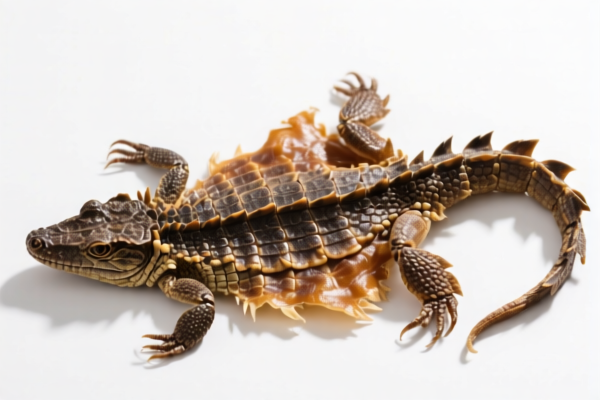

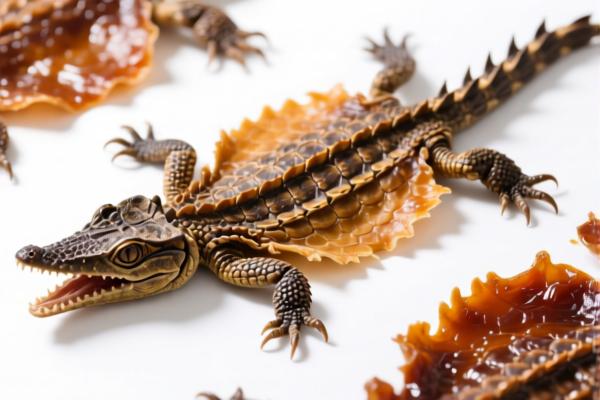

AI Analysis
🦎 Salted Reptile Skin (Prepared Animal Furskins)
🌐 HS Code Reference & Customs Clearance Guide | 2026 Latest Tariff Analysis | Professional Clearance Strategy
📌 I. Product Definition & Classification: What is "Salted Reptile Skin"?
Salted Reptile Skin refers to raw hides and skins of reptiles (such as snakes, crocodiles, alligators, lizards, and geckos) that have been preserved through the salting process to prevent decomposition during transport. These are raw materials, primarily used in the luxury leather goods industry (handbags, shoes, belts) and exotic leather accessories.
In international trade, the classification depends heavily on: 1. The Species: Different reptiles fall under different HS headings (84 vs. 85). 2. The State: "Salted" implies "raw but preserved," distinct from "tanned" or "crust" leather. 3. The Form: Whole skins, sections, or offals.
⚠️ Critical Distinction:
- Raw/Salted: Goes under Chapter 41 (Raw Hides and Skins).
- Tanned/Finished: Goes under Chapter 41 or Chapter 42 (Leather Articles), but with different codes.
- CITES Species: Many reptiles (especially crocodiles, alligators, pythons) are protected under CITES. Without valid CITES permits, these goods will be seized and destroyed.
📦 II. HS Code Classification Details (2026 Latest Tariff Authority)
| HS Code | Product Description | Application Scenario | CITES Status |
|---|---|---|---|
4102.21.00.00 |
Crocodiles, Alligators, and Caimans (Salted) | Luxury leather bags, wallets, shoes | 🚨 High (Appendix I/II) |
4102.29.00.00 |
Other Reptile Skins (e.g., Lizards, Geckos, Iguanas - Salted) | Exotic accessories, decorative items | 🚨 High (Appendix II) |
4102.30.00.00 |
Snakeskins (Salted) | Belts, watch straps, high-end fashion | 🚨 High (Appendix II/III) |
0511.99.90.00 |
Animal Products n.e.c. (if classified as "other animal products" in specific jurisdictions) | Rare cases where reptile skin doesn't fit Chapter 41 definitions | ❓ Varies |
🔍 Key Reminder:
- Chapter 41 covers "Raw Hides and Skins (other than fur skins) and Leather."
- Salted is the standard preservation method for export. Dried, limed, or chrome-tanned skins have different sub-headings.
- CITES is Mandatory: If the reptile is listed in CITES Appendices I or II, you MUST provide CITES export and import permits. Failure to do so results in confiscation and heavy fines.
💰 III. 2026 Latest Tariff Rate Details (Including Additional Duties)
✅ Applicable Country: United States (US)
✅ Country of Origin: China (CN)
✅ Effective Date: Post-November 10, 2025 (Includes subsequent imports)
🎯 1. 4102.21.00.00 – Crocodile/Alligator Skins (Salted)
| Item | Content |
|---|---|
| Base Tariff Rate | 4.5% (ad valorem) |
| USITC Additional Duty (Section 301) | +25% |
| IEEPA Additional Duty (China/HK) | +10% (Effective Nov 10, 2025) |
| Total Effective Rate | 39.5% |
| Tax Calculation | CIF Value × 39.5% |
| De Minimis Eligibility | ❌ No (deny_de_minimis) |
| Legal Basis Path | IEEPA:9903.01.25 → USITC:4102.21.00.00 → FOOTNOTE:9903.88.01 |
📌 Explanation:
- Crocodile skins are considered high-value raw materials for luxury goods.
- The 39.5% total duty significantly impacts profitability.
- CITES Permits are required in addition to customs duties.
🎯 2. 4102.29.00.00 – Other Reptile Skins (Salted, e.g., Lizards)
| Item | Content |
|---|---|
| Base Tariff Rate | 4.5% (ad valorem) |
| USITC Additional Duty (Section 301) | +25% |
| IEEPA Additional Duty (China/HK) | +10% |
| Total Effective Rate | 39.5% |
| Tax Calculation | CIF Value × 39.5% |
| De Minimis Eligibility | ❌ No |
| Legal Basis Path | IEEPA:9903.01.24 → USITC:4102.29.00.00 → FOOTNOTE:9903.88.01 |
📌 Note:
- Lizard and iguana skins fall here.
- Similar tariff structure to crocodile skins.
- CITES Permits are strictly enforced.
🎯 3. 4102.30.00.00 – Snakeskins (Salted)
| Item | Content |
|---|---|
| Base Tariff Rate | 4.5% (ad valorem) |
| USITC Additional Duty (Section 301) | +25% |
| IEEPA Additional Duty (China/HK) | +10% |
| Total Effective Rate | 39.5% |
| Tax Calculation | CIF Value × 39.5% |
| De Minimis Eligibility | ❌ No |
| Legal Basis Path | IEEPA:9903.01.24 → USITC:4102.30.00.00 → FOOTNOTE:9903.88.01 |
📌 Note:
- Snake skins (pythons, cobras, etc.) are high-risk for customs audits due to conservation concerns.
- CITES Permits are mandatory.
🛠️ IV. Customs Clearance Practical Advice (Real-World Pitfall Avoidance)
✅ 1. Required Documentation Checklist (All Mandatory)
| Document | Must Provide | Description |
|---|---|---|
| ✅ CITES Export Permit | ✔️ | Issued by the Country of Origin. Essential for all CITES-listed reptiles. |
| ✅ CITES Import Permit | ✔️ | Issued by the Destination Country (e.g., US FWS). Required for Appendix I/II species. |
| ✅ Commercial Invoice | ✔️ | Must specify: Species (Scientific Name), Quantity, Weight, HS Code, CITES Permit Numbers. |
| ✅ Packing List | ✔️ | Detailed description of packaging, weight, and dimensions. |
| ✅ Bill of Lading/Air Waybill | ✔️ | Standard shipping document. |
| ✅ Certificate of Origin | ✔️ | Required for tariff determination (preferential treatment if applicable). |
| ✅ Preservation Statement | ✔️ | Confirming the skins are "Salted" and not tanned (to justify Chapter 41 classification). |
✅ 2. Declaration Tips (Key Mantra)
🔥 "Species Name, CITES Permit, Salted State, HS Code Match!"
| Situation | Correct Declaration Method | Wrong Practice |
|---|---|---|
| Crocodile Skin | 4102.21.00.00 + CITES Permit |
Declaring as "Leather" → Delay + Fine |
| Lizard Skin | 4102.29.00.00 + CITES Permit |
Declaring as "Animal Hair" → Confiscation |
| Snake Skin | 4102.30.00.00 + CITES Permit |
Omitting CITES Permit → Seizure & Lawsuit |
| Mixed Container | Separate HS Codes for each species | Mixed declaration → Audit & Penalty |
✅ 3. Special Handling
| Situation | Handling Advice |
|---|---|
| OEM Custom Skins | Provide customer order + CITES permits. Ensure scientific names match CITES documents exactly. |
| Skins with Offals | Offals (trimmings) may have different tariffs. Declare separately if significant. |
| Skins for Medical Use | If for pharmaceuticals (e.g., snake venom glands), different HS codes may apply. Consult customs broker. |
| Skins for Military/Special Use | Rare, but if applicable, provide justification. CITES still applies. |
🌍 V. Global Major Market Customs Comparison (2026 Latest)
| Country/Region | Recommended HS Code | Tariff | Certification Requirements | Notes |
|---|---|---|---|---|
| 🇺🇸 USA | 4102.21.00.00 (Crocodile) |
39.5% (CN Origin) | CITES + USDA | High scrutiny on CITES compliance |
| 🇨🇳 China | 4102.21.00.00 |
5% | None (Domestic Trade) | No CITES for domestic, but required for import/export |
| 🇪🇺 EU | 4102.21.00 |
0% (If CITES compliant) | CITES + EU Regulation | Strict CITES enforcement |
| 🇦🇺 Australia | 4102.21.00 |
5% | CITES + Biosecurity | Strict biosecurity laws |
| 🇯🇵 Japan | 4102.21.00 |
0% | CITES | No additional duties if CITES valid |
📌 Conclusion:
- USA is the most expensive market due to 301 and IEEPA tariffs (39.5%).
- CITES compliance is non-negotiable in all major markets.
- EU and Japan offer better tariff rates but have strict CITES enforcement.
📌 VI. Common Mistakes & Pitfall Guide (Lessons Learned)
❌ Mistake 1: Declaring "Salted Reptile Skin" without specifying the Scientific Name
👉 Consequence: Customs cannot verify CITES status → Delay & Fines
❌ Mistake 2: Missing CITES Permit for Appendix I Species (e.g., Crocodile)
👉 Consequence: Confiscation & Criminal Charges
❌ Mistake 3: Declaring "Tanned Leather" when the goods are "Salted"
👉 Consequence: Misclassification → Back Taxes & Penalties
❌ Mistake 4: Using "Animal Skin" as a generic description
👉 Consequence: Customs flags for detailed inspection → Delays
✅ Correct Practice:
"Salted Crocodile Skin, Crocodylus porosus, 50 pcs, 100 kg, CITES Export Permit #12345, HS Code 4102.21.00.00"
🎯 VII. Conclusion: Professional Declaration, Save Time, Reduce Costs!
🎯 Remember the Mantra:
🔹 "CITES First, Species Second, Salted State Clear, HS Code Right!"
🔹 "HS Code determines tax, CITES determines legality, declaration determines speed!"
📌 Pro Tip:
If your reptile skins are originating from countries with CITES exemptions or lower tariffs (e.g., Australia, Thailand), consider supply chain optimization to avoid US tariffs and CITES complexities.
Recommend pre-clearance ruling for complex shipments to avoid risks.
📣 Immediate Action:
📞 Contact a licensed customs broker + Provide CITES Permits + Apply for Pre-Clearance Ruling
🚀 Let your reptile skins, smooth clearance, efficient export, profit maximization!
✨ Professional Clearance, Starts with Accurate Classification!
💼 Every Dollar Counts, Especially in Luxury Goods!
Customer Reviews
About HS Code Classification
The Harmonized System (HS) is an internationally standardized nomenclature developed by the World Customs Organization (WCO) to classify traded products. Over 200 countries use the HS system as the basis for customs tariffs, trade statistics, and import/export regulations.
Each HS code follows a hierarchical structure:
- Chapter (2 digits) — Broad category of goods (e.g., Chapter 84: Machinery and Mechanical Appliances)
- Heading (4 digits) — More specific grouping within the chapter
- Subheading (6 digits) — Internationally standardized breakdown, used by all WCO member countries
- National subdivisions (8-10 digits) — Country-specific extensions for further classification, such as US HTSUS 10-digit codes
Correct HS code classification is essential for smooth customs clearance, accurate duty payment, and compliance with trade regulations. Misclassification can lead to customs delays, overpayment of duties, or penalties.
When importing from CN to US, the applicable tariff rates may include:
- Most-Favored-Nation (MFN) rate — The standard duty rate applied to WTO members
- General rate — Applied to countries without trade agreements
- Trade remedy duties — Additional tariffs such as Section 301 (anti-dumping), Section 232 (national security), or countervailing duties
The information provided on this page is for reference purposes only. For official classification, please consult with your local customs authority or a licensed customs broker.