Salted Reptile Skins
CN → US| HS Code | Tariff Rate | Origin | Destination | Doc |
|---|---|---|---|---|
| 4103201000 | 17.5% | CN | US | Official Doc |
| 4301900000 | 10.0% | CN | US | Official Doc |
| 4103202000 | 22.5% | CN | US | Official Doc |
| 4301800290 | 17.5% | CN | US | Official Doc |
Product Images
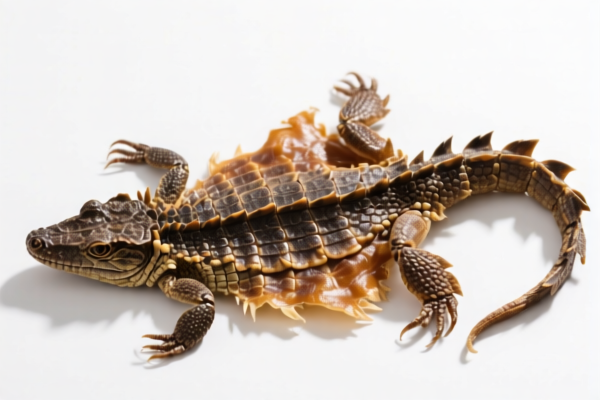
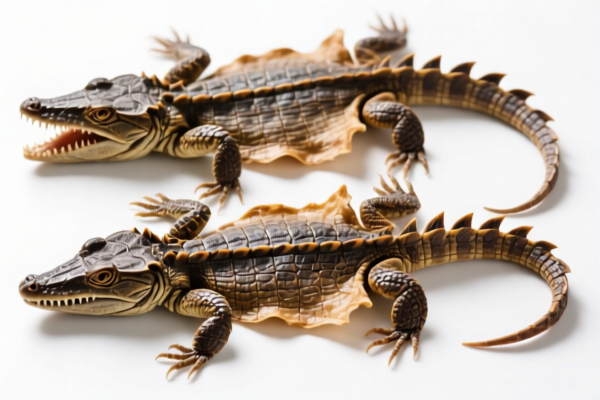
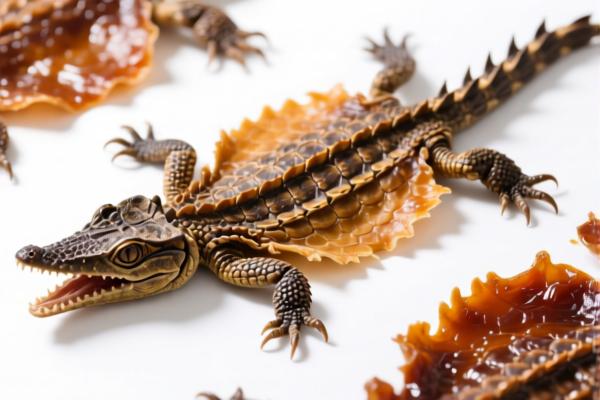
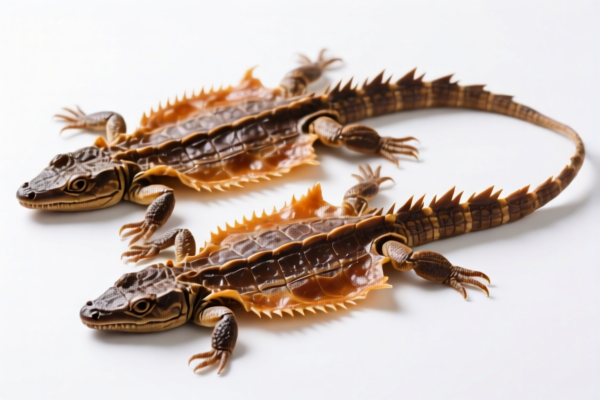
AI Analysis
🐊 Salted Reptile Skins (Crocodylian Skins)
🌐 HS Code Reference & Customs Clearance Guide | 2026 Harmonized System Analysis | Professional Customs Strategy
📌 I. Product Definition & Classification: What Are "Salted Reptile Skins"?
Salted reptile skins, particularly from crocodilians, are raw materials obtained after slaughtering, fleshing, and preserving in salt to prevent decomposition. They are the foundational material for luxury leather goods (handbags, shoes, watch straps).
Key Distinction in Customs: The classification depends heavily on how the skin is described and processed: 1. Chapter 41 (Leather): Typically covers skins of reptiles (excluding crocodiles, alligators, and caimans in some contexts, or specific forms). 2. Chapter 43 (Fur &皮毛): Specifically covers "Raw hides and skins of crocodiles, alligators and caimans" as "Furskins."
⚠️ Critical Classification Point:
- If classified as general reptile skin (non-crocodilian or specific sub-codes) → Chapter 41
- If explicitly identified as crocodile/Alligator raw skin (furskin category) → Chapter 43
- Salted state is a "primary processing" form, not tanned leather.
📦 II. HS Code Classification Matrix (2026 Latest Tariff Rates)
| HS Code | Product Description | Summary of Classification Logic | Total Tax Rate |
|---|---|---|---|
4103.20.10.00 |
Reptile Skins (Excluding Crocodiles) State: Salted (Raw) |
Defined as reptile skins in raw state (salted), meeting the definition of "Unprepared." | 17.5% |
4301.90.00.00 |
Crocodile Skins (Furskin Category) State: Salted (Raw) |
Classified as "Furskin" (raw fur category). Salted state is considered primary processing suitable for fur trade. | 10.0% |
4103.20.20.00 |
Reptile Skins (General) State: Salted |
Explicitly includes material (reptile) and state (salted/raw preservation). | 22.5% |
4301.80.02.90 |
Other Raw Furskins State: Salted |
Crocodile skins as raw furskins, not excluded from list, fitting "Other raw furskins" definition. | 17.5% |
🔍 Key Insight:
- Chapter 43 (4301.xxxx) generally applies to Crocodilians (Crocodylidae) when treated as "furskins." - Chapter 41 (4103.xxxx) applies to other reptiles or specific sub-classifications where crocodile skins are not categorized under fur. - Tax Discrepancy: The tax rate varies significantly (10% vs 22.5%) based on the precise HS code selection. Misclassification can lead to overpayment or underpayment risks.
💰 III. 2026 Tariff Rate Breakdown (Including Surtaxes & Policy Add-ons)
✅ Applicable Country: United States (US)
✅ Origin: China (CN) (Assumed based on typical context of such tax structures)
✅ Effective Date: Current (2025-2026)
🎯 1. HS Code: 4103.20.10.00
Description: Reptile skins (non-crocodile specific), Salted, Raw.
| Item | Detail |
|---|---|
| Base Tariff | 0.0% |
| Section 301 Surtax | +7.5% |
| Section 122 Tariff | +10.0% |
| Total Tax Rate | 17.5% |
| Calculation Basis | CIF Value × 17.5% |
| Legal Authority Path | USITC:4103.20.10.00 → Section 301: 7.5% → Section 122: 10% |
📌 Explanation:
- Base tariff is low, but Section 301 and Section 122 significantly add to the cost.
- Section 122 often applies to specific strategic materials or trade remedy cases.
🎯 2. HS Code: 4301.90.00.00
Description: Crocodile Skins (Furskin Category), Salted, Raw.
| Item | Detail |
|---|---|
| Base Tariff | 0.0% |
| Section 301 Surtax | 0.0% |
| Section 122 Tariff | +10.0% |
| Total Tax Rate | 10.0% |
| Calculation Basis | CIF Value × 10.0% |
| Legal Authority Path | USITC:4301.90.00.00 → Section 122: 10% |
📌 Explanation:
- Most Favorable Rate: Only 10% total tax.
- Section 301 Exemption: Crocodile skins classified under4301.90.00.00do not incur the 7.5% Section 301 surtax.
- Strategy: If your product is genuine crocodile skin, classifying under Chapter 43 is cost-optimal.
🎯 3. HS Code: 4103.20.20.00
Description: Reptile Skins, Salted.
| Item | Detail |
|---|---|
| Base Tariff | 5.0% |
| Section 301 Surtax | +7.5% |
| Section 122 Tariff | +10.0% |
| Total Tax Rate | 22.5% |
| Calculation Basis | CIF Value × 22.5% |
| Legal Authority Path | USITC:4103.20.20.00 → Base: 5% → Section 301: 7.5% → Section 122: 10% |
📌 Explanation:
- Highest Tax Rate: 22.5%.
- Reason: Higher base tariff (5%) plus both surtaxes.
- Risk: Misclassifying crocodile skin as "general reptile skin" here leads to overpayment of 12.5% compared to4301.90.00.00.
🎯 4. HS Code: 4301.80.02.90
Description: Other Raw Furskins (Crocodile), Salted.
| Item | Detail |
|---|---|
| Base Tariff | 0.0% |
| Section 301 Surtax | +7.5% |
| Section 122 Tariff | +10.0% |
| Total Tax Rate | 17.5% |
| Calculation Basis | CIF Value × 17.5% |
| Legal Authority Path | USITC:4301.80.02.90 → Section 301: 7.5% → Section 122: 10% |
📌 Explanation:
- This code applies if the skin is not the primary "furskin" category (4301.90) but still raw furskin.
- Tax Rate: 17.5% (same as4103.20.10.00).
- Use Case: When the skin type does not fit4301.90.00.00precisely.
🛠️ IV. Customs Clearance Practical Advice
✅ 1. Documentation Checklist (Mandatory)
| Document | Required? | Notes |
|---|---|---|
| ✅ Species Certificate | ✔️ Critical | Must explicitly state Crocodylidae (e.g., Crocodylus porosus, Crocodylus niloticus) vs. other reptiles. |
| ✅ CITES Permit | ✔️ Critical | Crocodile skins are CITES-listed. Import requires CITES Export Permit (from country of origin) and CITES Import Permit (US). |
| ✅ Salt Preservation Certificate | ✔️ | Confirms state as "raw/salted," not tanned. |
| ✅ Commercial Invoice | ✔️ | Must describe as "Raw Crocodile Skins, Salted" to support Chapter 43 classification. |
| ✅ Packing List | ✔️ | Detail count, weight, and dimensions of each skin. |
| ✅ Photos of Skins | ✔️ | Show texture, scale pattern, and salt application to verify raw state. |
⚠️ Warning:
- CITES Non-Compliance: Failure to provide CITES permits will result in seizure and fines.
- Species Identification: Using vague terms like "Reptile Skin" may trigger customs inspection for misclassification.
✅ 2. Declaration Strategy (Key Tips)
🔥 "Accurate Species, Correct Chapter, Avoid 12.5% Penalty!"
| Scenario | Correct Declaration | Error Consequence |
|---|---|---|
| Genuine Crocodile Skin | HS: 4301.90.00.00Desc: "Raw Crocodile Skins, Salted" |
Tax: 10% |
| Other Reptile Skin | HS: 4103.20.10.00 or 4103.20.20.00 |
Tax: 17.5% or 22.5% |
| Misclassified Crocodile as General Reptile | HS: 4103.20.20.00 |
Tax: 22.5% → Overpay 12.5% |
| Tanned Crocodile Leather | HS: 4106.21.00.00 (Not in data) |
Tax: Different (Likely higher base) |
| Incomplete CITES Docs | Any HS | Seizure, Fine, Delay |
✅ 3. Special Circumstances
| Situation | Handling Advice |
|---|---|
| Mixed Shipments (Crocodile + Other Reptiles) | Declare separately. Crocodile under 4301.90.00.00, others under 4103.xxxx. Do not mix to avoid audit risk. |
| Skin with Residual Flesh | Still considered "raw." Ensure it meets primary processing standards. If too decomposed, may be rejected. |
| Import for Taxidermy | Still requires CITES. Declare as "Raw Skins for Taxidermy." |
| Import for Leather Production | Declare as "Raw Skins for Tanning." Same HS codes apply. |
🌍 V. Global Market Comparison (2026)
| Country | Recommended HS Code | Tax Rate (China Origin) | CITES Requirement | Notes |
|---|---|---|---|---|
| 🇺🇸 USA | 4301.90.00.00 |
10.0% | Required | Lowest tax if correctly classified as Crocodile. |
| 🇨🇳 China | 4301.90.00.00 |
Varies | Required | Domestic trade rules may differ. |
| 🇪🇺 EU | 4301.90 |
Varies | Required | Strict CITES enforcement. |
| 🇬🇧 UK | 4301.90 |
Varies | Required | Post-Brexit rules apply. |
| 🇯🇵 Japan | 4301.90 |
Varies | Required | CITES strictness. |
📌 Conclusion:
- USA: Classifying as4301.90.00.00saves 12.5% compared to4103.20.20.00.
- CITES is universal for crocodile skins globally.
- Documentation precision is key to avoiding delays and penalties.
📌 VI. Common Mistakes & Pitfalls
❌ Mistake 1: Declaring "Reptile Skin" for Crocodile Skins
👉 Result: Tax increases from 10% to 17.5% or 22.5%.
👉 Fix: Explicitly state "Crocodile" and use Chapter 43.
❌ Mistake 2: Missing CITES Permit
👉 Result: Seizure, Fines, and Legal Action.
👉 Fix: Ensure CITES permits are obtained before shipment.
❌ Mistake 3: Confusing Raw (Salted) with Tanned
👉 Result: Wrong HS Code (e.g., 4106.21.00.00), potential misdeclaration.
👉 Fix: Clearly state "Salted" or "Raw" in invoice description.
❌ Mistake 4: Ignoring Section 301/122 Impact
👉 Result: Unbudgeted costs.
👉 Fix: Factor 17.5% or 22.5% into cost analysis for non-4301.90.00.00 codes.
🎯 VII. Conclusion: Optimize Classification, Minimize Costs
🎯 Key Takeaways:
🔹 For Crocodile Skins: Always try to classify under
4301.90.00.00→ 10% Tax.
🔹 For Other Reptiles: Expect 17.5% or 22.5% under Chapter 41.
🔹 CITES is Non-Negotiable: No permit = No entry.
🔹 Document Precision: "Raw," "Salted," and "Crocodile" must be explicit.
📌 Pro Tip:
If you are unsure of the species, provide DNA testing reports or expert identification to customs to support Chapter 43 classification for crocodile skins, saving 12.5% in taxes.
📣 Action Plan:
📞 Consult Customs Broker for HS Code confirmation.
📄 Obtain CITES Permits in origin country.
📝 Label Invoices as: "Raw Crocodile Skins, Salted, CITES Certified."
🚀 Ensure Smooth Clearance and Cost Efficiency.
✨ Professional Customs Clearance Starts with Precise Classification!
💼 Every Percent Saved is Pure Profit!
Customer Reviews
About HS Code Classification
The Harmonized System (HS) is an internationally standardized nomenclature developed by the World Customs Organization (WCO) to classify traded products. Over 200 countries use the HS system as the basis for customs tariffs, trade statistics, and import/export regulations.
Each HS code follows a hierarchical structure:
- Chapter (2 digits) — Broad category of goods (e.g., Chapter 84: Machinery and Mechanical Appliances)
- Heading (4 digits) — More specific grouping within the chapter
- Subheading (6 digits) — Internationally standardized breakdown, used by all WCO member countries
- National subdivisions (8-10 digits) — Country-specific extensions for further classification, such as US HTSUS 10-digit codes
Correct HS code classification is essential for smooth customs clearance, accurate duty payment, and compliance with trade regulations. Misclassification can lead to customs delays, overpayment of duties, or penalties.
When importing from CN to US, the applicable tariff rates may include:
- Most-Favored-Nation (MFN) rate — The standard duty rate applied to WTO members
- General rate — Applied to countries without trade agreements
- Trade remedy duties — Additional tariffs such as Section 301 (anti-dumping), Section 232 (national security), or countervailing duties
The information provided on this page is for reference purposes only. For official classification, please consult with your local customs authority or a licensed customs broker.