Salted Sheepskin with Wool
CN → US| HS Code | Tariff Rate | Origin | Destination | Doc |
|---|---|---|---|---|
| 6301200020 | 17.5% | CN | US | Official Doc |
| 6301200010 | 17.5% | CN | US | Official Doc |
| 5112111000 | 42.0% | CN | US | Official Doc |
| 5112192000 | 42.0% | CN | US | Official Doc |
Product Images
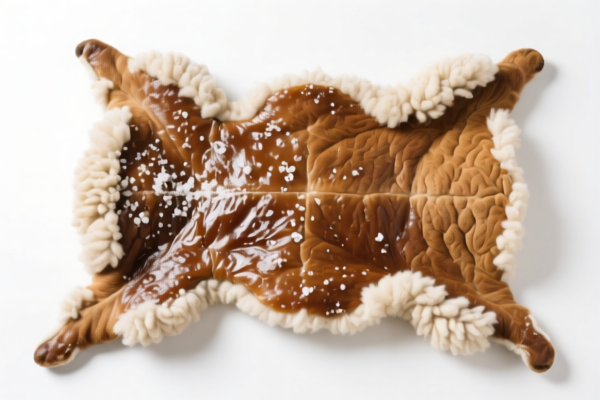
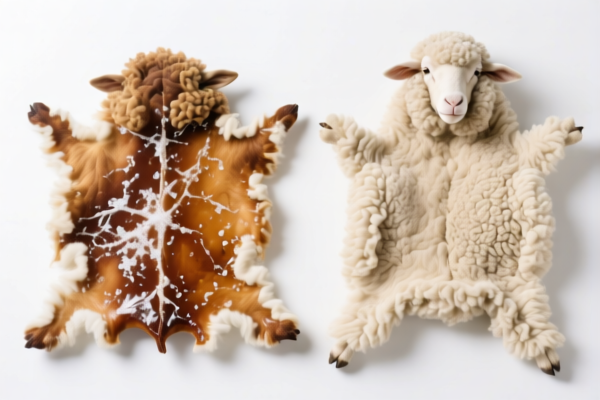
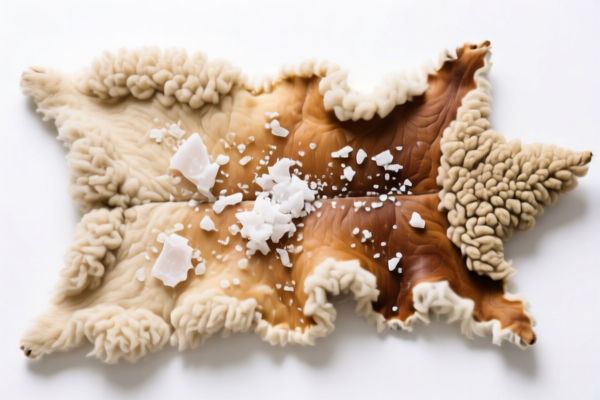
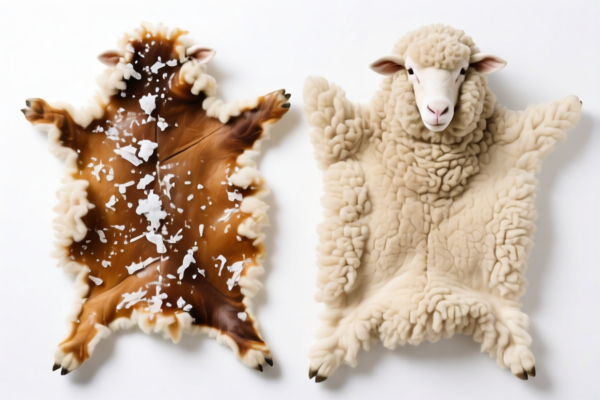
AI Analysis
🐑 Salted Sheepskin with Wool (Rawhide Skins)
🌐 HS Code Reference & Customs Clearance Guide | 2026 Latest Tariff Analysis | Professional Entry Strategies
📌 I. Product Definition & Classification: Do You Really Understand "Salted Sheepskin"?
Salted Sheepskin with Wool refers to raw sheepskins that have undergone the curing process (typically using salt) to preserve them and prevent decomposition before further tanning or processing. In international trade, these are classified as raw hides and skins, specifically under Chapter 41 of the Harmonized System.
However, for export purposes (particularly to the US from China), the specific form and processing level dictate the HS Code and the resulting tariff burden. The data provided distinguishes between raw skins (though not explicitly listed in your <DATA>, they are the baseline for raw products) and processed wool products (blankets/fabrics).
⚠️ Critical Distinction:
- If the product is a raw, salted skin with wool attached intended for tanning → It generally falls under Chapter 41 (e.g., 4101.21/4102.21). Note: Your provided<DATA>does not contain raw hides codes, but this is the standard classification for "Salted Sheepskin".
- If the product has been tanned, dyed, and manufactured into wool blankets → It falls under Chapter 63 (e.g., 6301.20).
- If the product is a loose wool fabric or woolen textile → It falls under Chapter 51 (e.g., 5112.11/5112.19).📌 Warning: The term "Salted Sheepskin" usually implies raw material. If you are exporting finished wool blankets, do not declare them as "raw skins" to avoid misclassification penalties. The
<DATA>provided focuses on finished wool products (blankets, fabrics), not raw hides.
📦 II. HS Code Classification Details (2026 Latest Tariff Reference Based on Provided Data)
Since your <DATA> contains codes for processed wool items (blankets and fabrics) rather than raw salted skins, we must assume you are either:
1. Exporting finished wool blankets made from sheepskin wool, OR
2. Exporting woolen fabrics used in sheepskin-related products.
Below are the exact codes from your <DATA> with their tax implications:
| HS Code | Product Description | Application Scenario | Key Characteristics |
|---|---|---|---|
6301.20.00.20 |
Wool Blankets | Finished wool blankets, commercial/home use | Material: Wool; Form: Blanket |
6301.20.00.10 |
Wool Blankets (General) | Wool blankets, general classification | Material: Wool; Form: Blanket |
5112.11.10.00 |
Woven Wool Fabrics | Plain weave woolen fabrics, not embroidered | Material: Wool; Form: Fabric |
5112.19.20.00 |
Decorative/Tapestry Wool Fabrics | Woven wool fabrics for decoration/tapestries | Material: Wool; Form: Fabric |
🔍 Key Insight:
- HS 6301.20: Covers finished wool blankets. This is the most likely category for "Sheepskin Wool Blankets."
- HS 5112.11/19: Covers woolen fabrics. This applies if you are exporting raw woolen cloth used to make clothing or upholstery, not finished blankets.
💰 III. 2026 Latest Tariff Rate Breakdown (Including Surtaxes & Policy Surcharges)
✅ Applicable Country: United States (US)
✅ Origin: China (CN)
✅ Effective Date: 2025/2026 (Current Trade Environment)
🎯 1. 6301.20.00.20 & 6301.20.00.10 — Wool Blankets
| Item | Content |
|---|---|
| Base Tariff Rate | 0.0% (Most Favored Nation rate for wool textiles) |
| Section 301 Surtax | +7.5% (Additional duty under US Trade Act Section 301) |
| Section 122 Surcharge | +10.0% (Specific surcharge under Section 122, typically for textile/apparel categories) |
| Total Tariff Rate | 17.5% |
| Tax Calculation | CIF Value × 17.5% |
| De Minimis Eligibility | ❌ Not Eligible (Textiles generally excluded from $800 de minimis exemption due to high scrutiny) |
| Legal Basis Path | USITC:6301.20.00 → Section301:7.5% → Section122:10% |
📌 Explanation:
- 0% Base: Wool blankets have a low base duty.
- 7.5% Section 301: Standard surtax on Chinese textile/apparel goods.
- 10% Section 122: A specific additional duty often applied to certain textile imports from China.
- Total: 17.5% is a moderate-to-high tariff. It is significantly lower than the 42% for raw wool fabrics.
🎯 2. 5112.11.10.00 & 5112.19.20.00 — Woven Wool Fabrics
| Item | Content |
|---|---|
| Base Tariff Rate | 7.0% (Ad valorem) |
| Section 301 Surtax | +25.0% (Higher surtax for raw wool/semi-processed textiles) |
| Section 122 Surcharge | +10.0% |
| Total Tariff Rate | 42.0% |
| Tax Calculation | CIF Value × 42.0% |
| De Minimis Eligibility | ❌ Not Eligible |
| Legal Basis Path | USITC:5112.11/19 → Section301:25% → Section122:10% |
📌 Explanation:
- 7% Base: Higher base duty for raw/semi-processed woolen fabrics.
- 25% Section 301: Aggressive surtax on Chinese woolen textiles.
- 10% Section 122: Same surcharge as blankets.
- Total: 42.0% is a very high tariff. This makes exporting raw woolen fabrics from China to the US extremely costly.
🛠️ IV. Customs Clearance Practical Advice (Real-World Pitfall Avoidance)
✅ 1. Prepare Documentation Checklist (Essential)
| Document | Required | Notes |
|---|---|---|
| ✅ Commercial Invoice | ✔️ | Must clearly state "Wool Blanket" or "Woven Wool Fabric," not "Raw Skin." |
| ✅ Packing List | ✔️ | Detail dimensions, weight, and material composition (e.g., "100% Sheep Wool"). |
| ✅ Bill of Lading | ✔️ | Ensure HS Code 6301.20.00.xx or 5112.xx.xx is listed. |
| ✅ Certificate of Origin | ✔️ | Proves Chinese origin; triggers Section 301/122 taxes. |
| ✅ Textile Labeling | ✔️ | For blankets, US requires fiber content labels on each item. |
| ✅ Fiber Content Declaration | ✔️ | Must specify "100% Wool" or "Sheep Wool." |
✅ 2. Declaration Tips (Key Rules)
🔥 “Declare Accurately, Avoid Misclassification Penalties!”
| Scenario | Correct Declaration | Incorrect Practice | Consequence |
|---|---|---|---|
| Finished Wool Blanket | 6301.20.00.10/20 |
Declare as 4106.21 (Raw Hide) |
High Risk: Customs may reclassify and apply different duties, plus penalties. |
| Woolen Fabric (for garments) | 5112.11.10.00 |
Declare as 6301.20 (Blanket) |
Overpayment: You might pay 17.5% instead of 42%, but customs may investigate for underpayment. |
| Raw Salted Skins | 4102.21.00.00 (Not in Data) |
Declare as 6301.20 |
Rejection: Blanket HS codes require tanned/finished products. Raw skins will be rejected for wrong HS. |
📌 Critical Warning:
- "Salted Sheepskin" is NOT a blanket. If you are exporting raw salted skins, the HS Code should be 4102.21.00.00 (Sheepskins, raw, with wool on).
- However, your<DATA>does not include Chapter 41 codes. This suggests either:
a) You are exporting finished wool products (blankets/fabrics) made from sheepskin wool, OR
b) There is a mismatch between your product name ("Salted Sheepskin") and the provided tax data.
- If you are exporting raw salted skins, please consult a customs broker for HS Code 4102.21.00.00. The tariff structure will differ (likely lower base duty, but still subject to Section 301).
✅ 3. Special Cases
| Scenario | Handling Advice |
|---|---|
| Mixed Material Blankets (e.g., 50% Wool, 50% Synthetic) | May fall under different HS Code (e.g., 6301.30). Check fiber content. |
| Reclaimed Wool | If made from recycled wool, still may fall under 6301.20 but requires "Reclaimed Wool" label. |
| Embroidered Wool Blankets | May move to 6301.10 or 6301.30. Check embroidery details. |
🌍 V. Global Market Comparison (2026 Latest)
| Country/Region | Recommended HS Code | Tariff (China Origin) | Notes |
|---|---|---|---|
| 🇺🇸 USA | 6301.20.00.xx |
17.5% | Section 301 (7.5%) + Section 122 (10%) |
| 🇨🇳 China | 6301.20.00.xx |
5.0% | Base import duty for wool blankets |
| 🇪🇺 EU | 6301.30.00 |
0% (if no wool on skin) | Varies by exact composition |
| 🇬🇧 UK | 6301.30.00 |
5.0% | Post-Brexit tariff |
| 🇦🇺 Australia | 6301.30.00 |
5.0% | Low base duty |
📌 Conclusion:
- USA is the most expensive market for wool textiles due to Section 122 and 301 surcharges.
- Blankets (17.5%) are significantly cheaper to import than Raw Wool Fabrics (42.0%).
- Raw Salted Skins (if exported) would likely have a different tariff structure, so ensure you are not confusing raw materials with finished goods.
📌 VI. Common Errors & Pitfalls (Lessons Learned)
❌ Error 1: Declaring Raw Salted Skins as Wool Blankets (6301.20)
👉 Consequence: Customs will reject the shipment for incorrect HS Code. Raw skins require Chapter 41 codes.
❌ Error 2: Declaring Woolen Fabric as Blanket (5112.11 vs 6301.20)
👉 Consequence: If you under-declare (17.5% vs 42%), you face back taxes + penalties. If you over-declare, you lose profit.
❌ Error 3: Ignoring Section 122 Surcharges
👉 Consequence: Many importers forget the 10% Section 122 tax, leading to unexpected costs at customs.
❌ Error 4: Using "Sheepskin" in the description for Finished Wool Products
👉 Consequence: Confusion between Chapter 41 (Raw Skins) and Chapter 51/63 (Wool Textiles). Be precise: Use "Wool Blanket" or "Wool Fabric," not "Sheepskin" unless it is a finished sheepskin coat/blanket with skin intact.
✅ Correct Practice:
"Woolen Blanket, 100% Sheep Wool, Machine-Made, Size 60x80 inches, CT1 Label, HS Code 6301.20.00.20"
🎯 VII. Conclusion: Precise Classification Saves Money!
🎯 Remember the Rules:
🔹 "Raw Skins = Chapter 41; Wool Fabrics = Chapter 51; Finished Blankets = Chapter 63."
🔹 "USA Tariffs: Blankets 17.5%, Fabrics 42%."
🔹 "Section 122 + 301 = High Costs for Chinese Wool Textiles."
📌 Pro Tip:
If you are exporting Raw Salted Sheepskins (not blankets), the HS Code is likely 4102.21.00.00. Please confirm with your customs broker if you are exporting raw materials or finished goods. The provided <DATA> only covers finished wool products.
📣 Immediate Action:
📞 Verify your product form: Raw Skin or Finished Blanket?
📦 Declare the correct HS Code to avoid customs delays.
🚀 Optimize your supply chain by understanding the 17.5% vs 42% tariff difference.
✨ Professional clearance starts with accurate classification!
💼 Every dollar in tariff costs is a dollar of profit lost!
Customer Reviews
About HS Code Classification
The Harmonized System (HS) is an internationally standardized nomenclature developed by the World Customs Organization (WCO) to classify traded products. Over 200 countries use the HS system as the basis for customs tariffs, trade statistics, and import/export regulations.
Each HS code follows a hierarchical structure:
- Chapter (2 digits) — Broad category of goods (e.g., Chapter 84: Machinery and Mechanical Appliances)
- Heading (4 digits) — More specific grouping within the chapter
- Subheading (6 digits) — Internationally standardized breakdown, used by all WCO member countries
- National subdivisions (8-10 digits) — Country-specific extensions for further classification, such as US HTSUS 10-digit codes
Correct HS code classification is essential for smooth customs clearance, accurate duty payment, and compliance with trade regulations. Misclassification can lead to customs delays, overpayment of duties, or penalties.
When importing from CN to US, the applicable tariff rates may include:
- Most-Favored-Nation (MFN) rate — The standard duty rate applied to WTO members
- General rate — Applied to countries without trade agreements
- Trade remedy duties — Additional tariffs such as Section 301 (anti-dumping), Section 232 (national security), or countervailing duties
The information provided on this page is for reference purposes only. For official classification, please consult with your local customs authority or a licensed customs broker.