Sample Book
CN → US| HS Code | Tariff Rate | Origin | Destination | Doc |
|---|---|---|---|---|
| 4911100080 | 17.5% | CN | US | Official Doc |
| 4911100020 | 17.5% | CN | US | Official Doc |
| 3926908700 | 40.3% | CN | US | Official Doc |
| 4820500000 | 35.0% | CN | US | Official Doc |
| 4820900000 | 35.0% | CN | US | Official Doc |
| 3926904800 | 13.4% | CN | US | Official Doc |
Product Images
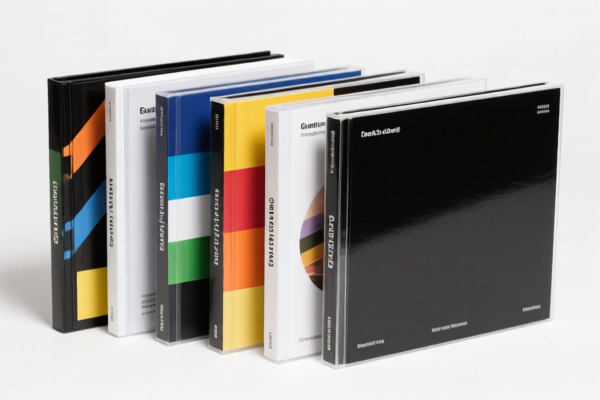
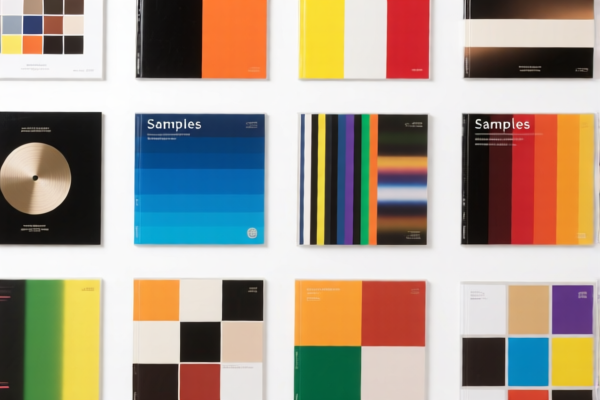
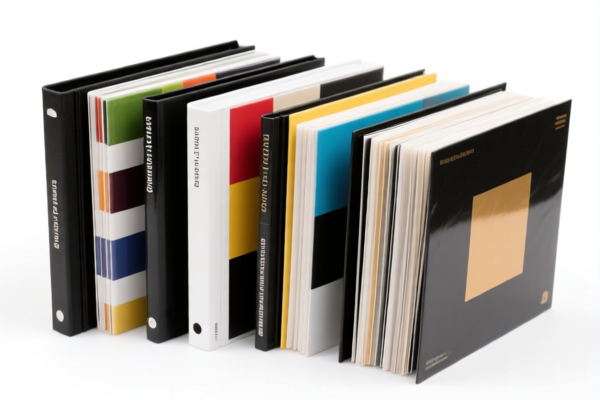
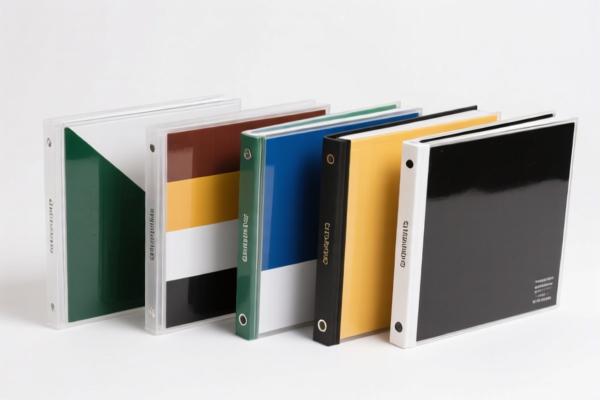
AI Analysis
📚 Sample Book (Trade Catalogues & Product Displays)
🌐 HS Code Reference & Customs Clearance Guide | 2026 Latest Tariff Analysis | Professional Strategy for Global Trade
📌 I. Product Definition & Classification: What Exactly is a "Sample Book"?
In international trade, a "Sample Book" is a broad term that can refer to various formats depending on its material composition and primary purpose. It is crucial to distinguish between:
- Paper-Based Catalogs/Sample Books: Printed materials used for commercial advertising, displaying product information, or serving as commercial directories. These fall under Chapter 49.
- Plastic/Flexible Binder Sample Books: Files or binders made of plastic materials used to hold samples or collections. These fall under Chapter 39.
- Paper/Cardboard Albums/File Holders: Books or folders made of paper or cardboard specifically designed for storing specimens or collections, often structured as albums. These fall under Chapter 48.
⚠️ Key Distinction Point:
- If the primary content is printed information (ads, catalogs) → Look at 4911.10
- If the primary form is a plastic file/binder holding samples → Look at 3926.90
- If it is a paper/cardboard album/folder for collections → Look at 4820.50 / 4820.90
📦 II. HS Code Classification Details (2026 Latest Tariff Authoritative Comparison)
| HS Code | Product Description | Applicable Scenario | Primary Material |
|---|---|---|---|
4911.10.00.80 |
Trade advertising material or commercial catalogue in printed form | Printed sample books, catalogs for trade shows | 📄 Paper/Printed |
4911.10.00.20 |
Sample book in printed form, used for displaying product information (trade ad/commercial directory) | Printed promotional sample books | 📄 Paper/Printed |
3926.90.87.00 |
Sample book in file binding form, material possibly flexible plastic or paper-plastic composite | Plastic binders, file folders for samples | 🧪 Plastic |
4820.50.00.00 |
Sample book used for storing samples or collections, material usually paper or cardboard | Paper albums, cardstock file holders | 📃 Cardboard/Paper |
4820.90.00.00 |
Sample book belongs to albums for samples or collections, material usually paper or cardboard | Other paper/cardboard albums | 📃 Cardboard/Paper |
3926.90.48.00 |
Sample book usage highly consistent with albums, material possibly plastic or related paper/composite | Plastic/paper-composite sample holders | 🧪 Plastic/Composite |
🔍 Important Reminder:
- If the item is primarily a printed advertisement or catalog showcasing products, it must be classified under 4911.10. - If the item is a physical container/binder (like a plastic sleeve or plastic folder) meant to hold samples, it falls under 3926.90. - Misclassification leads to significant tax differences (e.g., 17.5% vs 40.3%).
💰 III. 2026 Latest Tariff Rate Breakdown (Including Surtaxes & Policy Surcharges)
✅ Applicable Country: United States (US)
✅ Origin: China (CN)
✅ Effective Time: Current Trade Policy (Section 301 & IEEPA)
🎯 1. 4911.10.00.80 & 4911.10.00.20 —— Printed Sample Books (Trade Ads/Catalogs)
These two codes cover the most common "printed sample books" used in business marketing.
| Item | Details |
|---|---|
| Base Tariff | 0.0% (ad valorem) |
| Section 301 Surtax | +7.5% (USITC Footnote for Chapter 49) |
| IEEPA Surtax | +10% (Targeting Chinese/ HK products under IEEPA) |
| Total Tariff | 17.5% |
| Tax Calculation | CIF Value × 17.5% |
| De Minimis Eligibility | ❌ No (Section 321 exemption generally does not apply to goods subject to Section 301 or IEEPA surcharges above certain thresholds, or strictly denied for these specific surcharge codes). |
| Legal Basis Path | IEEPA:9903.01.25 → USITC:4911.10.00.80 → FOOTNOTE:9903.88.01 |
📌 Explanation:
- The 7.5% is the standard Section 301 surcharge for many Chinese imports. - The 10% is the additional IEEPA surcharge applied to Chinese goods. - Total: 17.5%. This is a moderate-high tariff, significantly higher than the base 0%.
🎯 2. 3926.90.87.00 —— Plastic/Flexible Sample Books
| Item | Details |
|---|---|
| Base Tariff | 5.3% |
| Section 301 Surtax | +25.0% (High-level Section 301 surcharge) |
| IEEPA Surtax | +10% |
| Total Tariff | 40.3% |
| Tax Calculation | CIF Value × 40.3% |
| De Minimis Eligibility | ❌ No |
| Legal Basis Path | IEEPA:9901.25 → IEEPA:9903.01.24 → USITC:3926.90.87.00 → FOOTNOTE:9903.88.01 |
📌 Warning:
- This tariff is very high (40.3%). - If your sample book has a plastic cover or is made of flexible plastic, customs may classify it here. - Strategy: If possible, emphasize the printed content (advertising/catalogue nature) to argue for classification under 4911.10 (17.5%) rather than 3926.90 (40.3%), provided the primary character is the information contained.
🎯 3. 4820.50.00.00 & 4820.90.00.00 —— Paper/Cardboard Albums/Folders
| Item | Details |
|---|---|
| Base Tariff | 0.0% |
| Section 301 Surtax | +25.0% (High-level Section 301 surcharge) |
| IEEPA Surtax | +10% |
| Total Tariff | 35.0% |
| Tax Calculation | CIF Value × 35.0% |
| De Minimis Eligibility | ❌ No |
| Legal Basis Path | IEEPA:9903.01.24 → USITC:4820.50.00.00 → FOOTNOTE:9903.88.01 |
📌 Note:
- Even though the base tariff is 0%, the 35% total tariff is still high due to surcharges. - These codes apply to purely paper/cardboard albums or file holders without significant plastic components.
🎯 4. 3926.90.48.00 —— Plastic/Paper Composite Sample Books (Alternative Plastic Code)
| Item | Details |
|---|---|
| Base Tariff | 3.4% |
| Section 301 Surtax | 0.0% (Specific subheading exemption or lower rate application) |
| IEEPA Surtax | +10% |
| Total Tariff | 13.4% |
| Tax Calculation | CIF Value × 13.4% |
| De Minimis Eligibility | ❌ No (Check specific ruling, but generally surcharges apply) |
| Legal Basis Path | IEEPA:9901.25 → USITC:3926.90.48.00 |
📌 Optimization Opportunity:
- This code has the lowest total tariff (13.4%) among plastic-based options. - It applies if the material is a plastic or paper-composite that fits this specific subheading description. - Strategy: If your product is a composite binder, verify if it fits 3926.90.48.00 instead of 3926.90.87.00 to save 27% in tariffs.
🛠️ IV. Customs Clearance Practical Advice (Pitfall Avoidance Guide)
✅ 1. Preparation Checklist (Essential Documents)
| Document | Required | Explanation |
|---|---|---|
| ✅ Product Specification | ✔️ | Clearly state dimensions, material (paper/plastic), and binding type. |
| ✅ Material Composition Statement | ✔️ | Specify % of paper vs. plastic vs. adhesive. Critical for Chapter 48 vs 39 vs 49. |
| ✅ Product Photos | ✔️ | Show the book open, closed, and any plastic components clearly. |
| ✅ Commercial Invoice | ✔️ | Description must match HS Code reasoning (e.g., "Printed Trade Catalogue" vs "Plastic Binder"). |
| ✅ Content Sample | ✔️ | Provide a copy of the pages to prove it is a "catalogue/advertisement" (supports 4911). |
✅ 2. Declaration Tips (Key Mantra)
🔥 "Material Dictates Code, Content Drives Value!"
| Scenario | Correct Declaration | Risk of Error |
|---|---|---|
| Printed book with plastic covers | 4911.10.00.80 (if printing is essential character) |
Misclassified as plastic file → 40.3% tax |
| Pure plastic binder with no print | 3926.90.87.00 |
Misclassified as paper → 35% tax |
| Paper album for collections | 4820.50.00.00 |
Misclassified as plastic → 40.3% tax |
| Composite plastic/paper file | 3926.90.48.00 (if eligible) |
Misclassified as 87.00 → Higher tax |
✅ 3. Special Handling
| Situation | Recommendation |
|---|---|
| Mixed Materials | If the book is 80% paper, 20% plastic, argue under 4911 (Chapter 49) as the essential character is the printed information. |
| OEM Custom Books | Provide design proofs to show it is a "trade advertisement" rather than a generic "file". |
| Plastic-Only Samples | If it is just a plastic sleeve with no print, it is 3926.90. Cannot be classified as 4911. |
🌍 V. Global Market Clearance Comparison (2026 Latest)
| Country/Region | Recommended HS Code | Tariff (China Origin) | Notes |
|---|---|---|---|
| 🇺🇸 USA | 4911.10.00.80 |
17.5% | Includes 7.5% Sec 301 + 10% IEEPA |
| 🇺🇸 USA | 3926.90.87.00 |
40.3% | High tariff for plastic binders |
| 🇺🇸 USA | 4820.50.00.00 |
35.0% | High tariff for paper albums |
| 🇪🇺 EU | 4911.10 |
0% - 6% | No Section 301/IEEPA surcharges |
| 🇨🇳 China | 4911.10 |
0% | No additional surcharges |
📌 Conclusion:
- USA is the most critical market for tariff optimization. - Classification as Printed Material (4911) saves ~23-27% compared to Plastic (3926) or Paper Albums (4820). - Ensure your product is printed and used for advertising/catalogue purposes to justify 4911.10.
📌 VI. Common Errors & Pitfalls (Lessons Learned)
❌ Error 1: Calling a "Plastic Binder" a "Sample Book" without specifying content
👉 Consequence: Customs classifies as plastic file (3926.90.87.00) → 40.3% tax.
❌ Error 2: Classifying a printed catalog as "Paper Album" (4820)
👉 Consequence: Tax rises from 17.5% to 35.0% → Unnecessary cost increase.
❌ Error 3: Not distinguishing between "Flexible Plastic" and "Composite"
👉 Consequence: Missed opportunity to use 3926.90.48.00 (13.4% tariff) instead of 3926.90.87.00 (40.3%).
✅ Correct Approach:
"Printed Trade Catalogue, Paper-Based, 2026 Model, Used for Product Display, with Plastic Covers (Minor Component)"
→ Justifies 4911.10.00.80 (17.5%).
🎯 VII. Conclusion: Precise Classification for Cost Savings
🎯 Remember the Mantra:
🔹 "Printed = 17.5%, Plastic Binder = 40.3%, Paper Album = 35%, Composite File = 13.4%!"
🔹 "HS Code decides tax rate, classify correctly, save thousands!"
📌 Pro Tip:
If your sample book is OEM printed and primarily serves as a marketing tool, insist on 4911.10.00.80.
If it is a generic plastic file holder with no specific print, accept 3926.90.87.00 or seek 3926.90.48.00 if materials allow.
Consider applying for an Advance Ruling from US Customs to lock in the 17.5% rate for printed materials.
📣 Immediate Action:
📞 Contact a licensed customs broker + Provide material samples + Request HS Code Advance Ruling
🚀 Ensure your sample books clear customs smoothly, minimize costs, and maximize profit!
✨ Professional Clearance Starts with Accurate Classification!
💼 Every percent of tariff saved is pure profit!
Customer Reviews
About HS Code Classification
The Harmonized System (HS) is an internationally standardized nomenclature developed by the World Customs Organization (WCO) to classify traded products. Over 200 countries use the HS system as the basis for customs tariffs, trade statistics, and import/export regulations.
Each HS code follows a hierarchical structure:
- Chapter (2 digits) — Broad category of goods (e.g., Chapter 84: Machinery and Mechanical Appliances)
- Heading (4 digits) — More specific grouping within the chapter
- Subheading (6 digits) — Internationally standardized breakdown, used by all WCO member countries
- National subdivisions (8-10 digits) — Country-specific extensions for further classification, such as US HTSUS 10-digit codes
Correct HS code classification is essential for smooth customs clearance, accurate duty payment, and compliance with trade regulations. Misclassification can lead to customs delays, overpayment of duties, or penalties.
When importing from CN to US, the applicable tariff rates may include:
- Most-Favored-Nation (MFN) rate — The standard duty rate applied to WTO members
- General rate — Applied to countries without trade agreements
- Trade remedy duties — Additional tariffs such as Section 301 (anti-dumping), Section 232 (national security), or countervailing duties
The information provided on this page is for reference purposes only. For official classification, please consult with your local customs authority or a licensed customs broker.