Sample Paper
CN → US| HS Code | Tariff Rate | Origin | Destination | Doc |
|---|---|---|---|---|
| 4911996000 | 17.5% | CN | US | Official Doc |
| 4911998000 | 17.5% | CN | US | Official Doc |
| 4823901000 | 35.0% | CN | US | Official Doc |
| 4823908000 | 35.0% | CN | US | Official Doc |
| 4811904090 | 35.0% | CN | US | Official Doc |
| 4811906010 | 35.0% | CN | US | Official Doc |
Product Images
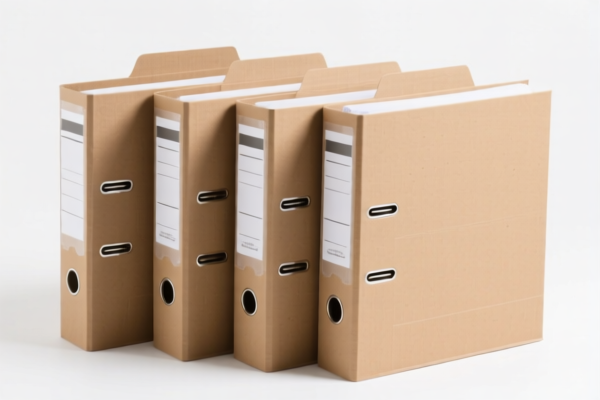
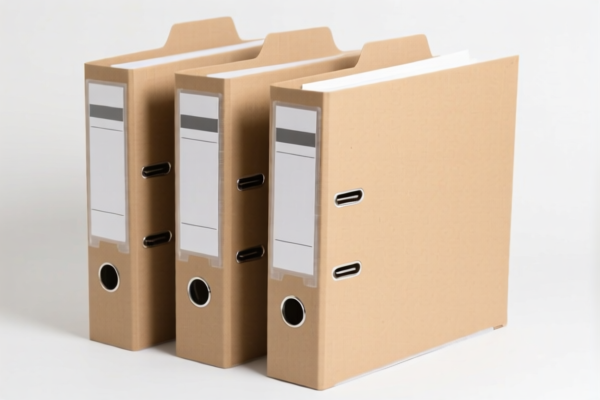
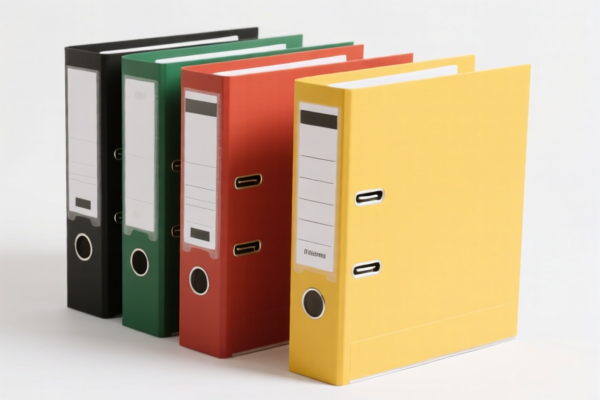
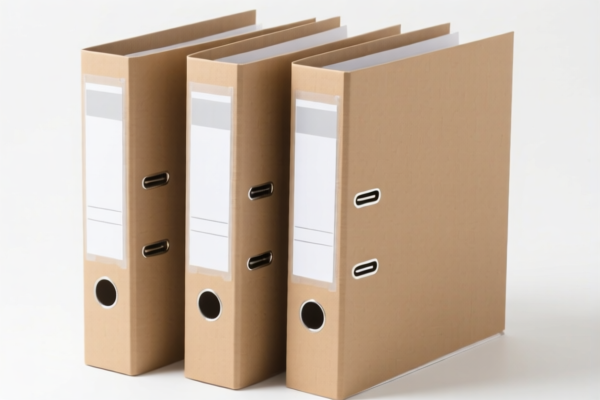
AI Analysis
📄 Sample Paper & Printed Paper Products
🌐 HS Code Reference & Customs Clearance Guide | 2026 Latest Tariff Analysis | Professional Compliance Strategy
📌 I. Product Definition & Classification: Do You Really Understand "Sample Paper"?
In international trade, "Sample Paper" is not a single commodity but a broad category that includes printed materials, paper pulp products, and various processed paper items. Accurate classification depends on the material composition, printing process, weight, and specific use. Misclassification often leads to significant tariff differences, especially under current trade policies.
⚠️ Key Distinction Points:
- Printed Materials (Heading 4911): Items like brochures, photos, or printed samples where printing is the primary characteristic.
- Processed Paper Articles (Heading 4823/4811): Paper cut to shape, coated, or impregnated, where the paper substance is key.
- Raw/Basic Paper Forms (Heading 4811): Rolls or sheets defined by weight (g/m²) and dimensions.
📦 II. HS Code Classification Details (2026 Latest Tariff Authority Match)
Based on the provided data, here are the specific HS codes and their corresponding tariff structures:
| HS Code | Product Description | Applicable Scenario | Key Characteristics |
|---|---|---|---|
4911.99.60.00 |
Other printed matter: Printed on paper by a lithographic process | Lithographic prints, high-quality samples, posters | Lithography is key; base duty 0%, Additional 7.5% |
4911.99.80.00 |
Other printed matter: Other (General printed samples) | General printed brochures, flyers, photos | General printed matter; base duty 0%, Additional 7.5% |
4823.90.10.00 |
Other articles of paper: Of paper pulp | Paper pulp products, molded pulp samples | Material is paper pulp; base duty 0%, Additional 25.0% |
4823.90.80.00 |
Other articles of paper: Gaskets, washers, seals | Paper-based industrial seals, gaskets | Specific industrial use; base duty 0%, Additional 25.0% |
4811.90.40.90 |
Coated/Printed paper: Weighing not over 15 g/m² | Ultra-light tissue, wrapping paper rolls | Weight ≤15g/m²; base duty 0%, Additional 25.0% |
4811.90.60.10 |
Coated/Printed paper: 15-30 g/m² (Tissue papers ≤29g/m²) | Tissue paper sheets, lightweight paper samples | Weight 15-30g/m²; base duty 0%, Additional 25.0% |
🔍 Important Note:
- Printed items (4911) generally face a lower additional tariff (7.5%) compared to processed paper articles (48xx), which face 25.0%.
- Weight is a critical factor for codes4811. Incorrect weight declaration can lead to misclassification.
💰 III. 2026 Latest Tariff Rate Details (Detailed Breakdown)
✅ Applicable Region: United States (US)
✅ Origin: China (CN)
✅ Policy Context: Section 301 Tariffs (Trade War Surcharge)
🎯 1. Printed Matters (4911.99.60.00 & 4911.99.80.00)
| Item | Content |
|---|---|
| Base Duty Rate | 0.0% (ad valorem) |
| Section 301 Additional Duty | +7.5% |
| Total Tariff Rate | 7.5% |
| Calculation Basis | CIF Value × 7.5% |
| De Minimis Exemption | ⚠️ Check Eligibility: Generally, Section 301 duties apply even to de minimis shipments if originating from China, but rules vary by carrier and customs interpretation. Assume 7.5% is payable. |
| Legal Basis | HTSUS 4911.99 → USITC Section 301 List |
📌 Explanation:
- These codes fall under "Other printed matter."
- The 7.5% surcharge is applied due to current US trade policies on Chinese-origin printed goods.
- Compared to paper articles, this is a relatively favorable rate.
🎯 2. Paper Articles & Processed Paper (4823.90 & 4811.90)
| Item | Content |
|---|---|
| Base Duty Rate | 0.0% (ad valorem) |
| Section 301 Additional Duty | +25.0% |
| Total Tariff Rate | 25.0% |
| Applicable Codes | 4823.90.10.00, 4823.90.80.00, 4811.90.40.90, 4811.90.60.10 |
| Calculation Basis | CIF Value × 25.0% |
| De Minimis Exemption | ❌ Not Exempt: High tariff burden usually negates de minimis advantages for commercial shipments. |
| Legal Basis | HTSUS 4823/4811 → USITC Section 301 List |
📌 Explanation:
- Codes under Chapter 48 (Paper/Paperboard) face a significantly higher tariff (25%).
- This includes paper pulp products, gaskets, and lightweight coated paper.
- Risk Alert: If your "Sample Paper" is actually a paper product (e.g., paper napkins, paper gaskets, or coated paper rolls), you will pay 25%, not 7.5%.
🛠️ IV. Customs Clearance Practical Advice (Real-World Pitfall Guide)
✅ 1. Preparation Checklist (Non-negotiable)
| Document | Required | Explanation |
|---|---|---|
| ✅ Product Specification Sheet | ✔️ | Must detail: Material (Paper vs. Pulp), Weight (g/m²), Printing Type (Lithographic vs. Other). |
| ✅ High-Resolution Photos | ✔️ | Show printed details, edges, and any specific shapes (e.g., gaskets). |
| ✅ Commercial Invoice | ✔️ | Clearly state: "Sample Paper," "Printed Matter," or "Paper Articles." Avoid vague terms like "Paper Goods." |
| ✅ Certificate of Origin | ✔️ | Confirm Chinese origin to apply correct Section 301 rates. |
| ✅ HS Code Justification Memo | ✔️ | Briefly explain why the code was chosen (e.g., "Printed via lithography" for 4911). |
✅ 2. Declaration Tips (Critical Keywords)
🔥 "Clarify Material & Process: If Printed, Aim for 4911; If Paper Product, Expect 48xx at 25%!"
| Scenario | Correct Declaration | Wrong Declaration | Consequence |
|---|---|---|---|
| Printed Brochure/Sample | "Lithographic Printed Paper Samples" | "Paper Products" | May be misclassified to 48xx (25%) instead of 4911 (7.5%). |
| Paper Gaskets/Washers | "Paper Gaskets" | "Printed Paper" | Misclassification leads to penalty; must use 4823.90.80.00. |
| Lightweight Tissue Rolls | "Coated Tissue Paper ≤15g/m²" | "Paper Rolls" | Must specify weight to use 4811.90.40.90. |
| Paper Pulp Molds | "Paper Pulp Articles" | "Printed Matter" | Cannot use 4911; must use 4823.90.10.00. |
✅ 3. Special Handling Cases
| Case | Recommendation |
|---|---|
| Mixed Shipment | If a shipment contains both printed samples (4911) and paper pulp products (4823), split the declaration to avoid misclassification of the entire lot. |
| Weight Uncertainty | For codes 4811.90, provide lab test results for basis weight (g/m²) if the paper is ultra-light (<30g/m²). |
| Printing Process | For 4911.99.60.00, confirm the printing is lithographic. If offset or digital, it may still fall under 4911.99.80.00 (also 7.5%, but ensure accuracy). |
| Commercial vs. Non-Commercial | If true "Samples" for free distribution, declare as "Non-commercial Sample" but tariffs still apply if value exceeds de minimis threshold or if Section 301 applies. |
🌍 V. Market Comparison (2026 Update)
| Region | Recommended HS Code | Tariff Rate | Notes |
|---|---|---|---|
| 🇺🇸 USA | 4911.99.60.00 / 4823.90 |
7.5% (Printed) or 25% (Paper Article) | Section 301 tariffs apply. Major cost factor. |
| 🇨🇳 China | 4911.99 / 4823.90 |
~10-15% | No additional Section 301 tariff. Lower cost. |
| 🇪🇺 EU | 4911.99 / 4823.90 |
~0-4% | Generally lower duties; no Section 301 equivalent. |
| 🇯🇵 Japan | 4911.99 / 4823.90 |
~0-3% | Favorable tariff structure for paper products. |
📌 Conclusion:
- USA is the most expensive market for these items due to Section 301 tariffs.
- Differentiation is key: "Printed matter" (7.5%) is significantly cheaper than "Paper articles" (25%).
- Strategy: If possible, structure shipments to qualify for 4911 (printed) rather than 48xx (paper goods), provided the product fits the description.
📌 VI. Common Mistakes & Pitfalls (Lessons Learned)
❌ Mistake 1: Calling "Paper Gaskets" "Printed Paper"
👉 Result: Customs may reclassify to 4823.90.80.00 → Tariff jumps from 7.5% to 25%.
👉 Fix: Declare accurately as "Paper Gaskets."
❌ Mistake 2: Ignoring Basis Weight for Light Paper
👉 Result: Misclassification between 4811.90.40.90 (≤15g/m²) and 4811.90.60.10 (15-30g/m²). Both are 25%, but wrong description leads to delay and penalties.
👉 Fix: Provide weight specs.
❌ Mistake 3: Assuming All "Samples" Are Exempt
👉 Result: Section 301 tariffs apply even to samples if declared as commercial imports.
👉 Fix: Consult customs broker for de minimis thresholds.
❌ Mistake 4: Vague Description "Paper Products"
👉 Result: Customs chooses the highest applicable duty (25%) for safety.
👉 Fix: Be specific: "Lithographic Printed Brochures" or "Paper Pulp Molds."
✅ Correct Practice:
"Lithographic Printed Sample Cards, 100gsm Paper, 500pcs, For Marketing Purposes, HS 4911.99.60.00"
🎯 VII. Conclusion: Precision Saves Money!
🎯 Remember:
🔹 "Printed = 7.5% (4911), Paper Product = 25% (48xx)"
🔹 "Weight Matters for 4811, Process Matters for 4911"
🔹 "Accurate Description = Faster Clearance, Lower Cost"
📌 Pro Tip:
If your product is borderline (e.g., printed paper with plastic coating), consult a customs broker before shipping. A pre-ruling (Advance Ruling) can save thousands in duties and avoid detention fees.
📣 Action Item:
📞 Review your product specs.
📄 Choose the correct HS Code (4911 vs. 48xx).
🚀 Declare accurately to minimize your 2026 tariff burden!
✨ Professional Classification, Predictable Costs!
💼 Don't let classification errors eat your margin!
Customer Reviews
About HS Code Classification
The Harmonized System (HS) is an internationally standardized nomenclature developed by the World Customs Organization (WCO) to classify traded products. Over 200 countries use the HS system as the basis for customs tariffs, trade statistics, and import/export regulations.
Each HS code follows a hierarchical structure:
- Chapter (2 digits) — Broad category of goods (e.g., Chapter 84: Machinery and Mechanical Appliances)
- Heading (4 digits) — More specific grouping within the chapter
- Subheading (6 digits) — Internationally standardized breakdown, used by all WCO member countries
- National subdivisions (8-10 digits) — Country-specific extensions for further classification, such as US HTSUS 10-digit codes
Correct HS code classification is essential for smooth customs clearance, accurate duty payment, and compliance with trade regulations. Misclassification can lead to customs delays, overpayment of duties, or penalties.
When importing from CN to US, the applicable tariff rates may include:
- Most-Favored-Nation (MFN) rate — The standard duty rate applied to WTO members
- General rate — Applied to countries without trade agreements
- Trade remedy duties — Additional tariffs such as Section 301 (anti-dumping), Section 232 (national security), or countervailing duties
The information provided on this page is for reference purposes only. For official classification, please consult with your local customs authority or a licensed customs broker.