Sanding Disc
CN → US| HS Code | Tariff Rate | Origin | Destination | Doc |
|---|---|---|---|---|
| 6805200000 | 35.0% | CN | US | Official Doc |
| 6805301000 | 35.0% | CN | US | Official Doc |
| 6805100000 | 35.0% | CN | US | Official Doc |
| 4016996050 | 37.5% | CN | US | Official Doc |
| 4016993550 | 35.0% | CN | US | Official Doc |
Product Images
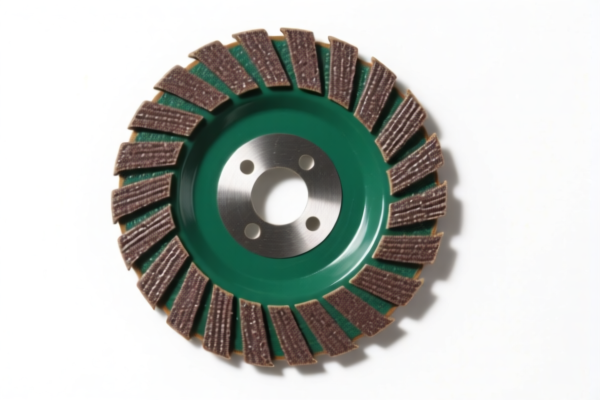
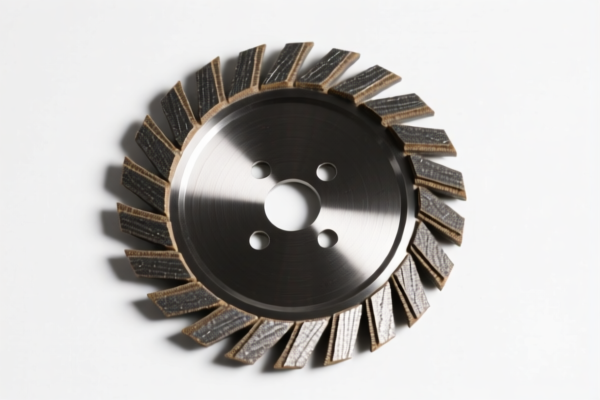
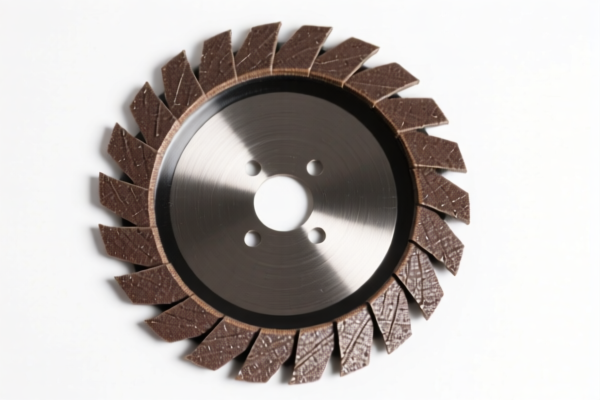
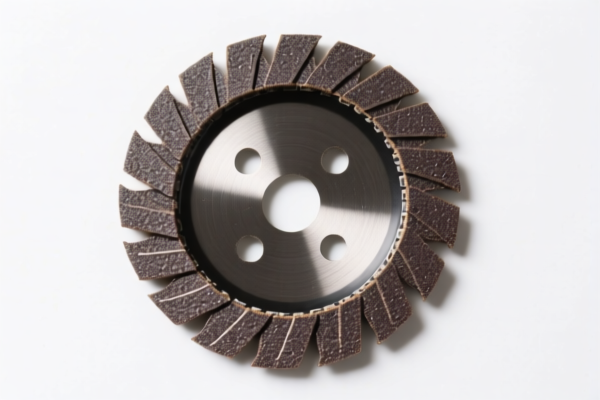
AI Analysis
🛠️ Sanding Discs (Abrasive Papers)
🌐 HS Code Reference & Customs Clearance Guide | 2026 Latest Tariff Analysis | Professional Clearance Strategy
📌 I. Product Definition & Classification: Do You Really Understand "Sanding Discs"?
Sanding discs, commonly known as abrasive papers or sanding sheets, are essential consumables in woodworking, metalworking, and surface preparation. In international trade, they are classified based on the base material (paper, cloth, film) and the binding agent (rubber, resin). The key distinction lies in whether the product is classified under Chapter 68 (Mineral Products like stone abrasives) or Chapter 40 (Rubber Products).
⚠️ Key Classification Distinction:
- If the base is Paper or Cardboard →归入 Chapter 68 (HS Codes 6805.10/20/30)
- If the base involves significant Rubber Composition or is classified as an "Other Rubber Article" → 归入 Chapter 40 (HS Codes 4016.99)
📦 II. HS Code Classification Details (2026 Latest Tariff Authority Comparison)
| HS Code | Product Description | Applicable Scenario | Base Material Inference | Total Tax Rate (CN→US) |
|---|---|---|---|---|
6805.20.00.00 |
Abrasive powder/granules fixed to paper or cardboard | Standard paper-backed sanding discs, sheets | Paper/Cardboard | 35.0% |
6805.30.10.00 |
Other abrasive articles on base of paper or cardboard | Specialty disc shapes, industrial paper-backed abrasives | Paper/Cardboard | 35.0% |
6805.10.00.00 |
Abrisives on base of paper, paperboard, or textile | General sanding discs, cloth-backed (if interpreted under this broader note) | Paper/Textile | 35.0% |
4016.99.60.50 |
Other vulcanized rubber articles (not hard rubber) | Discs where rubber binder is dominant or classified as "Other" rubber goods | Rubber Composite | 37.5% |
4016.99.35.50 |
Other vulcanized rubber articles (including those with rubber additives) | Discs with significant rubber adhesive/backing components | Rubber Composite | 35.0% |
🔍 Critical Reminder:
- Most standard sanding discs used in woodworking and home improvement are Paper-Backed and fall under HS 6805.
- Cloth-backed or heavy-duty industrial discs may sometimes be misclassified. If the rubber content is significant enough to change the character of the good, customs might argue for HS 4016, but HS 6805 is the standard for "abrasives on base of paper/cardboard/textile."
- Do not confuse with "sanding belts" or "sanding drums" which might have different structural classifications, though often similar tax treatment.
💰 III. 2026 Latest Tariff Rate Breakdown (Including Surtaxes & Policy Add-ons)
✅ Applicable Country: United States (US)
✅ Country of Origin: China (CN)
✅ Effective Date: From November 10, 2025 (for subsequent imports)
🎯 1. 6805.20.00.00 / 6805.30.10.00 / 6805.10.00.00 —— Abrasives on Paper/Cardboard Base
| Item | Content |
|---|---|
| Basic Tariff | 0% (ad valorem) |
| Section 301 Surtax | +25% (USITC Footnote 9903.88.01) |
| IEEPA Surtax | +10% (Targeting China/HK products, effective Nov 10, 2025) |
| Total Tariff Rate | 35.0% |
| Tax Calculation | CIF Value × 35% |
| De Minimis Exemption | ❌ Not Eligible (deny_de_minimis) |
| Legal Basis Path | IEEPA:9903.01.25 → IEEPA:9903.01.24 → USITC:6805.xxxx.xxxx → FOOTNOTE:9903.88.01 |
📌 Explanation:
- The 25% is the standard Section 301 tariff for Chinese goods in this category.
- The 10% is the additional IEEPA surcharge applied to Chinese-origin goods.
- Total 35% is a high tariff for a consumable. Businesses must factor this into cost models.
🎯 2. 4016.99.60.50 / 4016.99.35.50 —— Other Rubber Articles (Abrasive Tools)
| Item | Content |
|---|---|
| Basic Tariff | 2.5% (for 4016.99.60.50) / 0% (for 4016.99.35.50) |
| Section 301 Surtax | +25% |
| IEEPA Surtax | +10% |
| Total Tariff Rate | 37.5% (for .60.50) / 35.0% (for .35.50) |
| Tax Calculation | CIF Value × Rate |
| De Minimis Exemption | ❌ Not Eligible (deny_de_minimis) |
| Legal Basis Path | IEEPA:9901.25 → IEEPA:9903.01.24 → USITC:4016.99.xxx → FOOTNOTE:9903.88.01 |
📌 Note:
- If customs classifies your sanding disc as a Rubber Article rather than a Mineral Abrasive, the basic tariff might be higher (2.5%).
- However, the 301 + IEEPA additions remain the same (35% total if basic is 0%, 37.5% if basic is 2.5%).
- Risk: Misclassification from 6805 to 4016 can lead to additional duty liability if the basic rate is higher.
🛠️ IV. Customs Clearance Practical Advice (Real-World Pitfall Avoidance)
✅ 1. Required Documentation Checklist (Non-Negotiable)
| Document | Required | Description |
|---|---|---|
| ✅ Product Specification Sheet | ✔️ | Must clearly state: Base material (Paper/Cloth/Film), Abrasive type (Aluminum Oxide/Silicon Carbide), Grit size. |
| ✅ Product Photos | ✔️ | Clear images of the disc, showing both sides (abrasive side and backing side). |
| ✅ Commercial Invoice | ✔️ | Must use precise description: "Sanding Disc, Paper-Backed, Aluminum Oxide, 115mm". Avoid vague terms like "Tool Parts". |
| ✅ Packing List | ✔️ | Detail quantity per box, total boxes. |
| ✅ Country of Origin Certificate | ✔️ | Proof of Chinese origin to apply correct surtaxes. |
✅ 2. Declaration Tips (Key Mantras)
🔥 "Paper Base = 6805; Rubber Base = 4016; Be Specific to Save!"
| Scenario | Correct Declaration | Wrong Practice |
|---|---|---|
| Standard Paper-Backed Sanding Disc | 6805.20.00.00 Description: "Abrasive Disc on Paper Base" |
Vague: "Sandpaper" → May trigger manual exam |
| Cloth-Backed Disc (Heavy Duty) | 6805.10.00.00 (Usually) Or 4016.99 if rubber content > 50% |
Classify as 6805 if it's clearly rubber-based → Risk of reclassification |
| Sanding Disc with Plastic Hub | 6805.20.00.00 (Integrated) |
Split declare: Disc + Hub → 89.5% tariff on components! |
| Roll of Sandpaper | 6805.10.00.00 |
Declare as "Disc" → Dimension mismatch in customs system |
💡 Crucial Tip:
If the sanding disc has a plastic or metal center hub (common in power sanders), declare it as one unit under the HS code of the sanding disc. Do NOT split the declaration. Splitting leads to catastrophic tariff rates (up to 89.5%) on the accessories.
✅ 3. Special Case Handling
| Situation | Handling Advice |
|---|---|
| OEM/Custom Grit Sizes | Provide tech data sheet. Standard grits are fine; custom claims require technical justification. |
| Multi-Component Discs | If the disc includes a non-abrasive layer (e.g., static charge layer), declare based on the essential character (abrasive function). |
| Samples vs. Commercial | Both are subject to the same tariffs. No duty exemption for samples unless de minimis value is under $800 (but deny_de_minimis applies to China, so all shipments are taxable). |
🌍 V. Global Market Comparison (2026 Latest)
| Country/Region | Recommended HS Code | Tariff (CN→Local) | Certification | Notes |
|---|---|---|---|---|
| 🇺🇸 USA | 6805.20.00.00 |
35% | N/A | High tariff due to 301 + IEEPA. |
| 🇨🇳 China | 6805.20.00.00 |
5% | N/A | Standard import duty. |
| 🇪🇺 EU | 6805.10.00.00 |
0% | CE (if applicable) | No surtaxes. Very favorable. |
| 🇬🇧 UK | 6805.10.00.00 |
0% | UKCA | No surtaxes. |
| 🇨🇦 Canada | 6805.10.00.00 |
0% | N/A | USMCA may apply if non-Chinese origin. |
📌 Conclusion:
- USA is the most expensive market for Chinese sanding discs due to the 35% combined tariff.
- EU/UK/Canada offer 0-5% tariffs, making them more competitive for Chinese manufacturers.
- If exporting to the US, consider cost-plus pricing to absorb the 35% tariff, or explore third-party manufacturing (e.g., Vietnam) to avoid surtaxes.
📌 VI. Common Errors & Pitfall Guide (Blood-Teaching Lessons)
❌ Mistake 1: Declaring "Sanding Disc" as "Tool Part" (HS 8207 or 8466)
👉 Consequence: Customs will reclassify to 6805 and assess 35% + penalties.
❌ Mistake 2: Splitting "Sanding Disc + Plastic Hub" into two items
👉 Consequence: The hub may be taxed at 89.5% (Section 301 on plastics/accessories). Total cost explodes!
❌ Mistake 3: Ignoring the IEEPA 10% Surcharge
👉 Consequence: Underestimating landed cost by 10%. Profit margin disappears.
❌ Mistake 4: Assuming De Minimis ($800) applies
👉 Consequence: ALL Chinese-origin goods are subject to de minimis exclusion. Even small shipments are taxed.
✅ Correct Approach:
"Sanding Disc, Paper-Backed, Aluminum Oxide, 115mm Diameter, 60 Grit, With Plastic Center, For Orbital Sander"
🎯 VII. Conclusion: Precise Classification Saves Money!
🎯 Remember the Mantra:
🔹 "Paper Base = 6805 (35%); Rubber Base = 4016 (35-37.5%); No Splitting!"
🔹 "China Origin = 35% Total; De Minimis = OFF; Invoice Clearly!"
📌 Pro Tip:
If your sanding discs are originating from Vietnam, Thailand, or Malaysia, you may qualify for lower tariffs (0-5%) in the US, avoiding the 35% China surtax.
Recommendation: Apply for Advance Ruling with US CBP if you have a high-volume, consistent product line to ensure classification stability.
📣 Immediate Action:
📞 Consult a licensed customs broker + Provide Product Photos + Verify Base Material
🚀 Ensure your invoice descriptions are technical and precise to avoid delays.
✨ Professional Clearance Starts with Accurate Classification!
💼 Your every cent of cost deserves precise calculation!
Customer Reviews
About HS Code Classification
The Harmonized System (HS) is an internationally standardized nomenclature developed by the World Customs Organization (WCO) to classify traded products. Over 200 countries use the HS system as the basis for customs tariffs, trade statistics, and import/export regulations.
Each HS code follows a hierarchical structure:
- Chapter (2 digits) — Broad category of goods (e.g., Chapter 84: Machinery and Mechanical Appliances)
- Heading (4 digits) — More specific grouping within the chapter
- Subheading (6 digits) — Internationally standardized breakdown, used by all WCO member countries
- National subdivisions (8-10 digits) — Country-specific extensions for further classification, such as US HTSUS 10-digit codes
Correct HS code classification is essential for smooth customs clearance, accurate duty payment, and compliance with trade regulations. Misclassification can lead to customs delays, overpayment of duties, or penalties.
When importing from CN to US, the applicable tariff rates may include:
- Most-Favored-Nation (MFN) rate — The standard duty rate applied to WTO members
- General rate — Applied to countries without trade agreements
- Trade remedy duties — Additional tariffs such as Section 301 (anti-dumping), Section 232 (national security), or countervailing duties
The information provided on this page is for reference purposes only. For official classification, please consult with your local customs authority or a licensed customs broker.