Sanding Sponge Block
CN → US| HS Code | Tariff Rate | Origin | Destination | Doc |
|---|---|---|---|---|
| 6805301000 | 35.0% | CN | US | Official Doc |
| 6805305000 | 35.0% | CN | US | Official Doc |
Product Images
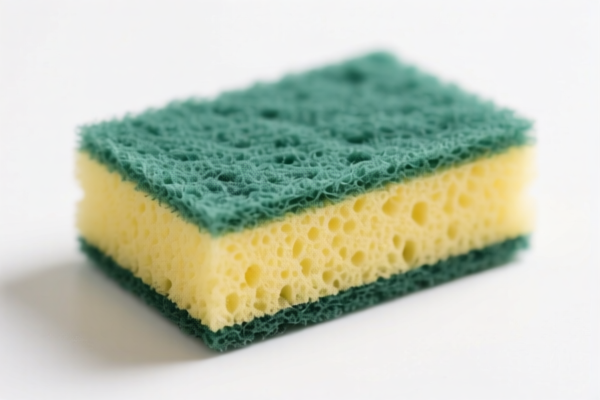
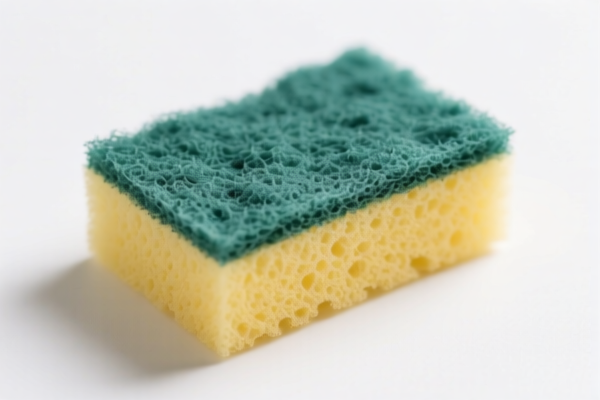
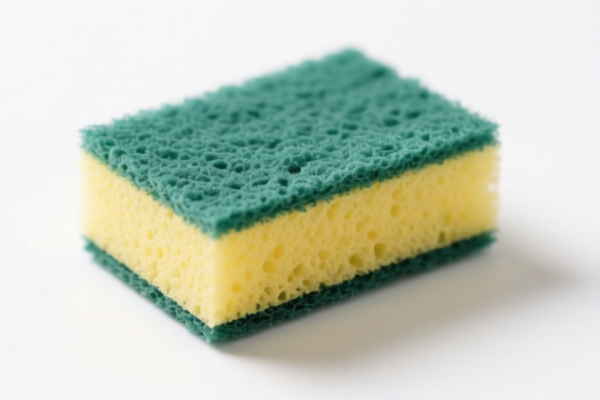

AI Analysis
🛠️ Sanding Sponge Block (Abrasive on Base of Other Materials)
🌐 HS Code Reference & Customs Clearance Guide | 2026 Latest Tariff Analysis | Professional Clearance Strategy
📌 I. Product Definition & Classification: Do You Know What a "Sanding Sponge" Really Is?
A Sanding Sponge Block is a handheld abrasive tool consisting of a flexible foam or rubber core (the "sponge") bonded with an abrasive layer (such as aluminum oxide, silicon carbide, or diamond grit). Unlike rigid sandpaper, it conforms to irregular shapes, making it ideal for woodworking, auto body repair, and drywall finishing.
In international trade, it is classified not as a simple "paper or textile" abrasive, but specifically as an article on a base of other materials (typically rubber or plastic foam).
⚠️ Key Distinction:
- If the base is paper, paperboard, or textile → It falls under HS Codes 6805.10, 6805.20, or 6805.30 (depending on the shape).
- If the base is rubber, plastic foam, or other → It falls under HS Code 6805.30 ("On a base of other materials").
- Sanding sponges are almost always classified under 6805.30.
📦 II. HS Code Classification Details (2026 Latest Tariff Authority Comparison)
Based on the provided dataset, there are two specific sub-headings under 6805.30 for abrasives on bases of other materials. The correct code depends on the form of the product.
| HS Code | Product Description | Application Scenario | Form Factor |
|---|---|---|---|
6805.30.10.00 |
Articles wholly or partly coated with abrasives, in the form of sheets, strips, disks, belts, sleeves or similar forms | Standard rectangular sanding blocks, curved blocks, or pre-cut shapes that fit "sheet/strip" categories | ✅ Pre-shaped/Conformable |
6805.30.50.00 |
Other | Irregular shapes, non-standard forms not fitting sheet/strip/disk categories, or custom-molded sponge blocks | ❌ Non-standard/Unique Shape |
🔍 Critical Insight:
- Most standard sanding sponges (rectangular, trapezoidal, or simple curved blocks) are typically cleared under6805.30.10.00as they are considered "similar forms" to sheets or strips of abrasive material.
- If the sponge has a highly complex, ergonomic grip or a non-standard 3D shape that doesn't resemble a sheet/strip/disk, it may fall under6805.30.50.00("Other").
- Recommendation: Use6805.30.10.00for standard inventory unless the shape is highly specialized.
💰 III. 2026 Latest Tariff Rate Breakdown (Including Additional Taxes & Policy Surcharges)
✅ Applicable Country: United States (US)
✅ Country of Origin: China (CN)
✅ Effective Date: 2025-11-10 onwards
🎯 1. 6805.30.10.00 —— Sanding Sponge Blocks (Standard Forms)
| Item | Content |
|---|---|
| Base Tariff | 0.0% |
| Section 301 Additional Tariff | +25.0% |
| Total Tax Rate | 25.0% |
| Tax Calculation | CIF Value × 25% |
| De Minimis Exemption? | ❌ NO (deny_de_minimis) |
| Legal Basis Path | USITC:6805.30.10.00 → SECTION_301:6805.30 |
📌 Explanation:
- Base Rate (0%): Abrasives often have low base duties.
- Section 301 Tariff (+25%): All abrasives from China are subject to the 25% tariff under Section 301 of the Trade Act.
- No IEEPA 10%: Unlike electronics or displays, abrasives are NOT currently subject to the additional IEEPA 10% tariff.
- Total Cost Impact: You pay 25% of the CIF value in tariffs alone. This is a significant cost increase for low-margin abrasive tools.
🎯 2. 6805.30.50.00 —— Other Abrasive Articles (Non-Standard Forms)
| Item | Content |
|---|---|
| Base Tariff | 0.0% |
| Section 301 Additional Tariff | +25.0% |
| Total Tax Rate | 25.0% |
| Tax Calculation | CIF Value × 25% |
| De Minimis Exemption? | ❌ NO (deny_de_minimis) |
| Legal Basis Path | USITC:6805.30.50.00 → SECTION_301:6805.30 |
📌 Note:
- The tariff rate is identical to6805.30.10.00.
- The distinction is purely for customs data reporting and importer compliance. Misclassification does not change the tax but can lead to audits if the product description doesn't match the code.
🛠️ IV. Customs Clearance Practical Advice (Real-World Pitfall Guide)
✅ 1. Required Documentation Checklist
| Document | Mandatory | Explanation |
|---|---|---|
| ✅ Product Specification Sheet | ✔️ | Must specify: Base material (rubber/plastic foam), Abrasive type (Aluminum Oxide/Silicon Carbide), Grit size (e.g., 80, 120, 220). |
| ✅ Product Photos | ✔️ | Clear images showing the sponge core and the abrasive surface. Must show it is not paper or textile-based. |
| ✅ Commercial Invoice | ✔️ | Clearly state: "Sanding Sponge Block, Rubber Base, Aluminum Oxide Abrasive." Avoid vague terms like "Sandpaper" or "Cleaning Cloth." |
| ✅ Packing List | ✔️ | Detail the quantity per box and gross weight. |
| ✅ Country of Origin Certificate | ✔️ | Required to confirm Chinese origin for Section 301 application. |
✅ 2. Declaration Tips (Key Mantra)
🔥 "Base is Key, Form Defines Code, Never Say 'Paper'!"
| Scenario | Correct Declaration | Incorrect Practice |
|---|---|---|
| Standard Rectangular Sponge | 6805.30.10.00 |
Mislabel as "Sandpaper" → HS 6805.10/20 → Potential penalty |
| Curved/Ergonomic Sponge | 6805.30.10.00 or 6805.30.50.00 |
If unsure, use 6805.30.50.00 (safer for non-standard) |
| Sponge with Plastic Handle | Whole Article | Do not separate handle and sponge → Treat as one abrasive article |
| Wet/Dry Sanding Sponge | Same Code | Water resistance does not change HS classification |
📌 Critical Warning:
- DO NOT describe the product as "Sandpaper" in the invoice. Sandpaper implies a paper or textile base.
- If customs determines the base is not paper/textile but you declared it as such, they may reclassify it, but since the tax rate is the same (25%), the main risk is delay and audit due to inconsistency.
- Correct Term: "Abrasive Sponge on Rubber/Plastic Base."
✅ 3. Special Cases
| Scenario | Handling Advice |
|---|---|
| Sponge with Plastic Handle Attached | If the handle is essential for use, classify as one unit. The value of the handle is included in the CIF. |
| Bulk Rolls vs. Cut Blocks | Rolls might be classified differently (e.g., 6805.30.10.00 as "strips"). Blocks are "articles." Ensure description matches. |
| Diamond Grit Sponges | Still 6805.30.10.00 or .50.00. Abrasive type (diamond vs. oxide) does not change the HS code, only the product spec. |
🌍 V. Global Market Comparison (2026 Latest)
| Country/Region | Recommended HS Code | Tariff Rate | Certification | Notes |
|---|---|---|---|---|
| 🇺🇸 USA | 6805.30.10.00 / .50.00 |
25.0% | None specific | High tariff due to Section 301 |
| 🇨🇳 China | 6805.30.10.00 |
0% | None | Export duty may apply (check latest) |
| 🇪🇺 EU | 6805.30.10 |
6.5% | CE (if applicable) | Lower base rate than US |
| 🇬🇧 UK | 6805.30.10 |
6.5% | UKCA | Post-Brexit alignment with EU |
| 🇦🇺 Australia | 6805.30.10 |
5.0% | None | GSP benefits may apply if origin eligible |
📌 Conclusion:
- The US market is the most expensive for Chinese-made sanding sponges due to the flat 25% additional tariff.
- Other major markets (EU, UK, Australia) have significantly lower duties (5-6.5%).
- For US imports, cost optimization is critical. Consider negotiating FOB prices or exploring duty drawback programs.
📌 VI. Common Mistakes & Pitfalls (Lessons Learned)
❌ Mistake 1: Declaring as "Sandpaper" (HS 6805.10/20)
👉 Consequence: Customs may reject it because the base is rubber/foam, not paper. Causes delay and request for amendment.
❌ Mistake 2: Ignoring the Section 301 Tariff
👉 Consequence: Importers underestimate landed cost. 25% extra cost wipes out profit margins.
❌ Mistake 3: Using "Cleaning Sponge" as Description
👉 Consequence: Customs may classify as a kitchen sponge (HS 9603) with different tariffs (often higher or lower, but wrong compliance). Always mention "Abrasive."
❌ Mistake 4: Not Specifying Grit Size
👉 Consequence: Low risk of reclassification, but high risk of inspection requests for safety/compliance checks.
✅ Correct Declaration Example:
"Abrasive Sanding Sponge Block, Rubber Base, Aluminum Oxide Grit 120, Cut to Shape, for Woodworking."
🎯 VII. Conclusion: Professional Declaration, Cost Control, Efficiency!
🎯 Remember the Mantra:
🔹 "Base is Rubber, Code is 6805.30, Tax is 25%, Don't Say Paper!"
🔹 "Sanding Sponge = Abrasive on Other Base, Full Tariff Applies, De Minimis Denied!"
📌 Pro Tip:
- If you are importing into the US, calculate the 25% tariff into your pricing model from day one.
- Keep product photos and specs ready for customs audits.
- Consider pre-ruling (Advance Ruling) if you have high-volume, unusual shapes to avoid classification disputes.
📣 Immediate Action:
📞 Verify HS Code with your customs broker
📄 Prepare accurate product descriptions (No "Sandpaper"!)
💰 Budget for 25% additional duty on all US-bound shipments
✨ Professional Clearance Starts with Precise Classification!
💼 Your Landed Cost is Only as Good as Your HS Code!
Customer Reviews
About HS Code Classification
The Harmonized System (HS) is an internationally standardized nomenclature developed by the World Customs Organization (WCO) to classify traded products. Over 200 countries use the HS system as the basis for customs tariffs, trade statistics, and import/export regulations.
Each HS code follows a hierarchical structure:
- Chapter (2 digits) — Broad category of goods (e.g., Chapter 84: Machinery and Mechanical Appliances)
- Heading (4 digits) — More specific grouping within the chapter
- Subheading (6 digits) — Internationally standardized breakdown, used by all WCO member countries
- National subdivisions (8-10 digits) — Country-specific extensions for further classification, such as US HTSUS 10-digit codes
Correct HS code classification is essential for smooth customs clearance, accurate duty payment, and compliance with trade regulations. Misclassification can lead to customs delays, overpayment of duties, or penalties.
When importing from CN to US, the applicable tariff rates may include:
- Most-Favored-Nation (MFN) rate — The standard duty rate applied to WTO members
- General rate — Applied to countries without trade agreements
- Trade remedy duties — Additional tariffs such as Section 301 (anti-dumping), Section 232 (national security), or countervailing duties
The information provided on this page is for reference purposes only. For official classification, please consult with your local customs authority or a licensed customs broker.