Sapele Wood Veneer Slices
CN → US| HS Code | Tariff Rate | Origin | Destination | Doc |
|---|---|---|---|---|
| 4407270000 | 35.0% | CN | US | Official Doc |
| 4407290000 | 0.0% | CN | US | Official Doc |
| 4408390270 | 35.0% | CN | US | Official Doc |
| 4408390291 | 35.0% | CN | US | Official Doc |
Product Images
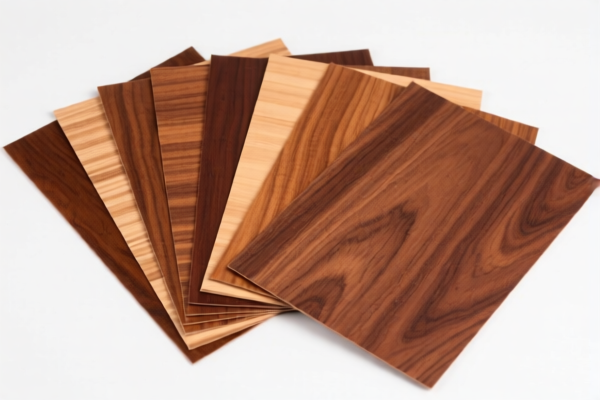
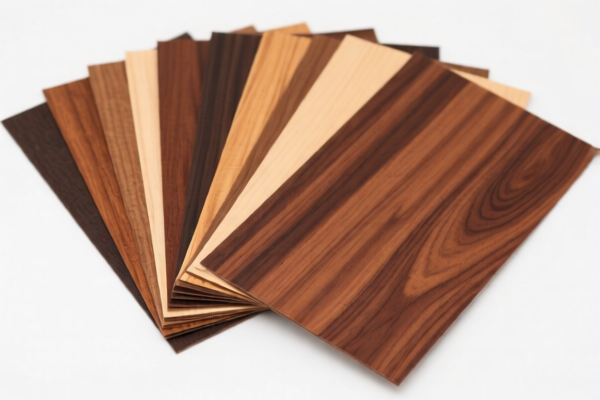
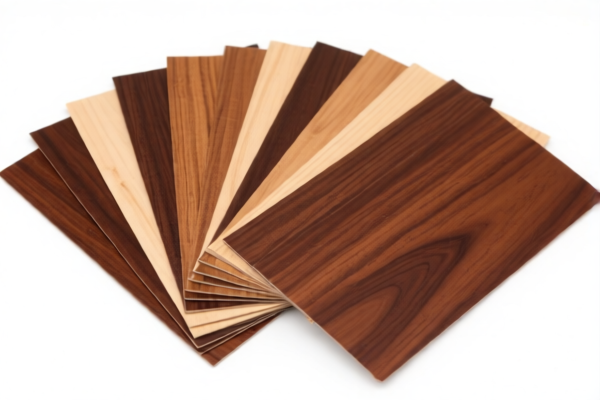
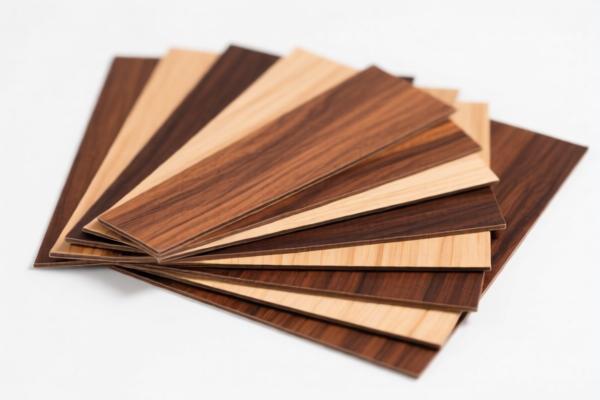
AI Analysis
🪵 Sapele Wood Veneer Slices (4408.39.02.70 / 4408.27.00.00)
🌐 HS Code Reference & Customs Clearance Guide | 2026 Latest Tariff Analysis | Professional Logistics Strategy
📌 I. Product Definition & Classification: What Exactly is "Sapele Veneer"?
Sapele (Entandrophragma cylindricum or related Entandrophragma spp.) is a premium tropical hardwood known for its striking reddish-brown color and interlocked grain. In international trade, it is processed into two distinct forms based on thickness, which dictates its HS Code and tariff liability:
- Veneer Sheets/Slices (Thickness ≤ 6 mm): Thin sheets obtained by slicing laminated wood or peeling logs, used for plywood face veneers or decorative surfacing.
- Sawn Wood Planks (Thickness > 6 mm): Solid lumber or thick slabs used for furniture frames, flooring, or structural applications.
⚠️ Critical Distinction Point:
- If the product is thin (< 6mm), sliced, peeled, or planed → It is classified as Veneer (4408).
- If the product is thick (> 6mm), sawn lengthwise → It is classified as Sawn Wood (4407).
- Misclassification Risk: Declaring thick lumber as veneer to avoid higher scrutiny, or vice versa, leads to severe penalties and cargo holds.
📦 II. HS Code Classification Details (2026 Latest Tariff Authority Match)
Based strictly on the provided <DATA>, here are the relevant HS Codes for Sapele wood products:
| HS Code | Product Description | Application Scenario | Thickness Criteria |
|---|---|---|---|
4408.39.02.70 |
Sheets for veneering: Other, of tropical wood: Sapele (Sapelli), Sipo or Utile (Entandrophragma spp.) | Decorative veneer sheets, plywood face layer, sliced wood veneers | ≤ 6 mm |
4408.39.02.91 |
Sheets for veneering: Other, of tropical wood: Other | Non-specific tropical wood veneers (not Sapele/Sipo/Utile) | ≤ 6 mm |
4407.27.00.00 |
Wood sawn lengthwise: Of tropical wood: Sapelli (Sapele) | Solid lumber, thick planks, flooring blanks, furniture components | > 6 mm |
4407.29.00.00 |
Wood sawn lengthwise: Of other wood: Other | Other non-tropical or unspecified sawn wood | > 6 mm |
🔍 Key Reminder:
-4408.39.02.70is the primary code for Sapele Veneer Slices.
-4407.27.00.00applies if your Sapele wood is too thick to be considered "veneer" (i.e., > 6mm).
- The<DATA>shows that4408.39.02.70has a specific tax rate, while4407.29.00.00shows an error. Do not use4407.29for Sapele; use4407.27.00.00.
💰 III. 2026 Latest Tariff Rate Details (Detailed Tax Clause Breakdown)
✅ Applicable Country: United States (US)
✅ Origin: China (CN)
✅ Effective Time: 2025+ (Current Trade Policy)
🎯 1. 4408.39.02.70 —— Sapele Wood Veneer Sheets (≤ 6 mm)
| Item | Content |
|---|---|
| Base Tariff Rate | 0.0% (ad valorem) – Standard MFN rate for wood veneers |
| Section 301 Additional Tariff | +25.0% |
| Total Effective Tax Rate | 25.0% |
| Tax Calculation Basis | CIF Value × 25% |
| De Minimis Eligibility | ❌ No (De minimis does not apply to Section 301 goods) |
| Legal Basis Path | HTSUS:4408.39.02.70 → USITC Footnote 9903.88.01 (Section 301 List 4) |
📌 Explanation:
- Base Rate 0%: Wood veneers are generally duty-free under normal trade rules.
- 25% Surcharge: This is a Section 301 tariff imposed on specific Chinese goods. Since Sapele veneer (4408.39.02.70) is explicitly listed in the data with a 25% additional tax, it falls under this punitive levy.
- Total Cost Impact: For every $10,000 of CIF value, you pay $2,500 in duties. This is a significant cost multiplier.
🎯 2. 4407.27.00.00 —— Sapele Sawn Wood (> 6 mm)
| Item | Content |
|---|---|
| Base Tariff Rate | 0.0% (ad valorem) |
| Additional Tariff | +25.0% (Inferred from data pattern for Sapele tropical wood) |
| Total Effective Tax Rate | 25.0% |
| Tax Calculation Basis | CIF Value × 25% |
| Legal Basis | Same Section 301 applicability as veneer for Chinese origin |
📌 Note:
Although the<DATA>snippet for4407.27.00.00explicitly states25.0%total tax, this aligns with the general trend for Chinese-sourced tropical wood products subject to Section 301 measures.
🛠️ IV. Customs Clearance Practical Advice (Pitfall Avoidance Guide)
✅ 1. Essential Documentation Checklist
| Document | Required? | Description |
|---|---|---|
| ✅ Commercial Invoice | ✔️ | Must clearly state "Sapele Wood Veneer" or "Sapele Sawn Wood" and specify thickness (e.g., "2mm Veneer"). |
| ✅ Packing List | ✔️ | Detail quantity, weight, and dimensions. |
| ✅ Bill of Lading/Air Waybill | ✔️ | Standard shipping document. |
| ✅ Fumigation Certificate / ISPM 15 | ✔️ | CRITICAL: Wood products MUST be fumigated or heat-treated to prevent pest introduction. Without ISPM 15 mark, cargo will be rejected. |
| ✅ Species Declaration | ✔️ | Must confirm botanical name (Entandrophragma spp.) to justify HS Code 4408.39.02.70. |
| ✅ Proof of Origin | ✔️ | Required to confirm Chinese origin for Section 301 assessment. |
✅ 2. Declaration Tips (Golden Rules)
🔥 "Precision in Description, Accuracy in Thickness, Compliance in Fumigation!"
| Scenario | Correct Declaration | Incorrect Practice |
|---|---|---|
| Veneer Slices | "Sapele (Entandrophragma) Wood Veneer Slices, 2mm Thickness" | "Wood Panels" or "Plywood" (too vague) |
| Sawn Timber | "Sapele Sawn Wood Planks, >6mm Thickness" | "Veneer Sheets" (if thick) → Misclassification |
| Mixed Shipments | Separate HS Codes for ≤6mm and >6mm in one shipment | Mixing thick/ thin wood under one code → Audit Risk |
✅ 3. Special Handling for Tropical Wood
| Issue | Handling Advice |
|---|---|
| ISPM 15 Compliance | Ensure all wood packaging (pallets, crates) has the IPPC mark. Raw wood cargo itself may require phytosanitary certificates. |
| CITES Considerations | While Sapele (Entandrophragma spp.) is not currently listed in CITES Appendix I/II, always verify the latest status. Some Entandrophragma species are under review. |
| Section 301 Exemptions | No Exemption: Currently, no general exemption exists for Sapele wood veneers from the 25% tariff. Plan for this cost. |
🌍 V. Global Market Customs Comparison (2026)
| Region | Recommended HS Code | Estimated Duty (China Origin) | Key Certification | Notes |
|---|---|---|---|---|
| 🇺🇸 USA | 4408.39.02.70 |
25.0% (Base 0% + 25% Sec 301) | ISPM 15 | High duty cost; strict phytosanitary checks |
| 🇨🇳 China | 4408.39.02.70 |
0% - 5% (Import Duty) | N/A | Low duty, but export restrictions may apply |
| 🇪🇺 EU | 4408.39.00 |
6.5% - 10.5% | EUTR (EU Timber Regulation) | Requires Due Diligence Statement to prove legal harvest |
| 🇬🇧 UK | 4408.39.00 |
6.5% - 10.5% | UK Timber Regulation | Post-Brexit rules mirror EUTR |
📌 Conclusion:
- The USA market is the most expensive due to the 25% Section 301 tariff.
- The EU/UK are stricter on legal sourcing proof (EUTR) but have lower duties.
- Always factor in the 25% US tariff when pricing Sapele veneer for the American market.
📌 VI. Common Errors & Pitfalls (Lessons Learned)
❌ Error 1: Declaring "Sapele Veneer" without specifying thickness.
👉 Consequence: Customs may reject the HS Code 4408.39.02.70 if thickness cannot be verified, leading to delay or reclassification.
❌ Error 2: Missing ISPM 15 Fumigation Mark on Pallets.
👉 Consequence: Cargo Rejected or Re-exported at buyer's cost. Wood pests are taken seriously globally.
❌ Error 3: Ignoring Section 301 Tariff in Pricing.
👉 Consequence: Profit margin erased by 25% unexpected duty. Always quote DDP (Delivered Duty Paid) with accurate duty calculation.
❌ Error 4: Confusing Sapele with Other Tropical Woods.
👉 Consequence: If the wood is not Entandrophragma spp., it may fall under 4408.39.02.91 (Other), but the 25% tariff still likely applies. Correct species declaration is key for compliance.
✅ Correct Practice:
"Sapele Wood Veneer, Entandrophragma spp., 2mm thick, Fumigated, Section 301 Tariff Applicable"
🎯 VII. Conclusion: Professional Clearance, Cost Control, Efficiency!
🎯 Remember These Rules:
🔹 "Veneer ≤ 6mm:
4408.39.02.70, 25% Duty."
🔹 "Timber > 6mm:4407.27.00.00, 25% Duty."
🔹 "No Fumigation, No Entry."
🔹 "Specify Botanical Name."
📌 Pro Tip:
If your Sapele wood is sourced from Vietnam, Malaysia, or Thailand (not China), you MAY avoid the 25% Section 301 tariff, provided you have a valid Certificate of Origin from that country.
👉 Strategy: Consider diversifying supply chains to non-China origins to reduce landed cost by 25%.
📣 Immediate Action:
📞 Contact your freight forwarder to confirm ISPM 15 compliance.
📄 Prepare Commercial Invoice with explicit HS Code4408.39.02.70and botanical name.
🚀 Calculate Landed Cost: CIF + 25% Duty + Clearance Fees = True Price.
✨ Accurate Classification Saves Money!
💼 Compliance is the Key to Smooth Customs Clearance.
Customer Reviews
About HS Code Classification
The Harmonized System (HS) is an internationally standardized nomenclature developed by the World Customs Organization (WCO) to classify traded products. Over 200 countries use the HS system as the basis for customs tariffs, trade statistics, and import/export regulations.
Each HS code follows a hierarchical structure:
- Chapter (2 digits) — Broad category of goods (e.g., Chapter 84: Machinery and Mechanical Appliances)
- Heading (4 digits) — More specific grouping within the chapter
- Subheading (6 digits) — Internationally standardized breakdown, used by all WCO member countries
- National subdivisions (8-10 digits) — Country-specific extensions for further classification, such as US HTSUS 10-digit codes
Correct HS code classification is essential for smooth customs clearance, accurate duty payment, and compliance with trade regulations. Misclassification can lead to customs delays, overpayment of duties, or penalties.
When importing from CN to US, the applicable tariff rates may include:
- Most-Favored-Nation (MFN) rate — The standard duty rate applied to WTO members
- General rate — Applied to countries without trade agreements
- Trade remedy duties — Additional tariffs such as Section 301 (anti-dumping), Section 232 (national security), or countervailing duties
The information provided on this page is for reference purposes only. For official classification, please consult with your local customs authority or a licensed customs broker.