Satellite Detector
CN → US| HS Code | Tariff Rate | Origin | Destination | Doc |
|---|---|---|---|---|
| 8802603000 | 35.0% | CN | US | Official Doc |
| 8543706000 | 35.0% | CN | US | Official Doc |
| 9015900160 | 35.0% | CN | US | Official Doc |
| 9015808040 | 35.0% | CN | US | Official Doc |
| 8802609040 | 35.0% | CN | US | Official Doc |
| 8543709860 | 37.6% | CN | US | Official Doc |
Product Images
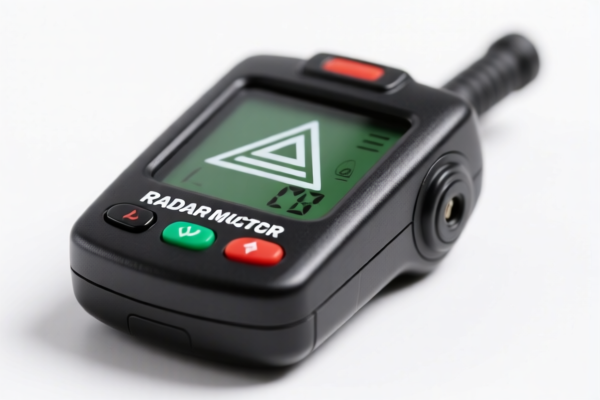
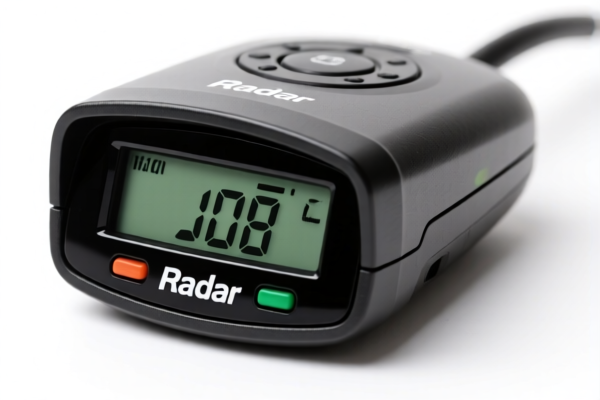


AI Analysis
🛰️ Satellite Detectors (Satellite Probes/Sensors)
🌐 HS Code Reference & Customs Clearance Guide | 2026 Latest Tariff Analysis | Professional Clearance Strategy
📌 I. Product Definition & Classification: Do You Really Understand "Satellite Detectors"?
In international trade, "Satellite Detectors" is a broad functional term that can refer to spacecraft (satellites/probes) themselves or specialized instruments used for space/earth exploration. Because the input is limited to the name "Satellite Detector," customs classification relies on functional intent and structural form. There are no material conflicts in the provided data, so we classify based on use case.
⚠️ Key Distinction:
- If the item is a complete spacecraft/satellite designed for launch → Chapter 88 (Aircraft/Spacecraft)
- If the item is a standalone instrument for geophysical/space measurement → Chapter 90 (Optical/Scientific Instruments)
- If the item is a generic machine/device connecting to networks → Chapter 85 (Electrical Machinery)
📦 II. HS Code Classification Details (2026 Latest Tariff Authority Comparison)
| HS Code | Product Description | Applicable Scenario | Classification Logic |
|---|---|---|---|
8802.60.30.00 |
Satellites and satellite probes | Complete spacecraft designed for space launch | Primary Match: "Satellite Detector" aligns with "Satellite/Spacecraft." No material/form conflict. |
8802.60.90.40 |
Other spacecraft (including satellites) | Complete spacecraft not listed elsewhere | Functional Match: Fully fits the definition of spacecraft. No conflicting material/form descriptions. |
9015.90.01.60 |
Other geophysical instruments & devices | Earth physics/space exploration measurement devices | Functional Match: Used for geophysical or space detection. No material conflict. |
9015.80.80.40 |
Other measuring/meteorological/geophysical instruments | Inferred as geophysical/space measurement devices | Inferred Use: Fits the category of measurement instruments. No material/form conflict. |
8543.70.60.00 |
Other machines/devices for network connection | Devices designed to connect to communication networks | Use Case Match: Designed to operate/connect with communication networks. "Other" catch-all applies. |
8543.70.98.60 |
Other machines and apparatus | Independent functional complex devices (not amplifiers/instruments) | Catch-all: Independent machine device. Not an amplifier. No material/form conflict. |
🔍 Critical Reminder:
- If the "Detector" is a physical satellite/probe, it MUST be classified under 8802.
- If it is a ground-based instrument or sensor module for data collection, it may fall under 9015 or 8543.
- Misclassifying a satellite as a generic machine (8543) or instrument (9015) when it is a spacecraft can lead to severe penalties or export control violations.
💰 III. 2026 Latest Tariff Rate Breakdown (Including Surtaxes & Policy Add-ons)
✅ Applicable Country: United States (US)
✅ Country of Origin: China (CN)
✅ Effective Date: From 2025-11-10 onwards (including subsequent imports)
🎯 1. Primary Spacecraft Codes: 8802.60.30.00 & 8802.60.90.40
| Item | Content |
|---|---|
| Base Tariff | 0% (Ad Valorem) |
| USITC Surtax | +25% (Under USITC Footnote 9903.88.01) |
| IEEPA Surtax | +10% (Against Chinese/HK products, from 2025-11-10) |
| Total Tariff Rate | 35.0% |
| Calculation | CIF Value × 35% |
| De Minimis Exemption? | ❌ NO (deny_de_minimis) |
| Legal Basis Path | IEEPA:9903.01.25 → IEEPA:9903.01.24 → USITC:8802.60.30.00/90.40 → FOOTNOTE:9903.88.01 |
📌 Explanation:
- 25% USITC Surcharge: From the Section 301 trade action; applies to aerospace components and spacecraft.
- 10% IEEPA Surcharge: International Emergency Economic Powers Act surcharge on Chinese goods.
- Total 35%: High tariff burden. Export control restrictions (ITAR/EAR) may also apply to actual satellites, requiring additional licenses beyond tariff payment.
🎯 2. Geophysical Instrument Codes: 9015.90.01.60 & 9015.80.80.40
| Item | Content |
|---|---|
| Base Tariff | 0% |
| USITC Surtax | +25% |
| IEEPA Surtax | +10% |
| Total Tariff Rate | 35.0% |
| Calculation | CIF × 35% |
| De Minimis Exemption? | ❌ NO |
| Legal Basis Path | IEEPA:9903.01.25 → IEEPA:9903.01.24 → USITC:9015.xxxx → FOOTNOTE:9903.88.01 |
📌 Note:
- Even if classified as scientific instruments, they are subject to the same 35% total tariff due to the 301/IEEPA add-ons.
- These codes are suitable for ground-based sensors or non-launchable detection modules.
🎯 3. Electrical Machine Codes: 8543.70.60.00 & 8543.70.98.60
| Item | Content |
|---|---|
| Base Tariff | 0% for 8543.70.60.00 / 2.6% for 8543.70.98.60 |
| USITC Surtax | +25% |
| IEEPA Surtax | +10% |
| Total Tariff Rate | 35.0% (for 60.00) / 37.6% (for 98.60) |
| Calculation | CIF × Total Rate |
| De Minimis Exemption? | ❌ NO |
| Legal Basis Path | IEEPA:9903.01.25 → IEEPA:9903.01.24 → USITC:8543.xxxx → FOOTNOTE:9903.88.01 |
📌 Warning:
- Code8543.70.98.60has a 2.6% base tariff, leading to a 37.6% total rate.
- This code is a "catch-all" for machines not elsewhere specified. Only use if the device is not a satellite and not a specialized scientific instrument, but rather a generic network-connected machine.
🛠️ IV. Customs Clearance Practical Advice (Battle-Tested Pitfall Avoidance)
✅ 1. Documentation Checklist (All Required)
| Document | Mandatory? | Description |
|---|---|---|
| ✅ Product Specification Sheet | ✔️ | Must clearly define if it is a "Spacecraft," "Instrument," or "Machine." Include voltage, weight, dimensions. |
| ✅ Technical Diagrams | ✔️ | Critical to distinguish between a launchable satellite (Ch 88) and a sensor module (Ch 90/85). |
| ✅ Product Photos (with Nameplate) | ✔️ | Show model number, brand, and input/output parameters. |
| ✅ Third-Party Test Reports | ✔️ | FCC, CE, RoHS, ITAR/EAR compliance certificates (if applicable). |
| ✅ Commercial Invoice | ✔️ | Must explicitly state "Satellite Detector" or specific function. Avoid vague terms like "Electronic Device." |
| ✅ Certificate of Origin (CO) | ✔️ | If not China-origin, claim preferential rates. |
| ✅ Packing List | ✔️ | Clarify relationship between main unit and accessories. Do not split if it's one functional unit. |
✅ 2. Declaration Tips (Key Mantra)
🔥 "Classify by Function: Satellite in Ch88, Instrument in Ch90, Machine in Ch85!"
| Scenario | Correct Declaration | Incorrect Practice |
|---|---|---|
| Physical Satellite/Probe | 8802.60.30.00 or 8802.60.90.40 |
Misclassified as "Instrument" → Export license violation |
| Ground-based Geophysical Sensor | 9015.90.01.60 or 9015.80.80.40 |
Misclassified as "Satellite" → Unnecessary export controls |
| Generic Network Device | 8543.70.60.00 |
Over-complicating with scientific instrument codes |
| Incomplete Unit (Parts) | Check HTS for "Parts of Satellites" | Declaring parts as full satellites → High duty + delays |
✅ 3. Special Handling Cases
| Case | Handling Advice |
|---|---|
| OEM/Custom Satellite | Provide client orders + design drawings. Avoid "non-standard" flags. |
| Satellite with Military Use | ITAR/EAR Control: May require DDTC/Commerce Dept licenses before customs clearance. Tariff is secondary to export control. |
| Satellite for Medical/Research | If specialized, provide proof of end-use to avoid misclassification as general machinery. |
| Detectors for Space Telescopes | Classify as Instrument (9015) if not launchable; Spacecraft (8802) if part of the satellite bus. |
🌍 V. Global Market Comparison (2026 Latest)
| Country/Region | Recommended HS Code | Tariff (China Origin) | Certification Requirements | Notes |
|---|---|---|---|---|
| 🇺🇸 USA | 8802.60.30.00 |
35% | FCC + ITAR/EAR (if space-bound) | 301 + IEEPA surcharges apply. |
| 🇨🇳 China | 8802.60.30.00 |
0% (Export) | CCC (if applicable) | No import duties for exports. |
| 🇪🇺 EU | 8802.60.30.00 |
0% (Generally) | CE + RoHS | Check dual-use goods regulations. |
| 🇦🇺 Australia | 8802.60.30.00 |
0% | RCM + ARC | No major surcharges. |
| 🇯🇵 Japan | 8802.60.30.00 |
0% | PSE + METI | No surcharges. |
📌 Conclusion:
- USA is the only major market with significant added tariffs (35%) for Chinese-origin satellite detectors.
- Export Control (ITAR/EAR) is more critical than tariff for this product. Ensure compliance with US export laws before shipment.
📌 VI. Common Errors & Pitfall Avoidance (Lessons Learned)
❌ Error 1: Declaring a launchable satellite as a generic machine (8543) to avoid scrutiny.
👉 Consequence: Customs may seize the item for export control violation. Tariff may increase to 37.6% + penalties.
❌ Error 2: Splitting a complete detector unit into "housing + electronics + sensor" for lower duties.
👉 Consequence: Each part may be taxed separately or flagged as incomplete shipment. Total duty could exceed 100%.
❌ Error 3: Using vague terms like "Detector" without specifying function (space vs. earth).
👉 Consequence: Customs will request additional documentation, causing delayed release or return.
❌ Error 4: Ignoring ITAR/EAR regulations for items classified under 8802.
👉 Consequence: Criminal penalties for unauthorized export of defense articles, regardless of tariff rate.
✅ Correct Practice:
"Satellite Detector, Model XYZ, Used for Earth Physics Measurement, Non-Orbital, FCC Certified, Compliant with EAR99"
🎯 VII. Conclusion: Precision in Classification Saves Time & Money!
🎯 Remember the Mantra:
🔹 "Satellites go to 8802, Instruments to 9015, Machines to 8543."
🔹 "35% is the baseline for US imports; Export Control is the real barrier."
🔹 "Classify correctly, declare specifically, avoid the 37.6% trap."
📌 Pro Tip:
If your satellite detector is originally from Vietnam, Mexico, or Thailand, you may qualify for IEEPA Exemptions, reducing the rate to 0%-5%.
👉 Apply for Advance Rulings from CBP to secure your HS code and avoid post-entry audits.
📣 Immediate Action:
📞 Contact professional customs brokers + Provide technical specs + Apply for HS Code Advance Ruling
🚀 Ensure ITAR/EAR compliance + Clear customs smoothly, minimize costs, maximize efficiency!
✨ Professional clearance starts with precise classification!
💼 Every dollar of cost deserves precise calculation!
Customer Reviews
About HS Code Classification
The Harmonized System (HS) is an internationally standardized nomenclature developed by the World Customs Organization (WCO) to classify traded products. Over 200 countries use the HS system as the basis for customs tariffs, trade statistics, and import/export regulations.
Each HS code follows a hierarchical structure:
- Chapter (2 digits) — Broad category of goods (e.g., Chapter 84: Machinery and Mechanical Appliances)
- Heading (4 digits) — More specific grouping within the chapter
- Subheading (6 digits) — Internationally standardized breakdown, used by all WCO member countries
- National subdivisions (8-10 digits) — Country-specific extensions for further classification, such as US HTSUS 10-digit codes
Correct HS code classification is essential for smooth customs clearance, accurate duty payment, and compliance with trade regulations. Misclassification can lead to customs delays, overpayment of duties, or penalties.
When importing from CN to US, the applicable tariff rates may include:
- Most-Favored-Nation (MFN) rate — The standard duty rate applied to WTO members
- General rate — Applied to countries without trade agreements
- Trade remedy duties — Additional tariffs such as Section 301 (anti-dumping), Section 232 (national security), or countervailing duties
The information provided on this page is for reference purposes only. For official classification, please consult with your local customs authority or a licensed customs broker.