Satin Fabric (Unbleached)
CN → US| HS Code | Tariff Rate | Origin | Destination | Doc |
|---|---|---|---|---|
| 5407810040 | 49.9% | CN | US | Official Doc |
| 5208192020 | 42.9% | CN | US | Official Doc |
| 5111909000 | 60.0% | CN | US | Official Doc |
Product Images
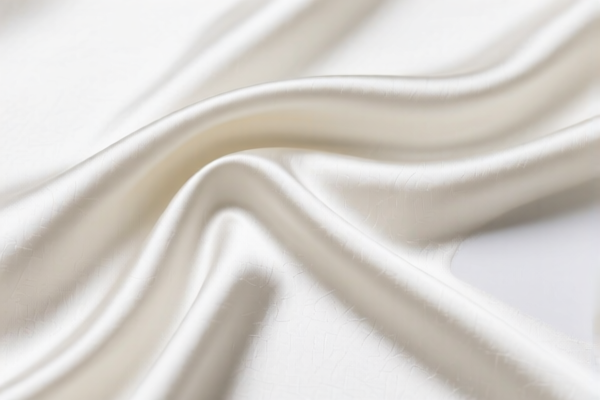
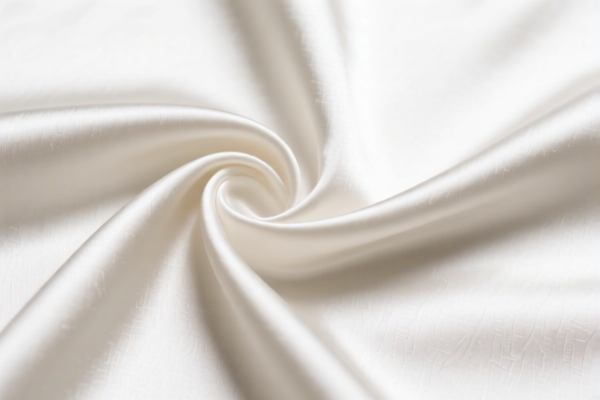
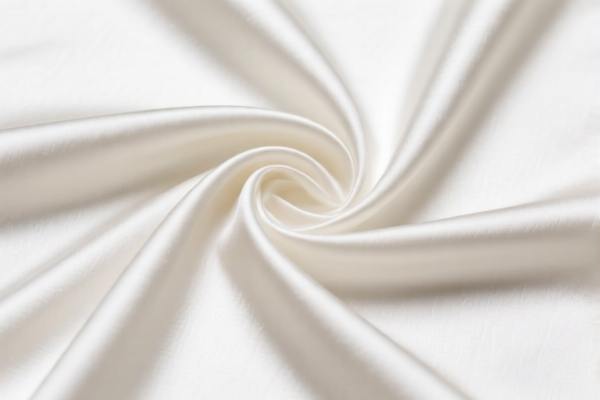
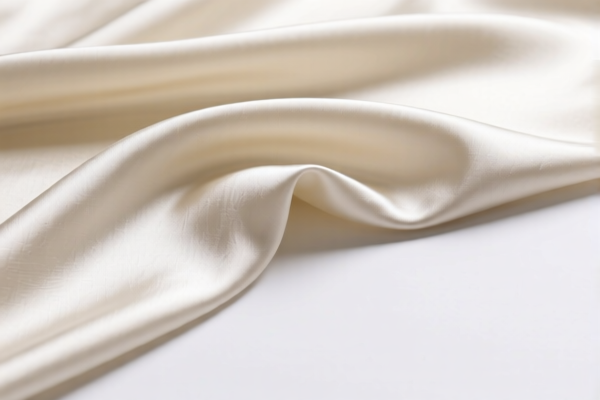
AI Analysis
🌟 Satin Fabric (Unbleached) – HS Code & Tariff Guide 2026 | Expert Customs Clearance Strategy
🌐 HS Code Classification & Duty Breakdown | U.S. Import Rules | 2026 Update | High-Tax Alert
✅ Target Product: Unbleached Satin Fabric
✅ Primary Use: Apparel, Home Textiles, Luxury Interiors
✅ Origin: China (CN), India (IN), Vietnam (VN), Turkey (TR)
✅ Effective Date: November 10, 2025 (U.S. Tariff Schedule Update)
📦 I. HS Code Classification Breakdown (2026 U.S. Tariff Schedule)
| HS Code | Product Description | Fiber Composition | Key Classification Logic |
|---|---|---|---|
5407.81.00.40 |
Satin fabric, unbleached, synthetic fiber & cotton blend | Polyester/Cotton Mix | Satin weave + synthetic + unbleached → 5407.81.00.40 |
5208.19.20.20 |
Satin fabric, unbleached, cotton or cellulosic fiber | 100% Cotton / Rayon / Viscose | Cotton or cellulosic + satin weave + unbleached → 5208.19.20.20 |
5111.90.90.00 |
Satin fabric, unbleached, animal hair fiber (e.g., wool) | Wool / Merino / Cashmere | Animal fiber + satin weave + unbleached → 5111.90.90.00 |
🔍 Why These Codes?
- Satin weave is defined by 3+ warp threads floating over 1 weft thread → creates lustrous surface.
- Unbleached means fabric retains natural color (off-white, beige, tan) → not chemically whitened.
- Fiber type determines the subheading: synthetic, cotton, or animal fiber.
- No bleaching = no eligibility for lower-duty "bleached" codes.
💰 II. 2026 U.S. Tariff Rate Analysis (China-Origin Goods)
⚠️ All rates apply to goods from China (CN).
⚠️ Effective from Nov 10, 2025.
⚠️ Total Duty = Base + Section 301 + Section 122 (IEEPA)
🎯 1. 5407.81.00.40 – Synthetic & Cotton Blend Satin (Unbleached)
| Tax Component | Rate | Legal Basis | Notes |
|---|---|---|---|
| Base Tariff | 14.9% | HTSUS 5407.81.00 | Standard rate for synthetic-cotton blends |
| Section 301 (USITC) | +25.0% | USITC Footnote 9903.88.01 | From "China Trade War" tariffs |
| Section 122 (IEEPA) | +10.0% | IEEPA: 9903.01.25 | International Emergency Economic Powers Act |
| Total Duty | 49.9% | — | Extremely High – Plan for Cost Impact |
📌 Explanation:
- Synthetic fiber (e.g., polyester) triggers higher base duty than cotton.
- Section 301 applies to all Chinese-origin textiles under "Section 301 List 3".
- Section 122 (IEEPA) applies to all goods from China, Hong Kong, or Macau.
- No de minimis exemption → even small shipments face full 49.9% duty.
🎯 2. 5208.19.20.20 – Cotton or Cellulosic Satin (Unbleached)
| Tax Component | Rate | Legal Basis | Notes |
|---|---|---|---|
| Base Tariff | 7.9% | HTSUS 5208.19.20 | Lower than synthetic blends |
| Section 301 (USITC) | +25.0% | USITC Footnote 9903.88.01 | Applies to cotton textiles from China |
| Section 122 (IEEPA) | +10.0% | IEEPA: 9903.01.25 | Same as above |
| Total Duty | 42.9% | — | Still very high, but lower than synthetic |
📌 Explanation:
- Cotton or cellulosic (e.g., rayon, viscose) has lower base rate than synthetic blends.
- Still subject to 25% Section 301 + 10% IEEPA → no relief for "natural fiber" status.
- Unbleached → cannot claim lower duty under "bleached" subheadings.
🎯 3. 5111.90.90.00 – Animal Hair Satin (Unbleached) – e.g., Wool
| Tax Component | Rate | Legal Basis | Notes |
|---|---|---|---|
| Base Tariff | 25.0% | HTSUS 5111.90.90 | High base for animal fibers |
| Section 301 (USITC) | +25.0% | USITC Footnote 9903.88.01 | Applies to all Chinese-origin textiles |
| Section 122 (IEEPA) | +10.0% | IEEPA: 9903.01.25 | Applies to all China-origin goods |
| Total Duty | 60.0% | — | Highest in Class – Extreme Risk |
📌 Explanation:
- Wool or animal hair has a high base rate (25%) due to protectionist policies.
- Combined with 25% + 10%, this becomes 60% total duty.
- No exceptions — even luxury wool satin faces this rate.
- High risk of seizure if misclassified.
🛠️ III. Customs Clearance Best Practices (Pro Tips)
✅ 1. Critical Documentation Checklist
| Document | Required? | Why It Matters |
|---|---|---|
| ✅ Commercial Invoice | ✔️ | Must state “Unbleached Satin Fabric” + HS Code |
| ✅ Packing List | ✔️ | Show weight, roll count, dimensions |
| ✅ Bill of Lading / Air Waybill | ✔️ | Proof of shipment |
| ✅ Certificate of Origin (CO) | ✔️ | Crucial: If from Vietnam, India, or Turkey → may avoid 301/IEEPA tariffs |
| ✅ Fiber Composition Certificate | ✔️ | Lab report proving blend (e.g., 65% polyester, 35% cotton) |
| ✅ Product Photos (with label) | ✔️ | Show weave, color, texture, no bleach marks |
| ✅ Third-Party Test Report | ✔️ | ISO, AATCC, or SGS for fiber content & weave |
✅ 2. 申报策略:Avoid the 45%+ Trap
🔥 Golden Rule:
"Know your fiber, know your code, know your tariff."
| Scenario | Correct HS Code | Risk of Over-Tax |
|---|---|---|
| 60% polyester + 40% cotton satin | 5407.81.00.40 |
✅ Safe |
| 100% cotton satin | 5208.19.20.20 |
✅ Safe |
| 100% wool satin | 5111.90.90.00 |
✅ Safe |
| Misdeclare as “cotton” when synthetic | ❌ 5208.19.20.20 |
⚠️ 49.9% duty instead of 42.9% → $10k+ overpayment |
| Misdeclare as “cotton” when 50% wool | ❌ 5208.19.20.20 |
⚠️ 60% duty → seizure risk |
✅ 3. Strategic Workarounds (Legal & Safe)
| Strategy | How It Works | Limitations |
|---|---|---|
| Source from Vietnam/India/Turkey | Use CO from non-China country → avoid 301 + IEEPA | Base duty still applies (e.g., 7.9% for cotton) |
| Apply for Pre-Ruling (Advance Ruling) | Request U.S. Customs to confirm HS Code & duty | Costs $10k–$20k, but locks in rate |
| Use "Non-Commercial" or "Sample" Shipment | If under $800 → may qualify for de minimis (but IEEPA still applies) | No de minimis for China-origin goods → even $100 shipment pays 42.9%+ |
| Repackage as "Yarn" or "Woven Fabric" (if applicable) | Avoid "satin" classification? ❌ Not recommended – high risk of audit |
🌍 IV. Global Market Comparison (2026)
| Country | Recommended HS Code | Tariff | Certification | Notes |
|---|---|---|---|---|
| 🇺🇸 United States | 5407.81.00.40 etc. |
42.9%–60.0% | FCC, RoHS, AATCC | No de minimis for China |
| 🇨🇳 China | 5407.81.00.40 |
5% | CCC | No extra tariffs |
| 🇪🇺 EU | 5407.81.00.40 |
0% (if CE) | CE, REACH | No Section 301/IEEPA |
| 🇦🇺 Australia | 5407.81.00.40 |
5% | RCM | No extra tariffs |
| 🇯🇵 Japan | 5407.81.00.40 |
0% | PSE | No extra tariffs |
📌 Insight:
- U.S. is the only market with 40%+ tariffs on unbleached satin.
- China-origin goods face the highest cost.
- Vietnam/India/Turkey sources are strategic alternatives.
🚨 V. Common Mistakes & Legal Risks (Avoid These!)
❌ Mistake 1: Declaring "cotton satin" when it's 55% polyester
👉 Result: Misclassification → 49.9% duty instead of 42.9% → $5k+ overpayment
❌ Mistake 2: Using “unbleached” fabric but claiming “bleached” code
👉 Result: Denial of entry or seizure – no de minimis for China
❌ Mistake 3: Not providing fiber test report
👉 Result: Customs may reclassify → higher duty + penalties
❌ Mistake 4: Shipping in small batches to avoid scrutiny
👉 Result: Cumulative duty still applies – no escape from 42.9%+
✅ Correct Declaration Example:
"Unbleached Satin Fabric, 65% Polyester / 35% Cotton, 120gsm, 150cm width, 10 rolls, Origin: Vietnam, HS Code: 5407.81.00.40, No 301/IEEPA applicable."
🎯 VI. Final Verdict: What You Must Do Now
📌 Key Takeaway:
- Unbleached satin from China faces 42.9%–60.0% tariffs – extremely high.
- Fiber composition is everything – misclassify and pay $10k+ extra.
- Source from Vietnam/India/Turkey to avoid 301/IEEPA.
- Always get a fiber test report & pre-ruling.
📣 Call to Action: Protect Your Profit Margin!
🚀 Immediate Steps:
1. ✅ Verify fiber composition with lab test
2. ✅ Obtain CO from non-China country (if possible)
3. ✅ Apply for Advance Ruling (if volume > $100k/year)
4. ✅ Use a U.S.-based customs broker experienced in textile tariffs
✨ Pro Tip:
"A $500 lab test can save you $50,000 in tariffs."
"One wrong HS Code can cost you your entire profit margin."
📌 Your Fabric. Your Duty. Your Future.
💼 Precise classification = Smooth clearance = Profitable trade.
📞 Need help?
Contact a U.S. Customs Broker + Textile Specialist today.
Let’s get your satin fabric through customs, on time, at the right cost.
🔥 Don’t get caught in the tariff trap. Know your HS Code. Know your duty. Know your risk.
Customer Reviews
About HS Code Classification
The Harmonized System (HS) is an internationally standardized nomenclature developed by the World Customs Organization (WCO) to classify traded products. Over 200 countries use the HS system as the basis for customs tariffs, trade statistics, and import/export regulations.
Each HS code follows a hierarchical structure:
- Chapter (2 digits) — Broad category of goods (e.g., Chapter 84: Machinery and Mechanical Appliances)
- Heading (4 digits) — More specific grouping within the chapter
- Subheading (6 digits) — Internationally standardized breakdown, used by all WCO member countries
- National subdivisions (8-10 digits) — Country-specific extensions for further classification, such as US HTSUS 10-digit codes
Correct HS code classification is essential for smooth customs clearance, accurate duty payment, and compliance with trade regulations. Misclassification can lead to customs delays, overpayment of duties, or penalties.
When importing from CN to US, the applicable tariff rates may include:
- Most-Favored-Nation (MFN) rate — The standard duty rate applied to WTO members
- General rate — Applied to countries without trade agreements
- Trade remedy duties — Additional tariffs such as Section 301 (anti-dumping), Section 232 (national security), or countervailing duties
The information provided on this page is for reference purposes only. For official classification, please consult with your local customs authority or a licensed customs broker.