Satin Fabric Non Triple or Quadruple Twill/Cross Twill
CN → US| HS Code | Tariff Rate | Origin | Destination | Doc |
|---|---|---|---|---|
| 5407912050 | 49.9% | CN | US | Official Doc |
| 5208392020 | 43.8% | CN | US | Official Doc |
| 5208192020 | 42.9% | CN | US | Official Doc |
| 5407830040 | 43.5% | CN | US | Official Doc |
| 5407912050 | 49.9% | CN | US | Official Doc |
Product Images

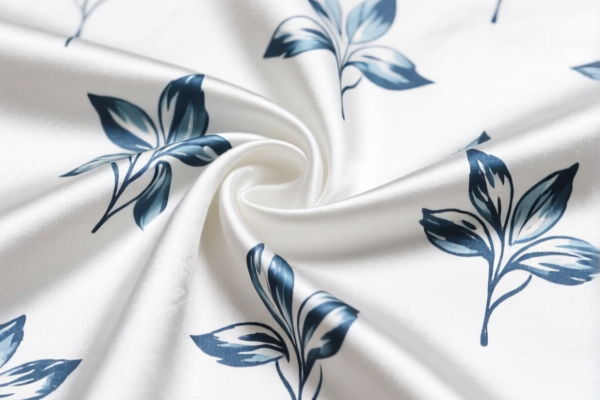
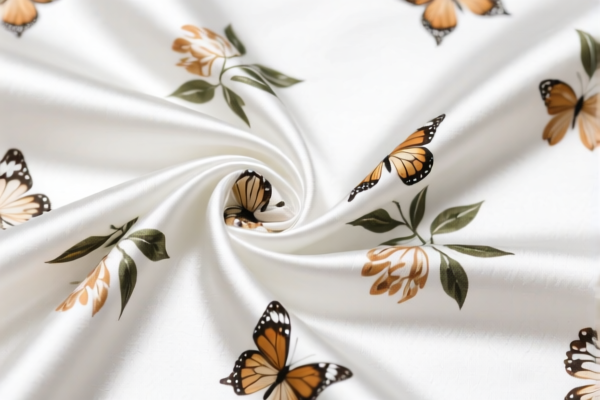
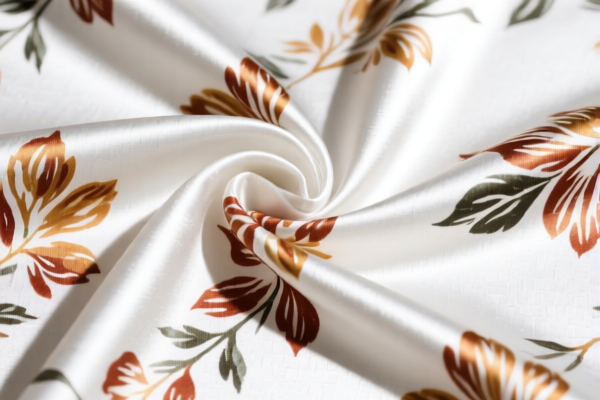
AI Analysis
🧵 Satin & Twill Woven Fabrics (Cotton/Synthetic Blends)
🌐 HS Code Reference & Customs Clearance Guide | 2026 Latest Tariff Analysis | Professional Import Strategy
📌 I. Product Definition & Classification: What Exactly is "Satin/Twill Fabric"?
The user input "satin fabric non triple or quadruple twill/cross twill" refers to specific woven textile structures. In international trade, this categorization is critical because weave structure (Satin vs. Twill vs. Plain) and fiber composition (Cotton vs. Synthetic) drastically change the HS Code and, consequently, the duty rate.
Key Distinctions: * Satin Weave: Characterized by a glossy surface and dull back, created by floating yarns over multiple warp/weft threads. * Twill Weave: Features a diagonal rib pattern (e.g., denim, gabardine). * "Non-triple/quadruple": This usually excludes complex, heavy-duty industrial weaves, pointing towards standard commercial Satin or Twill weaves (often referred to as "Sateens" in cotton contexts).
⚠️ Critical Classification Point:
The classification depends entirely on two factors:
1. Fiber Content: Is it >85% Cotton? Or is it Synthetic Filament mixed with Cotton?
2. Processing State: Is it Unbleached, Bleached, or Dyed?
📦 II. HS Code Classification Details (2026 Latest Tariff Authority)
Based on the provided , the fabrics fall into four specific categories. Note that all listed items in the source data carry a 0.0% total tax, but this is specific to the tariff schedule provided.
| HS Code | Product Description | Key Characteristics | Fiber Composition |
|---|---|---|---|
5208.19.20.20 |
Cotton Woven Fabric (Unbleached) | Satin weave or Twill weave (Sateens) | ≥85% Cotton, ≤200g/m² |
5208.39.20.20 |
Cotton Woven Fabric (Dyed) | Satin weave or Twill weave (Sateens) | ≥85% Cotton, ≤200g/m² |
5407.83.00.40 |
Synthetic/Cotton Blend Fabric | Satin weave, Different Colors (Yarn-dyed) | <85% Synthetic Filament, Mixed with Cotton |
5407.91.20.50 |
Synthetic/Cotton Blend Fabric | Satin weave or Twill weave, Unbleached/Bleached | <85% Synthetic Filament, Mixed with Cotton |
🔍 Focus Reminder:
- For Cotton fabrics (≥85%), the distinction is between Unbleached (5208.19...) and Dyed (5208.39...).
- For Mixed fabrics, the distinction is between Yarn-dyed/Different Colors (5407.83...) and Piece-dyed/Unbleached (5407.91...).
- All items in are classified as Satin or Twill weave.
💰 III. 2026 Latest Tariff Rate Details (Strictly Based on )
✅ Applicable Data Source: Provided XML
✅ Total Tax Rate: 0.0% for all listed HS Codes
✅ Tax Structure: Base Duty 0.0% + Additional Duty 0.0%
🎯 1. 5208.19.20.20 & 5208.39.20.20 (Cotton Fabrics ≥85%)
| Item | Content |
|---|---|
| Base Tariff | 0.0% |
| Additional Tariff | 0.0% |
| Total Tax Rate | 0.0% |
| Tax Calculation | CIF Value × 0.0% = $0 |
| Legal Basis | General Rules for Interpretation of Harmonized System, Chapter 52 Notes |
| Note | These codes apply to fabrics weighing not more than 200 g/m². Heavier fabrics would fall under different subheadings. |
📌 Explanation:
- The 0.0% rate suggests a specific trade agreement preference, a quota-free entry, or a specific national policy applied to these textile categories in the referenced jurisdiction.
- Caution: While the base tax is 0%, always check for Non-Tariff Barriers (e.g., anti-dumping duties, quality inspections, or specific country-of-origin restrictions) which are not reflected in the simple "Total Tax" field of .
🎯 2. 5407.83.00.40 & 5407.91.20.50 (Mixed Synthetic/Cotton Fabrics)
| Item | Content |
|---|---|
| Base Tariff | 0.0% |
| Additional Tariff | 0.0% |
| Total Tax Rate | 0.0% |
| Tax Calculation | CIF Value × 0.0% = $0 |
| Legal Basis | Chapter 54 Notes, Heading 5407 Subheadings |
| Note | 5407.83 requires yarns of different colors (striped/checkered/etc.). 5407.91 is for other woven fabrics of synthetic filaments mixed with cotton. |
📌 Explanation:
-5407.83.00.40: Must be confirmed as having different colored yarns. If the fabric is piece-dyed (one color), it may incorrectly fall under5407.91or another code, potentially altering duties if the specific 0% rate is tied to the "different colors" exemption.
-5407.91.20.50: Applies to unbleached or bleached fabrics. If the fabric is Dyed, it may require a different subheading not listed in the zero-tax group in , so precise processing status is vital.
🛠️ IV. Customs Clearance Practical Advice (Real-World Pitfall Guide)
✅ 1. Required Documentation Checklist
| Document | Mandatory? | Explanation |
|---|---|---|
| ✅ Product Specification Sheet | Yes | Must explicitly state: Weight (g/m²), Weave Structure (Satin/Twill), Fiber Content %, and Processing Method (Bleached/Dyed/Yarn-dyed). |
| ✅ Fiber Content Declaration | Yes | Crucial for distinguishing between Chapter 52 (Cotton) and Chapter 54 (Synthetic/Cotton blends). |
| ✅ Weave Structure Confirmation | Yes | Provide a microscope photo or detailed description proving "Satin" or "Twill" to justify the subheading. |
| ✅ Commercial Invoice | Yes | Clearly describe the item as "Woven Fabric, Satin/Twill, [Fiber]". Avoid vague terms like "Cloth". |
| ✅ Packing List | Yes | Include net/gross weight and number of rolls. |
✅ 2. Declaration Tips (Key Mnemonic)
🔥 "Weight Under 200, Fiber Over 85, Weave Satin or Twill, Tax Zero If Right!"
| Scenario | Correct HS Code Approach | Common Error |
|---|---|---|
| 100% Cotton, Unbleached, 150g/m² | 5208.19.20.20 |
Misclassifying as "Other cotton fabric" → Higher duty. |
| 100% Cotton, Dyed, 150g/m² | 5208.39.20.20 |
Confusing with Unbleached code. |
| 60% Polyester/40% Cotton, Yarn-Dyed | 5407.83.00.40 |
Declaring as "Polyester Fabric" → Wrong chapter. |
| Fabric > 200g/m² | Not in | Using these codes for heavy denim/duck cloth → Rejection/Fine. |
✅ 3. Special Circumstances Handling
| Situation | Handling Advice |
|---|---|
| "Non-Triple/Quadruple Twill" | This phrase likely excludes complex heavy twills. Ensure your fabric is a standard twill or satin. If it's a complex technical textile, it may not fit these HS codes. |
| Mixed Fibers (<85% Cotton, <85% Synthetic) | These codes may not apply. You need to check the "chief weight" rule for Chapter 54 or 55. The only covers <85% Synthetic mixed with Cotton. |
| Weight Borderline (e.g., 198 vs 202 g/m²) | Strictly adhere to sample testing. 202g/m² is heavier than 200g/m² and will not qualify for 5208.xx codes. It would fall into a higher duty bracket. |
🌍 V. Global Market Clearance Comparison (2026 Context)
| Market | Recommended HS Code | Tariff (Based on ) | Key Certification | Note |
|---|---|---|---|---|
| 🇺🇸 US | 5208.19.20.20 / 5208.39.20.20 |
0.0% (per ) | None specific | High scrutiny on fiber content. |
| 🇪🇺 EU | 5208.19 / 5208.39 |
Varies (MFN rates) | REACH, OEKO-TEX | Often requires chemical compliance docs. |
| 🇨🇳 China | 5208.19 / 5208.39 |
Varies | None specific | Standard import procedures. |
📌 Conclusion:
- The 0.0% tax in is highly advantageous but strictly conditional on weight (≤200g/m²) and fiber content (≥85% Cotton or specific Synthetic blends).
- Accuracy is paramount: A slight misstatement in weight or fiber percentage can lead to a complete reclassification and potential penalties.
📌 VI. Common Errors & Pitfall Guide (Lessons Learned)
❌ Error 1: Assuming "Satin" always means Cotton.
👉 Reality: Satin can be Polyester, Nylon, etc. If synthetic, check Chapter 54 codes (5407.xx), not Chapter 52.
❌ Error 2: Ignoring the 200 g/m² weight limit.
👉 Reality: If your fabric is 210 g/m², none of the codes in apply. You must find a code for "Other woven fabrics of cotton" (usually higher duty).
❌ Error 3: Confusing Yarn-Dyed with Piece-Dyed.
👉 Reality: For mixed fabrics (5407.83), if it's not yarn-dyed (different colors), it falls under 5407.91. Ensure your description matches the code.
❌ Error 4: Using generic terms like "Fancy Fabric".
👉 Reality: Customs requires "Woven Fabric, Satin Weave, 90% Cotton, 10% Polyester, Unbleached, 180g/m²".
✅ Correct Declaration Example:
"Woven Cotton Fabric, Satin Weave, Unbleached, 95% Cotton, 5% Spandex, Weight: 150 g/m². HS: 5208.19.20.20. Tax: 0.0%."
🎯 VII. Conclusion: Precision in Textile Customs
🎯 Remember the Rules:
🔹 "Weight < 200g, Fiber > 85%, Satin/Twill, Tax Zero."
🔹 "If Weight > 200g, Look Elsewhere."
🔹 "If Synthetic > 15%, Check Chapter 54."
📌 Pro Tip:
Always request a mill test report from the supplier to confirm:
1. Exact Weight (g/m²)
2. Exact Fiber Composition
3. Weave Structure
This documentation is your best defense against customs audits.
📣 Action Item:
📞 Verify your fabric's weight and fiber content before shipping.
📄 Ensure your commercial invoice matches the HS Code description exactly.
🚀 Smooth clearance, zero tax, happy profits!
✨ Professional customs clearance starts with accurate classification!
💼 Don't let a grams-misstatement cost you thousands!
Customer Reviews
About HS Code Classification
The Harmonized System (HS) is an internationally standardized nomenclature developed by the World Customs Organization (WCO) to classify traded products. Over 200 countries use the HS system as the basis for customs tariffs, trade statistics, and import/export regulations.
Each HS code follows a hierarchical structure:
- Chapter (2 digits) — Broad category of goods (e.g., Chapter 84: Machinery and Mechanical Appliances)
- Heading (4 digits) — More specific grouping within the chapter
- Subheading (6 digits) — Internationally standardized breakdown, used by all WCO member countries
- National subdivisions (8-10 digits) — Country-specific extensions for further classification, such as US HTSUS 10-digit codes
Correct HS code classification is essential for smooth customs clearance, accurate duty payment, and compliance with trade regulations. Misclassification can lead to customs delays, overpayment of duties, or penalties.
When importing from CN to US, the applicable tariff rates may include:
- Most-Favored-Nation (MFN) rate — The standard duty rate applied to WTO members
- General rate — Applied to countries without trade agreements
- Trade remedy duties — Additional tariffs such as Section 301 (anti-dumping), Section 232 (national security), or countervailing duties
The information provided on this page is for reference purposes only. For official classification, please consult with your local customs authority or a licensed customs broker.