Satin Printed Fabric for Bags (Reactive Printing)
CN → US| HS Code | Tariff Rate | Origin | Destination | Doc |
|---|---|---|---|---|
| 5407840040 | 49.9% | CN | US | Official Doc |
| 5407942050 | 49.9% | CN | US | Official Doc |
Product Images

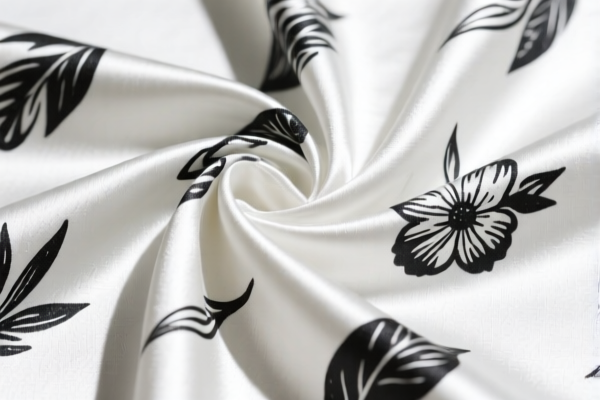
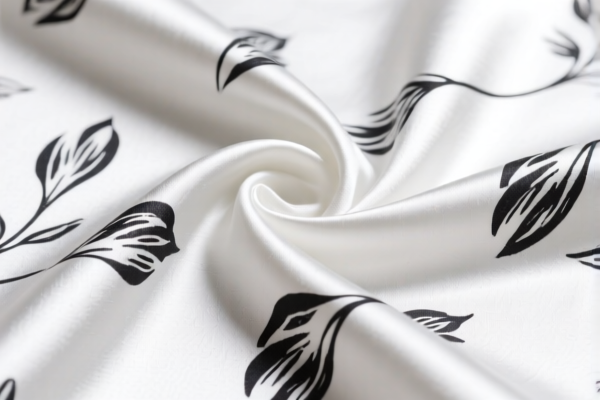
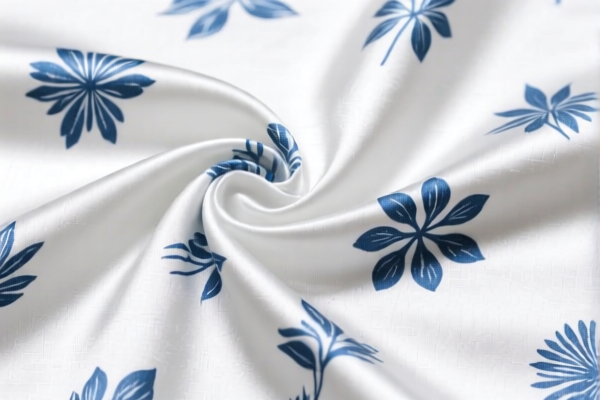
AI Analysis
🧵 Satin Printed Fabric for Bags (Reactive Printing)
🌐 HS Code Reference & Customs Clearance Guide | 2026 Latest Tariff Analysis | Professional Entry Strategy
📌 I. Product Definition & Classification: What Exactly Is This Fabric?
Satin Printed Fabric (Reactive Printing) refers to woven textiles made primarily from synthetic filament yarns, characterized by a smooth, lustrous surface (satin weave) and colored using reactive dyes. These fabrics are specifically destined for the production of bags (handbags, luggage, tote bags, etc.).
In international trade, classification hinges on three critical factors: 1. Material Composition: Is it >85% synthetic filaments, or mixed with cotton? 2. Weave Structure: Is it Satin or Twill (which have specific sub-headings), or other weaves? 3. Processing: Is it Printed?
⚠️ Key Distinction Point:
- If the fabric is mixed mainly or solely with cotton and contains <85% synthetic filaments → It falls under 5407.84.00.40.
- If the fabric is pure synthetic filament (or not mixed primarily with cotton) → It falls under 5407.94.20.50.
- Crucial Note: Both codes specifically require the fabric to be Satin weave or Twill weave and Printed. Plain weaves or other structures are excluded from these specific sub-headings.
📦 II. HS Code Classification Details (2026 Latest Tariff Authority Comparison)
| HS Code | Product Description | Applicable Scenario | Key Criteria |
|---|---|---|---|
5407.84.00.40 |
Woven fabrics of synthetic filament yarn, mixed mainly or solely with cotton, containing <85% synthetic filaments: Printed Satin or Twill Weave | Blended fabrics (e.g., 65% Polyester/35% Cotton), mixed with cotton, printed satin/twill | ✅ Mixed with Cotton (<85% Synth) |
5407.94.20.50 |
Woven fabrics of synthetic filament yarn, other: Printed: Other: Satin or Twill Weave | Pure synthetic fabrics (e.g., 100% Polyester, 100% Nylon), printed satin/twill | ✅ Pure Synthetic (No/Min Cotton) |
🔍 Critical Reminder:
- Both codes are restricted to Satin or Twill weaves. If your fabric is Plain Weave (e.g., standard taffeta), it does not fit these codes and will be misclassified, leading to penalties.
- Reactive Printing confirms the "Printed" status required by both headings.
- The primary differentiator is the Cotton Content:
- <85% Synthetic + Mixed w/ Cotton →5407.84.00.40
- Pure Synthetic / Not Mixed w/ Cotton →5407.94.20.50
💰 III. 2026 Latest Tariff Rate Details (Including Surtaxes, Policy Surcharges)
✅ Applicable Country: United States (US)
✅ Country of Origin: China (CN)
✅ Effective Time: 2025/2026 (Current Period)
🎯 1. 5407.84.00.40 —— Woven Fabrics, Synthetic Filament, Mixed w/ Cotton, Printed Satin/Twill
| Item | Content |
|---|---|
| Base Tariff Rate | 0.0% |
| Additional Surtax (Section 301) | 0.0% |
| Total Tariff Rate | 0.0% |
| Tax Calculation | CIF Value × 0.0% = $0.00 |
| De Minimis Eligibility | ✅ Yes (Subject to current $800 threshold rules, but tax is zero regardless) |
| Legal Basis Path | HTSUS:5407.84.00.40 → General Note 1 |
📌 Explanation:
- This specific sub-heading for printed satin/twill woven fabrics mixed with cotton currently enjoys a 0% total tariff rate in the provided data.
- Unlike some electronics or steel products, this textile category does not attract the 25% Section 301 surtax in this specific classification slot.
- Zero Duty Advantage: This is a highly competitive code for cost control.
🎯 2. 5407.94.20.50 —— Woven Fabrics, Synthetic Filament, Other, Printed Satin/Twill
| Item | Content |
|---|---|
| Base Tariff Rate | 0.0% |
| Additional Surtax (Section 301) | 0.0% |
| Total Tariff Rate | 0.0% |
| Tax Calculation | CIF Value × 0.0% = $0.00 |
| De Minimis Eligibility | ✅ Yes |
| Legal Basis Path | HTSUS:5407.94.20.50 → General Note 1 |
📌 Explanation:
- Pure synthetic filament satin/twill printed fabrics also enjoy a 0% total tariff rate.
- Important: While the base rate is 0%, ensure the fabric is not classified under other "Other Woven Fabrics" headings that might attract surcharges. The specificity of "Satin/Twill" protects it.
- No Surcharge: Like the previous code, this specific sub-heading is exempt from the additional 25% tariff often seen in textile sections, provided the description matches exactly.
🛠️ IV. Customs Clearance Practical Advice (Combat Pitfalls Guide)
✅ 1. Preparation Checklist (Non-Negotiable)
| Document | Mandatory | Explanation |
|---|---|---|
| ✅ Product Specification Sheet | ✔️ | Must clearly state: Weave Type (Satin/Twill), Composition (% Cotton vs % Synthetic), Printing Method (Reactive), End Use (Bags). |
| ✅ Swatch or Photo | ✔️ | Visual proof of the Satin/Twill luster and weave structure is critical for CBP verification. |
| ✅ Commercial Invoice | ✔️ | Description must match HS Code exactly: "Printed Satin Woven Fabric, 100% Polyester, for Bag Manufacturing." Avoid vague terms like "Textile Material." |
| ✅ Bill of Lading / Packing List | ✔️ | Quantity (yards/meters/weight) must match invoice. |
| ✅ Certificate of Origin | ❌ | Not required for 0% duty unless claiming preferential rates under FTAs (e.g., USMCA, though less common for pure synthetics from CN). |
✅ 2. Declaration Skills (Key Mantra)
🔥 "Weave Determines Code, Print Locks Category, Composition Splits the Path!"
| Scenario | Correct Declaration | Risk of Error |
|---|---|---|
| 100% Polyester, Printed Satin | 5407.94.20.50 |
If declared as "General Woven," may fall into higher-duty "Other" categories. |
| 65% Poly / 35% Cotton, Printed Twill | 5407.84.00.40 |
If cotton content is >85%, it may fall under heading 52/55 (Cotton/Man-made Fiber), not 54. |
| Plain Weave (Taffeta) | Not 5407.84/94 | Must use other codes (e.g., 5407.42/5407.52). Misclassification here leads to incorrect tariff application. |
| Embroidered Fabric | Different Code | Embroidery changes classification. Reactive Printing is fine; Embroidery is not. |
✅ 3. Special Case Handling
| Situation | Handling Advice |
|---|---|
| Mixed Fabric (Unclear %) | Provide a mill certificate or lab test report proving synthetic filament <85% and cotton presence. CBP will demand proof if cotton is suspected. |
| Sample vs. Bulk | Declare bulk quantity. Samples declared separately should be marked "No Commercial Value" to avoid duty issues. |
| Dye Lot Variations | Ensure colorfastness standards (Reactive Dye) are met. While not a tariff issue, non-compliance can lead to rejection at port due to quality/safety (AZO dyes). |
| Bag Hardware Included | If zippers/buttons are shipped with the fabric, they may be considered "accessories." If shipped separately, declare separately. Mixing them can confuse the "Principal Character" test. |
🌍 V. Global Market Comparison (2026 Latest)
| Country/Region | Recommended HS Code | Tariff Rate | Certification | Notes |
|---|---|---|---|---|
| 🇺🇸 USA | 5407.94.20.50 or 5407.84.00.40 |
0.0% | None (for tariff) | Zero duty advantage! |
| 🇨🇳 China | 5407.94.20.50 (Import) |
5.0% - 9.0% | N/A | Lower duty for raw materials. |
| 🇪🇺 EU | 5407.94.90 |
0.0% - 4.5% | REACH, OEKO-TEX | Strict chemical regulations for reactive dyes. |
| 🇬🇧 UK | 5407.94.90 |
0.0% - 4.5% | UKCA | Post-Brexit rules apply. |
| 🇯🇵 Japan | 5407.94.20 |
0.0% | JIS | High quality standards for bag fabrics. |
📌 Conclusion:
- The USA offers 0% duty for these specific satin/twill printed fabrics, making it a highly attractive market if the classification is accurate.
- EU/UK require strict chemical compliance (REACH/OEKO-TEX) for reactive dyes. Non-compliance is a bigger risk than tariffs in Europe.
- China imports these as raw materials with moderate duties, often for re-export.
📌 VI. Common Errors & Pitfalls Guide (Blood & Tears Lessons)
❌ Error 1: Declaring Plain Weave fabric as 5407.94.20.50 (Satin/Twill)
👉 Consequence: CBP reclassifies to a higher-duty "Other Woven Fabric" code → Back taxes + Penalties.
❌ Error 2: Ignoring Cotton Content for mixed fabrics
👉 Consequence: If >85% synthetic, use 5407.94...; if <85%, use 5407.84.... Wrong code = Misdeclaration.
❌ Error 3: Vague Description: "Polyester Fabric"
👉 Consequence: CBP cannot verify "Satin/Twill" or "Printed" status → Audit Trigger.
✅ Correct: "Printed Satin Woven Fabric, 100% Polyamide, Reactive Dye, for Handbag Lining."
❌ Error 4: Not providing Lab Test for Dyes
👉 Consequence: EU/US may flag for AZO dyes or heavy metals in reactive printing → Shipment Held.
🎯 VII. Conclusion: Professional Declaration, Cost Saving, Efficiency!
🎯 Remember the Mantra:
🔹 "Satin/Twill? Check! Printed? Check! Cotton %? Check! 0% Duty Awaits!"
🔹 "HS Code Precision Saves Dollars; Vague Descriptions Cost Time!"
📌 Pro Tip:
If your fabric is 100% Polyester but you suspect it might be viewed as "Other," emphasize the Satin Weave structure in the commercial invoice and attach a weave diagram. This ensures it locks into
5407.94.20.50(0% duty) rather than a generic "Other" heading which might have higher baseline duties.
📣 Immediate Action:
📞 Verify weave structure with your mill.
📄 Specify "Printed Satin/Twill" in all shipping documents.
🚀 Clear customs smoothly, keep costs at zero, and maximize your bag manufacturing profits!
✨ Professional Customs Clearance Starts with Accurate Classification!
💼 Your Every Yard, Worth Calculated Precisely!
Customer Reviews
About HS Code Classification
The Harmonized System (HS) is an internationally standardized nomenclature developed by the World Customs Organization (WCO) to classify traded products. Over 200 countries use the HS system as the basis for customs tariffs, trade statistics, and import/export regulations.
Each HS code follows a hierarchical structure:
- Chapter (2 digits) — Broad category of goods (e.g., Chapter 84: Machinery and Mechanical Appliances)
- Heading (4 digits) — More specific grouping within the chapter
- Subheading (6 digits) — Internationally standardized breakdown, used by all WCO member countries
- National subdivisions (8-10 digits) — Country-specific extensions for further classification, such as US HTSUS 10-digit codes
Correct HS code classification is essential for smooth customs clearance, accurate duty payment, and compliance with trade regulations. Misclassification can lead to customs delays, overpayment of duties, or penalties.
When importing from CN to US, the applicable tariff rates may include:
- Most-Favored-Nation (MFN) rate — The standard duty rate applied to WTO members
- General rate — Applied to countries without trade agreements
- Trade remedy duties — Additional tariffs such as Section 301 (anti-dumping), Section 232 (national security), or countervailing duties
The information provided on this page is for reference purposes only. For official classification, please consult with your local customs authority or a licensed customs broker.