Satin Printed Fabric for Handcraft (Reactive Printing)
CN → US| HS Code | Tariff Rate | Origin | Destination | Doc |
|---|---|---|---|---|
| 5407942050 | 49.9% | CN | US | Official Doc |
| 5407840040 | 49.9% | CN | US | Official Doc |
| 5007200035 | 35.0% | CN | US | Official Doc |
| 5208592085 | 45.3% | CN | US | Official Doc |
| 5407840040 | 49.9% | CN | US | Official Doc |
Product Images

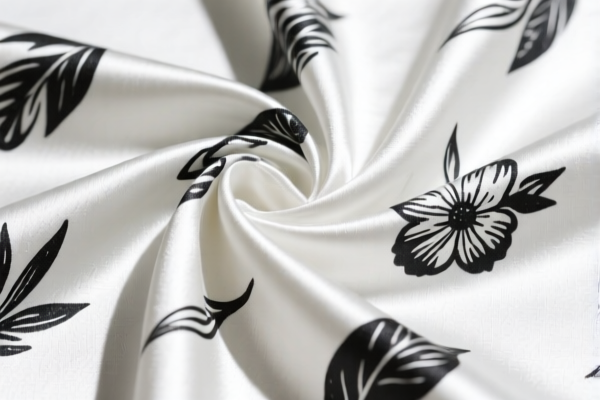
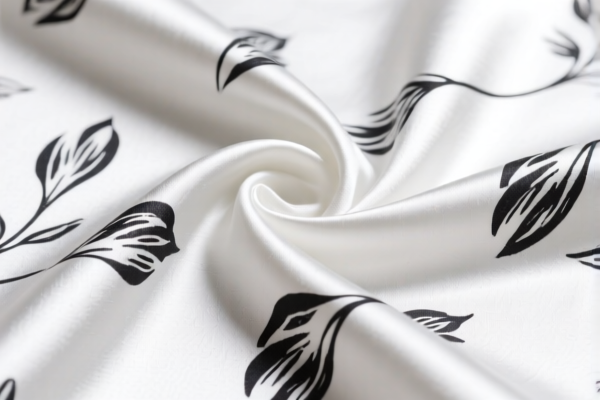
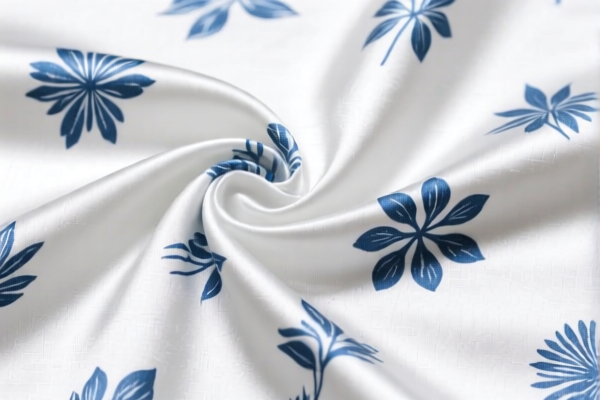
AI Analysis
🎨 Satin Printed Fabric for Handcraft (Reactive Printing)
🌐 HS Code Reference & Customs Clearance Guide | 2026 Latest Tariff Analysis | Professional Customs Strategy
📌 I. Product Definition & Classification: Do You Really Know "Satin Printed Fabric"?
Satin Printed Fabric is a versatile woven textile widely used in handcrafts, apparel, home decor, and upholstery. In international trade, its classification hinges on three critical factors: 1. Material Composition (Silk, Synthetic Fibers, or Cotton) 2. Weave Structure (Satin/Satin Weave) 3. Processing Method (Printed/Reactive Printed)
⚠️ Critical Distinction Point:
- If made of Synthetic Filament Yarns (e.g., Polyester, Nylon): Typically falls under Chapter 54 (e.g., 5407.94.20.50 or 5407.84.00.40).
- If made of Silk: Falls under Chapter 50 (e.g., 5007.20.00.35).
- If made of Cotton: Falls under Chapter 52 (e.g., 5208.59.20.85).
Since the input does not specify the exact fiber content, we analyze the most likely scenarios based on industry standards for "Satin Fabric" in handcrafts.
📦 II. HS Code Classification Details (2026 Latest Tariff Authoritative Comparison)
| HS Code | Product Description | Applicability Scenario | Material Basis |
|---|---|---|---|
5407.94.20.50 |
Woven fabrics of synthetic filaments, other, printed, satin weave | Common for polyester/nylon satin fabrics used in crafts | Synthetic Filament (Inferred) |
5407.84.00.40 |
Woven fabrics of synthetic filaments, mixed mainly or solely with cotton, printed | Blended satin fabrics (Synthetic + Cotton) | Synthetic-Cotton Blend (Inferred) |
5007.20.00.35 |
Woven fabrics of silk or silk waste, printed, other | Pure silk satin fabrics (High-end crafts/jewelry boxes) | Silk (Inferred) |
5208.59.20.85 |
Woven fabrics of cotton, printed, other (including discharge printed) | Cotton-based satin-like weaves or discharge-printed fabrics | Cotton (Inferred) |
🔍 Key Reminder:
- "Satin" refers to the weave structure, not the material.
- "Printed" refers to the surface treatment.
- "Reactive Printing" is a specific type of dyeing/printing process, generally compatible with all the above HS codes if they are "printed."
- The total tax rate varies significantly depending on the material classification due to different base tariffs.
💰 III. 2026 Latest Tariff Rate Details (Including Additional Taxes & Policy Surcharges)
✅ Applicable Country: United States (US)
✅ Country of Origin: China (CN)
✅ Effective Time: November 10, 2025 (and subsequent imports)
🎯 1. 5407.94.20.50 —— Woven Fabrics of Synthetic Filaments, Printed, Satin
| Item | Content |
|---|---|
| Base Tariff | 14.9% |
| Section 301 Additional Tariff | +25.0% |
| Section 122 Tariff | +10.0% |
| Total Tax Rate | 49.9% |
| Tax Calculation | CIF Value × 49.9% |
| De Minimis Exemption | ❌ Not Eligible (High risk for small parcels) |
| Legal Basis Path | Section 301:8524.11.10.00 → Section 122:10% → USITC:5407.94.20.50 |
📌 Explanation:
- This code applies to 100% synthetic satin fabrics (e.g., polyester).
- The 49.9% rate is extremely high, driven by the combination of base duties and trade war surcharges.
- Section 122 tariffs apply to certain textile products from China.
🎯 2. 5407.84.00.40 —— Woven Fabrics of Synthetic Filaments Mixed with Cotton, Printed
| Item | Content |
|---|---|
| Base Tariff | 14.9% |
| Section 301 Additional Tariff | +25.0% |
| Section 122 Tariff | +10.0% |
| Total Tax Rate | 49.9% |
| Tax Calculation | CIF Value × 49.9% |
| De Minimis Exemption | ❌ Not Eligible |
| Legal Basis Path | Section 301:8524.11.10.00 → Section 122:10% → USITC:5407.84.00.40 |
📌 Note:
- This code is for blended fabrics (synthetic fibers + cotton).
- The tax rate is identical to pure synthetic fabrics due to the similar duty structure for printed synthetics.
- Common in mid-range craft fabrics where durability (synthetic) meets comfort (cotton).
🎯 3. 5007.20.00.35 —— Woven Fabrics of Silk, Printed, Other
| Item | Content |
|---|---|
| Base Tariff | 0.0% |
| Section 301 Additional Tariff | +25.0% |
| Section 122 Tariff | +10.0% |
| Total Tax Rate | 35.0% |
| Tax Calculation | CIF Value × 35.0% |
| De Minimis Exemption | ❌ Not Eligible |
| Legal Basis Path | Section 301:8524.11.10.00 → Section 122:10% → USITC:5007.20.00.35 |
📌 Explanation:
- This code applies to real silk satin fabrics.
- Although the base tariff is 0%, the 35.0% total rate is still significant due to the 301 and 122 tariffs.
- Silk is often used for high-end handcrafts like jewelry pouches, luxury gift wrapping, and embroidery bases.
🎯 4. 5208.59.20.85 —— Woven Fabrics of Cotton, Printed, Other (Discharge/Dyed)
| Item | Content |
|---|---|
| Base Tariff | 10.3% |
| Section 301 Additional Tariff | +25.0% |
| Section 122 Tariff | +10.0% |
| Total Tax Rate | 45.3% |
| Tax Calculation | CIF Value × 45.3% |
| De Minimis Exemption | ❌ Not Eligible |
| Legal Basis Path | Section 301:8524.11.10.00 → Section 122:10% → USITC:5208.59.20.85 |
📌 Explanation:
- This code applies to cotton fabrics.
- The base tariff (10.3%) is lower than synthetic/silk codes, but the total rate (45.3%) is still high.
- "Discharge Printed" is mentioned as a compatible process; Reactive Printing is also accepted under "printed" categories for cotton.
- Cotton satin weaves are less common than synthetic ones for general crafts due to cost and care requirements, but are used for baby products or eco-friendly crafts.
🛠️ IV. Customs Clearance Practical Advice (Battle-Tested Pitfall Avoidance Guide)
✅ 1. Document Checklist (None Can Be Missing)
| Document | Must Provide | Explanation |
|---|---|---|
| ✅ Product Spec Sheet | ✔️ | Must specify: Fiber Content (%), Weave Type (Satin), Printing Method (Reactive), Width, Weight (GSM). |
| ✅ Product Photos | ✔️ | Clear images showing the satin sheen and print details. Include label/tag if available. |
| ✅ Commercial Invoice | ✔️ | Must accurately state: "Satin Printed Fabric, Reactive Dye, [Material], for Handcraft Use." |
| ✅ Packing List | ✔️ | Detail roll lengths, weights, and packaging type. |
| ✅ Origin Certificate (CO) | ✔️ | If originating from non-China countries, can apply for preferential tariffs. |
| ✅ Test Report | ✔️ | Optional but recommended: Proof of fiber content to avoid misclassification disputes. |
✅ 2. Declaration Tips (Key Mantra)
🔥 "Material First, Then Structure, Then Processing!"
| Scenario | Correct Declaration | Wrong Practice |
|---|---|---|
| Polyester Satin | 5407.94.20.50 |
Misdeclare as Silk → Risk of penalty |
| Cotton Satin | 5208.59.20.85 |
Misdeclare as Synthetic → Different tax rate |
| Silk Satin | 5007.20.00.35 |
Misdeclare as Synthetic → Base tariff difference |
| Blended Satin | 5407.84.00.40 |
Declare as "Mixed" without specificity → Audit risk |
📌 Critical Note:
- Do NOT just declare as "Fabric." You must specify the fiber composition.
- Reactive Printing is a subset of "Printed," so it fits all "Printed" HS codes above.
- If the fabric is 100% Polyester, it MUST go to Chapter 54, not Chapter 50 or 52.
✅ 3. Special Situation Handling
| Situation | Handling Advice |
|---|---|
| Unknown Material | Conduct a fiber analysis test. Misclassification can lead to severe penalties. |
| Small Parcels (De Minimis) | Not eligible for Section 321 (de minimis) due to high tariffs and Section 122/301 applicability. Plan for full customs entry. |
| Sample vs. Bulk | Samples still require proper declaration if value exceeds $800 or if restricted by Section 122/301. |
| OEM Custom Print | Provide design files if requested to prove "printed" status vs. dyed status (though both may have similar codes, "printed" is more precise). |
🌍 V. Global Main Market Customs Clearance Comparison (2026 Latest)
| Country/Region | Recommended HS Code | Tariff (China Origin) | Certification Requirements | Remarks |
|---|---|---|---|---|
| 🇺🇸 USA | Varies by Material | 35.0% - 49.9% | None specific for fabric | High tariffs due to Section 301 & 122. |
| 🇨🇳 China | Varies by Material | 5% - 14.9% | None | No additional surcharges. |
| 🇪🇺 EU | Varies by Material | 0% - 6.5% | REACH Compliance | No Section 301/122 tariffs. |
| 🇬🇧 UK | Varies by Material | 0% - 6.5% | UKCA (if applicable) | Post-Brexit rules apply. |
| 🇦🇺 Australia | Varies by Material | 5% | None | No additional surcharges. |
📌 Conclusion:
- USA is the most challenging market for textile imports from China due to cumulative tariffs.
- Cost Calculation: For a $1,000 shipment of polyester satin fabric to the US, expect to pay ~$499 in duties alone.
- Supply Chain Strategy: Consider sourcing from Vietnam, India, or Bangladesh to avoid China-specific surcharges (Section 301/122).
📌 VI. Common Errors & Pitfall Avoidance Guide (Blood & Tears Lessons)
❌ Error 1: Declaring all satin as "Silk" because of the sheen
👉 Consequence: Customs will test fiber content. If it's polyester, you face fraud penalties and back taxes.
❌ Error 2: Ignoring "Section 122" tariffs
👉 Consequence: Many importers forget the 10% Section 122 tariff, leading to unexpected charges at customs.
❌ Error 3: Using "Handcraft Fabric" as the only description
👉 Consequence: Customs may not understand the material. Always specify Fiber Content (e.g., "100% Polyester Satin Printed Fabric").
❌ Error 4: Assuming "Reactive Printing" is a separate code
👉 Consequence: It falls under "Printed." No special code exists. Use the standard "Printed" code for the material.
✅ Correct Practice:
"100% Polyester Satin Weave Fabric, Reactive Printed, 150cm Width, for Handcraft Use, Origin: China"
🎯 VII. Conclusion: Professional Declaration, Save Time, Reduce Costs!
🎯 Remember the Mantra:
🔹 "Material Determines Chapter, Weave Determines Subheading, Print Determines Duty Rate!"
🔹 "Silk 35%, Synthetic 50%, Cotton 45% - USA Tax Shock!"
📌 Pro Tip:
If your fabric is not from China, you may avoid the 25% Section 301 and 10% Section 122 tariffs.
- Vietnam/India/Bangladesh Origin: Check if they qualify for Generalized System of Preferences (GSP) or other FTAs.
- Recommendation: Apply for an Advance Ruling from CBP if you are unsure about the material classification.
📣 Immediate Action:
📞 Consult a licensed customs broker + Provide fiber composition + Apply for HS Code Pre-classification
🚀 Ensure your handcraft fabric clears customs smoothly, efficiently exports, and maximizes profit margins!
✨ Professional Customs Clearance Starts with Accurate Classification!
💼 Every cent of your cost deserves precise calculation!
Customer Reviews
About HS Code Classification
The Harmonized System (HS) is an internationally standardized nomenclature developed by the World Customs Organization (WCO) to classify traded products. Over 200 countries use the HS system as the basis for customs tariffs, trade statistics, and import/export regulations.
Each HS code follows a hierarchical structure:
- Chapter (2 digits) — Broad category of goods (e.g., Chapter 84: Machinery and Mechanical Appliances)
- Heading (4 digits) — More specific grouping within the chapter
- Subheading (6 digits) — Internationally standardized breakdown, used by all WCO member countries
- National subdivisions (8-10 digits) — Country-specific extensions for further classification, such as US HTSUS 10-digit codes
Correct HS code classification is essential for smooth customs clearance, accurate duty payment, and compliance with trade regulations. Misclassification can lead to customs delays, overpayment of duties, or penalties.
When importing from CN to US, the applicable tariff rates may include:
- Most-Favored-Nation (MFN) rate — The standard duty rate applied to WTO members
- General rate — Applied to countries without trade agreements
- Trade remedy duties — Additional tariffs such as Section 301 (anti-dumping), Section 232 (national security), or countervailing duties
The information provided on this page is for reference purposes only. For official classification, please consult with your local customs authority or a licensed customs broker.