Satin Printed Fabric for Home Textiles
CN → US| HS Code | Tariff Rate | Origin | Destination | Doc |
|---|---|---|---|---|
| 5407840040 | 49.9% | CN | US | Official Doc |
| 5407942050 | 49.9% | CN | US | Official Doc |
| 5407840040 | 49.9% | CN | US | Official Doc |
| 5407942050 | 49.9% | CN | US | Official Doc |
| 5407840040 | 49.9% | CN | US | Official Doc |
Product Images
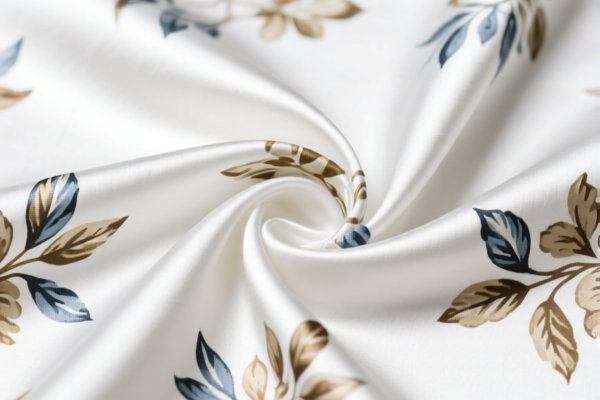
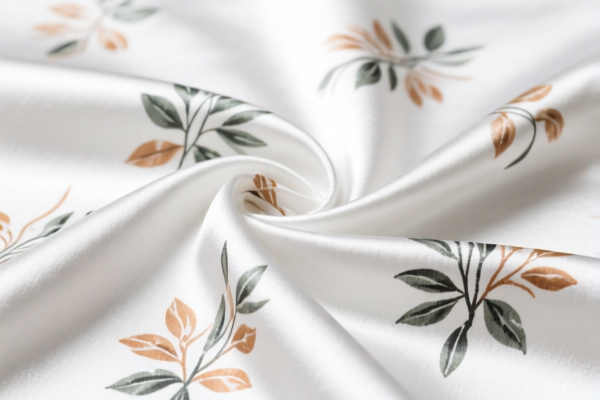
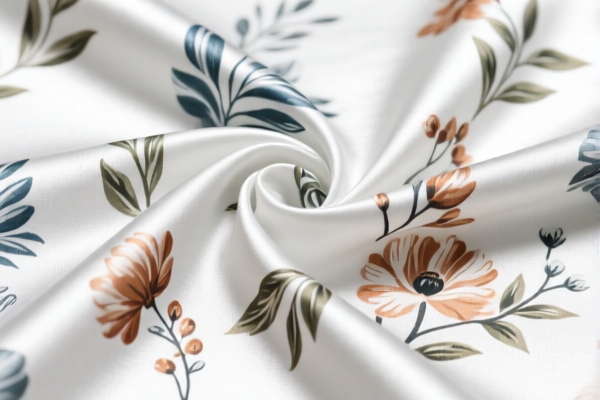
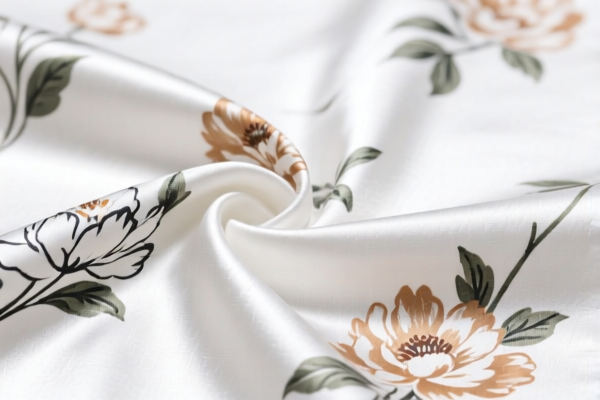
AI Analysis
🧵 Satin Printed Fabric for Home Textiles (Satin Base)
🌐 HS Code Reference & Clearance Guide | 2026 Latest Tariff Analysis | Professional Classification Strategy
📌 Part I: Product Definition & Classification: Understanding "Satin Printed Fabric"
Satin printed fabric is a widely used textile material in the home textile industry, characterized by its satin weave structure and printing工艺 (printing process). It is commonly used for bedding, curtains, upholstery, and decorative items.
In international trade, the classification of such fabrics depends on: 1. Weave Structure: Satin weave (characterized by a smooth, lustrous surface). 2. Surface Treatment: Printed (with patterns/dyes applied via printing machines). 3. Material Composition: Typically inferred as blended yarns (e.g., synthetic filament + cotton) or general synthetic fiber fabrics, based on common industry practices.
⚠️ Key Classification Points:
- If the fabric has a satin weave and is printed, it falls under Chapter 54 (Man-made Filament Fabrics).
- Two primary HS codes are relevant:
-5407.84.00.40– For fabrics inferred as blended synthetic filament + cotton.
-5407.94.20.50– For fabrics inferred as general synthetic fiber or unspecified fiber fabrics.
📦 Part II: HS Code Classification Details (2026 Latest Tariff Authority Comparison)
| HS Code | Product Description | Applicable Scenario | Inferred Material |
|---|---|---|---|
5407.84.00.40 |
Satin printed fabric base, matched with satin weave and printing machine-woven form; inferred as blended synthetic filament + cotton | Home textile satin printed fabric (bedding, curtains) | ✅ Blended (synthetic filament + cotton) |
5407.94.20.50 |
Satin printed fabric base, explicitly including satin structure and printing process; inferred as synthetic fiber or general fiber fabric | General satin printed fabric for home textiles | ✅ Synthetic or general fiber |
5407.84.00.40 |
Satin printed fabric base, matched with satin structure and printing purpose; inferred to meet category scope | Common satin printed fabric for home use | ✅ Blended (synthetic filament + cotton) |
5407.94.20.50 |
Satin printed fabric base, explicit inclusion of satin structure and printing process; inferred as synthetic or fiber-type fabric | General home textile satin printed fabric | ✅ Synthetic or general fiber |
5407.84.00.40 |
Satin printed fabric for garment heat-transfer printing, matched with satin structure and printing fabric purpose; meets definition of blended synthetic filament + cotton | Heat-transfer printed satin fabric | ✅ Blended (synthetic filament + cotton) |
🔍 Key Reminder:
- All listed HS codes apply to satin printed fabric bases with satin weave and printing process.
- The distinction between5407.84.00.40and5407.94.20.50lies in the inferred material composition:
-5407.84.00.40: Blended (synthetic filament + cotton).
-5407.94.20.50: General synthetic or unspecified fiber.
- No other HS codes are relevant per the provided data.
💰 Part III: 2026 Latest Tariff Rate Breakdown (Including Surtaxes & Policy Surcharges)
✅ Applicable Country: United States (US)
✅ Origin: China (CN)
✅ Effective Date: 2025 November 10 onwards (including subsequent imports)
🎯 1. 5407.84.00.40 – Satin Printed Fabric Base (Blended Synthetic Filament + Cotton)
| Item | Content |
|---|---|
| Basic Tariff Rate | 14.9% (ad valorem) |
| Surtax (Section 301) | +25.0% |
| 122 Clause Tariff | +10.0% |
| Total Tax Rate | 49.9% |
| Tax Calculation | CIF Value × 49.9% |
| De Minimis Exemption | ❌ Not Eligible (deny_de_minimis) |
| Legal Basis Path | Base Tariff: 14.9% → Section 301: 25.0% → 122 Clause: 10.0% |
📌 Explanation:
- The 14.9% is the basic MFN (Most Favored Nation) tariff for man-made filament fabrics.
- The 25.0% surtax is imposed under Section 301 of the U.S. Trade Act (targeting Chinese imports).
- The 10.0% is an additional tariff under Section 122 (national security-related).
- Total: 49.9% – A very high tariff rate, must be planned in advance!
🎯 2. 5407.94.20.50 – Satin Printed Fabric Base (Synthetic/General Fiber)
| Item | Content |
|---|---|
| Basic Tariff Rate | 14.9% (ad valorem) |
| Surtax (Section 301) | +25.0% |
| 122 Clause Tariff | +10.0% |
| Total Tax Rate | 49.9% |
| Tax Calculation | CIF Value × 49.9% |
| De Minimis Exemption | ❌ Not Eligible (deny_de_minimis) |
| Legal Basis Path | Base Tariff: 14.9% → Section 301: 25.0% → 122 Clause: 10.0% |
📌 Note:
- Identical tariff structure to5407.84.00.40.
- Applies to all satin printed fabrics with satin weave + printing, regardless of specific fiber type (as long as it falls under Chapter 54).
🛠️ Part IV: Customs Clearance Practical Advice (Battle-Tested Pitfall Avoidance Guide)
✅ 1. Required Documentation Checklist (No Exceptions)
| Document | Mandatory? | Explanation |
|---|---|---|
| ✅ Product Specification Sheet | ✔️ | Includes weave type (satin), printing method, material composition (blended/synthetic) |
| ✅ Fabric Structure Diagram | ✔️ | To confirm satin weave and printing process |
| ✅ Product Photos (with label) | ✔️ | Clear display of pattern, brand, care label |
| ✅ Third-Party Test Report | ✔️ | OEKO-TEX, CPSIA, or similar (if applicable) |
| ✅ Commercial Invoice | ✔️ | Clearly state "Satin Printed Fabric for Home Textiles" |
| ✅ Certificate of Origin (CO) | ✔️ | If not China-origin, may qualify for preferential rates |
| ✅ Packing List | ✔️ | Show relationship between rolls, packages, and accessories |
✅ 2. Declaration Tips (Key Mnemonics)
🔥 “Satin Weave + Printing = Chapter 54, Blended vs. Synthetic, 49.9% is the Truth!”
| Scenario | Correct Declaration | Wrong Practice |
|---|---|---|
| Satin printed fabric (blended) | 5407.84.00.40 |
Misclassified as cotton fabric → 0% but flagged for inconsistency |
| Satin printed fabric (synthetic) | 5407.94.20.50 |
Misclassified as non-satin → incorrect duty |
| Home textile use only | Clearly state “for home textiles” | Vague description → customs audit |
| Blended material | Specify “synthetic filament + cotton blend” | Vague “fabric” → potential reclassification |
✅ 3. Special Case Handling
| Scenario | Recommendation |
|---|---|
| OEM Custom Printed Fabric | Provide customer order + design drawings to avoid “non-standard” classification |
| Heat-Transfer Printed Satin | Use 5407.84.00.40 if blended; clearly state “for garment heat-transfer printing” |
| Fabric Used for Both Home Textiles & Apparel | Declare based on primary use; if mixed, choose most specific HS code |
| Non-China Origin | Apply for IEEPA Exemption if applicable (e.g., Vietnam, Mexico) → lower tax |
🌍 Part V: Global Main Market Clearance Comparison (2026 Latest)
| Country/Region | Recommended HS Code | Tariff | Certification Requirements | Notes |
|---|---|---|---|---|
| 🇺🇸 United States | 5407.84.00.40 / 5407.94.20.50 |
49.9% (China-origin) | None specific | High tariff, no de minimis |
| 🇨🇳 China | 5407.84.00.40 / 5407.94.20.50 |
~5–7% | GB/T standards | No surtax |
| 🇪🇺 European Union | 5407.84.00.40 / 5407.94.20.50 |
0–4% (if CE compliant) | REACH, OEKO-TEX | Low tariff |
| 🇬🇧 United Kingdom | 5407.84.00.40 / 5407.94.20.50 |
0–4% | UKCA | Post-Brexit rules |
| 🇦🇺 Australia | 5407.84.00.40 / 5407.94.20.50 |
5% | RCMS | No surtax |
| 🇯🇵 Japan | 5407.84.00.40 / 5407.94.20.50 |
0–3% | PSE (if applicable) | Low tariff |
📌 Conclusion:
- The U.S. imposes the highest tariff (49.9%) on Chinese-origin satin printed fabrics.
- EU, UK, Japan, and Australia have significantly lower tariffs (0–5%).
- China-origin fabric imported into the U.S. faces 49.9% total tax, making cost planning critical.
📌 Part VI: Common Errors & Pitfall Avoidance (Lessons from Real Cases)
❌ Error 1: Misclassifying satin printed fabric as cotton fabric (e.g., Chapter 52)
👉 Consequence: Incorrect tariff (0% vs. 49.9%) → Back taxes + penalties!
❌ Error 2: Omitting “satin weave” or “printing” in declaration
👉 Consequence: Customs reclassification → Delayed clearance or return shipment
❌ Error 3: Failing to specify material composition (blended vs. synthetic)
👉 Consequence: Ambiguity → Possible audit or incorrect duty application
❌ Error 4: Assuming de minimis exemption applies
👉 Consequence: Not eligible for shipments under $800 from China → Full duty applies
✅ Correct Practice:
“Satin Printed Fabric for Home Textiles, Satin Weave, Printed, Blended Synthetic Filament + Cotton, 150 GSM, Roll Packaging, Model XYZ, OEKO-TEX Certified”
🎯 Part VII: Conclusion: Professional Declaration, Time-Saving, Cost-Reducing, Efficiency-Boosting!
🎯 Remember the Mnemonic:
🔹 “Satin Weave + Printing = 49.9%, Blended or Synthetic, 49.9% is the Truth!”
🔹 “HS Code determines duty, 49.9% is steep, declaration must be precise!”
📌 Pro Tip:
If your satin printed fabric originates from Vietnam, Mexico, Thailand, or Malaysia, you may apply for IEEPA Exemption, reducing the tariff to 0–5%.
Recommendation: Apply for Advance Ruling before shipment to avoid clearance risks.
📣 Call to Action:
📞 Contact a professional customs broker + Provide product photos + Apply for HS Code Advance Ruling
🚀 Ensure your satin printed fabric clears customs smoothly, exports efficiently, and maximizes profit!
✨ Professional Clearance Starts with Accurate Classification!
💼 Every Cent of Cost Deserves Precise Calculation!
Customer Reviews
About HS Code Classification
The Harmonized System (HS) is an internationally standardized nomenclature developed by the World Customs Organization (WCO) to classify traded products. Over 200 countries use the HS system as the basis for customs tariffs, trade statistics, and import/export regulations.
Each HS code follows a hierarchical structure:
- Chapter (2 digits) — Broad category of goods (e.g., Chapter 84: Machinery and Mechanical Appliances)
- Heading (4 digits) — More specific grouping within the chapter
- Subheading (6 digits) — Internationally standardized breakdown, used by all WCO member countries
- National subdivisions (8-10 digits) — Country-specific extensions for further classification, such as US HTSUS 10-digit codes
Correct HS code classification is essential for smooth customs clearance, accurate duty payment, and compliance with trade regulations. Misclassification can lead to customs delays, overpayment of duties, or penalties.
When importing from CN to US, the applicable tariff rates may include:
- Most-Favored-Nation (MFN) rate — The standard duty rate applied to WTO members
- General rate — Applied to countries without trade agreements
- Trade remedy duties — Additional tariffs such as Section 301 (anti-dumping), Section 232 (national security), or countervailing duties
The information provided on this page is for reference purposes only. For official classification, please consult with your local customs authority or a licensed customs broker.