Satin Printed and Discharge Decorative Fabric
CN → US| HS Code | Tariff Rate | Origin | Destination | Doc |
|---|---|---|---|---|
| 5407840040 | 49.9% | CN | US | Official Doc |
| 5407942050 | 49.9% | CN | US | Official Doc |
| 5408349050 | 47.0% | CN | US | Official Doc |
| 5407942050 | 49.9% | CN | US | Official Doc |
| 5408349040 | 47.0% | CN | US | Official Doc |
Product Images
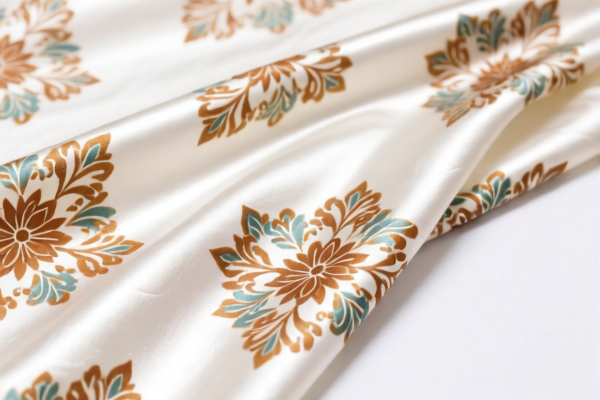
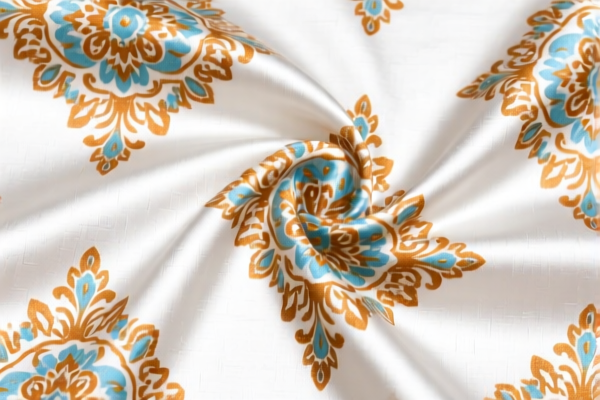
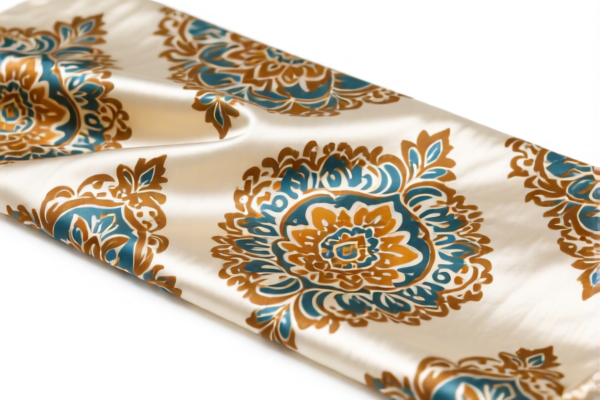
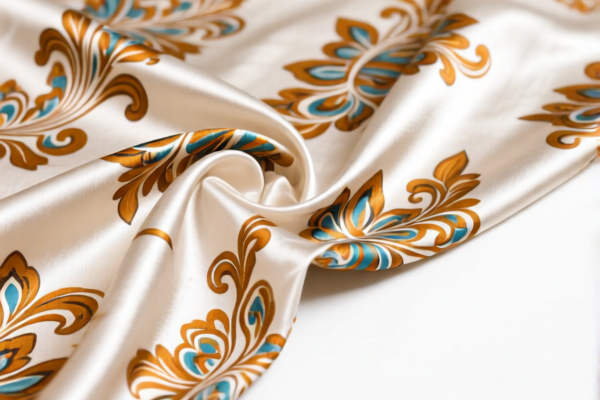
AI Analysis
🎀 Satin Printed and Discharge Decorative Fabric
🌐 HS Code Reference & Customs Clearance Guide | 2026 Latest Tariff Analysis | Professional-Level Clearance Strategy
📌 I. Product Definition and Classification: Do You Really Understand "Satin Printed Fabric"?
Satin printed and discharge decorative fabric is a high-end textile product characterized by its smooth, lustrous surface (satin weave) and complex surface patterns (printing and discharge techniques). In international trade, it is classified based on fiber content, weave structure, and processing methods.
Key Distinctions: * Synthetic Fiber Blends: Contains synthetic fibers (e.g., polyester) mixed with cotton or other fibers. * Synthetic Filament Yarns: Made entirely of synthetic continuous filaments. * Artificial Filament Yarns: Made from regenerated fibers (e.g., rayon, viscose).
⚠️ Critical Classification Points: - If the fabric contains synthetic fibers mixed with cotton and features printed/satin characteristics → Classify under 5407.84.00.40 - If the fabric is 100% synthetic filament yarns with printed/satin characteristics → Classify under 5407.94.20.50 - If the fabric uses artificial (regenerated) filament yarns with paint/chemical discharge printing → Classify under 5408.34.90.50 or 5408.34.90.40
📦 II. HS Code Classification Details (2026 Latest Tariff Authoritative Comparison)
| HS Code | Product Description | Key Features | Total Tax Rate | Tax Breakdown |
|---|---|---|---|---|
5407.84.00.40 |
Printed Satin Home Furnishing Fabric | Synthetic fiber & cotton blended woven fabric, matched with print and satin characteristics | 49.9% | Base: 14.9% Add-on: 25.0% Section 301: 10% |
5407.94.20.50 |
Printed Satin Home Furnishing Fabric | Synthetic filament yarn fabric, matched with print and satin characteristics | 49.9% | Base: 14.9% Add-on: 25.0% Section 301: 10% |
5408.34.90.50 |
Satin Printed Fabric (Paint/Discharge Decoration) | Matched with satin weave and print attributes | 47.0% | Base: 12.0% Add-on: 25.0% Section 301: 10% |
5407.94.20.50 |
Satin Printed Fabric (Paint/Discharge Decoration) | Synthetic filament fabric with satin weave and print processing | 49.9% | Base: 14.9% Add-on: 25.0% Section 301: 10% |
5408.34.90.40 |
Satin Printed Fabric (Paint/Discharge Decoration) | Matched with print attributes, artificial filament products | 47.0% | Base: 12.0% Add-on: 25.0% Section 301: 10% |
🔍 Key Reminders: - 5407.94.20.50 applies to 100% synthetic filament fabrics. Even if labeled as "discharge," if the fiber is synthetic, this code is used. - 5408.34.90.x0 applies to artificial (regenerated) filament fabrics (e.g., rayon satin). The base tax is lower (12% vs 14.9%), but the total remains high due to add-ons. - 5407.84.00.40 is for blends (synthetic + cotton/other).
💰 III. 2026 Latest Tariff Rate Details (Including Add-on Taxes, Policy Add-ons)
✅ Applicable Country: United States (US)
✅ Origin: China (CN)
✅ Effective Date: From November 10, 2025 (including subsequent imports)
🎯 1. 5407.84.00.40 —— Printed Satin Home Furnishing Fabric (Synthetic/Cotton Blend)
| Item | Content |
|---|---|
| Base Tariff | 14.9% (ad valorem) |
| USITC Add-on Tariff | +25.0% (from USITC Footnote related to Section 301) |
| Section 301 / IEEPA Add-on Tariff | +10.0% (Targeting China/HK products) |
| Total Tax Rate | 49.9% |
| Tax Calculation | CIF Value × 49.9% |
| De Minimis Exemption Eligibility | ❌ No (deny_de_minimis) |
| Legal Basis Path | Section 301: 5407.84.00.40 → Footnote: 301/9903 |
📌 Explanation:
- The 25% add-on is due to the Section 301 investigation on Chinese goods.
- The 10% add-on is an additional tariff specifically targeting textiles/apparel or related categories under recent executive orders.
- Total 49.9% is a very high tariff, requiring advance cost assessment.
🎯 2. 5407.94.20.50 —— Printed Satin Home Furnishing Fabric (Synthetic Filament)
| Item | Content |
|---|---|
| Base Tariff | 14.9% |
| USITC Add-on Tariff | +25.0% |
| Section 301 / IEEPA Add-on Tariff | +10.0% |
| Total Tax Rate | 49.9% |
| Tax Calculation | CIF Value × 49.9% |
| De Minimis Exemption Eligibility | ❌ No |
| Legal Basis Path | Section 301: 5407.94.20.50 → Footnote: 301/9903 |
📌 Note:
- This is the most common code for polyester-satin printed fabrics.
- Applies to all 100% synthetic filament woven fabrics with printing/satin finishes.
🎯 3. 5408.34.90.50 & 5408.34.90.40 —— Satin Printed Fabric (Artificial Filament)
| Item | Content |
|---|---|
| Base Tariff | 12.0% |
| USITC Add-on Tariff | +25.0% |
| Section 301 / IEEPA Add-on Tariff | +10.0% |
| Total Tax Rate | 47.0% |
| Tax Calculation | CIF Value × 47.0% |
| De Minimis Exemption Eligibility | ❌ No |
| Legal Basis Path | Section 301: 5408.34.90.x0 → Footnote: 301/9903 |
📌 Note:
- Slightly lower base tariff (12%) compared to synthetic blends (14.9%).
- However, total tax is still 47%, which is not significantly cheaper after add-ons.
- Applies to rayon, viscose, or other regenerated artificial filaments.
🛠️ IV. Customs Clearance Practical Advice (Real-world Pitfall Avoidance Guide)
✅ 1. Document Checklist (None Can Be Missing)
| Document | Required? | Description |
|---|---|---|
| ✅ Product Specification Sheet | ✔️ | Must include fiber content %, weave type (satin), width, weight (GSM), and printing technique (discharge/paint). |
| ✅ Fabric Composition Label | ✔️ | Clear declaration: e.g., "100% Polyester," "65% Poly / 35% Cotton," or "100% Rayon." |
| ✅ Product Photos (Including Label) | ✔️ | Show texture, print pattern, and side view to confirm woven structure. |
| ✅ Commercial Invoice | ✔️ | Must clearly state: "Satin Printed Decorative Fabric" and HS Code. |
| ✅ Packing List | ✔️ | Detail roll dimensions, weight, and quantity. |
| ✅ Certificate of Origin (CO) | ✔️ | If not from China, may qualify for lower rates (but unlikely for this category). |
✅ 2. Declaration Tips (Key Mantras)
🔥 "Fiber Determines Code, Print Defines Finish, Total Tax High, Declare Accurate!"
| Scenario | Correct Declaration | Wrong Practice |
|---|---|---|
| 100% Polyester Satin Print | 5407.94.20.50 |
Misdeclare as cotton → Penalty + Back Tax |
| Poly-Cotton Blend Satin Print | 5407.84.00.40 |
Declare as 100% synthetic → Audit Risk |
| Rayon/Viscose Satin Print | 5408.34.90.50 or .40 |
Misdeclare as synthetic → Underpayment Risk |
| Unprinted Satin Fabric | Different HS Code (e.g., 5407.61) | Declare as "Printed" → Incorrect Classification |
✅ 3. Special Cases Handling
| Scenario | Handling Advice |
|---|---|
| Discharge Printing vs. Paint Printing | Both are "printed" for HS purposes. The key is fiber content, not the print technique. |
| Home Furnishing vs. Apparel Use | If marketed as home decor (curtains, upholstery), use home furnishing codes. If for clothing, still likely same HS but different duty scrutiny. |
| Blended Fibers | If blend is 65% Poly/35% Cotton, use 5407.84.00.40. Do not use 100% synthetic code. |
| Sample Shipments | Even samples are subject to 49.9% duty. No de minimis exemption. |
🌍 V. Global Market Comparison (2026 Latest)
| Country/Region | Recommended HS Code | Tariff Rate | Certification Requirements | Notes |
|---|---|---|---|---|
| 🇺🇸 USA | 5407.94.20.50 |
49.9% (China-origin) | None specific | High tariff due to Section 301 |
| 🇨🇳 China | 5407.94.20.50 |
~12-14% | None | Low domestic import duty |
| 🇪🇺 EU | 5407.94.20.50 |
~12% | REACH, OEKO-TEX | No Section 301 add-ons |
| 🇦🇺 Australia | 5407.94.20.50 |
~5-10% | Standard | Lower overall cost |
| 🇯🇵 Japan | 5407.94.20.50 |
~10% | FSC | No add-on tariffs |
📌 Conclusion:
- The US is the most expensive market for these fabrics due to Section 301 and IEEPA add-ons.
- China-origin fabrics face nearly 50% duty in the US, making US market entry highly cost-sensitive.
- Consider diversifying sourcing (e.g., Vietnam, India) to avoid US tariffs if targeting the American market.
📌 VI. Common Errors & Pitfall Avoidance (Lessons Learned)
❌ Error 1: Misdeclaring blended fabrics as 100% synthetic
👉 Consequence: Incorrect HS Code → Penalty + Back Tax + Audit
❌ Error 2: Ignoring print technique in description
👉 Consequence: Customs may question the "decorative" nature → Delay in Clearance
❌ Error 3: Assuming de minimis exemption applies to small samples
👉 Consequence: Tax still applies → Unexpected Cost
❌ Error 4: Using vague terms like "Textile Fabric" instead of "Satin Printed"
👉 Consequence: Misclassification → Incorrect Duty Assessment
✅ Correct Practice:
"100% Polyester Satin Woven Fabric, Discharge Printed, Home Furnishing Use, Width 60", GSM 120, HS Code 5407.94.20.50"
🎯 VII. Conclusion: Professional Declaration, Save Time, Cut Costs!
🎯 Remember These Mantras:
🔹 "Fiber Dictates Code, Print Defines Style, US Tax High, Declare Precise!"
🔹 "HS Code is Life, 50% Tax Difference, Declare Wrong, Pay Double!"
📌 Pro Tip:
If your fabric is originally produced in Vietnam, India, or Turkey, you may avoid US Section 301 tariffs, reducing the rate to base tariff only (12-15%).
Recommend applying for an Advance Ruling (Pre-classification) to ensure correct HS Code assignment and avoid post-clearance audits.
📣 Take Action Now:
📞 Contact Professional Customs Broker + Provide Product Specs + Apply for HS Code Pre-classification
🚀 Let Your Fabric Clear Customs Smoothly, Reduce Costs, and Boost Profits!
✨ Professional Customs Clearance Starts with Precise Classification!
💼 Every Penny of Your Cost Deserves to Be Calculated Precisely!
Customer Reviews
About HS Code Classification
The Harmonized System (HS) is an internationally standardized nomenclature developed by the World Customs Organization (WCO) to classify traded products. Over 200 countries use the HS system as the basis for customs tariffs, trade statistics, and import/export regulations.
Each HS code follows a hierarchical structure:
- Chapter (2 digits) — Broad category of goods (e.g., Chapter 84: Machinery and Mechanical Appliances)
- Heading (4 digits) — More specific grouping within the chapter
- Subheading (6 digits) — Internationally standardized breakdown, used by all WCO member countries
- National subdivisions (8-10 digits) — Country-specific extensions for further classification, such as US HTSUS 10-digit codes
Correct HS code classification is essential for smooth customs clearance, accurate duty payment, and compliance with trade regulations. Misclassification can lead to customs delays, overpayment of duties, or penalties.
When importing from CN to US, the applicable tariff rates may include:
- Most-Favored-Nation (MFN) rate — The standard duty rate applied to WTO members
- General rate — Applied to countries without trade agreements
- Trade remedy duties — Additional tariffs such as Section 301 (anti-dumping), Section 232 (national security), or countervailing duties
The information provided on this page is for reference purposes only. For official classification, please consult with your local customs authority or a licensed customs broker.