Satin Weave Fabric (Unbleached)
CN → US| HS Code | Tariff Rate | Origin | Destination | Doc |
|---|---|---|---|---|
| 5208192020 | 42.9% | CN | US | Official Doc |
| 5407810040 | 49.9% | CN | US | Official Doc |
| 5111909000 | 60.0% | CN | US | Official Doc |
| 5111117060 | 60.0% | CN | US | Official Doc |
| 5407912050 | 49.9% | CN | US | Official Doc |
Product Images
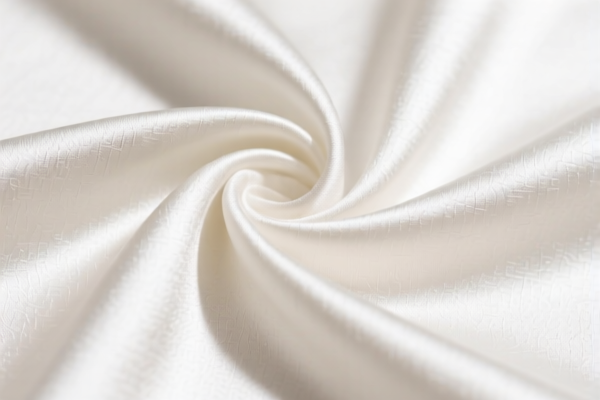
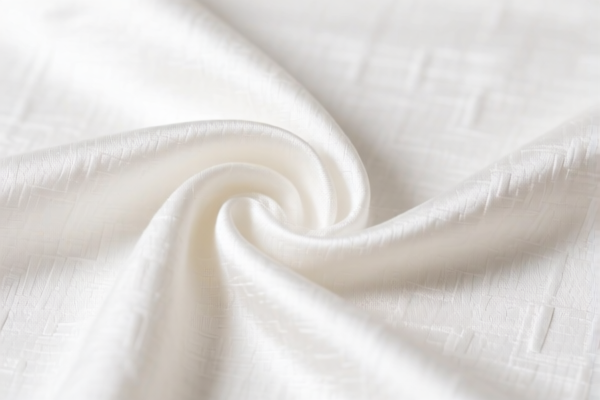


AI Analysis
🧵 Satin Weave Fabric (Unbleached) — The High-Tax Trap & Strategic Classification Guide
🌐 HS Code Reference & Customs Clearance Guide | 2026 Latest Tariff Analysis | Professional Clearance Strategy
📌 I. Product Definition: What Exactly is "Satin Weave Fabric (Unbleached)"?
Satin weave fabric is defined not by its fiber content, but by its structure. It features a specific interlacing pattern (typically 4 warp threads floating over 1 weft thread) that creates a smooth, lustrous surface on one side and a dull matte finish on the other.
"Unbleached" means the fabric has been grayed (scoured and degummed) but retains its natural fiber color (often creamy, beige, or gray) and has not undergone bleaching, dyeing, or printing processes.
⚠️ Critical Distinction:
- The HS Code is 100% dependent on FIBER CONTENT (Cotton, Synthetic, Wool, etc.).
- Misidentifying the fiber leads to massive tax discrepancies (e.g., 42.9% vs. 60.0%).
- "Satin" describes the weave; "Unbleached" describes the processing state.
📦 II. HS Code Classification Matrix (Based on Provided Data)
Below are the five precise classifications for Unbleached Satin Weave Fabric, categorized by material composition.
| HS Code | Material Type | Summary & Logic | Total Tax Rate |
|---|---|---|---|
| 5208.19.20.20 | Cotton | Unbleached satin weave. Matches satin morphology & unbleached state. | 42.9% |
| 5407.81.00.40 | Synthetic/Cotton Blend | Unbleached satin weave. Fits synthetic fiber & cotton blend category. | 49.9% |
| 5407.91.20.50 | Other Synthetic | Unbleached satin weave. Fully complies with structural & processing limits. | 49.9% |
| 5111.11.70.60 | Wool/Fine Animal Hair | Satin woven fabric. Inferred as wool/fine animal hair. Falls under "Other" category. | 60.0% |
| 5111.90.90.00 | Other Animal Fiber | Satin woven fabric. Inferred as animal fiber. Uses "Other" catch-all principle. | 60.0% |
💰 III. Tariff Structure Deep Dive (US Import Duties from China)
✅ Applicable Country: United States (US)
✅ Origin: China (CN)
✅ Effective Date: Post-November 2025 (Includes all subsequent imports)
🎯 1. Cotton-Based Satin Fabric
HS Codes: 5208.19.20.20
| Item | Detail |
|---|---|
| Base Duty | 7.9% |
| Section 301 Add-on | 25.0% |
| 122 Section Add-on | 10.0% |
| Total Effective Rate | 42.9% |
| Calculation | CIF Value × 42.9% |
| De Minimis Exemption | ❌ Denied |
📌 Explanation:
- 7.9% Base: Standard MFN (Most Favored Nation) duty for cotton fabrics.
- 25% Section 301: Tariffs imposed under US Trade Act Section 301 against Chinese goods.
- 10% Section 122: Additional tariff under Section 122 of the Trade Expansion Act (often applied to specific textile categories to protect domestic production).
- Total 42.9%: A significant cost burden for cotton-based satin imports.
🎯 2. Synthetic & Blended Satin Fabric
HS Codes: 5407.81.00.40, 5407.91.20.50
| Item | Detail |
|---|---|
| Base Duty | 14.9% |
| Section 301 Add-on | 25.0% |
| 122 Section Add-on | 10.0% |
| Total Effective Rate | 49.9% |
| Calculation | CIF Value × 49.9% |
| De Minimis Exemption | ❌ Denied |
📌 Explanation:
- 14.9% Base: Higher base duty for synthetic filaments/fabrics compared to cotton.
- 50% Total Load: Synthetics face a heavier combined tariff load (~50%) than cotton.
- Note: Both5407.81.00.40(Blends) and5407.91.20.50(Other Synthetics) incur the same total rate of 49.9%.
🎯 3. Wool & Animal Hair Satin Fabric
HS Codes: 5111.11.70.60, 5111.90.90.00
| Item | Detail |
|---|---|
| Base Duty | 25.0% |
| Section 301 Add-on | 25.0% |
| 122 Section Add-on | 10.0% |
| Total Effective Rate | 60.0% |
| Calculation | CIF Value × 60.0% |
| De Minimis Exemption | ❌ Denied |
📌 Explanation:
- 25.0% Base: Woolen fabrics carry a high base duty to protect US wool growers.
- Highest Total Rate: At 60.0%, wool/satin fabrics are the most expensive category to import from China.
- Classification Note: These fall under "Other" categories because standard wool suits/coatings are more common; satin weave for wool is specialized.
🛠️ IV. Customs Clearance Practical Advice
✅ 1. Mandatory Documentation Checklist
| Document | Requirement | Purpose |
|---|---|---|
| Product Specification Sheet | ✔️ Must include: Fiber Content (%), Weight (GSM), Weave Type (Satin), Finish (Unbleached/Gray) | Proves HS Code classification |
| Fiber Content Test Report | ✔️ From accredited lab (e.g., SGS, Intertek) | Critical for distinguishing Cotton vs. Synthetic vs. Wool |
| Commercial Invoice | ✔️ Explicitly state: "Unbleached Satin Weave Fabric, [Fiber] Content: XX%" | Prevents customs re-classification |
| Packing List | ✔️ Detailed rolls/packings | Ensures volume/weight consistency |
| Bill of Lading/Air Waybill | ✔️ Standard shipping docs | Proof of origin and transit |
✅ 2. Classification Strategy & Pitfalls
🔥 Golden Rule: "Fiber Defines Code, Weave Defines Subheading, Finish Defines Processing Level."
| Mistake | Consequence | Correct Action |
|---|---|---|
| Misidentifying Fiber | e.g., Calling Synthetic "Cotton" | Tax drops from 49.9% to 42.9%, but if caught → Fraud Penalty + Back Taxes |
| Confusing "Unbleached" with "White" | "Unbleached" = Natural color. "Bleached" = White. | Ensure invoice says "Unbleached" or "Gray", not "White" or "Bleached". Bleached fabrics have different HS codes and tax rates. |
| Ignoring Section 122 | Underestimating total duty | Always calculate Base + 25% + 10%. Do not quote only base duty. |
| Vague Description | "Satin Fabric" | Use precise description: "Unbleached Satin Woven Cotton Fabric, 150GSM" |
✅ 3. Cost Optimization Tips
- Verify Fiber Content Early:
- If you are importing a blend, ensure the synthetic percentage is accurate. A shift from 100% Cotton to 50% Polyester/50% Cotton changes the code from
5208to5407.
- If you are importing a blend, ensure the synthetic percentage is accurate. A shift from 100% Cotton to 50% Polyester/50% Cotton changes the code from
- Check for Exclusions:
- Some Section 301 exclusions may apply to specific textile products, but textiles are rarely excluded. Verify current USITC exclusion lists.
- Pre-Import Ruling:
- For large volumes, apply for an Advance Ruling from CBP (U.S. Customs and Border Protection) to confirm the HS code and duty rate before shipment. This avoids surprise audits.
🌍 V. Global Market Comparison (Quick Reference)
| Region | Key HS Chapter | Estimated Duty Impact | Notes |
|---|---|---|---|
| 🇺🇸 USA | 51-54 | High (42.9% - 60.0%) | Heavy Section 301 & 122 tariffs. |
| 🇨🇳 China | 51-54 | Low (0-9%) | Import duties are modest; VAT applies. |
| 🇪🇺 EU | 51-54 | Low-Moderate (0-12%) | No Section 301 equivalent, but VAT 20%+ applies. |
| 🇬🇧 UK | 51-54 | Low-Moderate (0-12%) | Post-Brexit tariff schedule applies. |
📌 Conclusion:
- The USA is the most expensive market for unbleached satin fabric due to layered tariffs.
- Cotton is the most tax-efficient fiber option (42.9% total).
- Wool is the least efficient (60.0% total).
- Synthetics fall in the middle (49.9% total).
📌 VI. Common Errors & Risk Mitigation
❌ Error 1: Labeling "Unbleached" fabric as "Bleached"
👉 Risk: Incorrect HS Code → Delayed clearance → Storage fees.
✅ Fix: Use "Gray" or "Unbleached" on all docs.
❌ Error 2: Assuming all "Satin" is Cotton
👉 Risk: If it's Polyester Satin, you underpay by 7% (42.9% vs 49.9%).
✅ Fix: Always provide a Fiber Content Report.
❌ Error 3: Ignoring Section 122 (10%)
👉 Risk: Budgeting only for Base + 25% → Cash flow shortage.
✅ Fix: Budget for Total Tax = Base + 35%.
🎯 VII. Final Recommendation: Professional Clearance Starts with Precision
🎯 Remember the Formula:
🔹 Satin Weave + Unbleached + [Fiber] = HS Code
🔹 Total Duty = Base (7.9-25%) + 25% (Sec 301) + 10% (Sec 122)
🔹 Cotton is Cheapest (42.9%) | Wool is Most Expensive (60.0%)
📌 Pro Tip:
If you are importing high-value satin fabrics, conduct a fiber content analysis before shipping. The difference between Cotton (42.9%) and Wool (60.0%) is 17.1%—that’s nearly $17,000 extra tax per $100,000 shipment!
📣 Immediate Action:
📞 Consult a licensed customs broker.
📄 Prepare accurate fiber content documentation.
💸 Calculate total landed cost including all 3 tax layers.
✨ Accurate Classification = Cost Savings = Competitive Advantage!
💼 Don’t let hidden tariffs eat your profit margin!
Customer Reviews
About HS Code Classification
The Harmonized System (HS) is an internationally standardized nomenclature developed by the World Customs Organization (WCO) to classify traded products. Over 200 countries use the HS system as the basis for customs tariffs, trade statistics, and import/export regulations.
Each HS code follows a hierarchical structure:
- Chapter (2 digits) — Broad category of goods (e.g., Chapter 84: Machinery and Mechanical Appliances)
- Heading (4 digits) — More specific grouping within the chapter
- Subheading (6 digits) — Internationally standardized breakdown, used by all WCO member countries
- National subdivisions (8-10 digits) — Country-specific extensions for further classification, such as US HTSUS 10-digit codes
Correct HS code classification is essential for smooth customs clearance, accurate duty payment, and compliance with trade regulations. Misclassification can lead to customs delays, overpayment of duties, or penalties.
When importing from CN to US, the applicable tariff rates may include:
- Most-Favored-Nation (MFN) rate — The standard duty rate applied to WTO members
- General rate — Applied to countries without trade agreements
- Trade remedy duties — Additional tariffs such as Section 301 (anti-dumping), Section 232 (national security), or countervailing duties
The information provided on this page is for reference purposes only. For official classification, please consult with your local customs authority or a licensed customs broker.