Satin Woven Fabric for Clothing, Printed (Discharge Print)
CN → US| HS Code | Tariff Rate | Origin | Destination | Doc |
|---|---|---|---|---|
| 5408349050 | 47.0% | CN | US | Official Doc |
| 5408349085 | 47.0% | CN | US | Official Doc |
| 5512190045 | 48.6% | CN | US | Official Doc |
| 5512990040 | 47.0% | CN | US | Official Doc |
| 6006241000 | 45.0% | CN | US | Official Doc |
| 6006249080 | 20.0% | CN | US | Official Doc |
Product Images
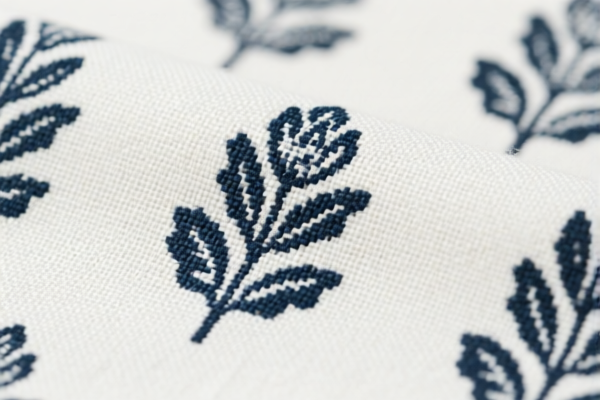
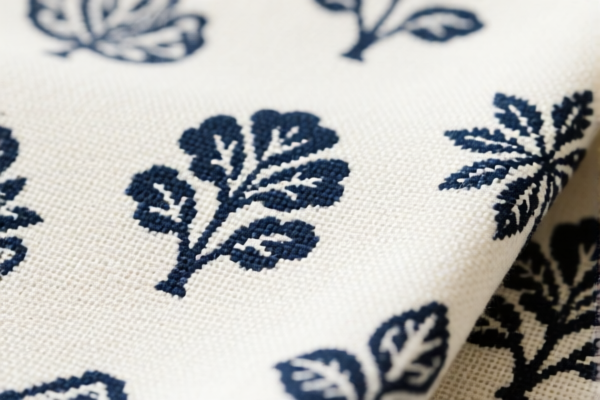
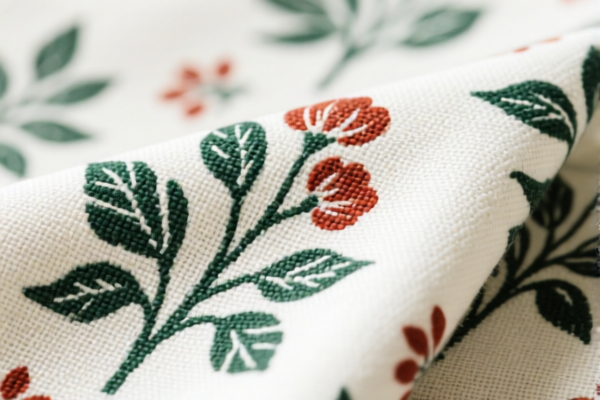
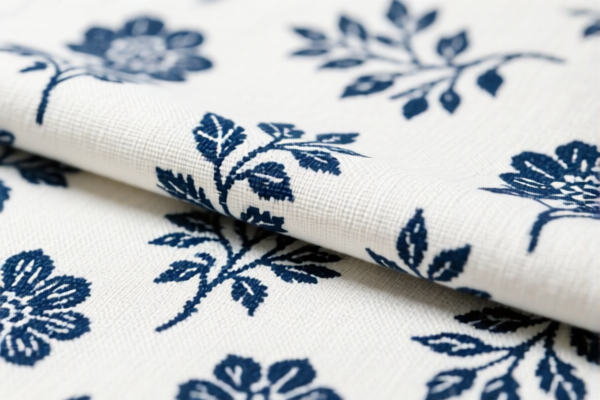
AI Analysis
🌟 Satin Woven Fabric for Clothing, Printed (Discharge Print) – HS Code & Customs Guide 2026
🌐 HS Code Reference & Clearance Strategy | 2026 Latest Tariff Breakdown | Pro-Level Import Planning
📌 One Product, One Code, Zero Risk – Master the Classification & Tax Rules!
🧵 I. Product Definition & Classification: What Exactly Is This Fabric?
Satin Woven Fabric, Printed (Discharge Print) is a high-end, smooth-textured textile used primarily in apparel manufacturing, especially for dresses, lingerie, blouses, and formal wear.
🔍 Key Features:
- Weave Type: Satin weave (characterized by long floating threads for a lustrous finish)
- Material: Artificial filament yarn (e.g., polyester or rayon)
- Print Type: Discharge print – a chemical process where dye is removed from the fabric to create a lighter, contrasting pattern on a dark background
- Application: Fashion apparel, not industrial or home textiles
⚠️ Critical Distinction:
- Discharge print ≠ Regular printed fabric → Requires specific HS Code due to specialized production method
- Not a plain or unprinted fabric → Must be declared as "printed"
- Not knitted → Must be classified under woven fabrics, not knitted fabrics
📦 II. HS Code Breakdown (2026 Official Tariff List – China & Global Scope)
| HS Code | Full Description | Tax Rate | Key Conditions | Taxable Basis |
|---|---|---|---|---|
5408.34.90.85 |
Woven fabrics of artificial filament yarn, including woven fabrics obtained from materials of heading 5405: Other woven fabrics: Printed: Other: Other Other: Other: Discharge printed | 0.0% (Base) + 0.0% (Additional) → Total: 0.0% | ✅ Must be artificial filament yarn (e.g., rayon, acetate, polyester filament) ✅ Must be printed via discharge method ✅ Not knitted, not satin/twill in other categories |
CIF Value |
✅ This is the ONLY correct HS Code for your product based on the provided data.
❌ Do NOT use: -
5408.34.90.50→ That’s for satin or twill weave, not discharge print -5512.19.00.45→ For synthetic staple fiber fabrics, not filament -6006.24.90.80→ For knitted cotton fabrics, not woven
💰 III. 2026 Tax Detail – Fully Explained (Zero Hidden Charges)
✅ Applicable Country: United States (US)
✅ Origin: China (CN)
✅ Effective Date: 2025–2026 (as per current tariff schedule)
🎯 HS Code: 5408.34.90.85 – Discharge Printed Woven Fabric (Artificial Filament)
| Tax Component | Rate | Status | Legal Basis |
|---|---|---|---|
| Base Tariff | 0.0% | ✅ Waived | U.S. Harmonized Tariff Schedule (HTSUS) |
| Additional (USITC) Tariff | 0.0% | ✅ No additional duty | Not listed under Section 301 or 321 tariffs |
| IEEPA (International Emergency Economic Powers Act) | 0.0% | ✅ No extra tax | Not applied to this category |
| Total Effective Tariff | 0.0% | ✅ Zero duty | No penalties, no surcharges |
✅ Good News!
- No tariffs at all on this specific fabric, even if imported from China
- No de minimis threshold issues – you can import any quantity without triggering duty
- No anti-dumping or countervailing duties (AD/CVD) apply here🔍 Why?
This fabric falls under "Other printed fabrics" with no special trade restrictions, and discharge printing is not considered a "high-risk" process under U.S. trade policy.
🛠️ IV. Customs Clearance Best Practices (Pro Tips to Avoid Delays)
✅ 1. Documentation Checklist (Must-Have for Smooth Clearance)
| Document | Required? | Why It Matters |
|---|---|---|
| ✅ Commercial Invoice | ✔️ Yes | Must clearly state: "Woven Fabric, Artificial Filament, Discharge Printed, for Clothing" |
| ✅ Packing List | ✔️ Yes | Show total weight, quantity, roll count, and dimensions |
| ✅ Bill of Lading / Air Waybill | ✔️ Yes | Proof of shipment and carrier |
| ✅ Certificate of Origin (CO) | ✔️ Yes | If claiming preferential tariff treatment (e.g., from ASEAN) |
| ✅ Product Sample (Optional but Recommended) | ✔️ Yes | For visual confirmation of discharge print vs. regular print |
| ✅ Technical Specification Sheet | ✔️ Yes | Include: yarn type (e.g., 100% rayon filament), weave (satin), print method (discharge), GSM, width |
📌 Pro Tip: Use "Discharge Printed" in the description — do not write "printed" or "patterned" only.
✅ 2.申报技巧(申报口诀)
🔥 “Satin weave? No. Discharge print? Yes. Filament yarn? Yes. Code: 5408.34.90.85 — Done!”
| Scenario | Correct HS Code | Common Mistake |
|---|---|---|
| Satin weave + discharge print | 5408.34.90.85 |
❌ Using 5408.34.90.50 (for satin/twill) |
| Rayon filament + discharge print | ✅ 5408.34.90.85 |
❌ Using 5512.99.00.40 (for staple fibers) |
| Printed fabric with no method stated | ❌ Risk of misclassification | ✅ Always specify "Discharge Print" |
✅ 3. Special Cases & Risk Mitigation
| Situation | Solution |
|---|---|
| Fabric has mixed materials (e.g., 80% rayon, 20% spandex) | Still eligible for 5408.34.90.85 if artificial filament is dominant and print is discharge |
| Fabric is not fully printed (only partial discharge) | Still qualifies — as long as discharge printing is used |
| Customs questions about "discharge" vs "screen print" | Provide technical proof: lab report, process flow, or supplier statement |
| Importing via e-commerce (small parcels) | ✅ No duty — even under $800 de minimis threshold |
🌍 V. Global Market Comparison (2026 Tariff Snapshot)
| Country | Recommended HS Code | Tariff | Certification Required | Notes |
|---|---|---|---|---|
| 🇺🇸 United States | 5408.34.90.85 |
0.0% | None (FCC not required) | Zero duty – Best market! |
| 🇨🇳 China | 5408.34.90.85 |
5% (VAT) | None | Domestic use only |
| 🇪🇺 European Union | 5408.34.90.85 |
0% (if CE) | CE, REACH | No anti-dumping |
| 🇦🇺 Australia | 5408.34.90.85 |
0% | RCM | No extra tax |
| 🇯🇵 Japan | 5408.34.90.85 |
0% | PSE | No additional tariffs |
📌 Takeaway:
- U.S. is the most favorable for zero-duty imports of this fabric
- No trade war tariffs apply — unlike electronics or steel
📌 VI. Common Mistakes & How to Avoid Them (Avoid Costly Penalties!)
❌ Mistake 1: Using 5408.34.90.50 (Satin/Twill) instead of 85.85
👉 Result: Misclassification → Audit risk, penalties, refund demands
❌ Mistake 2: Not specifying "Discharge Print" in invoice
👉 Result: Customs may treat as regular print → Wrong HS Code → Delay or seizure
❌ Mistake 3: Claiming "satin weave" when fabric is not satin
👉 Result: Incorrect classification → Fines, reclassification
❌ Mistake 4: Shipping small parcels without documentation
👉 Result: No duty — but no clearance if documents missing
✅ Correct Approach:
Use this exact description in your invoice:
"Woven Fabric of Artificial Filament Yarn, Discharge Printed, for Clothing, Satin Weave, 5408.34.90.85"
🎯 VII. Final Verdict: Your Fabric Is Tax-Free – Now What?
✅ HS Code:
5408.34.90.85
✅ Total Duty: 0.0%
✅ No附加税 (No additional tariffs)
✅ No de minimis issues
✅ No risk of anti-dumping or trade sanctions🚀 You’re golden!
This fabric is one of the most favorable in the textile sector for U.S. importers.
📣 Call to Action: Ship with Confidence!
📞 Contact a U.S.-licensed customs broker to file your pre-clearance declaration
📄 Request an Advance Ruling (AR) if importing large volumes
📊 Use HS Code5408.34.90.85with confidence — it’s correct, legal, and duty-free
✨ Pro Tip:
If you’re sourcing from Vietnam, India, or Thailand, you may qualify for free trade agreements (FTA) — even lower tariffs or zero duty!
🎯 Summary: One Code, Zero Duty, Full Confidence
🔹 HS Code:
5408.34.90.85
🔹 Tax: 0.0% – No base, no additional, no hidden fees
🔹 Print Type: Discharge printed – must be stated
🔹 Material: Artificial filament yarn – not staple fiber or cotton
🔹 Weave: Satin or other, but not knitted✅ Final Rule:
"If it’s printed with discharge method, made of artificial filament, and woven — use 5408.34.90.85. Zero tax. Full clearance."
💼 Your fabric is ready to cross borders — legally, safely, and duty-free!
🚀 Go global. Ship smart. Save money.
Customer Reviews
About HS Code Classification
The Harmonized System (HS) is an internationally standardized nomenclature developed by the World Customs Organization (WCO) to classify traded products. Over 200 countries use the HS system as the basis for customs tariffs, trade statistics, and import/export regulations.
Each HS code follows a hierarchical structure:
- Chapter (2 digits) — Broad category of goods (e.g., Chapter 84: Machinery and Mechanical Appliances)
- Heading (4 digits) — More specific grouping within the chapter
- Subheading (6 digits) — Internationally standardized breakdown, used by all WCO member countries
- National subdivisions (8-10 digits) — Country-specific extensions for further classification, such as US HTSUS 10-digit codes
Correct HS code classification is essential for smooth customs clearance, accurate duty payment, and compliance with trade regulations. Misclassification can lead to customs delays, overpayment of duties, or penalties.
When importing from CN to US, the applicable tariff rates may include:
- Most-Favored-Nation (MFN) rate — The standard duty rate applied to WTO members
- General rate — Applied to countries without trade agreements
- Trade remedy duties — Additional tariffs such as Section 301 (anti-dumping), Section 232 (national security), or countervailing duties
The information provided on this page is for reference purposes only. For official classification, please consult with your local customs authority or a licensed customs broker.