Satin Woven Fabric for Home Textiles
CN → US| HS Code | Tariff Rate | Origin | Destination | Doc |
|---|---|---|---|---|
| 5208292020 | 42.7% | CN | US | Official Doc |
| 5407820040 | 49.9% | CN | US | Official Doc |
| 5208192020 | 42.9% | CN | US | Official Doc |
| 5512210060 | 47.0% | CN | US | Official Doc |
| 5512110060 | 47.0% | CN | US | Official Doc |
Product Images

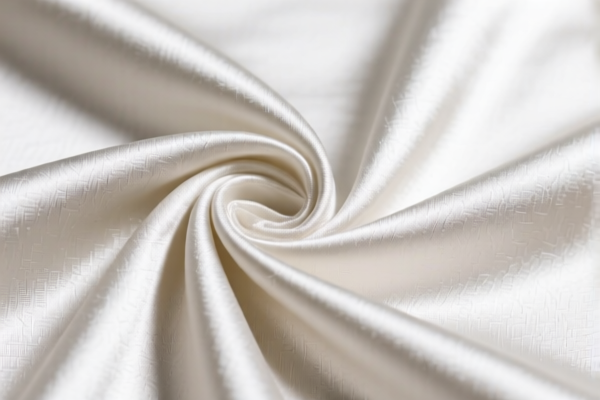
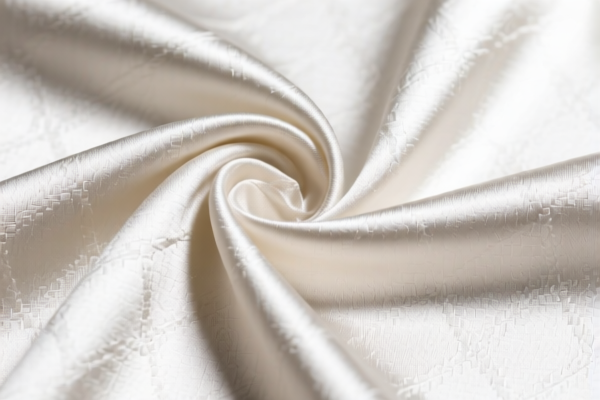
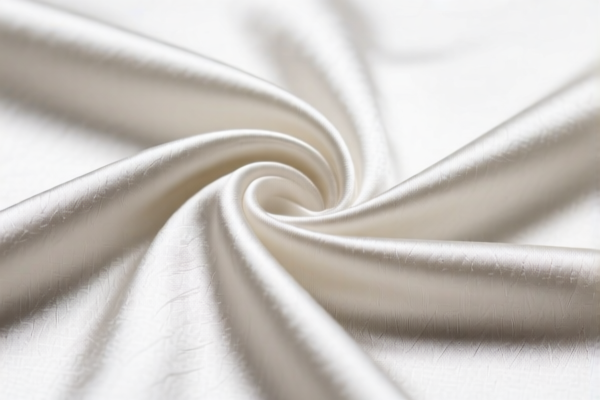
AI Analysis
🧵 Satin Woven Fabric for Home Textiles
🌐 HS Code Reference & Customs Clearance Guide | 2026 Latest Tariff Analysis | Professional Clearance Strategy
📌 I. Product Definition and Classification: What Exactly is "Satin Woven Fabric"?
Satin woven fabric, often referred to simply as "satin," is a type of textile characterized by a specific weave structure that produces a smooth, glossy surface on one side and a duller finish on the other. In international trade, particularly for home textiles (such as bedding, curtains, and upholstery), the classification is critical because material composition (Cotton vs. Synthetic) and weave structure dictate the HS Code and, consequently, the tax burden.
⚠️ Key Distinction:
- If made of Cotton → It falls under Chapter 52. - If made of Synthetic Fibers (Polyester, etc.) → It falls under Chapter 54 or 55. - The term "Satin" refers to the weave type (Satin Weave), not just the appearance. Customs authorities require precise matching of the weave description.
📦 II. HS Code Classification Details (2026 Latest Tariff Authority Comparison)
Based on the provided data, here are the specific HS Codes relevant to Satin Woven Fabric for Home Textiles, categorized by material type.
| HS Code | Product Description | Material/Weave Requirement | Application Scenario |
|---|---|---|---|
5208.29.20.20 |
Satin Weave Fabric | Cotton based; Morphologically matches satin weave characteristics | High-end cotton bedding, luxury sheets |
5208.19.20.20 |
Satin Weave Fabric | Cotton based; Morphologically matches satin weave, no material conflict | General cotton satin fabric |
5407.82.00.40 |
Satin Weave Fabric | Synthetic filament (e.g., Polyester/Nylon); Meets weaving method requirements | Synthetic satin linings, curtains, apparel |
5512.21.00.60 |
Satin Weave Fabric | Synthetic staple fiber (e.g., Polyester staple); Matches satin or twill weave characteristics | Blended satins, upholstery fabrics |
5512.11.00.60 |
Satin Weave Fabric | Synthetic staple fiber; Directly corresponds to satin or twill weave craft | Standard synthetic satin for home use |
🔍 Critical Note:
- Chapter 52 (5208.xxxx) applies strictly to Cotton fabrics.
- Chapter 54 & 55 (5407.xxxx, 5512.xxxx) apply to Synthetic fabrics.
- Do not mix up "Satin Weave" with "Satin Finish" on non-satin weaves. The customs summary explicitly requires "Morphological Match" or "Weave Method Compliance."
💰 III. 2026 Latest Tariff Rate Details (Including Surcharges & Policy Add-ons)
✅ Applicable Country: United States (US)
✅ Origin: China (CN)
✅ Effective Time: Current rates apply for imports from China.
The following tariffs reflect the Total Effective Tax Rate including Base Duty, Additional Duties (Section 301), and IEEPA Duties (Section 122/EEPA).
🎯 1. Cotton-Based Satin Fabrics (5208.29.20.20 & 5208.19.20.20)
These codes apply to 100% Cotton satin fabrics.
| HS Code | Product Description | Base Duty | Additional Duty (301) | IEEPA Duty (122) | Total Tax Rate |
|---|---|---|---|---|---|
5208.29.20.20 |
Satin Weave, Morphological Match | 7.7% | 25.0% | 10.0% | 42.7% |
5208.19.20.20 |
Satin Weave, No Material Conflict | 7.9% | 25.0% | 10.0% | 42.9% |
📌 Explanation:
- Base Duty: Low (7.7-7.9%) because it is a natural fiber textile.
- Additional Duty (25%): Standard Section 301 tariff on Chinese textiles.
- IEEPA Duty (10%): Additional surcharge on Chinese goods under International Emergency Economic Powers Act.
- Total: Over 42%. This is a high-cost item for importers.
🎯 2. Synthetic Filament Satin Fabric (5407.82.00.40)
This code applies to Synthetic Filament (continuous filaments like polyester yarn) satin fabrics that meet weaving method requirements.
| HS Code | Product Description | Base Duty | Additional Duty (301) | IEEPA Duty (122) | Total Tax Rate |
|---|---|---|---|---|---|
5407.82.00.40 |
Satin Weave, Weaving Method Compliance | 14.9% | 25.0% | 10.0% | 49.9% |
📌 Note:
- The base duty is higher (14.9%) compared to cotton variants.
- Total tax reaches ~50%. This is the highest burden among the listed codes.
- Ensure the fabric is truly filament based; if it is staple fiber, it must be classified under 5512.
🎯 3. Synthetic Staple Fiber Satin Fabrics (5512.21.00.60 & 5512.11.00.60)
These codes apply to Synthetic Staple Fiber (discontinuous fibers like polyester staples) satin or twill weave fabrics.
| HS Code | Product Description | Base Duty | Additional Duty (301) | IEEPA Duty (122) | Total Tax Rate |
|---|---|---|---|---|---|
5512.21.00.60 |
Satin/Twill Weave, Matches Characteristics | 12.0% | 25.0% | 10.0% | 47.0% |
5512.11.00.60 |
Satin/Twill Weave, Direct Craft Match | 12.0% | 25.0% | 10.0% | 47.0% |
📌 Note:
- Base duty is 12.0%.
- Total tax is 47%.
- Slightly cheaper than filament synthetics but still significantly more expensive than cotton.
🛠️ IV. Customs Clearance Practical Advice (Battle-Tested Pitfall Guide)
✅ 1. Documentation Checklist (Non-Negotiable)
| Document | Required? | Description |
|---|---|---|
| ✅ Product Specification Sheet | ✔️ | Must explicitly state: 100% Cotton OR 100% Polyester (or blend %), and Satin Weave Structure. |
| ✅ Weave Diagram/Photos | ✔️ | Visual proof of the satin weave (floats on surface). Crucial for 5208.29.20.20 to prove "Morphological Match." |
| ✅ Commercial Invoice | ✔️ | Describe as "Satin Woven Fabric, [Material], for Home Textiles." Avoid vague terms like "Cloth." |
| ✅ Certificate of Origin (CO) | ✔️ | Mandatory for Chinese origin to confirm applicability of IEEPA/301 tariffs. |
| ✅ HS Code Pre-Ruling (Optional but Recommended) | ✔️ | If unsure between Filament (5407) and Staple (5512), apply for a ruling to avoid delays. |
✅ 2. Declaration Tips (Key Mantras)
🔥 "Material First, Weave Second, Details Make the Difference!"
| Scenario | Correct Declaration | Incorrect Declaration |
|---|---|---|
| 100% Cotton Satin | "Satin Weave Fabric, 100% Cotton, for Bedding" | "Textile Fabric" or "Bedding Cloth" (Too vague → 100% Duty) |
| Polyester Satin | "Satin Weave Fabric, 100% Polyester Filament" | "Synthetic Fabric" (Ambiguous → May be classified as worst staple → Higher Tax) |
| Mixed Blends | "50% Cotton/50% Polyester Satin" | Must check specific blend rules; often falls under the component giving essential character. |
| Satin Finish vs. Weave | "Satin Weave" | "Satin Finish" (If it's not a satin weave, it’s a different code, potentially different tax!) |
✅ 3. Special Cases & Risk Management
| Scenario | Handling Advice |
|---|---|
| OEM Home Textile Fabrics | Provide the end-use (e.g., "for Luxury Sheets") to support the "Home Textile" claim, but ensure the fabric itself is the primary product. |
| Gray Fabric vs. Dyed Fabric | Ensure the HS code matches the state. The codes above (5208, 5407, 5512) generally refer to Woven Fabrics. If you are importing Made-up items (e.g., sewn bedsheets), the HS code changes completely (e.g., to 6302). Do not declare sewn sheets as fabric! |
| Origin Diversification | If importing from Vietnam or Bangladesh, IEEPA (10%) may not apply, and Section 301 (25%) may be reduced or eliminated depending on current trade agreements. Always check origin! |
🌍 V. Global Market Clearance Comparison (2026 Latest)
| Country/Region | Recommended HS Code | Tariff (China Origin) | Certification | Notes |
|---|---|---|---|---|
| 🇺🇸 USA | 5208.29.20.20 (Cotton)5407.82.00.40 (Synthetic) |
42.7% - 49.9% | No specific textile certs, but accurate description is key | Highest Tax Burden. Includes 25% Sec 301 + 10% IEEPA. |
| 🇨🇳 China | 5208.29.20.20 |
~7-14% | GB Standards (if sold domestically) | Low base duty, no US-style surcharges. |
| 🇪🇺 EU | 5208.29.20.20 |
~9-12% | OEKO-TEX (Market pressure, not customs) | No Section 301/IEEPA. Lower total cost than US. |
| 🇬🇧 UK | 5208.29.20.20 |
~9-12% | UKCA (if applicable) | Post-Brexit rules mirror EU closely for textiles. |
| 🇦🇺 Australia | 5208.29.20.20 |
~5-10% | None specific | Free Trade Agreement with China may apply (check ACCIS). |
📌 Conclusion:
- The US market is significantly more expensive due to cumulative tariffs (Base + 301 + IEEPA).
- Cotton (5208) is slightly cheaper than Filament Synthetic (5407) but more expensive than Staple Synthetic (5512) in some contexts? Actually, 5512 (47%) > 5208 (42.7%). So Cotton is the cheapest option listed here!
- Strategy: If possible, source Cotton Satin (5208) for the lowest US tariff. If you must use Polyester, check if5512(47%) is acceptable or if you can shift supply chains.
📌 VI. Common Mistakes & Pitfalls (Lessons Learned)
❌ Mistake 1: Declaring "Satin" without specifying Weave or Material.
👉 Consequence: Customs may reclassify as "Other Woven Fabrics" → 100% Ad Valorem Duty or detention.
❌ Mistake 2: Confusing Filament (5407) with Staple (5512).
👉 Consequence: Misclassification leads to inaccurate tax calculation (49.9% vs 47%). While the difference is small, incorrect declaration can lead to audits and penalties.
❌ Mistake 3: Importing Finished Sheets as Fabric.
👉 Consequence: HS Code 5208/5407 is for Greige or Finished Fabric. If it is cut and sewn, it belongs to Chapter 63 (e.g., 6302.21). Declaring finished goods as fabric is Smuggling/Fraud.
✅ Correct Declaration Example:
"Satin Weave Woven Fabric, 100% Cotton, Width 60 inches, for Home Textiles (Bedding). HS Code: 5208.29.20.20."
🎯 VII. Conclusion: Precision in Classification Saves Money!
🎯 Key Takeaways:
🔹 "Cotton is King" for US Tariffs:
5208.29.20.20(42.7%) is cheaper than Polyester Filament (49.9%).
🔹 "Weave Matters": You must prove it is a Satin Weave, not just a shiny fabric.
🔹 "No De Minimis": These goods do not qualify for the $800 de minimis exemption (if applicable via cross-border e-commerce) due to their nature and value thresholds; they are subject to full duty.
🔹 "Check Origin": If not from China, the 25%+10% surcharges may vanish, drastically reducing costs.
📣 Immediate Action:
📞 Consult a Licensed Customs Broker before shipping.
📄 Submit Pre-Arrival Information with photos of the weave.
📊 Calculate Landed Cost: Include 42-50% duty in your pricing model.
✨ Professional Clearance Starts with Accurate Classification!
💼 Every percentage point in duty impacts your bottom line!
Customer Reviews
About HS Code Classification
The Harmonized System (HS) is an internationally standardized nomenclature developed by the World Customs Organization (WCO) to classify traded products. Over 200 countries use the HS system as the basis for customs tariffs, trade statistics, and import/export regulations.
Each HS code follows a hierarchical structure:
- Chapter (2 digits) — Broad category of goods (e.g., Chapter 84: Machinery and Mechanical Appliances)
- Heading (4 digits) — More specific grouping within the chapter
- Subheading (6 digits) — Internationally standardized breakdown, used by all WCO member countries
- National subdivisions (8-10 digits) — Country-specific extensions for further classification, such as US HTSUS 10-digit codes
Correct HS code classification is essential for smooth customs clearance, accurate duty payment, and compliance with trade regulations. Misclassification can lead to customs delays, overpayment of duties, or penalties.
When importing from CN to US, the applicable tariff rates may include:
- Most-Favored-Nation (MFN) rate — The standard duty rate applied to WTO members
- General rate — Applied to countries without trade agreements
- Trade remedy duties — Additional tariffs such as Section 301 (anti-dumping), Section 232 (national security), or countervailing duties
The information provided on this page is for reference purposes only. For official classification, please consult with your local customs authority or a licensed customs broker.