Sauce Bowl Set (6 pieces)
CN → US| HS Code | Tariff Rate | Origin | Destination | Doc |
|---|---|---|---|---|
| 3924104000 | 13.4% | CN | US | Official Doc |
| 3924102000 | 24.0% | CN | US | Official Doc |
| 6912003950 | 14.5% | CN | US | Official Doc |
| 6912003550 | 19.8% | CN | US | Official Doc |
| 6911103710 | 25.5% | CN | US | Official Doc |
Product Images
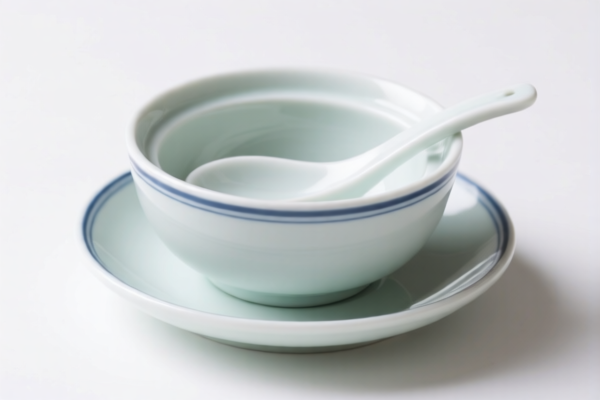
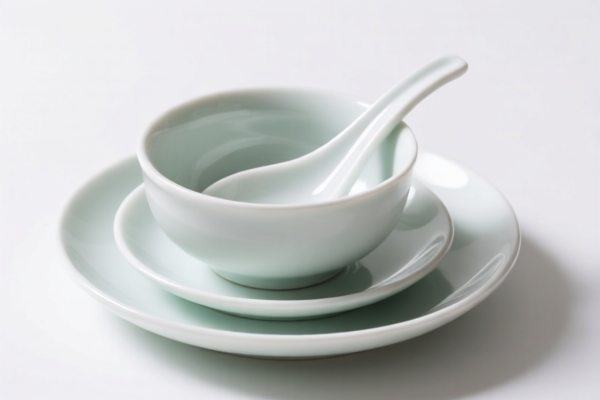
AI Analysis
🍲 Sauce Bowl Set (6 Pieces)
🌐 HS Code Reference & Customs Clearance Guide | 2026 Latest Tariff Analysis | Strategic Compliance Strategy
📌 I. Product Definition & Classification: What Exactly is a "Sauce Bowl Set"?
A Sauce Bowl Set typically consists of multiple small bowls (usually 4–10 pieces) designed specifically for holding condiments, dips, or side sauces. In international trade and US customs classification, the material is the primary determinant for HS Code assignment.
The two main categories are: 1. Plastic Sauce Bowls: Lightweight, durable, often used for catering or casual dining. 2. Ceramic/Porcelain Sauce Bowls: Heavier, decorative, often sold as part of a dinnerware set or individually.
⚠️ Critical Distinction:
- If the set is made of plastic →归入 Chapter 39
- If the set is made of porcelain/china → 归入 Chapter 69 (6911)
- If the set is made of other ceramic (earthenware, stoneware) → 归入 Chapter 69 (6912)
📦 II. HS Code Classification Details (2026 Latest Tariff Reference)
Below are the specific HS Codes from the provided data, mapped to the product description "Sauce Bowl Set". Note that customs classification depends heavily on the material and the aggregate value of the set.
| HS Code | Material | Description | Key Classification Criteria |
|---|---|---|---|
3924.10.20.00 |
Plastic | Tableware and kitchenware: Plates, cups, saucers, soup bowls, cereal bowls, sugar bowls, creamers, gravy boats, serving dishes and platters | Applies if the "sauce bowls" are classified broadly as bowls under plastic tableware. |
3924.10.40.00 |
Plastic | Tableware and kitchenware: Other | Applies if the plastic sauce bowls do not fit the specific "bowl" description above or are considered general plastic tableware. |
6911.10.35.10 |
Porcelain/China | Tableware and kitchenware: Other: Other: Available in specified sets: In any pattern for which the aggregate value... is not over $56 | Applies to Porcelain sets. Must be in a set. Aggregate value ≤ $56. |
6911.10.37.10 |
Porcelain/China | Tableware and kitchenware: Other: Other: Available in specified sets: In any pattern for which the aggregate value... is over $56 | Applies to Porcelain sets. Must be in a set. Aggregate value > $56. |
6912.00.35.50 |
Other Ceramic | Ceramic tableware... other than of porcelain or china: Tableware and kitchenware: Other: Other: Available in specified sets: In any pattern for which the aggregate value... is not over $38 | Applies to Non-Porcelain Ceramic (e.g., stoneware) sets. Aggregate value ≤ $38. |
6912.00.39.50 |
Other Ceramic | Ceramic tableware... other than of porcelain or china: Tableware and kitchenware: Other: Other: Available in specified sets: In any pattern for which the aggregate value... is over $38 | Applies to Non-Porcelain Ceramic (e.g., stoneware) sets. Aggregate value > $38. |
🔍 重点提醒 (Key Reminder):
- Material is King: You must declare the material accurately. Misdeclaring ceramic as plastic to avoid higher tariffs is a serious compliance violation. - Set Value Thresholds: For porcelain (6911), the $56 threshold is critical. For other ceramics (6912), the $38 threshold is critical. Exceeding these thresholds changes the HS Code and tax rate. - Sauce Bowls vs. Soup Bowls: Plastic3924.10.20.00explicitly includes "soup bowls." If your "sauce bowls" are technically small soup bowls, this code applies. If they are distinct small condiment dishes,3924.10.40.00(Other) might be more accurate for plastics.
💰 III. 2026 Latest Tariff Rate Breakdown (Including Surtaxes)
✅ Applicable Country: United States (US)
✅ Origin: China (CN) (Assumed based on typical context of such HS codes and surtaxes)
✅ Effective Time: 2025/2026 (Current Trade Environment)
🎯 1. 3924.10.20.00 – Plastic Tableware (Bowls/Serving Dishes)
| Item | Detail |
|---|---|
| Base Tariff | 6.5% |
| Section 301 Surtax | 7.5% |
| Total Tax Rate | 14.0% |
| Tax Calculation | CIF Value × 14.0% |
| De Minimis Exemption? | ❌ No (Generally, plastic tableware from China does not qualify for $800 de minimis if intended for commercial use, but check current CBP rulings for specific "personal use" vs "commercial" intent. However, for B2B import, tax applies.) |
📌 Explanation:
- Plastic tableware faces a combined duty of 14%. This is moderate compared to electronics but significant for low-margin goods.
🎯 2. 3924.10.40.00 – Other Plastic Tableware
| Item | Detail |
|---|---|
| Base Tariff | 3.4% |
| Section 301 Surtax | 0.0% |
| Total Tax Rate | 3.4% |
| Tax Calculation | CIF Value × 3.4% |
📌 Explanation:
- If the sauce bowls are classified as "Other" plastic items rather than specific "bowls," the tariff drops dramatically to 3.4%. Strategy: Ensure the description matches "Other" if possible, but accuracy is key.
🎯 3. 6911.10.35.10 – Porcelain Tableware (Set Value ≤ $56)
| Item | Detail |
|---|---|
| Base Tariff | 26.0% |
| Section 301 Surtax | 7.5% |
| Total Tax Rate | 33.5% |
| Tax Calculation | CIF Value × 33.5% |
📌 Explanation:
- Porcelain tableware is heavily taxed. The base rate alone is 26%. This is a high-cost category.
🎯 4. 6911.10.37.10 – Porcelain Tableware (Set Value > $56)
| Item | Detail |
|---|---|
| Base Tariff | 0.0% |
| Section 301 Surtax | 0.0% |
| Total Tax Rate | 0.0% |
| Tax Calculation | Free Duty |
📌 Explanation:
- Strategic Opportunity: If the aggregate value of the porcelain set is over $56, the tariff is 0%! This is a massive saving. However, the goods must be "available in specified sets" and meet the "additional U.S. note 6(b)" pattern requirements.
🎯 5. 6912.00.35.50 – Other Ceramic (Set Value ≤ $38)
| Item | Detail |
|---|---|
| Base Tariff | 0.0% |
| Section 301 Surtax | 0.0% |
| Total Tax Rate | 0.0% |
| Tax Calculation | Free Duty |
📌 Explanation:
- Strategic Opportunity: For non-porcelain ceramics (e.g., stoneware, earthenware) in a set with a value not over $38, the tariff is 0%!
🎯 6. 6912.00.39.50 – Other Ceramic (Set Value > $38)
| Item | Detail |
|---|---|
| Base Tariff | 4.5% |
| Section 301 Surtax | 0.0% |
| Total Tax Rate | 4.5% |
| Tax Calculation | CIF Value × 4.5% |
📌 Explanation:
- If the set value exceeds $38, a 4.5% duty applies. Still very low compared to porcelain.
🛠️ IV. Customs Clearance Practical Advice (Pitfall Avoidance Guide)
✅ 1. Preparation Checklist (Essential Documents)
| Document | Required? | Notes |
|---|---|---|
| Product Specifications | ✔️ | Must specify Material (Plastic, Porcelain, Ceramic) and Set Composition (e.g., "6-piece set"). |
| Commercial Invoice | ✔️ | Must list the Aggregate Value of the set clearly. This determines if the $56/$38 threshold is met. |
| Photos of Product | ✔️ | Show the set packaged together. If sold individually, clarify if they are still considered a "set" for customs purposes. |
| Material Declaration | ✔️ | Explicitly state "Porcelain" or "Plastic" to avoid misclassification penalties. |
| Pattern Description | ✔️ | For ceramics, describe the pattern to ensure it meets "additional U.S. note 6(b)" if aiming for 0% rate. |
✅ 2. Classification Strategy (Key Takeaways)
🔥 "Material First, Value Second, Set Status Critical!"
| Scenario | Recommended HS Code | Tariff | Why? |
|---|---|---|---|
| Plastic Sauce Bowls | 3924.10.40.00 |
3.4% | Lower rate than 3924.10.20.00 (14%). Classify as "Other" if not strictly "soup bowls." |
| Porcelain Set (Low Value) | 6911.10.35.10 |
33.5% | Avoid if possible! High tax due to low-value threshold. |
| Porcelain Set (High Value) | 6911.10.37.10 |
0.0% | Optimal! Ensure aggregate value > $56 and set is in specified pattern. |
| Ceramic Set (Low Value) | 6912.00.35.50 |
0.0% | Optimal! Ensure aggregate value ≤ $38. |
| Ceramic Set (High Value) | 6912.00.39.50 |
4.5% | Low tax, but slightly higher than 0%. |
📌 Note:
- Porcelain vs. Ceramic: Porcelain (6911) is harder to get 0% tax than Other Ceramic (6912) because the threshold is higher ($56 vs $38). - Set Definition: Customs considers a "set" if items are put up together for retail sale. If you import 6 bowls separately, they may be classified individually, potentially changing the value calculation.
✅ 3. Special Cases
| Situation | Advice |
|---|---|
| Mixed Material Set | Do not mix materials in one set unless you can split the value. Mixed sets can lead to complex classification or denial of preferential rates. |
| Gift Sets | If marketed as a "Gift Set," ensure the aggregate value is clearly stated. Customs may scrutinize the "set" definition. |
| OEM Private Label | If the pattern is unique, ensure it complies with "additional U.S. note 6(b)" for ceramics to claim 0% rate. |
🌍 V. Global Market Comparison (2026)
| Country/Region | Recommended HS Code | Tariff (China Origin) | Notes |
|---|---|---|---|
| 🇺🇸 USA | See above | 0% – 33.5% | Highly dependent on material and set value thresholds. |
| 🇨🇳 China | 3924.10.20.00 / 6911.10.35.10 etc. | 5% – 10% | Import duties for ceramics/plastics are moderate. |
| 🇪🇺 EU | 3924.10 / 6911 / 6912 | 4% – 6.5% | No Section 301 equivalent. VAT applies separately. |
| 🇬🇧 UK | 3924.10 / 6911 / 6912 | 4% – 6.5% | Post-Brexit tariffs similar to EU for these goods. |
📌 Conclusion:
- USA is the most complex market due to Section 301 surtaxes and specific value thresholds for ceramics. - Strategic Goal: Aim for 0% tariff by either: 1. Using Plastic (3924.10.40.00at 3.4% is close to 0). 2. Using Other Ceramic with set value ≤ $38 (6912.00.35.50at 0%). 3. Using Porcelain with set value > $56 (6911.10.37.10at 0%).
📌 VI. Common Mistakes & Pitfalls (Lessons Learned)
❌ Mistake 1: Declaring a $60 porcelain set as 6911.10.35.10 to avoid scrutiny.
👉 Consequence: If discovered, tax jumps from 0% to 33.5% + penalties.
✅ Fix: Declare accurately based on actual value. If value > $56, use 6911.10.37.10 (0%).
❌ Mistake 2: Assuming all plastic tableware is 3924.10.20.00.
👉 Consequence: Paying 14% instead of 3.4%.
✅ Fix: If the sauce bowls are not "soup bowls" per CBP definition, use 3924.10.40.00 (3.4%).
❌ Mistake 3: Ignoring the "Set" definition.
👉 Consequence: If items are not packed together as a set, they may be classified individually, potentially changing the value threshold logic.
✅ Fix: Ensure packaging clearly indicates a "6-Piece Set" and invoice reflects the set value.
🎯 VII. Conclusion: Strategic Compliance for Cost Savings
🎯 Remember:
🔹 "Material Matters: Plastic is cheaper, Ceramic is risky."
🔹 "Value Thresholds: Stay under $38 or over $56 for 0% tax on ceramics."
🔹 "Accurate Description: Avoid 14% plastic tax by classifying as 'Other' if applicable."
📌 Pro Tip:
If your Porcelain Sauce Bowl Set is valued at $50, you pay 33.5%.
If you increase the value (e.g., add matching plates or higher-end packaging) to $57, you pay 0%.
Consult a customs broker to validate if adding value changes the classification or if it's compliant.
📣 Immediate Action:
📞 Contact your customs broker with the exact material, set composition, and aggregate value.
🚀 Optimize for 0% tariff by adjusting set value or material choice where possible.
✨ Precision in Classification, Profit in Clearance!
💼 Every dollar saved on duty counts.
Customer Reviews
About HS Code Classification
The Harmonized System (HS) is an internationally standardized nomenclature developed by the World Customs Organization (WCO) to classify traded products. Over 200 countries use the HS system as the basis for customs tariffs, trade statistics, and import/export regulations.
Each HS code follows a hierarchical structure:
- Chapter (2 digits) — Broad category of goods (e.g., Chapter 84: Machinery and Mechanical Appliances)
- Heading (4 digits) — More specific grouping within the chapter
- Subheading (6 digits) — Internationally standardized breakdown, used by all WCO member countries
- National subdivisions (8-10 digits) — Country-specific extensions for further classification, such as US HTSUS 10-digit codes
Correct HS code classification is essential for smooth customs clearance, accurate duty payment, and compliance with trade regulations. Misclassification can lead to customs delays, overpayment of duties, or penalties.
When importing from CN to US, the applicable tariff rates may include:
- Most-Favored-Nation (MFN) rate — The standard duty rate applied to WTO members
- General rate — Applied to countries without trade agreements
- Trade remedy duties — Additional tariffs such as Section 301 (anti-dumping), Section 232 (national security), or countervailing duties
The information provided on this page is for reference purposes only. For official classification, please consult with your local customs authority or a licensed customs broker.