Sauna Cap
CN → US| HS Code | Tariff Rate | Origin | Destination | Doc |
|---|---|---|---|---|
| 6307909882 | 24.5% | CN | US | Official Doc |
| 6217108500 | 24.6% | CN | US | Official Doc |
| 6505001525 | 42.9% | CN | US | Official Doc |
| 6505001540 | 42.9% | CN | US | Official Doc |
| 6307909891 | 24.5% | CN | US | Official Doc |
Product Images

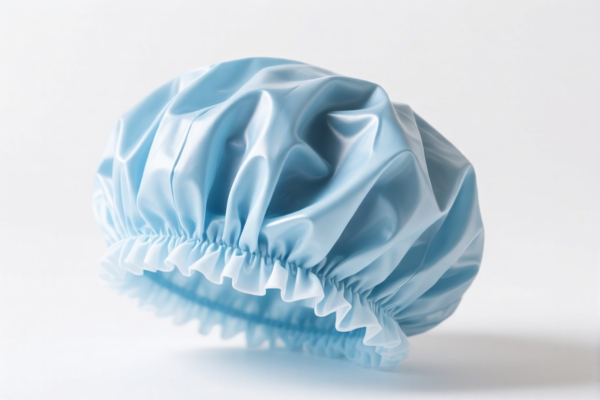
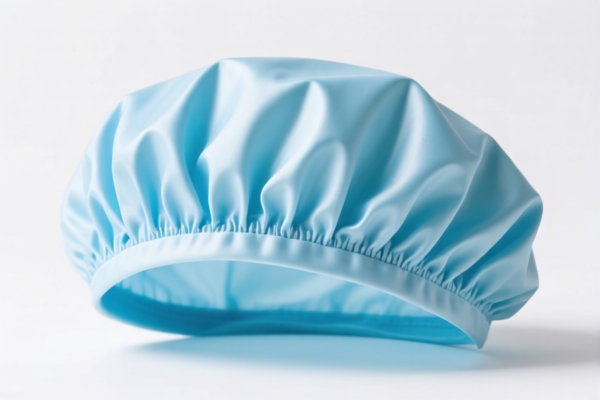
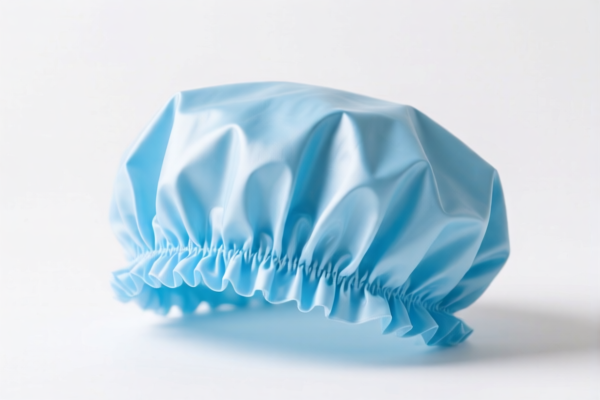
AI Analysis
🧖♂️ Sauna Cap (Sweat Band / Headband)
🌐 HS Code Reference & Customs Clearance Guide | 2026 Latest Tariff Analysis | Professional通关 Strategy
📌 I. Product Definition & Classification: Do You Really Understand "Sauna Cap"?
A Sauna Cap (also known as a sweat band or headband) is primarily a textile accessory designed to absorb sweat and maintain body temperature during sauna, steam room, or intense fitness activities. In international trade, its classification is not singular but depends heavily on its specific material composition, structural form, and declared use.
The data provided highlights four distinct HS Codes, ranging from 24.5% to 42.9% total tax. This variation is critical. Misclassification can lead to severe duty underpayment penalties or shipment delays.
⚠️ Key Distinction Point:
- Is it classified as a "General Textile Article" (Headings 6307)? → Lower Duty (~24.5%)
- Is it classified as a "Cap/Hat" (Heading 6505)? → Higher Duty (~42.9%)
- The difference lies in whether customs views it as a functional accessory (like a band) or a headwear article (like a cap).
📦 II. HS Code Classification Matrix (2026 Latest Tariff Data)
Based on the provided <DATA>, here is the authoritative breakdown for Cotton Sauna Caps:
| HS Code | Product Description (Summary) | Category | Total Tax Rate | Tax Breakdown (Base + Section 301 + IEEPA 122) |
|---|---|---|---|---|
| 6307.90.98.82 | Cotton Sauna Cap, Material: Cotton, Type: Other Made-up Articles | Textile Accessories | 24.5% | Base: 7.0% + Add. Tariff: 7.5% + Sec 122: 10% |
| 6307.90.98.91 | Cotton Sauna Cap, Category: Other Cotton Made-up Articles | Textile Accessories | 24.5% | Base: 7.0% + Add. Tariff: 7.5% + Sec 122: 10% |
| 6217.10.85.00 | Cotton Sauna Cap, Category: Clothing Accessories | Clothing Parts | 24.6% | Base: 14.6% + Add. Tariff: 0.0% + Sec 122: 10% |
| 6505.00.15.25 | Cotton Sauna Cap, Material: Cotton, Form: Hat/Cap | Headwear | 42.9% | Base: 7.9% + Add. Tariff: 25.0% + Sec 122: 10% |
| 6505.00.15.40 | Cotton Sauna Cap, Material: Cotton, Use: Hat & Other Headbands | Headwear | 42.9% | Base: 7.9% + Add. Tariff: 25.0% + Sec 122: 10% |
🔍 Critical Analysis:
- Codes 6307 & 6217 treat the product as an "Accessory" or "Other Article", resulting in a significantly lower total tax (~24.5-24.6%).
- Codes 6505 treat the product as a "Hat/Cap", triggering a higher Additional Tariff (25%), resulting in a total tax of 42.9%.
- Note: Section 122 Tariff (10%) and Section 301/IEEPA tariffs vary by specific subheading and administrative interpretation.
💰 III. 2026 Latest Tariff Rate Details (Including Add-on Taxes)
✅ Applicable Country: United States (US)
✅ Origin: China (CN)
✅ Product: Cotton Sauna Cap
🎯 1. Low Tax Scenario: Headings 6307 & 6217 (Total ~24.5-24.6%)
A. Code 6307.90.98.82 / 6307.90.98.91 (Other Made-up Textile Articles)
| Item | Detail |
|---|---|
| Base Duty | 7.0% |
| Section 301 / Add-on | 7.5% |
| Section 122 Tariff | 10.0% |
| Total Effective Rate | 24.5% |
| Calculation Basis | CIF Value × 24.5% |
| De Minimis Exemption | ❌ Not Applicable (Deemed denied for CN origin under current trade policies) |
| Legal Reference Path | HTS:6307.90.98 → USITC:Footnote → IEEPA/Sec122 |
📌 Interpretation:
- These codes classify the item as a "made-up article" rather than a hat.
- The Section 122 Tariff (10%) is a recent addition affecting certain textile/apparel imports.
- The additional tariff (7.5%) is lower than the 25% seen in the hat category.
B. Code 6217.10.85.00 (Other Made-up Clothing Accessories)
| Item | Detail |
|---|---|
| Base Duty | 14.6% |
| Section 301 / Add-on | 0.0% |
| Section 122 Tariff | 10.0% |
| Total Effective Rate | 24.6% |
| Calculation Basis | CIF Value × 24.6% |
| De Minimis Exemption | ❌ Not Applicable |
📌 Interpretation:
- Classified specifically as a clothing accessory.
- Note: Base duty is higher (14.6%) but avoids the additional 7.5% tariff, keeping the total very competitive.
🎯 2. High Tax Scenario: Heading 6505 (Total 42.9%)
Code 6505.00.15.25 / 6505.00.15.40 (Hats, Caps, etc.)
| Item | Detail |
|---|---|
| Base Duty | 7.9% |
| Section 301 / Add-on | 25.0% |
| Section 122 Tariff | 10.0% |
| Total Effective Rate | 42.9% |
| Calculation Basis | CIF Value × 42.9% |
| De Minimis Exemption | ❌ Not Applicable |
| Legal Reference Path | HTS:6505.00 → USITC:Footnote → IEEPA:9903.01.24 → Sec122 |
📌 Interpretation:
- If customs determines the item is a "Hat" or "Cap" (even if soft/cotton), it falls under Chapter 65.
- The 25% Additional Tariff is the primary driver of cost increase.
- Risk: Misdeclaring a "Cap" as an "Accessory" to save 18% is a major compliance risk.
🛠️ IV. Customs Clearance Practical Advice (Avoiding Pitfalls)
✅ 1. Preparation Checklist (Non-Negotiable)
| Document | Required? | Description |
|---|---|---|
| ✅ Product Specification Sheet | ✔️ | Must specify: Material (100% Cotton), Structure (Closed loop/Band), Usage (Sauna/Sweat). |
| ✅ Product Photos | ✔️ | Show the item clearly. If it looks like a headband/bandana, argue for 6307/6217. If it looks like a beanie/cap, you are stuck with 6505. |
| ✅ Commercial Invoice | ✔️ | Description should be precise. Avoid vague terms like "Headwear." Use "Cotton Sweat Band for Sauna" or "Textile Headband Accessory." |
| ✅ Packing List | ✔️ | Confirm weight and dimensions. |
| ✅ Certificate of Origin | ✔️ | Proves CN origin, triggering the specific tariff columns. |
✅ 2. Classification Strategy & Declaration Tips
🔥 "Shape Matters, Name Matters, Material Matters!"
| Scenario | Recommended HS Code | Rationale |
|---|---|---|
| Simple Elastic Band / Headband | 6307.90.98.82 | Clearly an "Article," not headwear. Lowest risk for high tax. |
| Folded/Cap-like but Sold as Accessory | 6217.10.85.00 | Argue it is a "Clothing Accessory" (e.g., worn under swim caps or for hygiene). |
| Structured Hat / Beanie / Beanie Cap | 6505.00.15.40 | If it has a distinct "hat" shape, be prepared for 42.9%. Do not try to misclassify. |
| Set (Cap + Towel) | Depends on Essential Character | If cap is essential, whole set may follow cap code. Separate billing helps. |
✅ 3. Critical Warnings
| Risk | Consequence | Mitigation |
|---|---|---|
| Misclassification (6505 vs 6307) | ~18% Tax Difference | Provide detailed photos showing it is a band, not a cap. Include usage instructions in the manual. |
| Section 122 Non-Compliance | Seizure / Fine | Ensure HS code matches the latest USITC updates for textile articles. |
| Vague Description | Customs Hold | Never write just "Sauna Cap." Write "Cotton Knitted Sweat Band, Sauna Accessory, No Brim." |
| De Minimis Exploitation | Penalty | Do not split shipments to bypass $800 de minimis. CN origin items are strictly scrutinized. |
🌍 V. Global Market Comparison (2026 Outlook)
| Market | Typical HS Code for Sauna Cap | Est. Duty | Note |
|---|---|---|---|
| 🇺🇸 USA | 6307.90.98.82 or 6505.00.15.40 | 24.5% - 42.9% | Highly dependent on "Hat" vs "Accessory" determination. Sec 122 adds 10%. |
| 🇪🇺 EU | 6505.00.00 | ~4% | No Section 301/122 equivalent. Lower barrier. |
| 🇨🇳 China | 6505.00.00 | ~5-10% | Import duty varies; generally lower than US. |
| 🇬🇧 UK | 6505.00.00 | ~4% | Post-Brexit tariffs apply. |
📌 Conclusion for US Exporters:
The 18% gap between 6307 (24.5%) and 6505 (42.9%) is significant.
- Strategy: If your product is a simple band without a structured crown or brim, strongly advocate for 6307.90.98.82 or 6217.10.85.00.
- Evidence: Provide marketing images showing it worn as a band, not a hat.
📌 VI. Common Errors & Pitfalls (Blood Lessons)
❌ Error 1: Calling it a "Cap" in the invoice while using a 6307 code.
👉 Result: Customs will reclassify to 6505 → Back taxes + Interest.
❌ Error 2: Ignoring Section 122 Tariff.
👉 Result: Underpayment by 10% on every shipment. Audit risk high.
❌ Error 3: Assuming all cotton textiles are equal.
👉 Result: "Accessories" (6307/6217) and "Hats" (6505) have different duty structures. Accuracy is key.
✅ Correct Declaration Example:
"Cotton Knitted Sweat Band for Sauna Use, Elastic Edge, No Brim, Accessory for Fitness/Sauna, HS 6307.90.98.82"
🎯 VII. Conclusion: Precision Saves Money
🎯 Remember the Golden Rule:
🔹 "Band = Accessory (24.5%) | Hat = Headwear (42.9%)"
🔹 "Describe Shape, Not Just Function"
🔹 "Section 122 Applies to Both – Don't Forget It!"
📌 Pro Tip:
If you are unsure, file an Advance Ruling (Pre-Ruling) with US Customs and Border Protection (CBP).
- Submit photos and specs.
- Pay a small fee for certainty.
- Avoid the 18% gamble.
📣 Take Action:
📞 Consult a Customs Broker
🖼️ Provide Clear "Band-Style" Photos
📝 Use Precise "Accessory" Language in Invoices
✨ Professional Classification, Smooth Clearance, Maximum Profit!
💼 Your Bottom Line Depends on These 8 Digits!
Customer Reviews
About HS Code Classification
The Harmonized System (HS) is an internationally standardized nomenclature developed by the World Customs Organization (WCO) to classify traded products. Over 200 countries use the HS system as the basis for customs tariffs, trade statistics, and import/export regulations.
Each HS code follows a hierarchical structure:
- Chapter (2 digits) — Broad category of goods (e.g., Chapter 84: Machinery and Mechanical Appliances)
- Heading (4 digits) — More specific grouping within the chapter
- Subheading (6 digits) — Internationally standardized breakdown, used by all WCO member countries
- National subdivisions (8-10 digits) — Country-specific extensions for further classification, such as US HTSUS 10-digit codes
Correct HS code classification is essential for smooth customs clearance, accurate duty payment, and compliance with trade regulations. Misclassification can lead to customs delays, overpayment of duties, or penalties.
When importing from CN to US, the applicable tariff rates may include:
- Most-Favored-Nation (MFN) rate — The standard duty rate applied to WTO members
- General rate — Applied to countries without trade agreements
- Trade remedy duties — Additional tariffs such as Section 301 (anti-dumping), Section 232 (national security), or countervailing duties
The information provided on this page is for reference purposes only. For official classification, please consult with your local customs authority or a licensed customs broker.