Sausage Casing Net
CN → US| HS Code | Tariff Rate | Origin | Destination | Doc |
|---|---|---|---|---|
| 4206009000 | 10.0% | CN | US | Official Doc |
| 5608192090 | 40.0% | CN | US | Official Doc |
| 4206001930 | 13.9% | CN | US | Official Doc |
| 7314142000 | 85.0% | CN | US | Official Doc |
| 5608903000 | 40.0% | CN | US | Official Doc |
Product Images
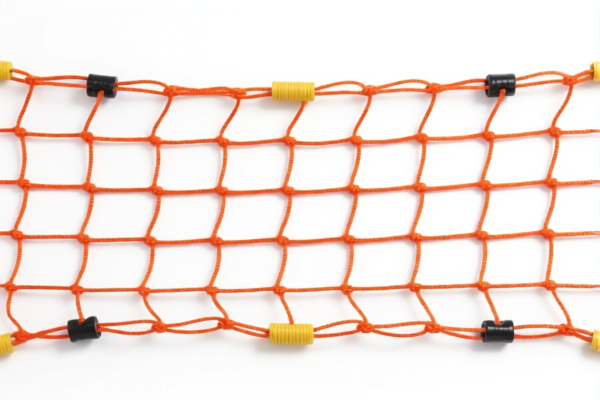
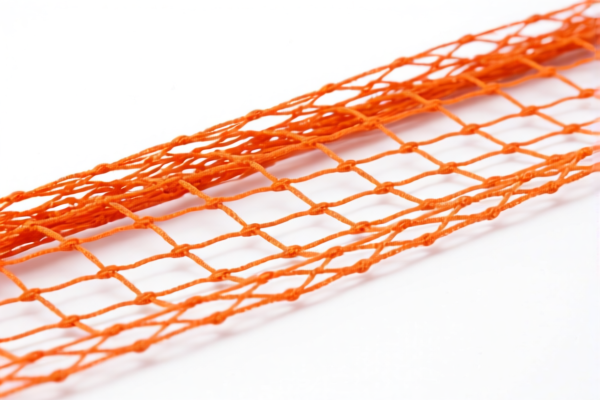
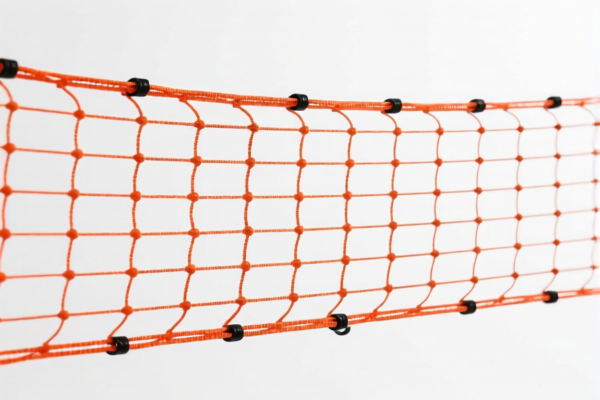
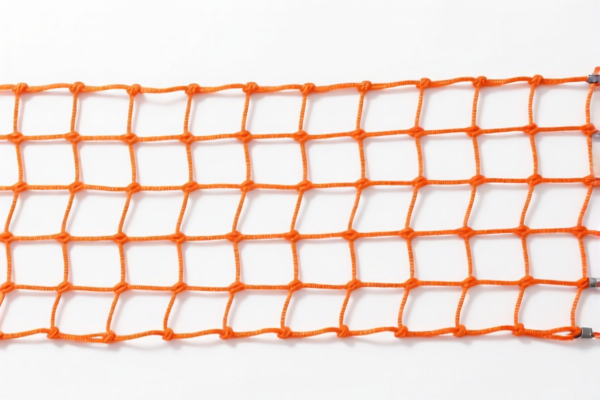
AI Analysis
🥩 Sausage Casing Net (肠衣网)
🌐 HS Code Reference & Customs Clearance Guide | 2026 Latest Tariff Analysis | Professional Clearance Strategy
📌 I. Product Definition & Classification: Do You Really Know What a "Sausage Casing Net" Is?
A Sausage Casing Net is a critical auxiliary tool used in the sausage processing industry. Its primary function is to provide support, shape, or texture to sausage casings (natural or artificial) during stuffing and curing. Depending on the material composition, it falls into entirely different customs categories.
In international trade, it is broadly divided into three material types: 1. Natural/Biological Auxiliary Products: Made from intestinal, tendon, or membrane materials. 2. Textile/Fiber Nets: Made from synthetic or natural fibers. 3. Metal Wire Meshes: Made from stainless steel or other metals.
⚠️ Critical Distinction Point:
- If made of biological materials (intestines/membranes) →归类 to Chapter 42
- If made of textile fibers → 归类 to Chapter 56
- If made of stainless steel wire → 归类 to Chapter 73
- Misclassification Risk: Declaring a stainless steel mesh as a textile net can lead to a massive tax discrepancy (85% vs. 40%).
📦 II. HS Code Classification Details (2026 Latest Tariff Authority对照)
| HS Code | Product Description | Applicable Scenario | Material Attribute |
|---|---|---|---|
4206.00.90.00 |
Other prepared animal guts, bladders and stomachs (Auxiliary structures) | Natural casing aids, biological membrane supports | ✅ Biological/Animal Origin |
5608.19.20.90 |
Nets of man-made fibers, not knotted or knitted in the form of tubes | Synthetic fiber nets, artificial textile casings | ✅ Textile/Synthetic Fiber |
4206.00.19.30 |
Other prepared animal guts, bladders and stomachs (Auxiliary materials for intestinal processing) | Biological auxiliary materials for gut processing | ✅ Biological/Processing Aid |
7314.14.20.00 |
Welded wire mesh of stainless steel | Stainless steel wire mesh nets (industrial food grade) | ✅ Metal/Stainless Steel |
5608.90.30.00 |
Other nets of textile materials (falling under residual categories) | General textile nets, composite fiber nets | ✅ Textile/Residual Category |
🔍 Key Reminder:
- Stainless Steel Nets attract the highest tariffs due to Section 301/122 measures; ensure accurate material declaration.
- Textile Nets have moderate tariffs but require strict proof of fiber composition.
- Biological Nets have lower base tariffs but must prove non-food direct consumption status (as "auxiliary tools").
💰 III. 2026 Latest Tariff Rate Breakdown (Including Additional Taxes & Policy Surcharges)
✅ Applicable Country: USA
✅ Origin: China
✅ Effective Date: Includes subsequent imports (2025/2026 regimes)
🎯 1. 4206.00.90.00 —— Biological/Auxiliary Animal Products
| Item | Content |
|---|---|
| Base Tariff | 0.0% |
| Section 301 Additional Tariff | 0.0% |
| Section 122 Tariff (China-specific) | +10% |
| Total Tariff Rate | 10.0% |
| Tax Calculation | CIF Value × 10% |
| De Minimis Exemption | ❌ Not Applicable (subject to additional tariffs) |
| Legal Basis Path | Section 122: 10% → USITC:4206.00.90.00 |
📌 Explanation:
- This category benefits from a 0% base tariff.
- The 10% Section 122 tariff is the only additional cost, making it the most cost-effective option if the product qualifies as "biological auxiliary."
🎯 2. 5608.19.20.90 —— Synthetic Fiber Nets
| Item | Content |
|---|---|
| Base Tariff | 5.0% |
| Section 301 Additional Tariff | +25% |
| Section 122 Tariff (China-specific) | +10% |
| Total Tariff Rate | 40.0% |
| Tax Calculation | CIF Value × 40% |
| De Minimis Exemption | ❌ Not Applicable |
| Legal Basis Path | Section 301: 25% + Section 122: 10% + Base: 5% → USITC:5608.19.20.90 |
📌 Note:
- Textile nets face a 35% surcharge (25% + 10%) on top of the 5% base.
- Total 40% is significantly higher than biological nets.
- Declaration must clearly state "Man-made fibers" to avoid being classified under residual textile categories.
🎯 3. 4206.00.19.30 —— Biological Auxiliary Processing Materials
| Item | Content |
|---|---|
| Base Tariff | 3.9% |
| Section 301 Additional Tariff | 0.0% |
| Section 122 Tariff (China-specific) | +10% |
| Total Tariff Rate | 13.9% |
| Tax Calculation | CIF Value × 13.9% |
| De Minimis Exemption | ❌ Not Applicable |
| Legal Basis Path | Section 122: 10% + Base: 3.9% → USITC:4206.00.19.30 |
📌 Note:
- A middle-ground option if the product is specifically for "intestinal processing."
- Total 13.9% is still far lower than textile or metal nets.
🎯 4. 7314.14.20.00 —— Stainless Steel Wire Mesh
| Item | Content |
|---|---|
| Base Tariff | 0.0% |
| Section 301 Additional Tariff | +25% |
| Section 122 Tariff (China-specific) | +10% |
| Steel/Aluminum/Copper Additional Tariff | +50% |
| Total Tariff Rate | 85.0% |
| Tax Calculation | CIF Value × 85% |
| De Minimis Exemption | ❌ Not Applicable |
| Legal Basis Path | Section 301: 25% + Section 122: 10% + Steel Tariff: 50% → USITC:7314.14.20.00 |
📌 ⚠️ CRITICAL WARNING:
- This is the HIGHEST TARIFF category.
- Stainless steel nets are subject to the 50% Steel Tariff on top of Section 301 and 122.
- Total 85% makes this import path extremely expensive. Only use if no other classification applies.
🎯 5. 5608.90.30.00 —— Other Textile Nets (Residual)
| Item | Content |
|---|---|
| Base Tariff | 5.0% |
| Section 301 Additional Tariff | +25% |
| Section 122 Tariff (China-specific) | +10% |
| Total Tariff Rate | 40.0% |
| Tax Calculation | CIF Value × 40% |
| De Minimis Exemption | ❌ Not Applicable |
| Legal Basis Path | Section 301: 25% + Section 122: 10% + Base: 5% → USITC:5608.90.30.00 |
📌 Note:
- Similar to5608.19.20.90, but falls under the "other" residual category.
- Total 40%. Ensure fiber composition is well-documented to avoid arbitrary classification.
🛠️ IV. Customs Clearance Practical Advice (Battle-Tested Pitfall Avoidance)
✅ 1. Documentation Checklist (Missing Items = Delays)
| Document | Mandatory | Description |
|---|---|---|
| ✅ Product Specification Sheet | ✔️ | Must explicitly state Material Composition (e.g., "100% Nylon," "Stainless Steel 304," "Pig Intestine Membrane"). |
| ✅ Material Certificate | ✔️ | Third-party lab report proving fiber type or metal grade. |
| ✅ Product Photos | ✔️ | Clear images showing texture, mesh size, and any packaging labels. |
| ✅ Commercial Invoice | ✔️ | Description must match HS Code (e.g., "Stainless Steel Sausage Casing Net" vs. "Textile Sausage Net"). |
| ✅ Usage Statement | ✔️ | Confirm it is an auxiliary tool, not a direct food product (especially for biological nets). |
✅ 2. Declaration Strategy (Key Mantra)
🔥 "Material is King! Don't Mix Metal with Textile!"
| Scenario | Correct Declaration | Wrong Practice |
|---|---|---|
| Stainless Steel Net | Declare as 7314.14.20.00 with explicit "Stainless Steel" |
Mislabel as "Textile Net" → Risk of 85% back-payment + penalty |
| Nylon/Polyester Net | Declare as 5608.19.20.90 with "Man-made Fiber" |
Mislabel as "Biological" → Customs will demand biological proof |
| Biological Membrane Net | Declare as 4206.00.90.00 or 4206.00.19.30 |
Mislabel as "Textile" → Unnecessary 40% tax |
| Mixed Material | Split shipment or declare dominant material | Mixed declaration → Customs will classify at highest rate |
✅ 3. Special Case Handling
| Scenario | Handling Suggestion |
|---|---|
| Biological Nets (Chapter 42) | Provide proof of non-food consumption (auxiliary use) to justify lower tax. |
| Stainless Steel Nets | Avoid if possible due to 85% tax. Consider sourcing from non-China origin if possible to mitigate Section 301/122. |
| Textile Nets | Ensure "Man-made" label is prominent. If ambiguous, Customs may classify under residual 5608.90.30.00 (40%). |
| Pre-Ruling | Highly Recommended for large shipments. Apply for Advance Ruling to lock in HS Code and tariff rate. |
🌍 V. Global Market Customs Comparison (2026 Latest)
| Country/Region | Recommended HS Code | Tariff (China Origin) | Certification Requirements | Notes |
|---|---|---|---|---|
| 🇺🇸 USA | 4206.00.90.00 (Best) |
10.0% (Biological) 40.0% (Textile) 85.0% (Metal) |
FDA (if food-contact), IEEPA Compliance | Highest risk market due to Section 122/301. |
| 🇨🇳 China | 4206.00.90.00 |
~5-6% | None | No Section 301/122. |
| 🇪🇺 EU | 4206.00.90.00 |
0-3% | CE (if industrial), REACH | Lower tariffs, stricter chemical regs. |
| 🇦🇺 Australia | 5608.19.20.90 |
5% | None | Moderate tariffs. |
| 🇯🇵 Japan | 4206.00.90.00 |
5% | JIA Certification | Moderate tariffs. |
📌 Conclusion:
- USA is the most challenging market due to multiple layered tariffs (Base + 301 + 122 + Steel).
- Biological Nets (4206) are the most tax-efficient for USA imports.
- Stainless Steel Nets (7314) are cost-prohibitive for USA imports from China.
📌 VI. Common Mistakes & Pitfall Guide (Blood-Teaching Lessons)
❌ Mistake 1: Declaring a Stainless Steel Net as a Textile Net
👉 Consequence: Customs discovers discrepancy → 85% tariff applied + penalties for misdeclaration.
❌ Mistake 2: Not specifying Material in Invoice
👉 Consequence: Customs defaults to highest applicable rate (likely 85% or 40%) → Delays and extra costs.
❌ Mistake 3: Claiming Biological Net as "Food"
👉 Consequence: FDA seizure or reclassification → Delay or Return.
❌ Mistake 4: Ignoring Section 122
👉 Consequence: Underpayment by 10% → Back-taxes + Interest upon audit.
✅ Correct Action:
"Sausage Casing Net, 100% Stainless Steel 304, 1mm Mesh, Industrial Use, Model XYZ, Origin China"
🎯 VII. Conclusion: Precise Classification Saves Money!
🎯 Remember the Mantra:
🔹 "Metal 85%, Textile 40%, Bio 10-14%: Choose Wisely!"
🔹 "Declare Material Clearly, Avoid Section 301/122 Surprises!"
📌 Pro Tip:
If you are importing Stainless Steel Nets from China to the USA, consider:
1. Relocating Production: Source from Vietnam/Mexico to avoid Section 301/122.
2. Alternative Materials: Use high-quality textile nets (40% tax) if stainless is not mandatory.
3. Advance Ruling: Apply for a binding tariff information ruling before shipment.
📣 Immediate Action:
📞 Contact a Licensed Customs Broker
📄 Prepare Material Certificates & Product Specs
🚀 Lock in your HS Code, Control Costs, and Clear Customs Smoothly!
✨ Professional Clearance, Starts with Accurate Classification!
💼 Every Cent of Tax is Worth Calculating Precisely!
Customer Reviews
About HS Code Classification
The Harmonized System (HS) is an internationally standardized nomenclature developed by the World Customs Organization (WCO) to classify traded products. Over 200 countries use the HS system as the basis for customs tariffs, trade statistics, and import/export regulations.
Each HS code follows a hierarchical structure:
- Chapter (2 digits) — Broad category of goods (e.g., Chapter 84: Machinery and Mechanical Appliances)
- Heading (4 digits) — More specific grouping within the chapter
- Subheading (6 digits) — Internationally standardized breakdown, used by all WCO member countries
- National subdivisions (8-10 digits) — Country-specific extensions for further classification, such as US HTSUS 10-digit codes
Correct HS code classification is essential for smooth customs clearance, accurate duty payment, and compliance with trade regulations. Misclassification can lead to customs delays, overpayment of duties, or penalties.
When importing from CN to US, the applicable tariff rates may include:
- Most-Favored-Nation (MFN) rate — The standard duty rate applied to WTO members
- General rate — Applied to countries without trade agreements
- Trade remedy duties — Additional tariffs such as Section 301 (anti-dumping), Section 232 (national security), or countervailing duties
The information provided on this page is for reference purposes only. For official classification, please consult with your local customs authority or a licensed customs broker.