Sausage Casings
CN → US| HS Code | Tariff Rate | Origin | Destination | Doc |
|---|---|---|---|---|
| 4206009000 | 10.0% | CN | US | Official Doc |
| 5608192090 | 40.0% | CN | US | Official Doc |
| 4206001930 | 13.9% | CN | US | Official Doc |
| 5608903000 | 40.0% | CN | US | Official Doc |
| 7314142000 | 85.0% | CN | US | Official Doc |
Product Images
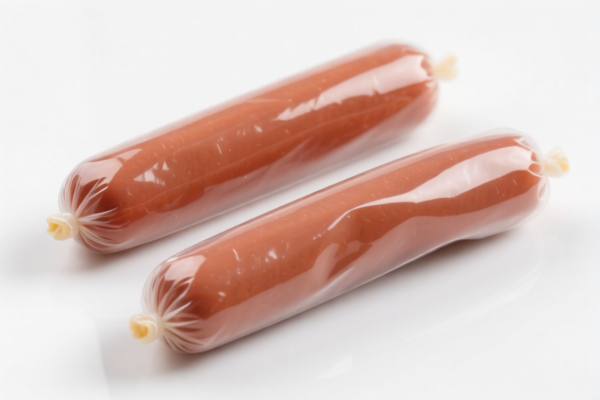
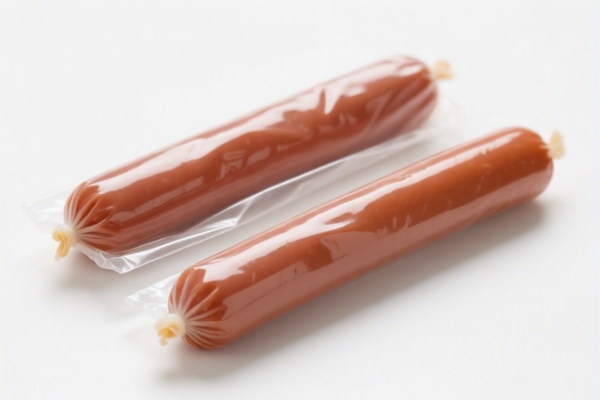
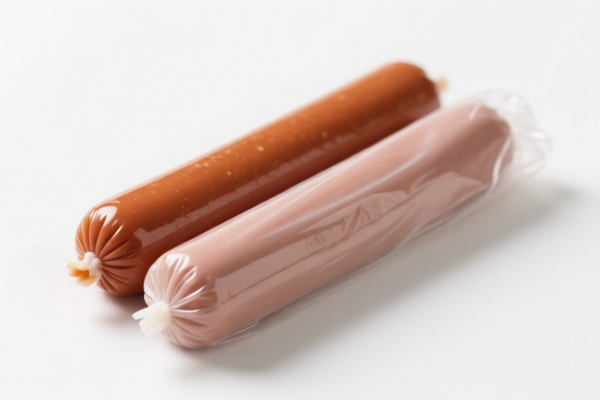
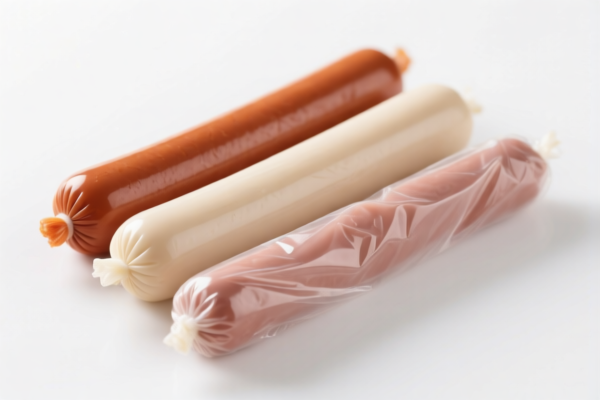
AI Analysis
🌭 Sausage Casings (肠衣 /肠衣网)
🌐 HS Code Reference & Customs Clearance Guide | 2026 Latest Tariff Analysis | Professional Clearance Strategy
📌 I. Product Definition & Classification: Do You Really Understand "Sausage Casings"?
Sausage casings are tubular or net-like structures used to contain sausage fillings during the stuffing, cooking, and drying processes. In international trade, they are classified differently based on their material composition and manufacturing process. The provided data highlights four distinct HS Code pathways, ranging from biological materials to synthetic textiles and stainless steel nets.
⚠️ Key Distinction Point:
- If made from intestinal membranes, collagen, or muscle tendons → Classified under Chapter 42 (Articles of leather; saddlery and harness).
- If made from textile fibers, artificial filaments, or nets → Classified under Chapter 56 (Wadding, felt and nonwovens; special yarns; twine, rope, cables and articles thereof).
- If made from stainless steel wire (industrial filtering nets) → Classified under Chapter 73 (Articles of iron or steel).
📦 II. HS Code Classification Details (2026 Latest Tariff Authority Comparison)
| HS Code | Product Description | Material/Feature | Application Scenario |
|---|---|---|---|
4206.00.90.00 |
Sausage casing nets/auxiliary tools | Biological materials (intestine, gold skin, tendons) | Traditional natural/collagen casing production aids |
5608.19.20.90 |
Net of textile materials or artificial filaments | Synthetic textile/net structure | Synthetic collagen casings, artificial fiber nets |
4206.00.19.30 |
Auxiliary materials for intestinal processing | Biological processing category | Collagen-based casing aids, processed intestinal aids |
5608.90.30.00 |
Net made of textile materials | General textile net definition | Generic synthetic casing nets,兜底 (residual) category |
7314.14.20.00 |
Stainless steel wire mesh | Stainless steel woven/net | Industrial filtering nets, non-food grade metal mesh |
🔍 Important Reminder:
- Natural/Biological Casings (Intestine, Collagen) fall under Chapter 42.
- Synthetic/Fiber Casings fall under Chapter 56.
- Metal Mesh (if used for filtration rather than food packaging) falls under Chapter 73.
- Misclassification leads to massive tariff differences (from 10% to 85%+).
💰 III. 2026 Latest Tariff Rate Details (Including Additional Taxes, Policy Add-ons)
✅ Applicable Country: United States (US)
✅ Origin: China (CN)
✅ Effective Date: Current trade policies (Section 301 & IEEPA) apply.
🎯 1. 4206.00.90.00 — Sausage Casing Nets (Biological/Leather Auxiliary)
| Item | Content |
|---|---|
| Basic Tariff | 0.0% (ad valorem) |
| Section 301 Additional Tariff | 0.0% |
| IEEPA Additional Tariff | +10% (Targeting China/HK products under Section 122 or related IEEPA provisions) |
| Total Tariff | 10.0% |
| Tax Calculation | CIF Value × 10% |
| De Minimis Eligibility | ❌ Not Applicable (Commercial shipment) |
| Legal Basis Path | USITC:4206.00.90.00 → IEEPA:Section 122 |
📌 Explanation:
- "Section 122 Tariff 10%" refers to specific administrative provisions or executive orders applied to certain Chinese goods.
- This is the lowest tax burden option among the provided codes.
- Suitable for natural casings, collagen casings, and biological auxiliary nets.
🎯 2. 5608.19.20.90 — Nets of Textile Materials or Artificial Filaments
| Item | Content |
|---|---|
| Basic Tariff | 5.0% |
| Section 301 Additional Tariff | +25.0% |
| IEEPA Additional Tariff | +10.0% |
| Total Tariff | 40.0% |
| Tax Calculation | CIF Value × 40% |
| De Minimis Eligibility | ❌ Not Applicable |
| Legal Basis Path | IEEPA:9903.01.24 → USITC:5608.19.20.90 → FOOTNOTE:9903.88.01 |
📌 Explanation:
- This code applies to synthetic sausage casings made from textiles or artificial fibers.
- Total 40%: High tariff due to combined Section 301 (25%) and IEEPA (10%) on top of the base 5%.
- Common for artificial collagen casings that are classified as textile products.
🎯 3. 4206.00.19.30 — Auxiliary Materials for Intestinal Processing
| Item | Content |
|---|---|
| Basic Tariff | 3.9% |
| Section 301 Additional Tariff | 0.0% |
| IEEPA Additional Tariff | +10.0% |
| Total Tariff | 13.9% |
| Tax Calculation | CIF Value × 13.9% |
| De Minimis Eligibility | ❌ Not Applicable |
| Legal Basis Path | IEEPA:9903.01.24 → USITC:4206.00.19.30 → FOOTNOTE:9903.88.01 |
📌 Explanation:
- Another Chapter 42 option, specifically for "auxiliary materials for intestinal processing."
- Total 13.9%: Slightly higher than4206.00.90.00due to the 3.9% base tariff, but no Section 301.
- Suitable for processed biological aids or specialized collagen processing tools.
🎯 4. 5608.90.30.00 — Nets of Other Textile Materials (Residual Category)
| Item | Content |
|---|---|
| Basic Tariff | 5.0% |
| Section 301 Additional Tariff | +25.0% |
| IEEPA Additional Tariff | +10.0% |
| Total Tariff | 40.0% |
| Tax Calculation | CIF Value × 40% |
| De Minimis Eligibility | ❌ Not Applicable |
| Legal Basis Path | IEEPA:9903.01.24 → USITC:5608.90.30.00 → FOOTNOTE:9903.88.01 |
📌 Explanation:
- This is a catch-all (兜底) code for textile nets not specified elsewhere in Chapter 56.
- Total 40%: Same high tariff as5608.19.20.90.
- Used when the specific textile net type doesn’t fit5608.19.
- Recommendation: Avoid if possible; try to classify under Chapter 42 if biologically derived.
🎯 5. 7314.14.20.00 — Stainless Steel Wire Mesh (Non-Food Grade)
| Item | Content |
|---|---|
| Basic Tariff | 0.0% |
| Section 301 Additional Tariff | +25.0% |
| IEEPA Additional Tariff | +10.0% |
| Steel/Aluminum/Copper Additional Tariff | +50.0% |
| Total Tariff | 85.0% |
| Tax Calculation | CIF Value × 85% |
| De Minimis Eligibility | ❌ Not Applicable |
| Legal Basis Path | USITC:7314.14.20.00 → FOOTNOTE:Steel/Aluminum/Copper Tariff |
📌 Explanation:
- ⚠️ EXTREMELY HIGH TARIFF.
- This code applies to stainless steel nets. While some industrial "sausage nets" (e.g., for large-scale processing filters) might use steel, food-grade sausage casings are rarely made of steel wire.
- If misclassified, the 85% tax (including the 50% steel/copper surcharge) is devastating.
- Only use if the product is genuinely a metal mesh and not intended as a food casing membrane.
🛠️ IV. Customs Clearance Practical Advice (Avoid Pitfalls)
✅ 1. Required Documentation (Must-Submit)
| Document | Required | Explanation |
|---|---|---|
| ✅ Product Specifications | ✔️ | Material type (natural, collagen, synthetic, steel), diameter, thickness, tensile strength. |
| ✅ Material Certificate | ✔️ | Proof of biological origin (collagen/intestine) or synthetic composition. |
| ✅ Product Photos | ✔️ | Clear images of the net/casing, label, and packaging. |
| ✅ Third-Party Test Report | ✔️ | FDA compliance (if for food), RoHS, REACH. |
| ✅ Commercial Invoice | ✔️ | Must clearly state "Sausage Casing" or "Textile Net" with correct HS Code. |
| ✅ Packing List | ✔️ | Net weight, gross weight, quantity. |
✅ 2. Declaration Tips (Critical Mnemonic)
🔥 “Material determines HS Code, 42 is cheap, 56 is expensive, 73 is a trap!”
| Scenario | Correct HS Code | Wrong Practice | Consequence |
|---|---|---|---|
| Natural/Collagen Casing | 4206.00.90.00 or 4206.00.19.30 |
Declare as "Textile Net" | Tariff jumps from 10% to 40% |
| Synthetic/Fiber Casing | 5608.19.20.90 |
Declare as "Leather Article" | Misclassification penalty + 40% tax |
| Stainless Steel Filter Mesh | 7314.14.20.00 |
Declare as "Sausage Casing" | 85% Tax! + FDA rejection |
| Mixed Materials | Consult Customs | Guess the HS Code | Delay, audit, or fines |
✅ 3. Special Cases
| Scenario | Handling Advice |
|---|---|
| Collagen Casings | Usually classified under 4206 (Chapter 42) if derived from animal hide/tendons. Provide collagen source proof. |
| Cellulose Casings | Often classified under 4206 or 5608 depending on structure. Provide material safety data sheet (MSDS). |
| Industrial Steel Nets | If used for filtration in meat processing, declare as "Filter Mesh" under 7314. Do NOT use "Sausage Casing" name. |
| OEM Custom Casings | Provide customer design specs. Ensure material matches declared HS Code. |
🌍 V. Global Market Comparison (2026 Latest)
| Country/Region | Recommended HS Code | Tariff (China Origin) | Notes |
|---|---|---|---|
| 🇺🇸 USA | 4206.00.90.00 |
10% (Biological) | Lowest tax. Avoid 5608 (40%) and 7314 (85%). |
| 🇺🇸 USA | 5608.19.20.90 |
40% (Synthetic) | High tax for synthetic casings. |
| 🇨🇳 China | 4206.00.90.00 |
13.9% | Import tariff applies. |
| 🇪🇺 EU | 4206.00 |
Varies | Check EU Combined Nomenclature. |
| 🇦🇺 Australia | 4206.00 |
Varies | Check Australian Tariff. |
📌 Conclusion:
- USA: For biological/collagen casings, aim for 4206.00.90.00 (10%).
- Avoid7314unless it’s truly a steel filter.
- Synthetic casings face 40% tariffs in the US.
📌 VI. Common Mistakes & Pitfalls (Blood & Tears Lessons)
❌ Mistake 1: Declaring Collagen Casings as "Textile Nets" (5608)
👉 Consequence: Tax increases from 10% to 40%.
👉 Fix: Provide collagen source documentation to justify Chapter 42 classification.
❌ Mistake 2: Declaring Stainless Steel Mesh as "Sausage Casing"
👉 Consequence: Tax hits 85% + FDA rejection if mislabeled as food-grade.
👉 Fix: Declare as "Industrial Filter Mesh" under 7314.14.20.00 with proper industrial use description.
❌ Mistake 3: Not distinguishing between Natural and Artificial materials
👉 Consequence: Customs audit, delay, and potential seizure.
👉 Fix: Clearly label products as "Natural Collagen," "Artificial Fibers," or "Stainless Steel."
✅ Correct Declaration Example:
"Natural Collagen Sausage Casing, 100% Bovine Submucosa, Medical Grade, For Food Packaging, Model SC-01, FDA Compliant" → HS Code: 4206.00.90.00
🎯 VII. Conclusion: Precise Classification, Save Money!
🎯 Remember the Mnemonic:
🔹 "Bio/Leather = 42 = 10%"
🔹 "Textile = 56 = 40%"
🔹 "Steel = 73 = 85% (Trap!)"
🔹 "Misclassification = 40%+ Tax + Delays!"
📌 Tips:
- If your product is Collagen-based, insist on 4206 classification.
- If your product is Synthetic, prepare for 40% tax under 5608.
- Never use 7314 for food casings unless it’s a metal filter.
- Apply for Advance Ruling from US Customs (CBP) if unsure.
📣 Immediate Action:
📞 Consult a licensed customs broker.
📄 Prepare material certificates (Collagen source, FDA compliance).
🚀 Ensure HS Code 4206.00.90.00 for biological casings to save 30%+ in taxes.
✨ Professional clearance starts with precise classification!
💼 Every percentage point counts in your profit margin!
Customer Reviews
About HS Code Classification
The Harmonized System (HS) is an internationally standardized nomenclature developed by the World Customs Organization (WCO) to classify traded products. Over 200 countries use the HS system as the basis for customs tariffs, trade statistics, and import/export regulations.
Each HS code follows a hierarchical structure:
- Chapter (2 digits) — Broad category of goods (e.g., Chapter 84: Machinery and Mechanical Appliances)
- Heading (4 digits) — More specific grouping within the chapter
- Subheading (6 digits) — Internationally standardized breakdown, used by all WCO member countries
- National subdivisions (8-10 digits) — Country-specific extensions for further classification, such as US HTSUS 10-digit codes
Correct HS code classification is essential for smooth customs clearance, accurate duty payment, and compliance with trade regulations. Misclassification can lead to customs delays, overpayment of duties, or penalties.
When importing from CN to US, the applicable tariff rates may include:
- Most-Favored-Nation (MFN) rate — The standard duty rate applied to WTO members
- General rate — Applied to countries without trade agreements
- Trade remedy duties — Additional tariffs such as Section 301 (anti-dumping), Section 232 (national security), or countervailing duties
The information provided on this page is for reference purposes only. For official classification, please consult with your local customs authority or a licensed customs broker.