Saw Blade (Hand Tool Part)
CN → US| HS Code | Tariff Rate | Origin | Destination | Doc |
|---|---|---|---|---|
| 8467990190 | 35.0% | CN | US | Official Doc |
| 8467910100 | 17.5% | CN | US | Official Doc |
| 8202990000 | 35.0% | CN | US | Official Doc |
| 8202990000 | 35.0% | CN | US | Official Doc |
| 8202390070 | 35.0% | CN | US | Official Doc |
Product Images
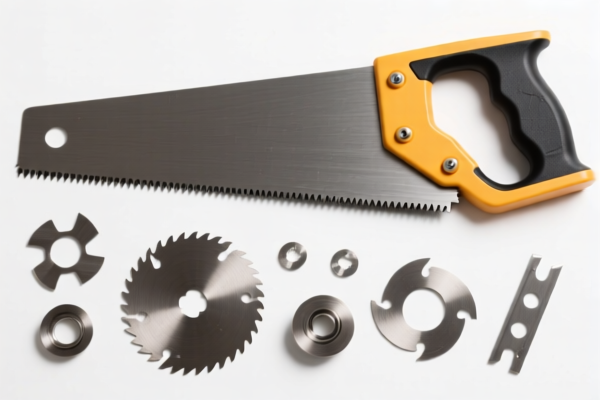
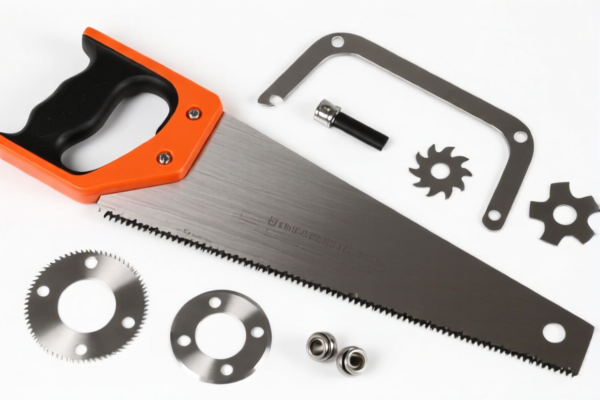
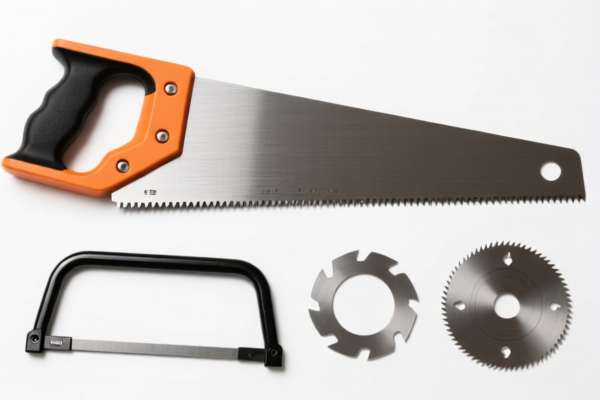
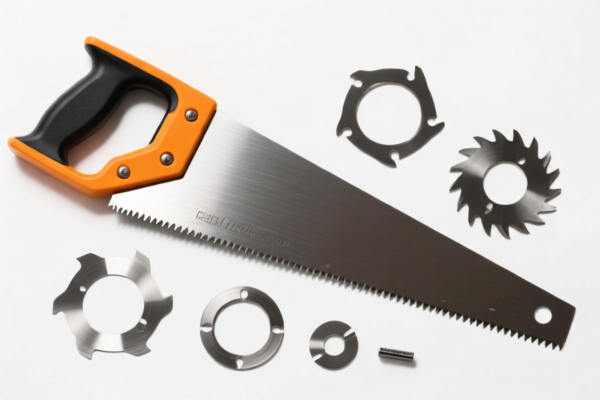
AI Analysis
🪚 Saw Blades & Hand Tool Parts (Precision Classification & Tariff Analysis)
🌐 HS Code Reference & Customs Clearance Guide | 2026 Latest Tariff Resolution | Professional-Level Clearance Strategy
📌 One, Product Definition & Classification: Do You Really Know "Saw Blades" vs. "Tool Parts"?
Saw blades are critical consumables and components in power tools and hand tools. In international trade, the classification depends strictly on whether the item is a standalone cutting tool or a component/attachment of a larger handheld power tool. Misclassification here leads to massive tariff differences (17.5% vs. 35%) and potential customs seizures.
Key Distinctions: 1. Standalone Saw Blades (Cutting Tools): Sold separately as general-purpose cutting implements. These fall under Chapter 82 (Tools). 2. Parts of Handheld Power Tools: Specifically designed for and sold as parts of handheld drills, saws, etc. These fall under Chapter 84 (Machinery).
⚠️ Critical Classification Point:
- If it is a Circular Saw Blade (round shape, for table saws/angle grinders) → 8202.39.00.70
- If it is a General Saw Blade (band, hacksaw, or non-circular) → 8202.99.00.00
- If it is clearly a Part of a Handheld Power Tool (e.g., specific adapter, internal gear, or proprietary part for a handheld device) → 8467.91.01.00 or 8467.99.01.90
📦 Two, HS Code Classification Details (2026 Latest Tariff Authority Cross-Reference)
| HS Code | Product Description | Applicable Scenario | Material/Type Conflict? |
|---|---|---|---|
8202.39.00.70 |
Circular Saw Blades, Other | Round blades for power tools, table saws, wood/metal cutting | ❌ No |
8202.99.00.00 |
Saws and Saw Blades, Other | Band saws, hacksaws, reciprocating blades, general cutting tools | ❌ No |
8202.99.00.00 |
Saw Blades, Other Category | General category fallback for specific saw blades not listed elsewhere | ❌ No |
8467.91.01.00 |
Parts of Handheld Tools; Saw Blades are Components of Chainsaws | Parts specifically for handheld power tools; blades integral to chainsaws | ❌ No |
8467.99.01.90 |
Parts of Hand-held Tools, Other | General parts for handheld tools (non-cutting edges, housings, motors) | ❌ No |
🔍 Key Reminder:
- Circular blades almost always go to 8202.39.00.70.
- If the blade is part of a chainsaw or specifically identified as a part of a handheld power tool in commercial documents, it may fall under 8467.
- Material Conflict: The provided data indicates "No material conflict" for all listed codes, meaning steel/carbide composition does not negatively impact this classification.
💰 Three, 2026 Latest Tariff Rate Detailed Breakdown (Including Additional Taxes & Policy Surcharges)
✅ Applicable Country: United States (US)
✅ Origin: China (CN)
✅ Effective Time: 2025/2026 (Current Trade War Status)
🎯 1. 8467.99.01.90 —— Parts of Hand-held Tools (General Category)
| Item | Content |
|---|---|
| Base Duty | 0.0% (ad valorem) |
| Section 301 Surcharge | +25.0% |
| Section 122 Surcharge | +10.0% |
| Total Tax Rate | 35.0% |
| Tax Calculation | CIF Value × 35.0% |
| De Minimis Exemption | ❌ Not Eligible (High risk of audit) |
| Legal Basis | Section 301: Footnote 9903.88.01 → Section 122: 122 Clause |
📌 Explanation:
- 25% is the standard Section 301 tariff on Chinese hand tool parts.
- 10% is the additional Section 122 tariff (often related to specific enforcement clauses).
- Total 35%: This is a very high burden. Ensure you are not misclassifying a simple blade here if it could be classified differently, though often "parts" attract high duties.
🎯 2. 8467.91.01.00 —— Parts of Handheld Tools; Saw Blades as Components of Chainsaws
| Item | Content |
|---|---|
| Base Duty | 0.0% |
| Section 301 Surcharge | +7.5% |
| Section 122 Surcharge | +10.0% |
| Total Tax Rate | 17.5% |
| Tax Calculation | CIF Value × 17.5% |
| De Minimis Exemption | ❌ Not Eligible |
| Legal Basis | Section 301: Footnote 9903.88.01 → Section 122: 122 Clause |
📌 Explanation:
- Significant Savings: This code offers a 17.5% total rate, which is 17.5% lower than the general parts category.
- Condition: This classification is most appropriate if the saw blade is intrinsically linked to a chainsaw or specific handheld tool parts where the duty rate is preferentially lower.
- Strategy: If your product is a chain saw blade or a specific part of a handheld power tool, prioritize this code over8467.99.
🎯 3. 8202.99.00.00 —— Saws and Saw Blades (Other) / General Saw Blades
| Item | Content |
|---|---|
| Base Duty | 0.0% |
| Section 301 Surcharge | +25.0% |
| Section 122 Surcharge | +10.0% |
| Total Tax Rate | 35.0% |
| Tax Calculation | CIF Value × 35.0% |
| De Minimis Exemption | ❌ Not Eligible |
| Legal Basis | Section 301: Footnote 9903.88.01 → Section 122: 122 Clause |
📌 Explanation:
- This covers non-circular saw blades (e.g., band saw blades, hacksaw blades).
- Despite being a "tool" rather than a "part of machinery," the Section 301 tariffs still apply fully.
🎯 4. 8202.39.00.70 —— Circular Saw Blades, Other
| Item | Content |
|---|---|
| Base Duty | 0.0% |
| Section 301 Surcharge | +25.0% |
| Section 122 Surcharge | +10.0% |
| Total Tax Rate | 35.0% |
| Tax Calculation | CIF Value × 35.0% |
| De Minimis Exemption | ❌ Not Eligible |
| Legal Basis | Section 301: Footnote 9903.88.01 → Section 122: 122 Clause |
📌 Explanation:
- Circular Blades: If it’s a round blade, this is the correct specific code.
- Why 35%?: Even though it’s a specific product, it remains subject to the full Section 301 and 122 surcharges.
🛠️ Four, Customs Clearance Practical Advice (Battle-Tested Pitfall Avoidance Guide)
✅ 1. Document Preparation Checklist (Non-Negotiable)
| Document | Must Provide | Explanation |
|---|---|---|
| ✅ Product Specification Sheet | ✔️ | Must specify: Diameter, Teeth Count, Arbor Size, Material (Carbide/Steel), Application (Wood/Metal). |
| ✅ Commercial Invoice | ✔️ | Clearly state: "Circular Saw Blade" or "Saw Blade for Handheld Tool". Avoid vague terms like "Metal Part". |
| ✅ Photos (Labeled) | ✔️ | Show the blade, teeth type, and any branding/model numbers. |
| ✅ Chain Saw Blade Specific Proof | ✔️ | If claiming 8467.91.01.00, provide proof it’s for a chainsaw or handheld tool part to justify the 17.5% rate. |
| ✅ HS Code Pre-Ruling | ✔️ | Highly recommended for high-volume shipments to lock in the 17.5% vs. 35% distinction. |
✅ 2. Declaration Tips (Key Mantra)
🔥 “Circular is 8202, Part is 8467, Chain is 8467.91, Save 17.5%!”
| Scenario | Correct Declaration | Wrong Declaration | Consequence |
|---|---|---|---|
| Circular Saw Blade | 8202.39.00.70 |
8202.99.00.00 |
Wrong sub-category, possible delay. |
| Band/Hacksaw Blade | 8202.99.00.00 |
8202.39.00.70 |
Misclassification (Shape mismatch). |
| Chainsaw Blade / Tool Part | 8467.91.01.00 |
8467.99.01.90 |
Overpay 17.5% in duties. |
| General Tool Part | 8467.99.01.90 |
8467.91.01.00 |
Underpay duties if not a 8467.91 item → Penalties. |
✅ 3. Special Handling Cases
| Case | Handling Advice |
|---|---|
| Saw Blade Sold with Holder | Declare separately if possible, or as a complete unit. If the holder is the main part, classify by holder. |
| Carbide-Tipped Blades | Still classified under 8202 or 8467. The carbide tip does not change the chapter from Steel/Tool to Mineral. |
| OEM Private Label | Ensure the invoice matches the actual manufacturer’s description. "Generic Part" raises red flags. |
| Small Sample Shipments | Even small samples are subject to the 35% (or 17.5%) duty. De Minimis ($800) may not apply if flagged as commercial or if duty exceeds limits. |
🌍 Five, Global Major Market Clearance Comparison (2026 Latest)
| Country/Region | Recommended HS Code | Tariff (China Origin) | Certification Requirements | Notes |
|---|---|---|---|---|
| 🇺🇸 USA | 8202.39.00.70 / 8467.91.01.00 |
17.5% - 35% | None specific, but safety certs (UL/ETL) help | High Duty Environment. 122 Clause is critical. |
| 🇨🇳 China | 8202.39.00.70 |
5% - 10% | CCC (if applicable) | Lower duties, no Section 301. |
| 🇪🇺 EU | 8202.39.00.70 |
0% - 5% | CE Marking (Safety) | No retaliatory tariffs on these items. |
| 🇦🇺 Australia | 8202.39.00.70 |
5% | RCM | No additional surcharges. |
| 🇯🇵 Japan | 8202.39.00.70 |
0% - 5% | PSE (if electrical) | Generally low tariffs. |
📌 Conclusion:
- USA is the most expensive market due to Section 301 and Section 122 tariffs.
- Cost Saving Opportunity: If your product qualifies as8467.91.01.00(Parts of Handheld Tools/Chainsaws), you save 17.5% compared to the standard 35%.
- Strategy: Ensure your product description in the commercial invoice explicitly supports the lower-duty code if applicable.
📌 Six, Common Errors & Pitfall Guide (Lessons Learned)
❌ Error 1: Classifying all saw blades as 8467.99 (General Parts)
👉 Consequence: If it’s a circular blade, it should be 8202.39. If it’s a chainsaw part, 8467.91 is cheaper. Overpayment or Misclassification Risk.
❌ Error 2: Calling a circular blade a "Hand Tool Part" to avoid Section 301
👉 Consequence: Customs will inspect and reclassify to 8202, imposing the full 35% + penalties. No Savings.
❌ Error 3: Ignoring Section 122 (10%)
👉 Consequence: Underestimating total landed cost. The 10% is significant on high-volume shipments.
❌ Error 4: Vague Description "Metal Blade"
👉 Consequence: Customs delay for additional info. Always specify "Circular Saw Blade" or "Chain Saw Blade".
✅ Correct Practice:
“Circular Saw Blade, 7.25 Inch, Carbide Tipped, 24 Teeth, for Wood Cutting, Model XYZ, Made in China”
🎯 Seven, Conclusion: Professional Declaration, Cost Efficiency!
🎯 Remember the Mantra:
🔹 “Circular is 8202, Part is 8467, Chain is 8467.91, Save 17.5%!”
🔹 “35% is the standard pain, 17.5% is the strategic win. Get the code right, keep the margin clean!”
📌 Pro Tip:
If your saw blades are originating from Vietnam, Mexico, or Thailand, you may qualify for IEEPA Exemptions or lower Section 301 rates.
Recommendation: Apply for an HS Code Pre-Ruling from US Customs for high-value shipments to confirm eligibility for 8467.91.01.00 (17.5%) vs. 8202 (35%).
📣 Immediate Action:
📞 Contact your customs broker + Provide Product Photos + Confirm Chainsaw/Handheld Tool Compatibility
🚀 Ensure Smooth Clearance, Accurate Tariffs, and Maximized Profits!
✨ Professional Clearance Starts with Precise Classification!
💼 Every Percent of Duty Saved is Pure Profit!
Customer Reviews
About HS Code Classification
The Harmonized System (HS) is an internationally standardized nomenclature developed by the World Customs Organization (WCO) to classify traded products. Over 200 countries use the HS system as the basis for customs tariffs, trade statistics, and import/export regulations.
Each HS code follows a hierarchical structure:
- Chapter (2 digits) — Broad category of goods (e.g., Chapter 84: Machinery and Mechanical Appliances)
- Heading (4 digits) — More specific grouping within the chapter
- Subheading (6 digits) — Internationally standardized breakdown, used by all WCO member countries
- National subdivisions (8-10 digits) — Country-specific extensions for further classification, such as US HTSUS 10-digit codes
Correct HS code classification is essential for smooth customs clearance, accurate duty payment, and compliance with trade regulations. Misclassification can lead to customs delays, overpayment of duties, or penalties.
When importing from CN to US, the applicable tariff rates may include:
- Most-Favored-Nation (MFN) rate — The standard duty rate applied to WTO members
- General rate — Applied to countries without trade agreements
- Trade remedy duties — Additional tariffs such as Section 301 (anti-dumping), Section 232 (national security), or countervailing duties
The information provided on this page is for reference purposes only. For official classification, please consult with your local customs authority or a licensed customs broker.