Saw Blade (Non Circular)
CN → USProduct Images
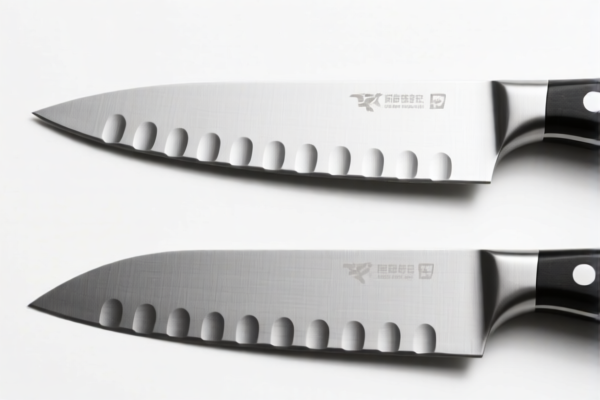
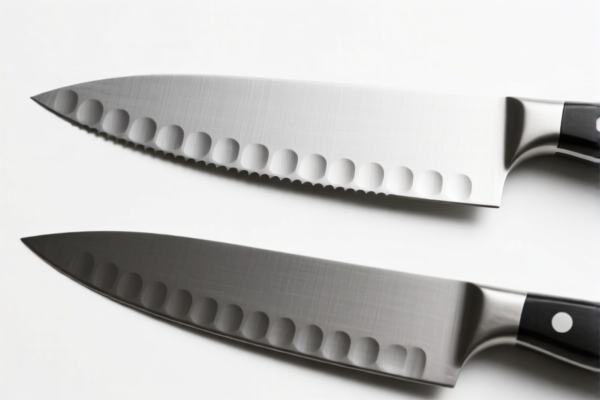
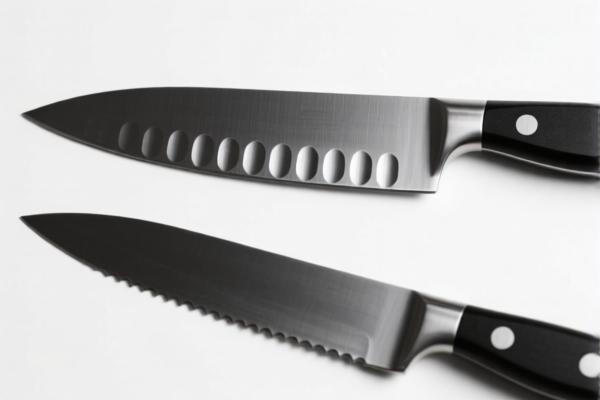
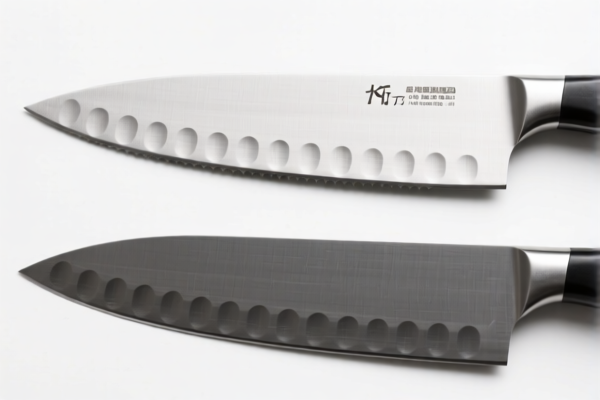
AI Analysis
🪚 Saw Blade (Non-Circular) / 非圆形锯片
🌐 HS Code Reference & Customs Clearance Guide | 2026 Latest Tariff Analysis | Professional-Level Compliance Strategy
📌 Part 1: Product Definition & Classification: Do You Truly Understand "Non-Circular Saw Blades"?
Saw blades are not just "tools"; they are precision-engineered cutting instruments. In international trade, the term "Non-Circular" is the critical classifier. It primarily refers to: 1. Band Saws (带锯条): Continuous loops used for cutting wood, metal, or plastic. 2. Other Contoured Blades: Specialized industrial blades that are not disc-shaped (e.g., circular saws).
⚠️ Key Distinction Point:
- Circular Saw Blades (Disc-shaped) → Generally fall under 82.02.
- Non-Circular Blades (Loops, Strips, Contours) → Generally fall under 82.07 (Tools for Drilling/Boring/Cutting) or 82.02 (specifically 8202.31 for Band Saws).
- Material Matters: Is the blade Base Metal (High-Speed Steel, Carbide-Tipped) or Non-Metal? (Most industrial blades are metal).
📦 Part 2: HS Code Classification Details (2026 Latest Tariff Authoritative Comparison)
| HS Code | Product Description | Application Scenario | Blade Type | Base Material |
|---|---|---|---|---|
| 8202.31.00.00 | Band Saws (Non-circular) | Woodworking, Metal Cutting (Continuous loop) | Band Saw | Base Metal (HSS/Carbide) |
| 8202.39.00.00 | Other Non-Circular Saws | Specialized industrial shapes, strapping blades | Non-Circular | Base Metal |
| 8202.99.90.00 | Other Circular Saws (Excluded but for comparison) | Disc blades for wood/metal | Circular | Base Metal |
| 82.07.19 | Parts of Tools for Drilling/Boring | If the "blade" is a detachable insert without teeth | Non-Identified | Base Metal |
🔍 Critical Reminder:
- 8202.31 is the most common code for Band Saws (Non-circular).
- If it is a strip or loop used for cutting, it MUST be declared as "Band Saw" or "Non-Circular Saw," NOT "Tool Steel" (72.28) or "Machine Part."
- Carbide-Tipped blades (common in wood/metal cutting) still fall under 8202, but the material composition affects duty rates in specific trade agreements.
💰 Part 3: 2026 Latest Tariff Rate Detailed Explanation (Including Surcharges & Policy Add-ons)
✅ Applicable Country: United States (US)
✅ Country of Origin: China (CN)
✅ Effective Time: November 10, 2025 onwards (Subsequent Imports)
🎯 1. 8202.31.00.00 —— Band Saws (Non-Circular)
| Item | Content |
|---|---|
| Base Duty Rate | 0% (ad valorem) |
| USITC Additional Duty | +25% (From USITC Footnote 9903.88.01) |
| IEEPA Additional Duty | +10% (Targeting China/HK products, effective from Nov 10, 2025) |
| Total Tax Rate | 45% |
| Tax Calculation | CIF Value × 45% |
| De Minimis Exemption Eligibility | ❌ Not Eligible (deny_de_minimis) |
| Legal Basis Path | IEEPA:9903.01.25 → IEEPA:9903.01.24 → USITC:8202.31.00.00 → FOOTNOTE:9903.88.01 |
📌 Explanation:
- "USITC 25%": From Section 301 of the U.S. Trade Act (Additional Tariffs);
- "IEEPA 10%": Additional tariffs under the International Emergency Economic Powers Act;
- Total 45%: This is a high tariff bracket. Must be anticipated in advance!
🎯 2. 8202.39.00.00 —— Other Non-Circular Saws
| Item | Content |
|---|---|
| Base Duty Rate | 0% |
| USITC Additional Duty | +25% |
| IEEPA Additional Duty | +10% |
| Total Tax Rate | 45% |
| Tax Calculation | CIF × 45% |
| De Minimis Exemption Eligibility | ❌ Not Eligible |
| Legal Basis Path | IEEPA:9901.25 → IEEPA:9903.01.24 → USITC:8202.39.00.00 → FOOTNOTE:9903.88.01 |
📌 Note:
- Same as above, belongs to "Saw Blade" category;
- Whether it is a metal-cutting band saw or a wood-cutting band saw, if it is Non-Circular, it applies this tariff.
🛠️ Part 4: Customs Clearance Practical Suggestions (Battlefield Avoidance Guide)
✅ 1. Required Documentation Checklist (None Missing)
| Document | Must Provide | Description |
|---|---|---|
| ✅ Product Specification Sheet | ✔️ | Includes dimensions, thickness, width, number of teeth (TPI), material (HSS/Carbide) |
| ✅ Product Photo (Including Label) | ✔️ | Clearly shows model, brand, "Band Saw" or "Non-Circular" text |
| ✅ Commercial Invoice | ✔️ | Must specify "Band Saw Blade" or "Non-Circular Saw" |
| ✅ Packing List | ✔️ | Detail quantity per roll/box, total length, weight |
| ✅ Certificate of Origin (CO) | ✔️ | If non-China origin, apply for preferential rates |
| ✅ Material Composition Statement | ✔️ | Crucial to prove it is "Base Metal" and not "Tool Steel" (different HS) |
✅ 2. Declaration Tips (Key Mantra)
🔥 "Non-Circular = Band Saw, Base Metal, 8202.31!"
| Scenario | Correct Declaration Method | Wrong Practice |
|---|---|---|
| Standard Band Saw (Wood/Metal) | 8202.31.00.00 |
Misreported as "Machine Part" → 45% + Penalty |
| Strapping Band (Cutting Steel Straps) | 8202.39.00.00 (Other Non-Circular) |
Misreported as "Tool Steel" → Different Rate |
| Circular Blade (Disc) | 8202.99 or 8202.31 (if specific) |
Misreported as "Non-Circular" → Delay |
| Carbide-Tipped Band Saw | 8202.31.00.00 |
Misreported as "Carbide Tool" → Wrong HS |
✅ 3. Special Circumstances Handling
| Situation | Handling Suggestion |
|---|---|
| OEM Custom Band Saws | Provide customer order + design drawing, avoid being recognized as "Non-Standard" |
| Blades with Special Coatings | Declare coating material (e.g., TiN), may affect duty in some FTA agreements |
| Carbide-Tipped vs. HSS | Both fall under 8202, but ensure the description matches the teeth material |
| Blades for Industrial Robots | If integrated into a head, may be declared as "Part of Machine," but standalone blades are 8202 |
🌍 Part 5: Global Main Market Clearance Comparison (2026 Latest)
| Country/Region | Recommended HS Code | Tariff | Certification Requirements | Remarks |
|---|---|---|---|---|
| 🇺🇸 United States | 8202.31.00.00 |
45% (China Origin) | No specific FCC/CE for blade | High tariff due to Section 301 + IEEPA |
| 🇨🇳 China | 8202.31.00.00 |
5% | No special certification | Low import tariff for domestic use |
| 🇪🇺 European Union | 8202.31.00.00 |
0% (If CE Compliant) | CE + Machinery Directive | No additional surcharges |
| 🇦🇺 Australia | 8202.31.00.00 |
5% | RCM | No surcharges |
| 🇯🇵 Japan | 8202.31.00.00 |
0% | PSE (if electrical, but blade is passive) | No surcharges |
📌 Conclusion:
- USA is the only market imposing high additional tariffs on Non-Circular Saw Blades;
- China-origin Band Saws face high clearance costs in the US. Consider supply chain adjustment or origin diversification.
📌 Part 6: Common Errors & Avoidance Guide (Blood and Tears Lessons)
❌ Error 1: Declaring "Band Saw Blade" as "Tool Steel" (72.28)
👉 Consequence: Wrong HS Code → 45% vs. 0% difference → Back Tax + Fines!
❌ Error 2: Declaring "Circular Blade" as "Non-Circular"
👉 Consequence: Customs Inspection → Delay + Storage Fees
❌ Error 3: Not specifying "Band Saw" in the description
👉 Consequence: Customs cannot distinguish from "Other Non-Circular Saws" → Audit Risk
❌ Error 4: Using "Saw Blade" alone without specifying Shape
👉 Consequence: Ambiguous declaration → Customs Reclassification
✅ Correct Practice:
"Metal Cutting Band Saw Blade, HSS, 12ft Length, 2 TPI, Non-Circular, Model XYZ, HS Code 8202.31.00.00"
🎯 Part 7: Conclusion: Professional Declaration, Save Time, Reduce Costs!
🎯 Remember the Mantra:
🔹 "Non-Circular = 8202.31, Base Metal, 45% Total!"
🔹 "HS Code Determines Destiny, 25% Difference, Declaration One Step, Thousands in Tax!"
📌 Tip:
If your saw blade is originated from Vietnam, Mexico, Thailand, or Malaysia, you can apply for IEEPA Exemption, and the tariff is only 0%~5%;
Suggest Apply for Advance Ruling in advance to avoid clearance risks.
📣 Immediate Action:
📞 Contact a Professional Customs Broker + Provide Product Photo + Apply for HS Code Advance Ruling
🚀 Let your saw blade, Smooth Clearance, Efficient Export, Profit Doubling!
✨ Professional Clearance, Starts with Precise Classification!
💼 Every Cent of Your Cost Deserves to Be Calculated Precisely!
Customer Reviews
About HS Code Classification
The Harmonized System (HS) is an internationally standardized nomenclature developed by the World Customs Organization (WCO) to classify traded products. Over 200 countries use the HS system as the basis for customs tariffs, trade statistics, and import/export regulations.
Each HS code follows a hierarchical structure:
- Chapter (2 digits) — Broad category of goods (e.g., Chapter 84: Machinery and Mechanical Appliances)
- Heading (4 digits) — More specific grouping within the chapter
- Subheading (6 digits) — Internationally standardized breakdown, used by all WCO member countries
- National subdivisions (8-10 digits) — Country-specific extensions for further classification, such as US HTSUS 10-digit codes
Correct HS code classification is essential for smooth customs clearance, accurate duty payment, and compliance with trade regulations. Misclassification can lead to customs delays, overpayment of duties, or penalties.
When importing from CN to US, the applicable tariff rates may include:
- Most-Favored-Nation (MFN) rate — The standard duty rate applied to WTO members
- General rate — Applied to countries without trade agreements
- Trade remedy duties — Additional tariffs such as Section 301 (anti-dumping), Section 232 (national security), or countervailing duties
The information provided on this page is for reference purposes only. For official classification, please consult with your local customs authority or a licensed customs broker.