Saw Blade Hand Tool Part
CN → US| HS Code | Tariff Rate | Origin | Destination | Doc |
|---|---|---|---|---|
| 8202310000 | 35.0% | CN | US | Official Doc |
| 8466939885 | 39.7% | CN | US | Official Doc |
| 8202913000 | 35.0% | CN | US | Official Doc |
Product Images
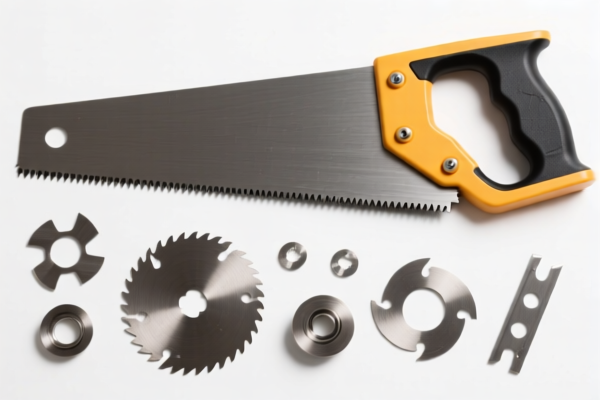
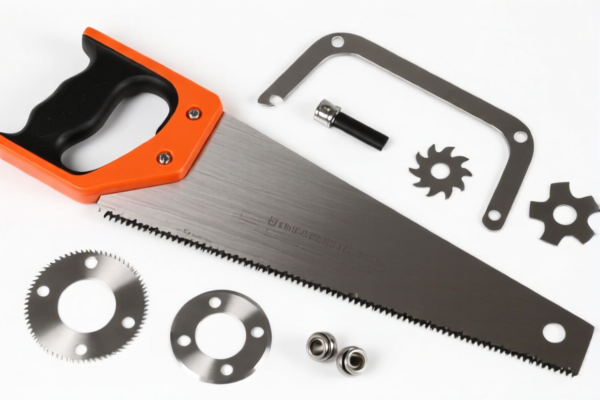
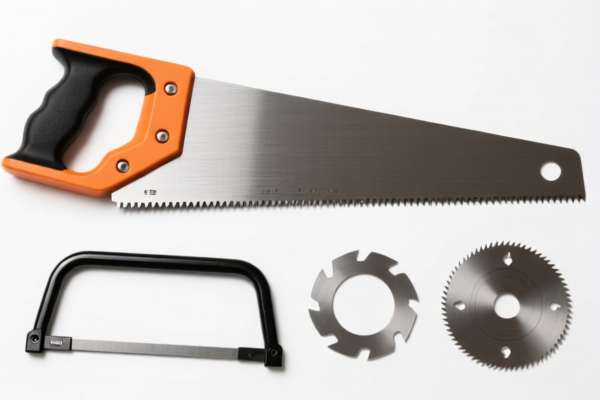
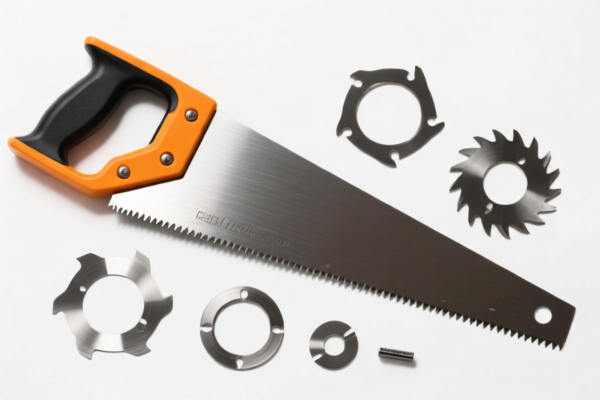
AI Analysis
🪚 Saw Blade Hand Tool Part (Saw Blade)
🌐 HS Code Reference & Clearance Guide | 2026 Latest Tariff Analysis | Professional Custom Clearance Strategy
📌 I. Product Definition & Classification: What Exactly is a "Saw Blade Hand Tool Part"?
A "Saw Blade Hand Tool Part" typically refers to replacement blades or circular saw blades designed for manual handheld power tools (such as handheld circular saws, jigsaws, or reciprocating saws). In international trade, the classification depends heavily on the material of the cutting part and the functional role of the item.
1. Saw Blades (Finished Articles):
The complete blade assembly, where the working part is made of steel (e.g., tungsten carbide tipped or high-speed steel). These are classified as finished sawing tools.
2. Machine Tool Accessories (Spare Parts):
If the item is explicitly marketed or structured as an attachment/fixture for machine tools, or if it lacks the distinct identity of a standalone saw blade but serves as a component for machinery, it may fall under machine accessories.
⚠️ Key Distinction:
- If the item is a complete saw blade with teeth/shaping for cutting wood/metal → Chapter 82 (Tools).
- If the item is considered a part/attachment for a machine tool (e.g., specialized holder or non-standard component) → Chapter 84 (Machinery Parts).
- Material Inference: Based on industry standards, saw blades for hand tools are almost exclusively made of steel or steel alloys.
📦 II. HS Code Classification Details (2026 Latest Tariff Authority Comparison)
| HS Code | Product Description | Application Scenario | Material Inference |
|---|---|---|---|
8202.31.00.00 |
Saw blades, circular (whether or not fitted with teeth or cutting devices); cutting discs | Circular saw blades for hand-held power tools; working part inferred as steel-based. | ✅ Steel-based (Fits classification requirements) |
8466.93.98.85 |
Parts and accessories suitable for use solely or principally with the machines of headings 8456 to 8465 | Classified as a machine tool accessory/spare part. Typically made of metal. | ✅ Metal/Metallic (Accessory nature) |
8202.91.30.00 |
Saw blades and parts thereof, circular | Covers various saw blades including steel saw strips. Matches the function and form of blades explained in classification notes. | ✅ Metal/Metallic (Consistent with steel saw blades) |
🔍 Key Reminder:
- 8202.31.00.00 and 8202.91.30.00 treat the item as a sawing tool itself. The summary infers the working part is steel, which aligns with standard hand tool saw blades. - 8466.93.98.85 treats the item as a machine accessory. This is often a fallback or alternative classification if the blade is considered a non-standard attachment or if customs authorities view it primarily as a spare part for machinery rather than a tool.
💰 III. 2026 Latest Tariff Rate Breakdown (Including Additional Taxes & Policy Add-ons)
✅ Applicable Country: United States (US)
✅ Origin: China (CN)
✅ Effective Date: Post-2025 (Including subsequent imports)
🎯 1. 8202.31.00.00 —— Circular Saw Blades (Steel-based)
| Item | Content |
|---|---|
| Base Tariff Rate | 0.0% (ad valorem) |
| USITC Additional Tariff | +25.0% (From USITC Footnote 9903.88.01 / Section 301) |
| IEEPA Additional Tariff | +10.0% (For products from China/HK, effective from Nov 10, 2025) |
| Total Tax Rate | 35.0% |
| Tax Calculation | CIF Value × 35% |
| De Minimis Eligibility | ❌ Not Eligible (deny_de_minimis) |
| Legal Basis Path | IEEPA:9903.01.25 → IEEPA:9903.01.24 → USITC:8202.31.00.00 → FOOTNOTE:9903.88.01 |
📌 Explanation:
- The 25% is the standard Section 301 tariff applied to many steel tools and machinery parts. - The 10% is the additional IEEPA tariff specifically targeting Chinese-origin goods. - Total 35% is a significant cost factor. Must be factored into landed cost calculations.
🎯 2. 8466.93.98.85 —— Parts and Accessories for Machine Tools
| Item | Content |
|---|---|
| Base Tariff Rate | 4.7% (ad valorem) |
| USITC Additional Tariff | +25.0% (From USITC Footnote 9903.88.01 / Section 301) |
| IEEPA Additional Tariff | +10.0% (For products from China/HK, effective from Nov 10, 2025) |
| Total Tax Rate | 39.7% |
| Tax Calculation | CIF Value × 39.7% |
| De Minimis Eligibility | ❌ Not Eligible (deny_de_minimis) |
| Legal Basis Path | IEEPA:9903.01.25 → IEEPA:9903.01.24 → USITC:8466.93.98.85 → FOOTNOTE:9903.88.01 |
📌 Note:
- Although the base rate is higher (4.7% vs 0%), the total rate is also high (39.7%). - This classification assumes the item is treated strictly as a machine accessory rather than a consumer tool. - Customs may scrutinize the "solely or principally for use" criteria for this heading.
🎯 3. 8202.91.30.00 —— Other Saw Blades (Steel)
| Item | Content |
|---|---|
| Base Tariff Rate | 0.0% (ad valorem) |
| USITC Additional Tariff | +25.0% (From USITC Footnote 9903.88.01 / Section 301) |
| IEEPA Additional Tariff | +10.0% (For products from China/HK, effective from Nov 10, 2025) |
| Total Tax Rate | 35.0% |
| Tax Calculation | CIF Value × 35% |
| De Minimis Eligibility | ❌ Not Eligible (deny_de_minimis) |
| Legal Basis Path | IEEPA:9903.01.25 → IEEPA:9903.01.24 → USITC:8202.91.30.00 → FOOTNOTE:9903.88.01 |
📌 Attention:
- This code covers a broader range of saw blades, including steel saw strips. - The summary confirms that the product name and classification explanations are fully consistent in terms of use and form, inferring a metallic (steel) composition. - The tax structure mirrors8202.31.00.00(0% base + 25% + 10% = 35%).
🛠️ IV. Clearance Practical Advice (Real-World Pitfall Guide)
✅ 1. Preparation Checklist (Indispensable)
| Document | Must Provide | Description |
|---|---|---|
| ✅ Product Specification Sheet | ✔️ | Material composition (e.g., "Steel alloy teeth"), dimensions, tooth count, arbor size. |
| ✅ Product Photos (Labeled) | ✔️ | Clear view of teeth, brand, model number. |
| ✅ Commercial Invoice | ✔️ | Description should specify "Saw Blade for Handheld Power Tool" or "Machine Tool Accessory". |
| ✅ Packing List | ✔️ | Indicate quantity and packaging type. |
| ✅ Certificate of Origin | ✔️ | If non-Chinese origin, to potentially claim preferential rates (though limited for US/China). |
✅ 2. Declaration Tips (Key Mantra)
🔥 “Material Matters, Function Defines, Label Precisely, Avoid High Rates!”
| Scenario | Correct Declaration Method | Error to Avoid |
|---|---|---|
| Standard Circular Saw Blade | 8202.31.00.00 or 8202.91.30.00 |
Misdeclaring as general hardware → 25% (No IEEPA? Risky) |
| Blade as a Machine Accessory | 8466.93.98.85 |
Misdeclaring as tool → 35% (Higher base rate) |
| Non-Steel Blade (e.g., Diamond) | Different Chapter (90 or 8202.20) | Misdeclaring as steel saw blade → Rejection/Fine |
✅ 3. Special Circumstances Handling
| Situation | Handling Advice |
|---|---|
| Diamond/Tungsten Carbide Tips | Ensure description highlights "cutting devices" if applicable, but 8202.31 typically covers TCT (Tungsten Carbide Tipped) blades. |
| OEM Private Label | Provide authorization letters if branded, but HS code depends on technical specs. |
| Bundled Sales | If sold with a saw, the blade might be considered an accessory to the main machine (Chapter 84), but if sold separately as a replacement, Chapter 82 is stronger. |
🌍 V. Global Market Clearance Comparison (2026 Latest)
| Country/Region | Recommended HS Code | Tariff (China Origin) | Certification | Notes |
|---|---|---|---|---|
| 🇺🇸 USA | 8202.31.00.00 / 8202.91.30.00 |
35% (Base 0% + 25% + 10%) | No specific CE/FCC | High tariff due to Section 301 + IEEPA |
| 🇨🇳 China | 8202.31.00.00 |
~5-10% | N/A | Lower entry cost |
| 🇪🇺 EU | 8202.31.00 |
0-2.7% | CE (if under machinery directive) | No US-style additional tariffs |
| 🇬🇧 UK | 8202.31.00 |
0-4.7% | UKCA | Post-Brexit rules apply |
| 🇦🇺 Australia | 8202.31.00 |
5% | No specific certs | Competitive |
📌 Conclusion:
- The US market is the most challenging due to the cumulative 35% tariff. - Europe and other regions offer significantly lower or zero base tariffs, but compliance with local safety standards (CE/UKCA) is critical.
📌 VI. Common Errors & Pitfall Guide (Lessons Learned)
❌ Error 1: Describing the item simply as "Metal Part"
👉 Consequence: Customs may classify under general machinery parts (8466), leading to a 39.7% rate instead of 35%, or worse, triggering additional scrutiny.
❌ Error 2: Ignoring the "Steel" Material Inference
👉 Consequence: If the blade is diamond-tipped, it might still fall under 8202.31, but if it's ceramic or other non-metal, classification changes. Consistency in description is key.
❌ Error 3: Assuming De Minimis Applies
👉 Consequence: Strictly forbidden for these HS codes under current US rules. Do not expect low-value shipment exemptions.
❌ Error 4: Mixing Hand Tool Blades with Table Saw Blades
👉 Consequence: While similar, table saw blades might be classified differently if deemed "machine accessories." Be precise about the intended tool (Handheld vs. Stationary).
✅ Correct Practice:
"Circular Saw Blade, Tungsten Carbide Tipped, 10-inch Diameter, for Handheld Circular Saw, Model XYZ, Steel Body"
🎯 VII. Conclusion: Professional Declaration, Time-Saving, Cost-Efficient!
🎯 Remember the Mantra:
🔹 "Base 0%, Add 25%, Plus 10%, Total 35% for Steel Blades!"
🔹 "Machine Parts Base 4.7%, Add 35%, Total 39.7%!"
🔹 "No De Minimis! Declare Precisely!"
📌 Pro Tip:
If your saw blades are sourced from Vietnam, Mexico, or Thailand, you might be eligible for IEEPA exemptions or lower Section 301 rates.
Recommend applying for an Advance Ruling with US Customs (CBP) to confirm the exact HS code and tariff liability before shipment.
📣 Immediate Action:
📞 Consult a Professional Customs Broker + Provide Product Specs + Apply for HS Code Advance Ruling
🚀 Ensure your Saw Blades, smoothly cleared, efficiently exported, profit maximized!
✨ Professional Clearance Starts with Accurate Classification!
💼 Every Cent of Your Cost Deserves Precise Calculation!
Customer Reviews
About HS Code Classification
The Harmonized System (HS) is an internationally standardized nomenclature developed by the World Customs Organization (WCO) to classify traded products. Over 200 countries use the HS system as the basis for customs tariffs, trade statistics, and import/export regulations.
Each HS code follows a hierarchical structure:
- Chapter (2 digits) — Broad category of goods (e.g., Chapter 84: Machinery and Mechanical Appliances)
- Heading (4 digits) — More specific grouping within the chapter
- Subheading (6 digits) — Internationally standardized breakdown, used by all WCO member countries
- National subdivisions (8-10 digits) — Country-specific extensions for further classification, such as US HTSUS 10-digit codes
Correct HS code classification is essential for smooth customs clearance, accurate duty payment, and compliance with trade regulations. Misclassification can lead to customs delays, overpayment of duties, or penalties.
When importing from CN to US, the applicable tariff rates may include:
- Most-Favored-Nation (MFN) rate — The standard duty rate applied to WTO members
- General rate — Applied to countries without trade agreements
- Trade remedy duties — Additional tariffs such as Section 301 (anti-dumping), Section 232 (national security), or countervailing duties
The information provided on this page is for reference purposes only. For official classification, please consult with your local customs authority or a licensed customs broker.