Sawn, Cut or Planed Wood
CN → US| HS Code | Tariff Rate | Origin | Destination | Doc |
|---|---|---|---|---|
| 4407110001 | 35.0% | CN | US | Official Doc |
| 4407190055 | 35.0% | CN | US | Official Doc |
| 4407190055 | 35.0% | CN | US | Official Doc |
Product Images
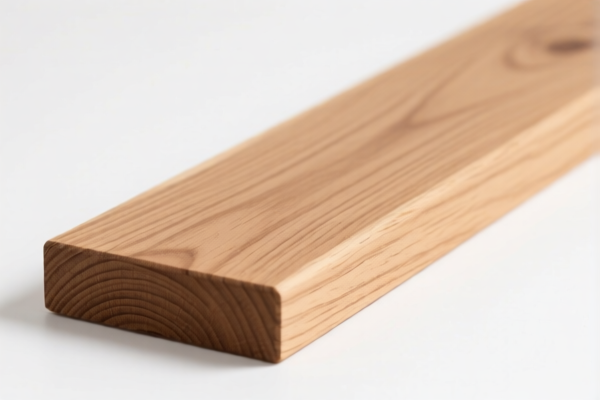
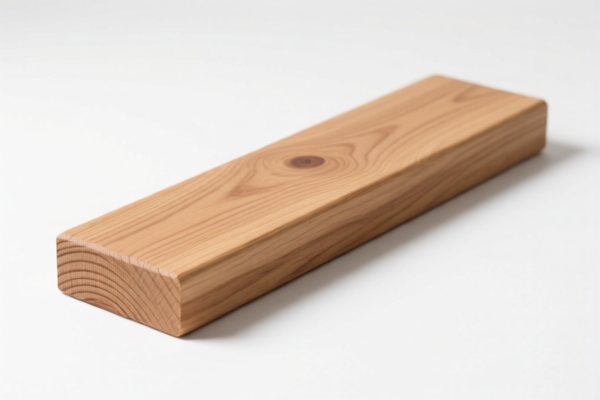
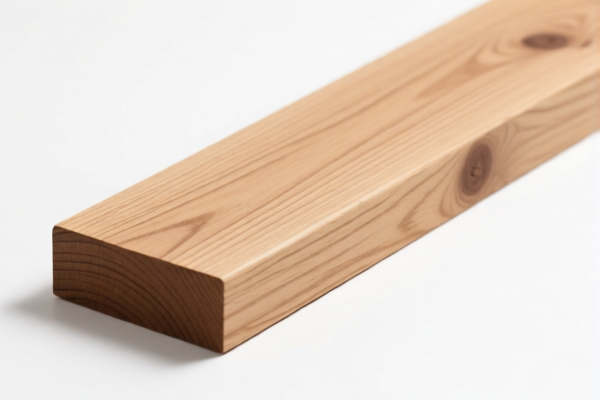
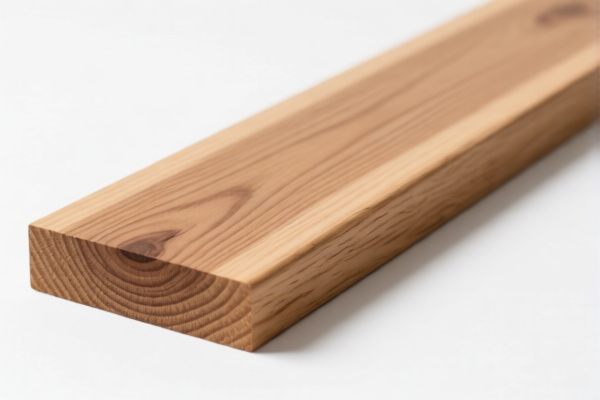
AI Analysis
🪵 Sawn, Cut, or Planed Wood (Timber Products)
🌐 HS Code Reference & Customs Clearance Guide | 2026 Latest Tariff Analysis | Strategic Wood Trade Compliance
📌 I. Product Definition: What Exactly Is "Sawn Wood"?
Sawn, cut, or planed wood refers to timber that has been processed mechanically to achieve specific dimensions and surface finishes, but has not been further processed into veneers, plywood, or engineered wood products. In international trade, precision in classification is critical because this category sits at the intersection of forestry exports and manufactured materials, attracting significant attention from trade policies.
Key Distinctions: * Sawn (Machined Lengthwise): Timber cut along the grain (e.g., planks, boards, beams). * Planed (Surface Smoothed): Sawn timber that has been smoothed on one or more sides. * Matched/Patterned: Timber cut with specific profiles (tongue-and-groove, chamfered) for assembly.
⚠️ Critical Classification Point:
- If the wood is merely raw logs (unprocessed) → Not included in this guide (Usually HS 4403/4406).
- If the wood is sliced into thin sheets (Veneer) → Excluded (Usually HS 4408).
- If the wood is compressed/engineered (Plywood/MDF) → Excluded (Usually HS 4412/4411).
- This guide covers only: Solid wood processed by sawing, planing, or profiling.
📦 II. HS Code Classification Details (2026 Latest Tariff Alignment)
Based on the provided data, the classification focuses on two primary subheadings under Chapter 44 (Wood and Articles of Wood). Both codes attract the same high tariff burden due to US trade policies.
| HS Code | Product Description | Applicable Scenario | Key Characteristics |
|---|---|---|---|
| 4407.11.00.01 | Sawn/Planed Wood; Species-Specific | Hardwoods (e.g., Oak, Maple, Walnut) matched to specific taxonomic definitions | "Matching morphological characteristics and major material categories." Typically applies to well-known hardwood species defined in HS subheadings starting with 4407.1X. |
| 4407.19.00.55 | Sawn/Planed Wood; Other Hardwoods | The "Catch-all" or residual category for hardwoods not explicitly listed elsewhere | "Reasonable inference under wood processing categories." Used when the specific wood species does not fit into the more granular 4407.11–18 range. Acts as the residual code for other hardwoods. |
🔍 Important Note:
- Both codes fall under Chapter 44, Heading 4407: "Wood sawn or chipped lengthwise, sliced or peeled, whether or not planed, sanded, finger-jointed, jointed at the ends, or otherwise combined, of a thickness exceeding 6 mm."
- The distinction lies in the specificity of the wood species. If your wood is a common hardwood with a specific subheading (like 4407.11 for Oak), use 4407.11.00.01. If it is a less common hardwood or doesn't fit the specific subheadings, it falls into the residual category under 4407.19.00.55.
💰 III. 2026 Tariff Rate Breakdown (Including Surcharge Policies)
✅ Applicable Country: United States (US)
✅ Country of Origin: China (CN) (Implied by "Section 301" and "122" references in tax detail)
✅ Effective Date: Current trade policy regime (Section 301 & IEEPA provisions active)
🎯 1. 4407.11.00.01 —— Sawn/Planed Wood (Specific Hardwood)
| Item | Detail |
|---|---|
| Base Duty Rate | 0.0% (Ad Valorem under normal MFN treatment) |
| Section 301 Surcharge | +25.0% (USITC Footnote 9903.88.01 / Section 301 Enlistment) |
| Section 122 / IEEPA Surcharge | +10.0% (Additional tariff under Section 122 or IEEPA authorities targeting specific Chinese imports) |
| Total Effective Tax Rate | 35.0% |
| Tax Calculation | CIF Value × 35% |
| De Minimis Exemption | ❌ Not Applicable (Deny de minimis for Section 301 goods) |
| Legal Basis Path | USITC:4407.11.00.01 → Section 301: Footnote 9903.88.01 → Section 122/IEEPA: +10% |
📌 Explanation:
- The 25% Section 301 tariff is the primary duty added to a wide range of Chinese wood products.
- The additional 10% (labeled as "122 Clause" in data) represents further administrative or emergency trade measures.
- Total 35% significantly impacts profit margins for lumber exporters.
🎯 2. 4407.19.00.55 —— Sawn/Planed Wood (Other/Residual Hardwood)
| Item | Detail |
|---|---|
| Base Duty Rate | 0.0% |
| Section 301 Surcharge | +25.0% |
| Section 122 / IEEPA Surcharge | +10.0% |
| Total Effective Tax Rate | 35.0% |
| Tax Calculation | CIF Value × 35% |
| De Minimis Exemption | ❌ Not Applicable |
| Legal Basis Path | USITC:4407.19.00.55 → Section 301: Footnote 9903.88.01 → Section 122/IEEPA: +10% |
📌 Note:
- Despite being a "residual" code, 4407.19.00.55 is not a lower-tax loophole. It is subject to the exact same 35% total tariff as specific hardwoods.
- Customs authorities scrutinize "Other" codes closely. Ensure your species declaration is accurate to avoid misclassification penalties.
🛠️ IV. Customs Clearance Practical Advice (Risk Avoidance Guide)
✅ 1. Documentation Checklist (Essential for Smooth Clearance)
| Document | Required? | Description |
|---|---|---|
| ✅ Commercial Invoice | ✔️ | Must clearly state "Sawn/Planed Wood," species, dimensions, and treatment (e.g., heat-treated, kiln-dried). |
| ✅ Packing List | ✔️ | Detail weight, volume (CBM), and number of packages. |
| ✅ Phytosanitary Certificate | ✔️ | Critical. Issued by the country of origin’s agricultural authority to prove freedom from pests/diseases. |
| ✅ Fumigation/Heat Treatment Certificate | ✔️ | Proof of ISPM 15 compliance (if wood packaging is involved) or direct treatment of the wood itself. |
| ✅ Certificate of Origin | ✔️ | To establish origin for tariff calculation. |
| ✅ Species Identification Document | ✔️ | Botanical names (Latin) must match HS code descriptions. |
✅ 2. Declaration Strategy (Key Mnemonics)
🔥 “Species First, Treatment Clear, Dimension Exact, Tariff Avoidable?”
| Scenario | Correct Declaration | Wrong Practice |
|---|---|---|
| Hardwood Planks | 4407.11.00.01 or 4407.19.00.55 + Latin Name |
Vague description "Wood for Furniture" |
| Softwood (Pine/Fir) | Note: Data does not cover Softwood (4407.2X). If declared as hardwood, risk of penalty. | Misclassifying Softwood as Hardwood |
| Unplaned Rough Sawn | Specify "Unplaned" in description | Claiming "Planed" to simplify |
| Heat-Treated Wood | Explicitly state "HT" (Heat Treated) | Omitting treatment status → Quarantine hold |
📌 Critical Reminder:
- Do NOT use "De Minimis" (Section 321) for shipments valued under $800 if they are subject to Section 301. CBP has increased scrutiny on this.
- Ensure the Latin name of the wood species is included. Customs may reclassify if the common name is ambiguous.
✅ 3. Special Cases & Handling
| Scenario | Handling Advice |
|---|---|
| Mixed Species Containers | Declare each species separately. If one species triggers a higher tariff or restriction, the whole shipment may be delayed. |
| Wood Packaging (Pallets) | Must be ISPM 15 compliant (marked with IPPC logo). Non-compliant pallets lead to rejection or fumigation charges. |
| Antique Wood | If pre-1975, may require CITES documentation if endangered species are involved. |
| Reconstituted Wood | If bonded/veneered, it is not sawn wood. Use HS 4412 (Plywood). Misclassification leads to 35% tax vs. potentially lower/hook duties for plywood. |
🌍 V. Global Market Comparison (2026 Overview)
| Region | Recommended HS Code | Base Tariff | Notes |
|---|---|---|---|
| 🇺🇸 United States | 4407.11.00.01 / 4407.19.00.55 |
35% (Total) | Includes 25% Sec 301 + 10% Sec 122. High cost for Chinese origin. |
| 🇨🇳 China | 4407.11/19 |
0% - 5% | China often exports these goods. Import duties into China vary by species. |
| 🇪🇺 European Union | 4407.11/19 |
0% - 10% | No Section 301 equivalent. May require EUDR (Deforestation Regulation) compliance by 2026. |
| 🇨🇦 Canada | 4407.11/19 |
0% (CUSMA) | Preferential duty if originating in Canada/Mexico/US. |
📌 Conclusion:
- US Market: The 35% total tariff is a significant barrier. Consider supply chain diversification (e.g., sourcing from Southeast Asia or Americas) if possible, though many Asian countries also face Section 301 duties if processed with Chinese materials.
- Compliance is Key: Proper documentation (Phytosanitary, Species ID) is as important as tariff calculation.
📌 VI. Common Errors & Pitfalls (Lessons Learned)
❌ Error 1: Using generic term "Wood" instead of Species Name
👉 Consequence: Customs holds shipment for identification → Demurrage charges + Delays.
❌ Error 2: Misclassifying Softwood (Pine) as Hardwood (Oak)
👉 Consequence: HS Code mismatch → Penalty + Potential audit. Note: The provided data only covers Hardwood categories (4407.1X).
❌ Error 3: Ignoring Phytosanitary Requirements
👉 Consequence: Shipment rejected or destroyed due to pest risk.
❌ Error 4: Assuming "Planed" automatically changes HS Code
👉 Consequence: Planing is a standard processing step under 4407. It does not change the heading unless it becomes veneer (4408) or furniture part.
✅ Correct Practice:
"Quercus Robur (European Oak) Sawn Planks, Planed on 4 Sides, Kiln Dried, HT Treatment, Dimensions: 2.4m x 0.2m x 0.05m, HS: 4407.11.00.01"
🎯 VII. Conclusion: Professional Clearance, Cost Control, Efficiency
🎯 Remember the Golden Rule:
🔹 "Species Specificity is King; Documentation is Queen; Tariff is the Cost."
🔹 "35% Total Tax is Non-Negotiable for China-Origin Wood; Plan Logistics Accordingly."
🔹 "Phytosanitary Cert = Gate Pass; Without It, No Entry."
📌 Pro Tip:
If you are exporting from China, consult a licensed customs broker to verify if your specific wood species falls under 4407.11.00.01 or 4407.19.00.55. Small errors in species identification can lead to audits. Consider Advance Rulings from CBP to lock in the HS Code and tax rate.
📣 Immediate Action:
📞 Contact your freight forwarder + Prepare Phytosanitary Certificate + Verify Latin Species Name
🚀 Ensure smooth customs clearance, avoid 35% surprises, and maximize your timber trade profit!
✨ Precision Classification Starts Here!
💼 Your wood is valuable; your compliance must be flawless!
Customer Reviews
About HS Code Classification
The Harmonized System (HS) is an internationally standardized nomenclature developed by the World Customs Organization (WCO) to classify traded products. Over 200 countries use the HS system as the basis for customs tariffs, trade statistics, and import/export regulations.
Each HS code follows a hierarchical structure:
- Chapter (2 digits) — Broad category of goods (e.g., Chapter 84: Machinery and Mechanical Appliances)
- Heading (4 digits) — More specific grouping within the chapter
- Subheading (6 digits) — Internationally standardized breakdown, used by all WCO member countries
- National subdivisions (8-10 digits) — Country-specific extensions for further classification, such as US HTSUS 10-digit codes
Correct HS code classification is essential for smooth customs clearance, accurate duty payment, and compliance with trade regulations. Misclassification can lead to customs delays, overpayment of duties, or penalties.
When importing from CN to US, the applicable tariff rates may include:
- Most-Favored-Nation (MFN) rate — The standard duty rate applied to WTO members
- General rate — Applied to countries without trade agreements
- Trade remedy duties — Additional tariffs such as Section 301 (anti-dumping), Section 232 (national security), or countervailing duties
The information provided on this page is for reference purposes only. For official classification, please consult with your local customs authority or a licensed customs broker.