Sawn, Planed, or Shaped Wood
CN → US| HS Code | Tariff Rate | Origin | Destination | Doc |
|---|---|---|---|---|
| 4407110001 | 35.0% | CN | US | Official Doc |
| 4407190055 | 35.0% | CN | US | Official Doc |
Product Images
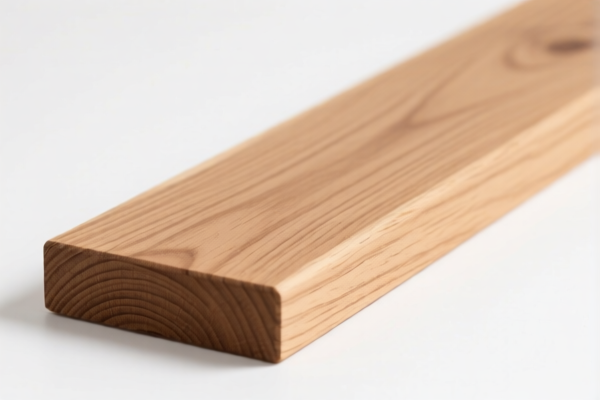
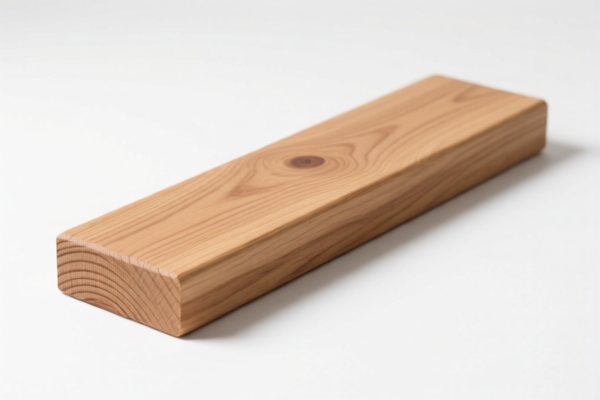
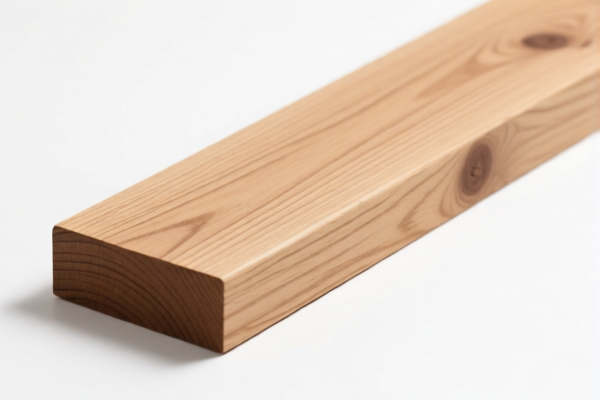
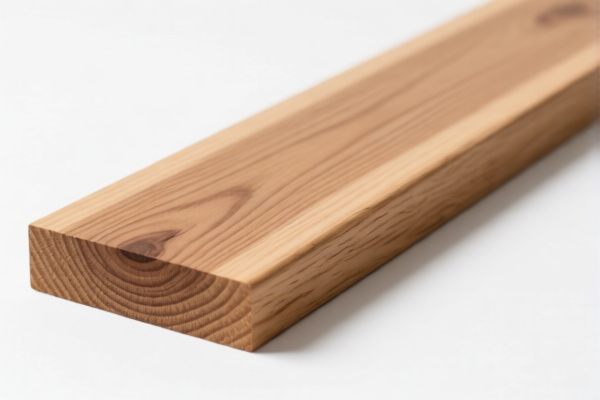
AI Analysis
🌲 Sawn, Planed, or Shaped Wood: The Ultimate Guide to HS Code Classification & US Customs Clearance (2026)
🌐 HS Code Reference & Clearance Guide | 2026 Latest Tariff Analysis | Professional Entry Strategies
📌 I. Product Definition & Classification: Do You Really Understand "Wood"?
"Sawn, Planed, or Shaped Wood" is a broad category in international trade, referring to timber processed longitudinally. In the US Harmonized Tariff Schedule (HTSUS), this falls primarily under Chapter 44 (Wood and articles of wood; wood charcoal).
However, not all wood is created equal. The critical distinction lies in: 1. Tree Species: Coniferous (Softwood) vs. Non-Coniferous (Hardwood). 2. Processing Level: Raw sawn vs. Planed/Sanded/Finger-jointed. 3. Dimensions: Thickness >6mm is key for Chapter 44 Section V.
⚠️ Critical Distinction: - If the wood is finger-jointed (pieces joined end-to-end), it triggers specific subheadings like
4407.11. - If the wood is rough sawn (untreated, no planing), it falls under "Other" categories like4407.19. - Thickness Rule: Only wood with a thickness exceeding 6 mm is classified under HS Code4407. If ≤6mm, it may fall under4408(Veneer sheets) or4409(Wood continuous fashioned along its length).
📦 II. HS Code Classification Details (2026 Latest Tariff Reference)
Based on the provided data, here are the specific classifications for Coniferous Wood (Softwood) with thickness > 6mm:
| HS Code | Product Description | Application Scenario | Processing Level |
|---|---|---|---|
4407.11.00.01 |
Coniferous: Of pine (Pinus spp.): Finger-jointed | Pine lumber used in construction, furniture, or DIY projects where end-joints are present | ✅ Finger-jointed ✅ Planed/Sanded/End-joined |
4407.19.00.55 |
Coniferous: Other: Douglas-fir (Pseudotsuga menziesii): Rough: Having a minimum dimension 5.1 cm or more but less than 12.7 cm | Rough-sawn Douglas-fir dimensional lumber for framing or construction | ❌ Not treated ✅ Rough Sawn ✅ Dimension: 5.1cm–12.7cm |
🔍 Key Notes: -
4407.11.00.01: Specifically targets Pine (Pinus spp.) that has been finger-jointed. This is a higher-value processing step than simple sawing. -4407.19.00.55: Specifically targets Douglas-fir (Pseudotsuga menziesii) that is Rough (unplaned) and falls within a specific size range (5.1cm–12.7cm minimum dimension). - Both codes apply to wood exceeding 6mm in thickness.
💰 III. 2026 Latest Tariff Rate Breakdown (Including Additional Taxes)
✅ Applicable Country: United States (US) ✅ Origin: China (CN) ✅ Effective Time: November 10, 2025 (and subsequent imports)
🎯 1. 4407.11.00.01 —— Coniferous Pine (Finger-Jointed)
| Item | Detail |
|---|---|
| Base Tariff | 0.0% (Ad Valorem) |
| Additional Tariff (Section 301) | +25.0% |
| Total Tariff Rate | 25.0% |
| Tax Calculation | CIF Value × 25% |
| De Minimis Exemption | ❌ Not Eligible (High risk of seizure if declared under $800) |
| Legal Basis Path | USITC:4407.11.00.01 → Footnote 9903.88.01 (Section 301) |
📌 Explanation: - Pine is a major export commodity from China. - Despite the 0% base rate, the 25% Section 301 tariff applies due to US trade policies targeting Chinese timber products. - Finger-jointed processing does not exempt the product from additional duties.
🎯 2. 4407.19.00.55 —— Coniferous Douglas-fir (Rough)
| Item | Detail |
|---|---|
| Base Tariff | 0.0% (Ad Valorem) |
| Additional Tariff (Section 301) | +25.0% |
| Total Tariff Rate | 25.0% |
| Tax Calculation | CIF Value × 25% |
| De Minimis Exemption | ❌ Not Eligible |
| Legal Basis Path | USITC:4407.19.00.55 → Footnote 9903.88.01 (Section 301) |
📌 Explanation: - Douglas-fir is often used in structural framing. - Even though it is Rough (less processed), the 25% additional tariff still applies. - The specific dimension (5.1cm–12.7cm) is critical for correct classification. Incorrect dimension reporting can lead to misclassification penalties.
🛠️ IV. Customs Clearance Practical Advice (Real-World Pitfall Avoidance)
✅ 1. Required Documentation Checklist (Non-Negotiable)
| Document | Mandatory? | Description |
|---|---|---|
| ✅ Commercial Invoice | ✔️ | Must specify: Species (e.g., Pinus sylvestris), Treatment (Rough/Finger-jointed), Dimensions |
| ✅ Packing List | ✔️ | Detail quantity, weight, and packaging type |
| ✅ Wood Packaging Material Declaration | ✔️ | If shipped in pallets/crates, must comply with ISPM 15 standards |
| ✅ Phytosanitary Certificate | ✔️ | Required by USDA APHIS to prevent pest introduction |
| ✅ Bill of Lading/Air Waybill | ✔️ | Standard transport document |
| ✅ Product Photos | ✔️ | Show cross-section, grain, and any end-joints (for finger-jointed items) |
✅ 2. Declaration Tips (Key Mantra)
🔥 "Species First, Treatment Second, Size Matters!"
| Scenario | Correct Declaration | Wrong Practice |
|---|---|---|
| Pine Lumber | 4407.11.00.01 - "Pine (Pinus spp.), Finger-Jointed, Sawn, >6mm thick" |
Vague term: "Wood Planks" → Leads to audit |
| Douglas-fir Framing | 4407.19.00.55 - "Douglas-fir (Pseudotsuga menziesii), Rough, 2x4 (5.1-12.7cm)" |
Misdeclaring as Hardwood → Penalty |
| Wood Thickness ≤6mm | Do NOT use 4407 codes. Use 4408 or 4409 |
Using 4407 for veneers → Rejection |
| Treated Wood (Pressure-Treated) | May require EPA/USDA declarations | Ignoring treatment type → Delayed release |
✅ 3. Special Cases
| Case | Handling Advice |
|---|---|
| OEM Custom Sizes | Provide exact cut dimensions. If "Rough," do not claim "Planed" |
| Mixed Shipments (Pine + Douglas-fir) | Declare separately by HS Code. Mixed declarations cause delays |
| End-Jointed vs. Finger-Jointed | Ensure documentation matches physical product. "Finger-jointed" implies interlocking ends |
| Origin Labeling | Must clearly state "Product of China" on packaging and invoice |
🌍 V. Global Market Comparison (2026 Update)
| Country/Region | Recommended HS Code | Tariff Rate | Certification Requirements | Remarks |
|---|---|---|---|---|
| 🇺🇸 USA | 4407.11.00.01 / 4407.19.00.55 |
25% (Add'l) + 0% Base | ISPM 15, Phytosanitary | High tariff due to Section 301 |
| 🇨🇳 China | Same HS Codes | ~5-10% | FSC Certification (Optional) | Lower tariff, but import volume controlled |
| 🇪🇺 EU | 4407 Series |
0-6.5% | FLEGT License (If applicable) | Stricter EUDR (Deforestation Regulation) |
| 🇯🇵 Japan | 4407 Series |
0-3.2% | ISPM 15 | Strict pest inspection at ports |
📌 Conclusion: - USA: Highest cost due to 25% additional tariff. - EU: Increasing scrutiny on deforestation-free supply chains under EUDR. - Japan: Strict phytosanitary controls.
📌 VI. Common Mistakes & Pitfalls (Lessons Learned)
❌ Mistake 1: Declaring "Wood" without specifying species. 👉 Result: Customs cannot determine if it's Pine or Douglas-fir → Hold for Inspection.
❌ Mistake 2: Misdeclaring "Rough" wood as "Planed." 👉 Result: Wrong HS Code → Penalties & Back Taxes.
❌ Mistake 3: Ignoring the 6mm thickness rule.
👉 Result: If ≤6mm, using 4407 codes → Misclassification.
❌ Mistake 4: Assuming "Finger-Jointed" exempts from tariffs. 👉 Result: Still subject to 25% Section 301 tariff.
✅ Correct Practice:
"Sawn Pine Lumber, Finger-Jointed, Pinus sylvestris, >6mm thick, Rough/Sanded as specified, Product of China"
🎯 VII. Conclusion: Precise Classification Saves Money!
🎯 Remember the Mantra:
🔹 "Species Identifies Code, Treatment Defines Subcode, Size Completes the Picture." 🔹 "25% Tariff is Fixed for Chinese Conifers, No Exemptions for Processed Wood."
📌 Pro Tip: If your wood is originally from Vietnam, Malaysia, or Indonesia, you may qualify for lower or zero Section 301 tariffs. Consider supply chain diversification to mitigate costs.
📣 Take Action:
📞 Engage a licensed customs broker + Provide detailed product specs + Apply for Advance Ruling if unsure. 🚀 Ensure smooth clearance, avoid delays, and protect your margins!
✨ Professional Clearance Starts with Accurate Classification! 💼 Every cent saved on tariffs is pure profit!
Customer Reviews
About HS Code Classification
The Harmonized System (HS) is an internationally standardized nomenclature developed by the World Customs Organization (WCO) to classify traded products. Over 200 countries use the HS system as the basis for customs tariffs, trade statistics, and import/export regulations.
Each HS code follows a hierarchical structure:
- Chapter (2 digits) — Broad category of goods (e.g., Chapter 84: Machinery and Mechanical Appliances)
- Heading (4 digits) — More specific grouping within the chapter
- Subheading (6 digits) — Internationally standardized breakdown, used by all WCO member countries
- National subdivisions (8-10 digits) — Country-specific extensions for further classification, such as US HTSUS 10-digit codes
Correct HS code classification is essential for smooth customs clearance, accurate duty payment, and compliance with trade regulations. Misclassification can lead to customs delays, overpayment of duties, or penalties.
When importing from CN to US, the applicable tariff rates may include:
- Most-Favored-Nation (MFN) rate — The standard duty rate applied to WTO members
- General rate — Applied to countries without trade agreements
- Trade remedy duties — Additional tariffs such as Section 301 (anti-dumping), Section 232 (national security), or countervailing duties
The information provided on this page is for reference purposes only. For official classification, please consult with your local customs authority or a licensed customs broker.