Sawn or Planed Timber
CN → US| HS Code | Tariff Rate | Origin | Destination | Doc |
|---|---|---|---|---|
| 4407110001 | 35.0% | CN | US | Official Doc |
| 4407190055 | 35.0% | CN | US | Official Doc |
Product Images
AI Analysis
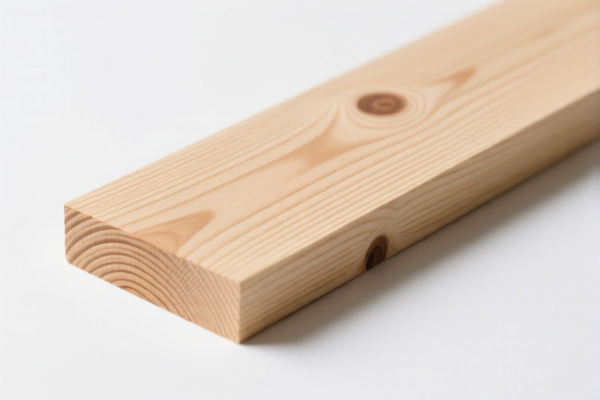
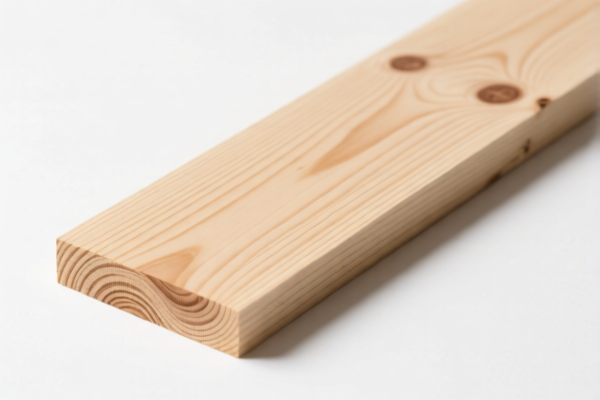
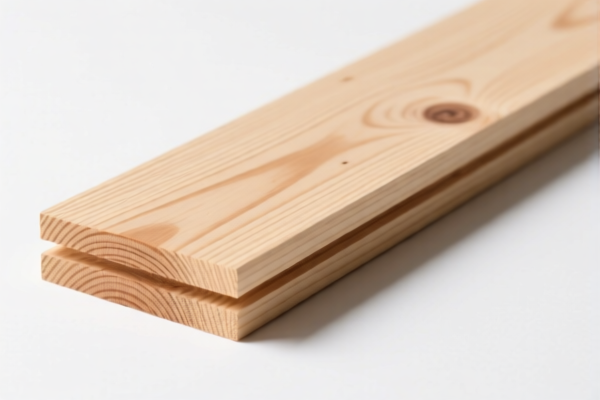
🪵 Sawn or Planed Timber (Wood of a Thickness > 6mm)
🌐 HS Code Reference & Customs Clearance Guide | 2026 Latest Tariff Analysis | Professional Entry Strategy
📌 I. Product Definition & Classification: What Exactly is "Sawn or Planed Timber"?
Sawn or planed timber refers to wood that has been mechanically processed—sawn, chipped, sliced, or peeled lengthwise—and subsequently planed, sanded, or end-jointed. The defining characteristic for Chapter 44 classification here is a thickness exceeding 6 mm.
In international trade, this category is strictly divided by species (Coniferous vs. Non-Coniferous) and processing level (Rough vs. Planed/Sanded/Finger-jointed).
⚠️ Key Distinction Points:
- Thickness: Must be > 6mm. If ≤ 6mm, it likely falls under "Veneer Sheets" or "Other Wood," not this heading.
- Processing: "Rough" means not planed/sanded. "Planed/Sanded" includes finished surfaces. "Finger-jointed" implies interlocking ends for length extension.
- Species: Coniferous (Softwoods like Pine, Douglas-fir, Spruce, Fir) vs. Non-Coniferous (Hardwoods).
📦 II. HS Code Classification Details (Based on Provided Data)
| HS Code | Product Description | Application Scenario | Processing Level | Species |
|---|---|---|---|---|
4407.11.00.01 |
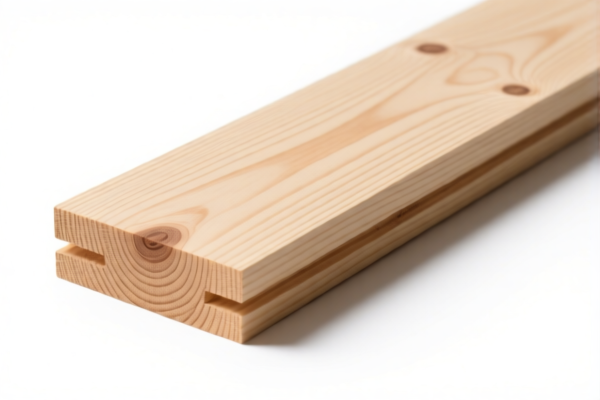
Coniferous Wood: Of Pine (Pinus spp.) | Finger-jointed pine boards/lumber | End-jointed (Finger-jointed) | Pine (Pinus spp.) |
4407.19.00.55 |
Coniferous Wood: Other Other: Not treated: Douglas-fir (Pseudotsuga menziesii) | Rough-sawn Douglas-fir lumber | Rough (Not Planed/Sanded) | Douglas-fir (Pseudotsuga menziesii) |
🔍 Critical Clarification:
- HS Code4407.11.00.01is specific to Pine that has been finger-jointed. If the pine is NOT finger-jointed, it may fall under a different "Other" subheading, but per the provided data, this is the code for finger-jointed pine.
- HS Code4407.19.00.55is specific to Douglas-fir that is rough (not planed/sanded) and has a minimum dimension between 5.1 cm and 12.7 cm. If the Douglas-fir is planed, it would not fit this specific "Rough" description.
💰 III. 2026 Latest Tariff Rate Details (Including Additional Taxes)
✅ Applicable Country: United States (US)
✅ Origin: China (CN)
✅ Effective Date: 2025/2026 Import Period
🎯 1. 4407.11.00.01 —— Coniferous Wood: Pine (Pinus spp.), Finger-jointed
| Item | Content |
|---|---|
| Base Tariff Rate | 0.0% (ad valorem) |
| Section 301 Additional Tariff | +25.0% |
| Total Effective Tariff | 25.0% |
| Tax Calculation | CIF Value × 25.0% |
| De Minimis Eligibility | ❌ Not Eligible (Wood products generally excluded from low-value shipment exemptions in many contexts, and Section 301 applies strictly) |
| Legal Basis Path | HTSUS:4407.11.00.01 → Section 301 Footnote: 9903.01.25 (Wood Products) |
📌 Explanation:
- The "Base Tariff" of 0% is standard for many wood products under normal trade relations.
- However, the 25% Section 301 Additional Tariff applies specifically to wood products from China. This is a significant cost factor that must be factored into landed cost calculations.
- This tariff applies to all wood of Chapter 44, Heading 44.03 to 44.07, unless specifically excluded (which pine and Douglas-fir are not).
🎯 2. 4407.19.00.55 —— Coniferous Wood: Douglas-fir (Pseudotsuga menziesii), Rough
| Item | Content |
|---|---|
| Base Tariff Rate | 0.0% (ad valorem) |
| Section 301 Additional Tariff | +25.0% |
| Total Effective Tariff | 25.0% |
| Tax Calculation | CIF Value × 25.0% |
| De Minimis Eligibility | ❌ Not Eligible |
| Legal Basis Path | HTSUS:4407.19.00.55 → Section 301 Footnote: 9903.01.25 (Wood Products) |
📌 Note:
- Like Pine, Douglas-fir is subject to the same 25% additional tariff.
- The specific physical description (Rough, 5.1cm-12.7cm dimension) determines the HS Code, but the tax rate remains identical for these coniferous woods.
- Ensure the minimum dimension (5.1 cm to 12.7 cm) is accurately declared. If dimensions fall outside this range, the HS Code may change, potentially affecting eligibility for specific trade remedies or quotas (though the 25% tariff likely remains).
🛠️ IV. Customs Clearance Practical Advice (Avoid Pitfalls)
✅ 1. Required Documentation Checklist (Non-Negotiable)
| Document | Must Provide | Explanation |
|---|---|---|
| ✅ Commercial Invoice | ✔️ | Must clearly state "Wood," Species (e.g., Pinus sylvestris, Pseudotsuga menziesii), Dimensions, and Treatment Status. |
| ✅ Packing List | ✔️ | Detail net/gross weight, number of packages, and dimensions. |
| ✅ Phytosanitary Certificate | ✔️ | Mandatory for wood products to prove treatment against pests (ISPM 15 standard). |
| ✅ Fumigation/Treatment Certificate | ✔️ | Proof of heat treatment or methyl bromide fumigation if required by destination country. |
| ✅ Product Specification Sheet | ✔️ | Confirm thickness (>6mm), processing (Rough vs. Planed), and whether finger-jointed. |
| ✅ Bill of Lading/Air Waybill | ✔️ | Standard shipping document. |
📌 Critical Reminder:
- Species Identification: Incorrect species declaration can lead to misclassification. Use Latin binomial names (e.g., Pinus strobus instead of just "White Pine") for precision.
- Treatment Status: Undeclared or improperly treated wood will be rejected or destroyed at the border due to biosecurity laws.
✅ 2. Declaration Tips (Key Mnemonic)
🔥 “Species First, Treatment Clear, Dimensions Accurate, Tax Ready!”
| Scenario | Correct Declaration | Common Mistake |
|---|---|---|
| Finger-Jointed Pine | 4407.11.00.01 - "Pine (Pinus spp.), Finger-Jointed, Planed/Sanded" |
Declaring as "Lumber" without specifying finger-jointed → Potential misclassification. |
| Rough Douglas-fir | 4407.19.00.55 - "Douglas-fir, Rough, 5.1-12.7cm min dimension" |
Declaring as "Planed" → Wrong HS Code (and potentially wrong tax rate if different). |
| Wood < 6mm | Do NOT use 4407 codes | Using 4407 for thin wood → Rejection/Refitting. |
| Treated Wood | Specify treatment (e.g., HT, MB) | Omitting treatment info → Phytosanitary hold. |
✅ 3. Special Situation Handling
| Situation | Handling Advice |
|---|---|
| Mixed Species Shipment | Declare separately for each species. Do not average the HS Code. |
| End-Jointed (Finger-Jointed) | Provide diagrams or product photos showing the finger-joint pattern. |
| Non-Coniferous Wood | Not covered in provided data. Check other HS codes (e.g., 4407.91 for non-coniferous). |
| Wood with Fungal Stain | Ensure it meets "Sound Wood" requirements. Stained wood may still be classified under 4407 if structurally sound, but disclose clearly. |
🌍 V. Global Market Customs Comparison (2026 Latest)
| Country/Region | Recommended HS Code | Tariff (China Origin) | Certification Requirements | Notes |
|---|---|---|---|---|
| 🇺🇸 USA | 4407.11.00.01 / 4407.19.00.55 |
25% (Section 301) | Phytosanitary, ISPM 15 Marking | High tariff risk. Plan for landed cost. |
| 🇨🇳 China | 4407.11.00.01 / 4407.19.00.55 |
Varies (Check Local Tariff) | Phytosanitary | No Section 301. Standard import duties. |
| 🇪🇺 EU | 4407 series |
Varies (Often 0-10%) | Fumigation/Heat Treatment (ISPM 15) | Strict phytosanitary controls. |
| 🇨🇦 Canada | 4407 series |
Varies (MFN Rate) | Phytosanitary | Similar to US but no Section 301 tariffs. |
📌 Conclusion:
- The 25% US tariff is the biggest cost driver for Chinese-origin wood.
- Phytosanitary compliance is non-negotiable globally.
- Accurate species and treatment declaration is critical to avoid delays.
📌 VI. Common Errors & Pitfalls (Lessons Learned)
❌ Mistake 1: Declaring "Wood" without specifying species or treatment.
👉 Consequence: Customs holds the shipment for inspection → Delays + Storage Fees.
❌ Mistake 2: Using "Planed" description for "Rough" wood.
👉 Consequence: Misclassification → Potential fine or retroactive tariff adjustment.
❌ Mistake 3: Ignoring the "Thickness > 6mm" rule.
👉 Consequence: Wrong HS Code → Rejection of entry.
❌ Mistake 4: Failing to show ISPM 15 marking on pallets/crates.
👉 Consequence: Shipment rejected at port → Return or destruction at seller’s cost.
✅ Correct Approach:
"Douglas-fir (Pseudotsuga menziesii), Rough Sawn, Unplaned, Minimum Dimension 7.6cm, Heat Treated (HT), ISPM 15 Marked Pallets, For Construction Use"
🎯 VII. Conclusion: Precision in Classification Saves Costs!
🎯 Remember the Mnemonic:
🔹 "Species & Treatment Define the Code, 25% Tariff Hits the US Road!"
🔹 "Thin Wood? Not 4407. Rough? Not Planed. Get it Right, Stay Light!"
📌 Pro Tip:
If you are exporting to the US, calculate the 25% additional tariff into your pricing strategy. Consider sourcing from non-China origins (e.g., Vietnam, Mexico, Canada) if possible to avoid Section 301 tariffs, provided the wood meets rules of origin.
Always request a Pre-Ruling from US Customs (CBP) for high-volume shipments to confirm the HS Code and tariff liability.
📣 Immediate Action:
📞 Contact your freight forwarder + Provide Product Photos + Verify Phytosanitary Certificates
🚀 Ensure your wood products clear customs smoothly, avoid delays, and protect your margins!
✨ Professional Customs Clearance Starts with Accurate Classification!
💼 Every Percent of Tariff Counts!
Customer Reviews
About HS Code Classification
The Harmonized System (HS) is an internationally standardized nomenclature developed by the World Customs Organization (WCO) to classify traded products. Over 200 countries use the HS system as the basis for customs tariffs, trade statistics, and import/export regulations.
Each HS code follows a hierarchical structure:
- Chapter (2 digits) — Broad category of goods (e.g., Chapter 84: Machinery and Mechanical Appliances)
- Heading (4 digits) — More specific grouping within the chapter
- Subheading (6 digits) — Internationally standardized breakdown, used by all WCO member countries
- National subdivisions (8-10 digits) — Country-specific extensions for further classification, such as US HTSUS 10-digit codes
Correct HS code classification is essential for smooth customs clearance, accurate duty payment, and compliance with trade regulations. Misclassification can lead to customs delays, overpayment of duties, or penalties.
When importing from CN to US, the applicable tariff rates may include:
- Most-Favored-Nation (MFN) rate — The standard duty rate applied to WTO members
- General rate — Applied to countries without trade agreements
- Trade remedy duties — Additional tariffs such as Section 301 (anti-dumping), Section 232 (national security), or countervailing duties
The information provided on this page is for reference purposes only. For official classification, please consult with your local customs authority or a licensed customs broker.