Sazhop Hops Powder
CN → US| HS Code | Tariff Rate | Origin | Destination | Doc |
|---|---|---|---|---|
| 121190 | 0.0% | CN | US | Official Doc |
| 121190 | 0.0% | CN | US | Official Doc |
Product Images
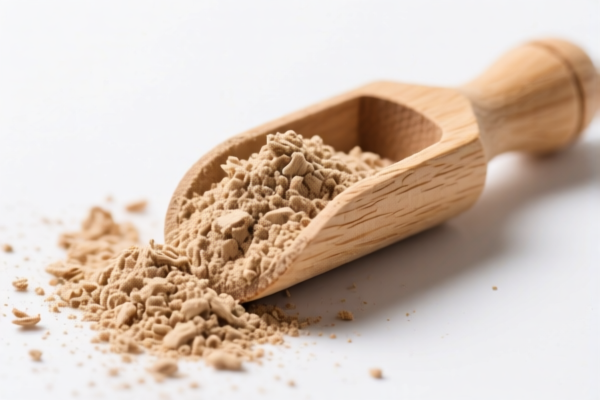
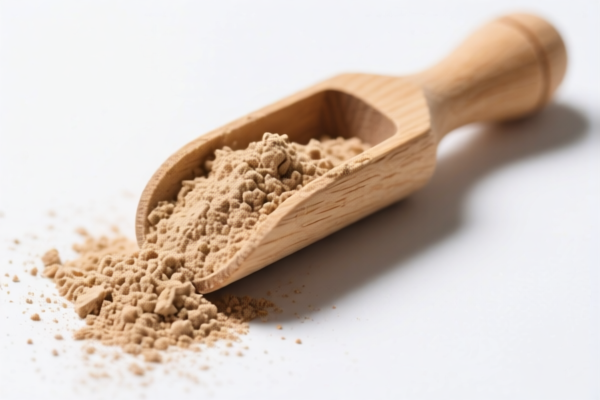
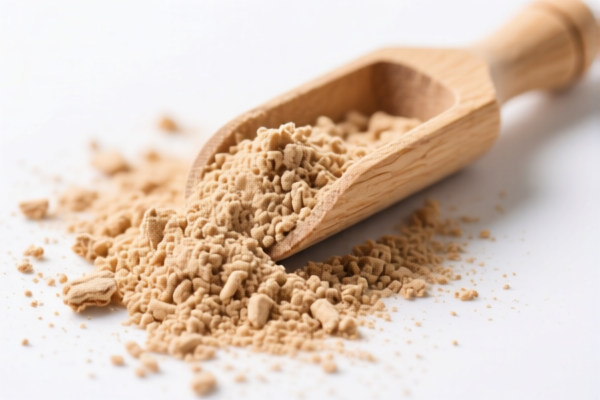
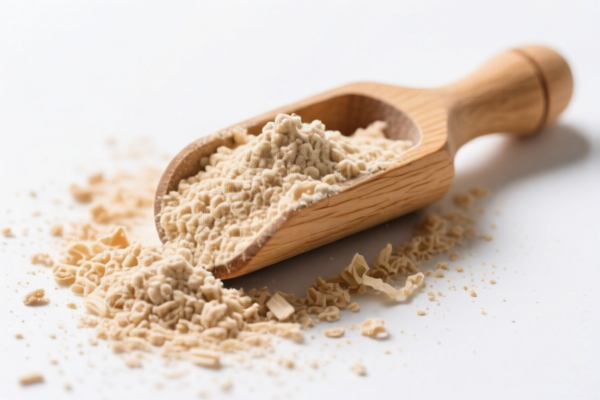
AI Analysis
🌿 Sazhop Hops Powder (Dried Hops for Brewing)
🌐 HS Code Reference & Customs Clearance Guide | 2026 Latest Tariff Analysis | Professional Clearance Strategy
📌 I. Product Definition & Classification: Do You Really Know "Hops Powder"?
Sazhop Hops Powder, in the context of international trade, refers to dried hop cones or processed hop products that are not specified elsewhere in the Harmonized System. It is primarily used as a flavoring and preserving agent in the brewing of beer and other beverages.
Key Distinction: * Dried Hops (Raw/Processed): If the product consists of dried hop flowers/cones, whether whole, crushed, or powdered, it falls under Chapter 12 (Oil Seeds, etc.). * Extraction/Isolates: If it were a pure chemical isolate (e.g., alpha-acids powder), it might fall under Chapter 29. However, "Sazhop Hops Powder" typically implies processed dried hop material for food/beverage use.
⚠️ Critical Classification Point:
- If it is dried hops used for flavoring, regardless of particle size (powder vs. cone), it is generally classified under HS Code 1211.90.
- It is NOT classified as a spice (Chapter 09) because hops are primarily used for bitterness/flavor in brewing, distinct from culinary spices like pepper or cumin.
📦 II. HS Code Classification Details (2026 Latest Tariff Authority Reference)
Based on the provided , the relevant HS Code is 121190.
| HS Code | Product Description | Application Scenario | Tax Status (from DATA) |
|---|---|---|---|
121190 |
Other dried hops, not elsewhere specified, used primarily as a flavoring agent in brewing beer and other beverages. | Brewing industry, beer production, culinary flavoring | ⚠️ Error: Failed to retrieve tax information |
121190 |
Dried hops, not elsewhere specified, used in food and beverage preparation, particularly in brewing. | Food processing, beverage manufacturing | ⚠️ Error: Failed to retrieve tax information |
🔍 Key Note:
- Both descriptions in point to HS Code 1211.90.
- The tax information provided in is marked as "Failed to retrieve tax information" and "Error". This means no specific tariff rates can be confirmed from the provided source.
- DO NOT assume a tax rate based on this data alone.
💰 III. 2026 Latest Tariff Rate Details (Includes Additional Taxes, Policy Add-ons)
✅ Critical Disclaimer:
The source explicitly states: "Failed to retrieve tax information" and "total_tax: Error".
Therefore, specific tax rates (base, additional, total) cannot be provided from .📌 Explanation:
- The provided data does not contain valid tariff numbers (e.g., %, USD/kg).
- In real-world scenarios, HS Code 1211.90.00 (Dried Hops) typically attracts low or zero base duties in many countries (e.g., 0% in EU, US, China for most origins), but this is NOT confirmed in .
- Some countries may apply agricultural levies or specific duties, but these are unknown based on the provided .
- USITC/IEEPA Additional Taxes: Usually, agricultural products like dried hops are NOT subject to Section 301 (USITC) or IEEPA surcharges unless specifically listed. However, this is NOT confirmed in .🚨 Action Required:
- You MUST consult a local customs broker or official tariff database (e.g., USITC, EU TARIC, China Customs) to get accurate tax rates.
- Do NOT use estimated rates for clearance to avoid delays, fines, or confiscation.
🛠️ IV. Customs Clearance Practical Advice (Real-World Pitfall Avoidance Guide)
✅ 1. Preparation Checklist (All Required)
| Document | Required | Explanation |
|---|---|---|
| ✅ Product Specification Sheet | ✔️ | Must state: "Dried Hops," "Powder/Cones," "Food Grade," "No Extracts." |
| ✅ Certificate of Origin (CO) | ✔️ | Essential for determining any preferential tariff rates (if applicable). |
| ✅ Health/Sanitary Certificate | ✔️ | Proof that hops are safe for human consumption (especially for food/beverage use). |
| ✅ Lab Test Report | ✔️ | Should include moisture content, pesticide residue, and alpha-acid content if required by destination. |
| ✅ Commercial Invoice | ✔️ | Clearly describe as "Dried Hops for Brewing" or "Dried Hops Powder for Flavoring." Avoid vague terms like "Herb" or "Spice." |
| ✅ Packing List | ✔️ | Detail net/gross weight, number of packages, and material (e.g., food-grade bags). |
✅ 2. Declaration Tips (Key Mantras)
🔥 "Clear Description, Food-Grade Proof, No Medical Claims!"
| Scenario | Correct Declaration | Wrong Practice |
|---|---|---|
| Hops for Brewing | 121190 - "Dried Hops, Food Grade, for Beer Brewing" |
Declaring as "Medicinal Herb" → May trigger drug regulations. |
| Hops Powder | 121190 - "Dried Hops Powder, Not Elsewhere Specified" |
Declaring as "Spice Mixture" → May be misclassified under Chapter 09. |
| Hops Extract | NOT 121190 | Declaring extract as dried hops → Misclassification, high penalties. |
✅ 3. Special Case Handling
| Situation | Recommendation |
|---|---|
| High Alpha-Acid Content | If the product is a concentrate or extract, it may fall under HS 2914 or 1302. Ensure it is NOT declared as simple dried hops. |
| Organic Certification | If selling as "Organic," provide organic certification to potentially qualify for premium pricing, but tax classification remains 121190. |
| Bulk vs. Retail | Large industrial sacks vs. small retail packs do not change HS Code, but may affect duty assessment in some countries (specific duties). |
| Destination-Specific Rules | Some countries require pre-shipment inspection or phytosanitary certificates for plant products. Check local regulations. |
🌍 V. Global Major Market Clearance Comparison (2026 Latest)
⚠️ Note: Tax rates below are GENERAL INDICATORS and NOT from . Always verify with official sources.
| Country/Region | Recommended HS Code | Estimated Base Duty | Certification Requirements | Remarks |
|---|---|---|---|---|
| 🇺🇸 USA | 1211.90.05 / 1211.90.90 |
0% (Most Origins) | FDA Registration, FSMA Compliance | No Section 301 on dried hops. |
| 🇪🇺 EU | 1211.90.30 |
0% | EC Organic Certification (if claimed) | Strict pesticide residue limits. |
| 🇨🇳 China | 1211.90.90 |
5% - 10% (Varies by Origin) | CIQ Inspection | Phytosanitary certificate required. |
| 🇯🇵 Japan | 1211.90.000 |
10% - 15% | JAS Organic (if claimed) | Strict positive list system for additives. |
| 🇬🇧 UK | 1211.90.90 |
0% - 5% | UKCA Marking (if applicable) | Post-Brexit rules apply. |
📌 Conclusion:
- Base duties for dried hops are generally low or zero in major markets.
- The major risk is NOT duty, but regulatory compliance (food safety, pesticide limits, phytosanitary).
- Always confirm HS Code accuracy with a local customs broker.
📌 VI. Common Mistakes & Pitfall Guide (Lessons Learned)
❌ Mistake 1: Declaring "Hops Powder" as "Spice" (Chapter 09)
👉 Consequence: Misclassification, potential penalty, delay in clearance.
✅ Correction: Use HS 1211.90.
❌ Mistake 2: Not providing a Phytosanitary Certificate for dried plant products
👉 Consequence: Rejection at border, destruction of goods.
✅ Correction: Always obtain a Phytosanitary Certificate from the exporting country's agricultural authority.
❌ Mistake 3: Assuming "Hops Powder" is the same as "Hops Extract"
👉 Consequence: HS Code error. Extracts may be classified under 2914 or 1302.
✅ Correction: Clearly distinguish between dried plant material (1211) and chemical extracts (2914/1302).
❌ Mistake 4: Ignating "Failed to Retrieve Tax" Error in
👉 Consequence: Using incorrect tax rates for budgeting or clearance.
✅ Correction: Do NOT use for tax rates. Consult official tariff databases.
🎯 VII. Conclusion: Professional Declaration, Safe and Cost-Effective!
🎯 Remember the Mantra:
🔹 "Dried Hops go to 1211, Extracts go to 2914. Phytosanitary is a must, Food Safety is key!"
🔹 "If Tax Data is Error, Consult Official Source. Do Not Guess, Avoid Loss!"
📌 Pro Tip:
If you are importing into the US, ensure your supplier provides an FDA Prior Notice and FSMA Compliance documentation. For the EU, ensure pesticide residue limits are met according to EU Regulation 396/2005.
📣 Immediate Action:
📞 Contact a licensed customs broker in the destination country.
📄 Request an Advance Ruling on HS Code if uncertain.
🚀 Ensure your Phytosanitary Certificate and Health Certificate are valid and match the product description.
✨ Professional Clearance Starts with Accurate Classification!
💼 Your Cost Efficiency Depends on Precise Declaration!
Customer Reviews
About HS Code Classification
The Harmonized System (HS) is an internationally standardized nomenclature developed by the World Customs Organization (WCO) to classify traded products. Over 200 countries use the HS system as the basis for customs tariffs, trade statistics, and import/export regulations.
Each HS code follows a hierarchical structure:
- Chapter (2 digits) — Broad category of goods (e.g., Chapter 84: Machinery and Mechanical Appliances)
- Heading (4 digits) — More specific grouping within the chapter
- Subheading (6 digits) — Internationally standardized breakdown, used by all WCO member countries
- National subdivisions (8-10 digits) — Country-specific extensions for further classification, such as US HTSUS 10-digit codes
Correct HS code classification is essential for smooth customs clearance, accurate duty payment, and compliance with trade regulations. Misclassification can lead to customs delays, overpayment of duties, or penalties.
When importing from CN to US, the applicable tariff rates may include:
- Most-Favored-Nation (MFN) rate — The standard duty rate applied to WTO members
- General rate — Applied to countries without trade agreements
- Trade remedy duties — Additional tariffs such as Section 301 (anti-dumping), Section 232 (national security), or countervailing duties
The information provided on this page is for reference purposes only. For official classification, please consult with your local customs authority or a licensed customs broker.