Scanner Gun
CN → US| HS Code | Tariff Rate | Origin | Destination | Doc |
|---|---|---|---|---|
| 9018120000 | 35.0% | CN | US | Official Doc |
| 8443396000 | 10.0% | CN | US | Official Doc |
| 8471609050 | 35.0% | CN | US | Official Doc |
| 8443399000 | 17.5% | CN | US | Official Doc |
| 8471608000 | 17.5% | CN | US | Official Doc |
Product Images
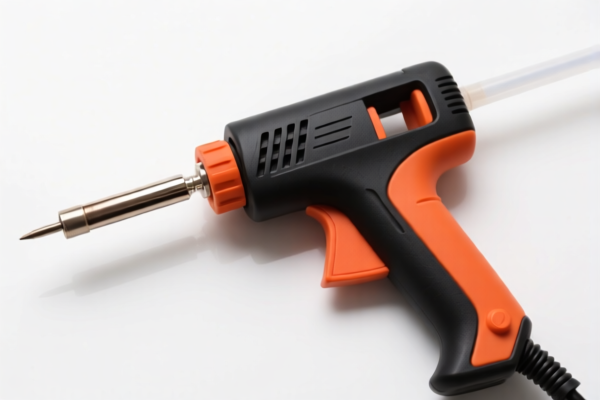
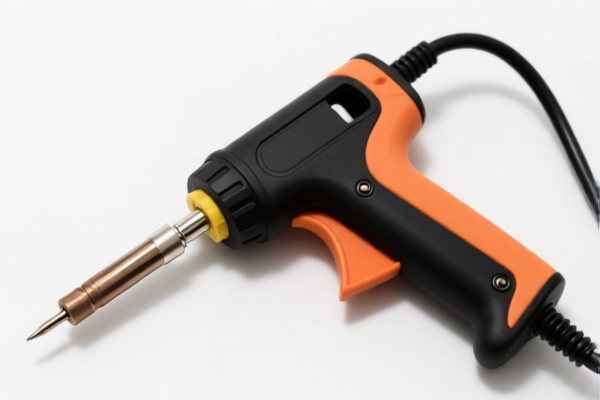
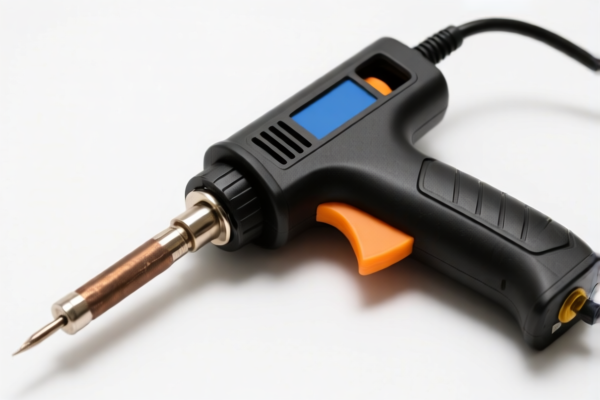
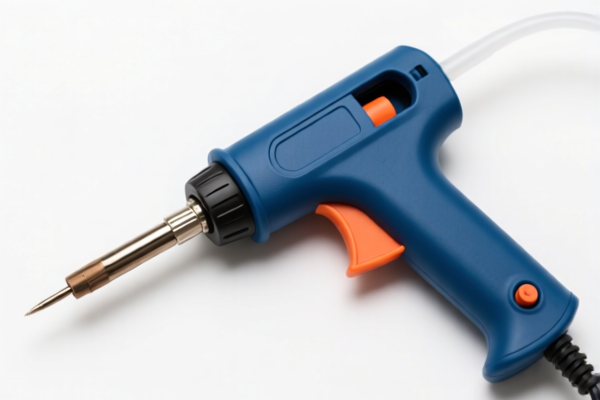
AI Analysis
📸 Scanner Gun (Barcode Scanners & Imaging Devices)
🌐 HS Code Reference & Customs Clearance Guide | 2026 Latest Tariff Analysis | Professional-Level Strategy
📌 I. Product Definition & Classification: Do You Really Know a "Scanner Gun"?
A "Scanner Gun" is a common trade name for handheld barcode scanners or imaging devices. In international trade, these devices fall into distinct categories based on their primary function and connection method:
1. Data Processing Input Devices:
Handheld scanners that connect via USB, Bluetooth, or serial ports to a computer/host system, functioning as input peripherals for Automatic Data Processing (ADP) machines.
2. Office Machine Components:
Standalone scanning units or integrated modules for printers/copiers that perform document imaging or printing functions.
3. Medical Imaging Equipment:
Specific types of scanners (less common for general "guns") that fall under diagnostic imaging (Ultrasound, etc.).
⚠️ Key Distinction Point:
- If it connects to a PC/Server as an input device → It is an ADP peripheral.
- If it is part of a multi-function printer/copying machine system → It is an Office Machine.
- If it uses ultrasound (rare for "guns" but possible in medical contexts) → It is Medical Equipment.
📦 II. HS Code Classification Details (2026 Latest Tariff Authority Comparison)
| HS Code | Product Description | Application Scenario | Key Classification Reason |
|---|---|---|---|
8471.60.90.50 |
Automatic Data Processing Machines; Input/Output Units (Other) | General handheld barcode scanners, laser scanners connected to PCs/POS systems | ADP Input/Output Component |
8471.60.80.00 |
Automatic Data Processing Machines; Input/Output Units | Optical scanners specifically for document/data input, matching ADP functions | Pure Optical ADP Input |
9018.12.00.00 |
Ultrasound Scanning Apparatus | Medical-grade ultrasound probes (if classified as "gun" shaped, rare for standard barcode guns) | Medical Diagnostic Device |
8443.39.60.00 |
Other Printing, Copying, or Faxing Machines | Scanners integrated into office multi-function printers or standalone office copiers | Office Machine Category |
8443.39.90.00 |
Other Printers, Copiers, Fax Machines | Other office scanning/copying equipment not specified elsewhere | General Office Machine |
🔍 Key Reminder:
- Most standard handheld barcode scanners for retail, logistics, or warehouse use are classified as ADP Input/Output Units (8471.60.xxxx).
- If the device is marketed as part of an office printing/copying system, it may fall under Office Machines (8443.39.xxxx).
- Medical Ultrasound probes are strictly categorized under Medical Devices (9018.12.00.00), not ADP.
💰 III. 2026 Latest Tariff Rate Details (Including Additional Taxes, Policy Add-ons)
✅ Applicable Country: United States (US)
✅ Country of Origin: China (CN)
✅ Effective Time: From November 10, 2025 (including subsequent imports)
🎯 1. 9018.12.00.00 —— Ultrasound Scanning Apparatus (Medical)
| Item | Content |
|---|---|
| Base Rate | 0% (ad valorem) |
| USITC Additional Duty | +25% (From USITC Footnote 9903.88.01 / Section 301) |
| IEEPA Additional Duty | +10% (Targeting China/HK products, from Nov 10, 2025) |
| Total Rate | 35.0% |
| Tax Calculation | CIF Value × 35% |
| De Minimis Exemption | ❌ Not Eligible (deny_de_minimis) |
| Legal Basis Path | IEEPA:9903.01.25 → IEEPA:9903.01.24 → USITC:9018.12.00.00 |
📌 Explanation:
- "USITC Additional Duty 25%": From "Section 301" additional tariffs under US Trade Law.
- "IEEPA 10%": Additional tariffs on Chinese products under the International Emergency Economic Powers Act.
- Total 35%, a high tariff, must be anticipated in advance!
🎯 2. 8443.39.60.00 —— Other Photocopying/Printing Equipment (Office)
| Item | Content |
|---|---|
| Base Rate | 0% |
| USITC Additional Duty | 0% |
| IEEPA Additional Duty | +10% (Specific "122 Clause" tariff) |
| Total Rate | 10.0% |
| Tax Calculation | CIF × 10% |
| De Minimis Exemption | ❌ Not Eligible (deny_de_minimis) |
| Legal Basis Path | IEEPA:9903.01.24 → USITC:8443.39.60.00 |
📌 Note:
- This code applies if the scanner is classified as Office Equipment (e.g., part of a multi-function printer).
- The 10% IEEPA tariff applies specifically to this category under recent trade provisions.
- Significantly lower than the ADP or Medical classifications for Chinese goods.
🎯 3. 8471.60.90.50 —— ADP Input/Output Units (Other)
| Item | Content |
|---|---|
| Base Rate | 0% |
| USITC Additional Duty | +25% |
| IEEPA Additional Duty | +10% |
| Total Rate | 35.0% |
| Tax Calculation | CIF × 35% |
| De Minimis Exemption | ❌ Not Eligible (deny_de_minimis) |
| Legal Basis Path | IEEPA:9903.01.25 → IEEPA:9903.01.24 → USITC:8471.60.90.50 |
📌 Explanation:
- Standard handheld barcode scanners connected to computers often fall here.
- Subject to both 25% Section 301 and 10% IEEPA tariffs.
- High cost for Chinese-origin goods.
🎯 4. 8443.39.90.00 —— Other Printers/Copiers
| Item | Content |
|---|---|
| Base Rate | 0% |
| USITC Additional Duty | +7.5% |
| IEEPA Additional Duty | +10% |
| Total Rate | 17.5% |
| Tax Calculation | CIF × 17.5% |
| De Minimis Exemption | ❌ Not Eligible (deny_de_minimis) |
| Legal Basis Path | IEEPA:9903.01.24 → USITC:8443.39.90.00 |
📌 Note:
- Applies to other office scanning/copying equipment.
- Moderate tariff compared to ADP/Medical.
- The 7.5% USITC is lower than the standard 25%, likely due to specific sub-category provisions.
🎯 5. 8471.60.80.00 —— ADP Input/Output Units (Optical)
| Item | Content |
|---|---|
| Base Rate | 0% |
| USITC Additional Duty | +7.5% |
| IEEPA Additional Duty | +10% |
| Total Rate | 17.5% |
| Tax Calculation | CIF × 17.5% |
| De Minimis Exemption | ❌ Not Eligible (deny_de_minimis) |
| Legal Basis Path | IEEPA:9903.01.24 → USITC:8471.60.80.00 |
📌 Note:
- If the scanner is strictly defined as an Optical Scanner for ADP input, it may qualify for this sub-code.
- Lower USITC duty (7.5%) makes this more favorable than8471.60.90.50.
- Requires precise documentation proving "Optical" nature and ADP compatibility.
🛠️ IV. Customs Clearance Practical Advice (Battle-Tested Pitfall Avoidance)
✅ 1. Preparation Checklist (All Required)
| Document | Mandatory | Description |
|---|---|---|
| ✅ Product Specifications | ✔️ | Resolution, interface type (USB/BT), scan speed, image size |
| ✅ Circuit Diagram/Structure | ✔️ | To determine if it’s a standalone unit or ADP peripheral |
| ✅ Product Photos (with Label) | ✔️ | Clear model number, brand, input/output parameters |
| ✅ Third-Party Certification | ✔️ | FCC, CE, RoHS (if applicable) |
| ✅ Commercial Invoice | ✔️ | Must specify "Handheld Barcode Scanner for ADP Input" or "Office Document Scanner" |
| ✅ Certificate of Origin (CO) | ✔️ | For non-China products to claim preferential rates |
| ✅ Packing List | ✔️ | Clarify relationship between main unit and accessories (cables, bases) |
✅ 2. Declaration Tips (Key Mantras)
🔥 “Function Determines Code, ADP vs Office, Tax Differs by 17.5%!”
| Scenario | Correct Declaration | Wrong Approach |
|---|---|---|
| Handheld Barcode Scanner (USB/BT) | 8471.60.80.00 or 8471.60.90.50 |
Misclassified as Office Machine → Risk of 35% or 17.5% |
| Integrated Office Scanner (AIO Printer) | 8443.39.60.00 or 8443.39.90.00 |
Misclassified as ADP → Risk of 35% |
| Medical Ultrasound Probe | 9018.12.00.00 |
Misclassified as ADP → High Compliance Risk |
| Standalone Document Feeder | 8443.39.60.00 |
Misclassified as ADP Input → Tax Difference |
📌 Critical Advice:
- If your product is a standard barcode scanner for logistics/retail, do not declare it as "Office Equipment" unless it is explicitly part of a copier/printer system.
- For ADP Scanners, try to justify8471.60.80.00(Optical) over8471.60.90.50(Other) if possible, as the total tariff is 17.5% vs 35%. This requires proving the "Optical" nature in technical specs.
✅ 3. Special Case Handling
| Situation | Handling Suggestion |
|---|---|
| OEM Custom Scanners | Provide client order + design drawings to avoid "non-standard" classification |
| Scanner with Keyboard Base | Still classified as Scanner (ADP Input), not Keyboard + Scanner |
| Industrial High-Speed Scanner | Provide test reports showing speed and resolution to support 8471.60.80.00 |
| Medical Imaging Device | Must provide FDA clearance docs; do not use ADP codes |
🌍 V. Global Market Customs Comparison (2026 Latest)
| Country/Region | Recommended HS Code | Tariff | Certification Requirement | Notes |
|---|---|---|---|---|
| 🇺🇸 USA | 8471.60.80.00 |
17.5% (China) | FCC + RoHS | If 8471.60.90.50 → 35% |
| 🇨🇳 China | 8471.60.80.00 |
5% - 8% | CCC (if applicable) | No additional tariffs |
| 🇪🇺 EU | 8471.60.80.00 |
0% - 1.7% | CE + RoHS | No additional tariffs |
| 🇦🇺 Australia | 8471.60.80.00 |
5% | RCM | No additional tariffs |
| 🇯🇵 Japan | 8471.60.80.00 |
0% - 8% | PSE | No additional tariffs |
📌 Conclusion:
- USA is the only major market with high additional tariffs for Chinese-origin scanners.
- Classifying correctly as "Optical ADP Input" (8471.60.80.00) saves 17.5% compared to "Other ADP Input" or "Medical".
- European and Asian markets have much lower barriers, making USA the critical choke point for cost control.
📌 VI. Common Errors & Pitfall Avoidance (Blood-Learned Lessons)
❌ Error 1: Declaring a handheld barcode scanner as "Office Printer Part" (8443.39.60.00)
👉 Consequence: If audited, customs may reclassify as ADP Input (8471.60.90.50) → Tax jumps from 10% to 35%.
❌ Error 2: Declaring a general scanner as 8471.60.90.50 when it qualifies as 8471.60.80.00
👉 Consequence: Pay 35% instead of 17.5% unnecessarily. Huge profit loss.
❌ Error 3: Using vague descriptions like "Scanning Device"
👉 Consequence: Customs cannot determine origin/function → Delay in release, additional inspections, potential penalties.
❌ Error 4: Ignoring the IEEPA 10% surcharge on all categories
👉 Consequence: Underestimating total landed cost by 10-35%.
✅ Correct Approach:
“Handheld Barcode Scanner, 1D/2D, USB Interface, Optical Sensor, ADP Input Device, Model XYZ, FCC Certified”
🎯 VII. Conclusion: Professional Declaration, Save Time, Cut Costs!
🎯 Remember the Mantras:
🔹 “ADP Input is King, Optical is 17.5%, Other is 35%!”
🔹 “Office Scanners are Cheaper (10%), but Must be Copier-Related!”
🔹 “Medical is Separate, Don’t Mix Codes!”
📌 Pro Tip:
If your scanner is originally from Vietnam, Mexico, Thailand, or Malaysia, you may apply for IEEPA Exemption, reducing tariffs to 0%-5%.
Recommendation: Apply for Advance Ruling before shipment to confirm the correct HS Code and avoid surprise tariffs.
📣 Act Now:
📞 Contact Professional Customs Broker + Provide Product Specs + Apply for HS Code Advance Ruling
🚀 Let your scanners clear customs smoothly, maximize profit, and dominate the market!
✨ Professional Clearance Starts with Precise Classification!
💼 Every Penny of Cost Deserves Exact Calculation!
Customer Reviews
About HS Code Classification
The Harmonized System (HS) is an internationally standardized nomenclature developed by the World Customs Organization (WCO) to classify traded products. Over 200 countries use the HS system as the basis for customs tariffs, trade statistics, and import/export regulations.
Each HS code follows a hierarchical structure:
- Chapter (2 digits) — Broad category of goods (e.g., Chapter 84: Machinery and Mechanical Appliances)
- Heading (4 digits) — More specific grouping within the chapter
- Subheading (6 digits) — Internationally standardized breakdown, used by all WCO member countries
- National subdivisions (8-10 digits) — Country-specific extensions for further classification, such as US HTSUS 10-digit codes
Correct HS code classification is essential for smooth customs clearance, accurate duty payment, and compliance with trade regulations. Misclassification can lead to customs delays, overpayment of duties, or penalties.
When importing from CN to US, the applicable tariff rates may include:
- Most-Favored-Nation (MFN) rate — The standard duty rate applied to WTO members
- General rate — Applied to countries without trade agreements
- Trade remedy duties — Additional tariffs such as Section 301 (anti-dumping), Section 232 (national security), or countervailing duties
The information provided on this page is for reference purposes only. For official classification, please consult with your local customs authority or a licensed customs broker.