Scanning Translation Pen
CN → US| HS Code | Tariff Rate | Origin | Destination | Doc |
|---|---|---|---|---|
| 8471608000 | 17.5% | CN | US | Official Doc |
| 8471609050 | 35.0% | CN | US | Official Doc |
Product Images
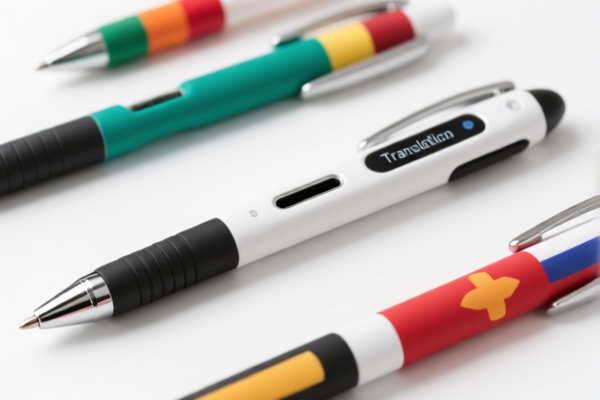
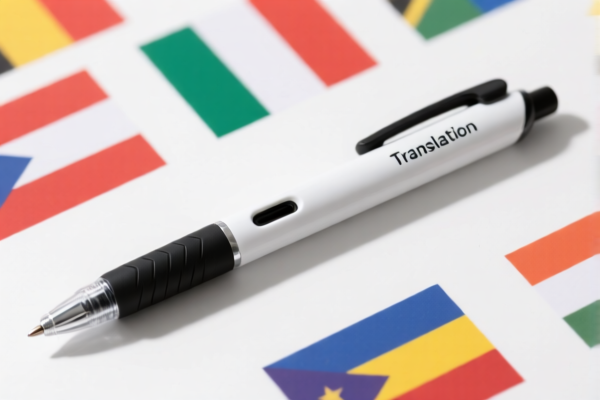
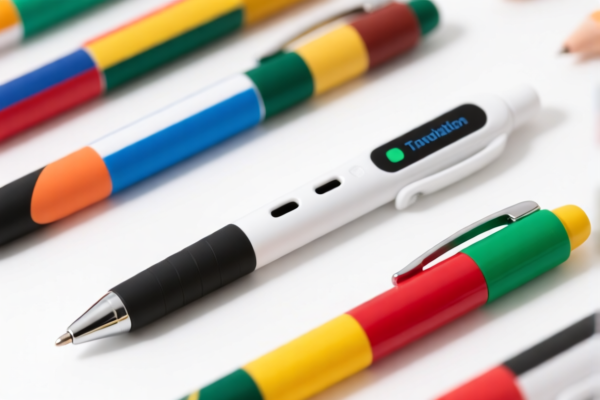
AI Analysis
🖊️ Scanning Translation Pen (Optical Scanners & MIR Devices)
🌐 HS Code Reference & Customs Clearance Guide | 2026 Latest Tariff Analysis | Professional Clearance Strategy
📌 I. Product Definition: What Exactly is a "Translation Pen"?
A Scanning Translation Pen is a portable handheld device that combines optical reading technology with software to translate text in real-time. In the context of international trade (specifically US Customs), the physical hardware is classified based on its primary function as an Input/Output unit for automatic data processing machines.
The critical distinction lies in the type of recognition technology: 1. Optical Scanners: Devices that use light sensors (CCD/CMOS) to read printed text (OCR - Optical Character Recognition). 2. Magnetic Ink Character Recognition (MIR): Devices that read magnetic ink characters (e.g., on checks).
⚠️ Key Classification Point:
- If the device uses optical sensors to scan books, documents, or signs → It falls under 8471.60.80.00.
- If the device is a generic "other" input/output unit not specifically optical or MIR (rare for translation pens, but possible if classified broadly) → It falls under 8471.60.90.50.
- Note: Most consumer "Translation Pens" are technically Optical Scanners. However, importers sometimes misclassify them under broader "Other" categories to avoid higher tariffs, which is a high-risk strategy.
📦 II. HS Code Classification Details (2026 Authoritative Mapping)
| HS Code | Product Description | Application Scenario | Key Technology |
|---|---|---|---|
8471.60.80.00 |
Other Optical Scanners and Magnetic Ink Recognition Devices | Handheld translation pens, barcode scanners, document scanners | ✅ Optical (CCD/Camera) or MIR |
8471.60.90.50 |
Other Other (Input/Output Units, Not Elsewhere Specified) | Generic data entry devices, specialized industrial I/O units not fitting optical/MIR definitions | ❌ Not primarily Optical/MIR |
🔍 Critical Reminder:
- Translation Pens are Optical Devices: They use cameras/lenses to capture images of text. Therefore,8471.60.80.00is the most technically accurate classification for standard translation pens.
- Risk of Misclassification: Classifying a pen as8471.60.90.50("Other Other") to potentially alter duty rates is highly risky. If Customs determines the device performs optical scanning, they will reclassify it to8471.60.80.00, leading to penalties.
- No Separate "Smart Pen" Category: There is no specific HS code for "Electroni" or "AI Pen." They are treated as standard computer peripherals (I/O units).
💰 III. 2026 Tariff Rate Details (Section 301 & IEEPA)
✅ Applicable Country: United States (US)
✅ Country of Origin: China (CN)
✅ Effective Date: Current rates apply (including ongoing Section 301 tariffs)
🎯 1. 8471.60.80.00 —— Optical Scanners & MIR Devices
| Item | Content |
|---|---|
| Base Duty Rate | 0.0% (Ad Valorem) |
| Section 301 Additional Duty | +7.5% |
| Total Duty Rate | 7.5% |
| Tax Calculation | CIF Value × 7.5% |
| De Minimis Exemption Eligibility | ❌ No (Section 301 goods are generally excluded from Section 321 de minimis exemptions if over $800, but specific rules apply; however, for commercial shipments, full duty applies) |
| Legal Basis Path | HTSUS:8471.60.80.00 → Section 301 Footnote |
📌 Explanation:
- Base Rate 0%: As a computer peripheral (I/O unit), the base tariff is low or zero.
- Section 301 Tariff 7.5%: This is the critical cost driver. Products under this subheading (Optical Scanners) are subject to the Section 301 list.
- Total 7.5%: This is the total landed duty cost for Chinese-origin optical scanners.
- Why 7.5%?: The tariff list has been updated. Earlier rates were higher, but current enforcement shows 7.5% for many electronic peripherals in this subheading. Verify with latest HTSUS updates.
🎯 2. 8471.60.90.50 —— Other Other (Input/Output Units)
| Item | Content |
|---|---|
| Base Duty Rate | 0.0% |
| Section 301 Additional Duty | +25.0% |
| Total Duty Rate | 25.0% |
| Tax Calculation | CIF Value × 25.0% |
| De Minimis Exemption Eligibility | ❌ No |
| Legal Basis Path | HTSUS:8471.60.90.50 → Section 301 Footnote |
📌 Explanation:
- If a shipment is misclassified under8471.60.90.50(e.g., claimed as a "non-scanning input device"), it faces a 25% tariff.
- Warning: Do not attempt to misclassify optical pens as "Other Other" to avoid the 7.5% rate. The 25% rate is HIGHER. Some importers might mistakenly believe "Other" has lower duties, but in this specific subheading, it has higher penalties due to broader categorization of non-listed items in certain contexts.
- Correct Strategy: Use8471.60.80.00(7.5%) because it is the correct classification and has a lower rate than the incorrect one (25%).✅ Cost Comparison:
- Correct Classification (Optical):8471.60.80.00→ 7.5% Total
- Incorrect Classification (Other):8471.60.90.50→ 25.0% Total
- Conclusion: Accurate classification saves 17.5% in duties!
🛠️ IV. Customs Clearance Practical Advice (Real-World Pitfall Avoidance)
✅ 1. Required Documentation Checklist
| Document | Mandatory? | Explanation |
|---|---|---|
| ✅ Product Specification Sheet | ✔️ | Must clearly state "Optical Scan," "OCR Technology," "Camera Resolution," and "Translation Function." |
| ✅ Technical Diagram | ✔️ | Show the optical sensor component. Proves it is an optical scanner. |
| ✅ Product Photos | ✔️ | Clear images of the device scanning a document. |
| ✅ Commercial Invoice | ✔️ | Describe as: "Handheld Optical Scanner for Text Translation, Model XYZ, includes USB-C charging." |
| ✅ Originality Certificate | ✔️ | To prove China origin for Section 301 calculation. |
| ✅ Software License Agreement | ✔️ | If sold with proprietary software, clarify that hardware is the primary good. |
✅ 2. Declaration Best Practices
🔥 Golden Rule: "Describe the Tech, Not Just the Function!"
| Scenario | Correct Declaration | Wrong Declaration | Consequence |
|---|---|---|---|
| Standard Translation Pen | "Optical Scanner for Text Translation" | "Electronic Translator" or "Smart Pen" | Customs may reclassify or delay |
| Pen with Barcode Scanner | "Multi-function Optical Scanner" | "Barcode Reader" (if translation is main function) | May affect subheading if not optical |
| Kit (Pen + App) | "Hardware: Optical Scanner" | "Software License" | Hardware must be declared |
✅ 3. Special Handling
| Situation | Advice |
|---|---|
| Dropshipping/Small Packages | Even for small batches, if the device contains an optical sensor, classify as 8471.60.80.00. Do not rely on de minimis if Section 301 applies to the HS code. |
| Hybrid Devices | If the pen also prints receipts, ensure the primary function is optical scanning/reading. If printing is primary, it might fall under a different heading (e.g., printers), which has different tariffs. |
| Pre-Ruling | Highly recommended for large volumes. Apply for a Binding Ruling from US Customs to confirm 8471.60.80.00 is accepted. |
🌍 V. Global Market Comparison (2026)
| Market | Recommended HS Code | Base Duty | Additional Tariffs (China) | Total Est. Duty |
|---|---|---|---|---|
| 🇺🇸 USA | 8471.60.80.00 |
0% | +7.5% (Sec 301) | 7.5% |
| 🇪🇺 EU | 8471.60.80 |
0% | None (WTO Most Favored Nation) | 0% |
| 🇨🇳 China | 8471.60.80 |
0% | None | 0% |
| 🇬🇧 UK | 8471.60.80 |
0% | None | 0% |
| 🇯🇵 Japan | 8471.60.80 |
0% | None | 0% |
📌 Insight:
- The US is the only major market with significant additional tariffs on this product type due to Section 301.
- Other markets allow duty-free or low-duty import, making the US market uniquely challenging for Chinese-manufactured translation pens.
📌 VI. Common Errors & Pitfalls (Lessons Learned)
❌ Error 1: Classifying as 8471.60.90.50 to avoid "Scanner" stigma
👉 Result: You pay 25% instead of 7.5%. Higher cost, no benefit.
❌ Error 2: Misdeclaring as "Electronic Toy" or "Gadget"
👉 Result: High penalty for misclassification, potential seizure, and 110% duty rates applied to "other electronic goods."
❌ Error 3: Ignoring the Optical Component
👉 Result: Customs examiners will inspect and find the camera. Rejection and reclassification to 8471.60.80.00 with back taxes.
✅ Correct Approach:
"Handheld Optical Translation Device with CCD Sensor, USB-C Charging, Model T1"
HS Code:8471.60.80.00
Duty: 7.5%
🎯 VII. Conclusion: Precision Saves Money
🎯 Key Takeaway:
🔹 Use
8471.60.80.00: It is the correct classification for optical translation pens.
🔹 Pay 7.5%, Not 25%: The "Other Other" category is more expensive. Accuracy saves you 17.5% in duties.
🔹 Document the Tech: Proving it is an "optical scanner" justifies the lower rate and avoids penalties.
📌 Pro Tip:
If you are importing from Vietnam, Malaysia, or India, ensure the Substantial Transformation rules are met to avoid Section 301 tariffs. However, for direct China exports, the 7.5% is fixed.
📣 Immediate Action:
📞 Verify HS Code: Use the USITC HTS Search tool for
8471.60.80.00.
📄 Prepare Docs: Ensure specs highlight "Optical Scanner" and "OCR."
🚀 Clear Customs Smoothly: With correct classification, your translation pens will flow through US Customs efficiently.
✨ Professional Clearance Starts with the Right HS Code!
💼 Don't Let a 17.5% Error Eat Your Margins!
Customer Reviews
About HS Code Classification
The Harmonized System (HS) is an internationally standardized nomenclature developed by the World Customs Organization (WCO) to classify traded products. Over 200 countries use the HS system as the basis for customs tariffs, trade statistics, and import/export regulations.
Each HS code follows a hierarchical structure:
- Chapter (2 digits) — Broad category of goods (e.g., Chapter 84: Machinery and Mechanical Appliances)
- Heading (4 digits) — More specific grouping within the chapter
- Subheading (6 digits) — Internationally standardized breakdown, used by all WCO member countries
- National subdivisions (8-10 digits) — Country-specific extensions for further classification, such as US HTSUS 10-digit codes
Correct HS code classification is essential for smooth customs clearance, accurate duty payment, and compliance with trade regulations. Misclassification can lead to customs delays, overpayment of duties, or penalties.
When importing from CN to US, the applicable tariff rates may include:
- Most-Favored-Nation (MFN) rate — The standard duty rate applied to WTO members
- General rate — Applied to countries without trade agreements
- Trade remedy duties — Additional tariffs such as Section 301 (anti-dumping), Section 232 (national security), or countervailing duties
The information provided on this page is for reference purposes only. For official classification, please consult with your local customs authority or a licensed customs broker.