Scent Tube
CN → US| HS Code | Tariff Rate | Origin | Destination | Doc |
|---|---|---|---|---|
| 3303002000 | 35.0% | CN | US | Official Doc |
| 9616100000 | 17.5% | CN | US | Official Doc |
| 7017905000 | 41.7% | CN | US | Official Doc |
| 9616200000 | 14.3% | CN | US | Official Doc |
| 7017200000 | 41.7% | CN | US | Official Doc |
| 3303001000 | 35.0% | CN | US | Official Doc |
Product Images
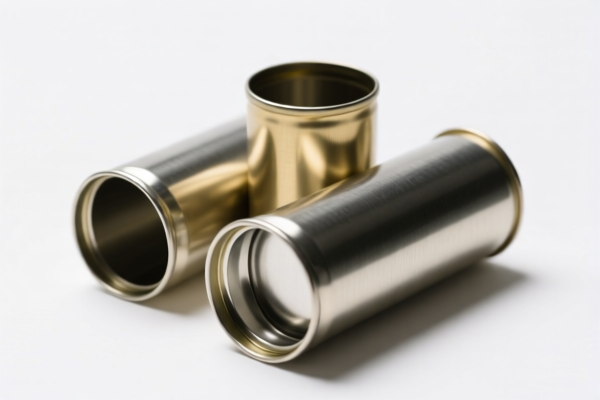
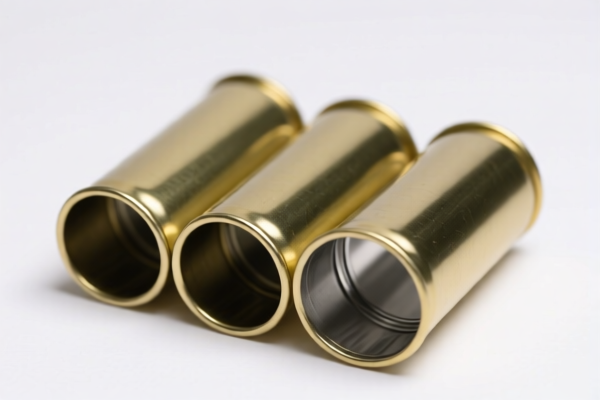
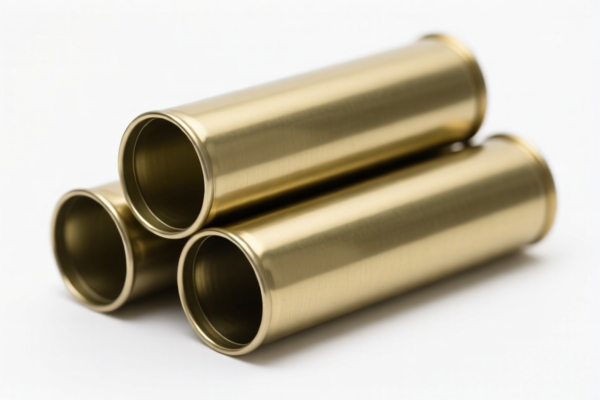

AI Analysis
👃 Scent Tubes (Perfume Smelling Strips / Blotters)
🌐 HS Code Reference & Customs Clearance Guide | 2026 Latest Tariff Analysis | Professional Clearance Strategy
📌 I. Product Definition & Classification: Do You Really Understand "Scent Tubes"?
A Scent Tube (also known as a Perfume Blotter, Sniffer Strip, or Mouillette) is a small strip of paper or other absorbent material used to test perfumes, essential oils, or fragrances. In international trade, its classification depends heavily on its material, intended use, and physical form.
It is generally categorized into two main paths: 1. Cosmetic Accessory: If used for applying/testing personal care products (perfume/lotion). 2. Laboratory/Sanitary Glassware: If made of glass for professional scent detection or medical hygiene.
⚠️ Key Distinction:
- If it is a glass tube used for hygiene, lab testing, or containing perfume liquids → It falls under Chapter 70 (Glass).
- If it is a plastic/metal dispenser, glass atomizer nozzle, or paper strip holder related to perfume application → It falls under Chapter 96 (Miscellaneous Manufactured Articles) or 9616 (Perfume Sprays).
- Note: The provided data strictly limits options to Glassware (Ch 70) and Perfume Sprayers/Accessories (Ch 96). Traditional paper blotters are not explicitly listed in the provided HS codes, so we must align the "Scent Tube" with the closest functional matches in the dataset.
📦 II. HS Code Classification Details (2026 Latest Tariff Authority Comparison)
Based on the provided <DATA>, here are the precise classifications for "Scent Tube" variants:
| HS Code | Product Description | Applicable Scenario | Material/Form | Tax Rate (Total) |
|---|---|---|---|---|
7017.90.50.00 |
Glassware for sanitary/medical use | Glass scent tubes for professional hygiene or lab use | Glass / Tube | 41.7% |
7017.20.00.00 |
Glassware for laboratory/pharma use | Glass tubes for scent detection/sampling in labs | Glass / Tube | 41.7% |
3303.00.20.00 |
Perfume & Toilet Waters | Contains the liquid scent; or tubes acting as applicators for perfumes | Liquid/Packaging | 35.0% |
9616.10.00.00 |
Perfume Sprayers | Sprayer heads/nozzles/components for scent tubes | Mechanical/Component | 17.5% |
9616.20.00.00 |
Toilet Powders & Similar Articles | Scents in tube form (e.g., solid scent sticks, tube-shaped aroma applicators) | Tube/Portable | 14.3% |
🔍 Critical Note:
- Glass Scent Tubes (empty or filled) are high-tax items (41.7%) due to the combination of base tariff and Section 301/122 tariffs.
- Finished Scent Products in Tubes (liquid) are classified under3303.00.20.00at 35.0%.
- Solid/Portable Scent Tubes (no liquid spray mechanism, just the scent source) fall under9616.20.00.00at 14.3% – the most cost-effective option for solid scent tubes.
- Sprayer Components (nozzles, pumps) fall under9616.10.00.00at 17.5%.
💰 III. 2026 Latest Tariff Rate Breakdown (Including Additional Taxes & Policy Surcharges)
✅ Applicable Country: United States (US)
✅ Origin: China (CN)
✅ Effective Date: November 10, 2025 (and subsequent imports)
🎯 1. 7017.90.50.00 & 7017.20.00.00 — Glass Scent Tubes (Lab/Sanitary)
| Item | Detail |
|---|---|
| Base Tariff | 6.7% |
| Section 301 Surcharge | +25.0% (USITC Footnote 9903.70.17) |
| Section 122 Tariff | +10.0% (China-specific surcharge) |
| Total Tariff | 41.7% |
| De Minimis Exemption | ❌ Denied (deny_de_minimis) |
| Legal Path | USITC:7017.x0.x0.x0 → FOOTNOTE:9903.70.17 + IEEPA:9903.01.25 |
📌 Explanation:
- Glassware for lab or sanitary use incurs a high combined tariff of 41.7%.
- The 25% Section 301 tariff applies to most Chinese glass products.
- The 10% Section 122 tariff is an additional penalty for specific Chinese-origin goods.
- Result: This is a high-cost category. Avoid if possible unless the product is distinctly laboratory-grade and cannot be reclassified.
🎯 2. 3303.00.20.00 — Perfumes & Toilet Waters (Scented Liquids in Tubes/Containers)
| Item | Detail |
|---|---|
| Base Tariff | 0.0% |
| Section 301 Surcharge | +25.0% |
| Section 122 Tariff | +10.0% |
| Total Tariff | 35.0% |
| De Minimis Exemption | ❌ Denied (deny_de_minimis) |
| Legal Path | USITC:3303.00.x0.x0 → FOOTNOTE:9903.33.03 + IEEPA:9903.01.25 |
📌 Explanation:
- If the "Scent Tube" contains liquid perfume or is considered part of the "Perfume" presentation, it falls here.
- 35.0% is still very high, driven by the 25% + 10% surcharges.
- This is the standard for liquid perfume samples or scented cosmetics.
🎯 3. 9616.20.00.00 — Perfumes in Tube Form / Scent Applicators (Solid or Non-Spray)
| Item | Detail |
|---|---|
| Base Tariff | 4.3% |
| Section 301 Surcharge | +0.0% |
| Section 122 Tariff | +10.0% |
| Total Tariff | 14.3% |
| De Minimis Exemption | ❌ Denied (deny_de_minimis) |
| Legal Path | USITC:9616.20.x0.x0 → FOOTNOTE:9903.96.16 + IEEPA:9903.01.25 |
📌 Explanation:
- Best Rate for Tubes: If your product is a solid scent stick, scented rollerball, or non-spray tube applicator, it qualifies here.
- 0% Section 301 surcharge! This is a huge advantage.
- Only the 10% Section 122 and 4.3% Base apply.
- Key Condition: Must be clearly defined as a "toilet powder/similar article" or "perfume applicator" without a pressurized spray mechanism.
🎯 4. 9616.10.00.00 — Perfume Sprayers (Nozzles/Parts)
| Item | Detail |
|---|---|
| Base Tariff | 0.0% |
| Section 301 Surcharge | +7.5% |
| Section 122 Tariff | +10.0% |
| Total Tariff | 17.5% |
| De Minimis Exemption | ❌ Denied (deny_de_minimis) |
| Legal Path | USITC:9616.10.x0.x0 → FOOTNOTE:9903.96.16 + IEEPA:9903.01.25 |
📌 Explanation:
- If you are importing replacement nozzles, pump heads, or sprayer mechanisms for scent tubes.
- 7.5% Section 301 (lower than the 25% for glass/perfume).
- Useful if the scent tube is assembled in the US from imported parts.
🛠️ IV. Customs Clearance Practical Advice (Avoiding Pitfalls)
✅ 1. Documentation Checklist (Mandatory)
| Document | Required | Notes |
|---|---|---|
| ✅ Product Specification | ✔️ | Must clearly state: "Scent Tube," "Material: Glass/Paper/Plastic," "Usage: Perfume Testing/Application." |
| ✅ Product Photos | ✔️ | Show the tube, any labels, and the scent mechanism (spray vs. solid). |
| ✅ Commercial Invoice | ✔️ | Value must include CIF. Do not use vague terms like "Container." Use "Perfume Scent Tube" or "Glass Scent Sampling Tube." |
| ✅ Origin Certificate | ✔️ | Proof of Chinese origin is critical for calculating 122/301 tariffs. |
| ✅ Usage Declaration | ✔️ | Explicitly state: "Used for cosmetic scent testing" or "Laboratory glassware for hygiene." |
✅ 2. Classification Strategy (Key Mnemonics)
🔥 "Glass Tubes: 41.7%, Liquid Perfume: 35%, Solid/Non-Spray Tube: 14.3%!"
| Scenario | Correct HS Code | Reason |
|---|---|---|
| Empty Glass Tube (Lab/Hygiene) | 7017.90.50.00 |
Classified as glassware for sanitary/lab use. |
| Glass Tube with Perfume Liquid | 3303.00.20.00 |
Classified as "Perfume and Toilet Waters." |
| Solid Scent Stick / Rollerball Tube | 9616.20.00.00 |
Classified as "Toilet Powders/Similar" (non-spray applicator). |
| Scent Tube Sprayer Nozzle | 9616.10.00.00 |
Classified as "Perfume Sprayer Parts." |
| Paper Blotter Strip | Not in Dataset | Risk: May be misclassified. Best to pair with 9616.20.00.00 as an applicator. |
⚠️ Critical Warning:
- Do NOT classify glass scent tubes as "Parts of Perfume Bottles" if they are primary containers. If they are glass, they often trigger the 7017 high-tax route unless they are clearly cosmetic applicators (9616).
- De Minimis Rule: All these HS codes are denied de minimis exemption (deny_de_minimis). You cannot use Section 321 for shipments under $800. You must file a formal entry and pay taxes.
✅ 3. Special Handling Tips
| Situation | Recommendation |
|---|---|
| OEM Private Label | Provide the buyer’s design specs to prove it’s a "cosmetic applicator" (9616) rather than "glassware" (7017) if possible. |
| Mixed Shipments | Separate glass scent tubes from other goods in the declaration to avoid cross-contamination of tax rates. |
| Scented vs. Unscented | If the tube is unscented and made of glass, it might still be classified under 7017 depending on customs interpretation. Be prepared for audit. |
| Plastic Tubes | If the tube is plastic and for cosmetic use, it may qualify for 9616.20.00.00 (14.3%) rather than plastics chapter. Highlight "Cosmetic Applicator" in description. |
🌍 V. Global Market Comparison (2026 Overview)
| Market | Recommended HS Code | Est. Tariff (China Origin) | Key Certification |
|---|---|---|---|
| 🇺🇸 USA | 9616.20.00.00 (Best) |
14.3% | FDA (if cosmetic), CPC (if for kids) |
| 🇺🇸 USA | 7017.x0.x0.x0 (Glass) |
41.7% | None specific |
| 🇪🇺 EU | 9616.20.00 |
~0-4% + VAT | CPNP Notification (Cosmetics) |
| 🇬🇧 UK | 9616.20.00 |
~0-4% + VAT | UKCA + CPNP |
| 🇨🇳 China | 9616.20.00 |
4.3% | N/A |
📌 Conclusion:
- USA is the most expensive market due to Section 301/122 tariffs.
- Avoid7017(Glass) for cosmetic scent tubes if you can classify as9616(Applicator) to save 27.4% in duties.
- Solid scent tubes are significantly cheaper to import than liquid perfume in tubes.
📌 VI. Common Errors & Pitfalls (Lessons Learned)
❌ Error 1: Declaring a glass scent tube as "Plastic Cosmetic Tool"
👉 Result: Customs will inspect, find glass, and reclassify to 7017 → 41.7% Tax + Penalties.
❌ Error 2: Declaring liquid perfume in a tube as "Scent Tube" (implying empty)
👉 Result: If liquid is detected, it must be classified as 3303.00.20.00 → 35.0% Tax + Smuggling Suspicions.
❌ Error 3: Using Section 321 (De Minimis) for shipments under $800
👉 Result: All listed HS codes are deny_de_minimis. Shipments will be blocked or seized.
✅ Correct Practice:
"Solid Perfume Scent Rollerball Tube, Plastic Body, Cosmetics for Testing, Model XYZ, Unscented Empty Tube" (for
9616.20.00.00)
OR
"Glass Laboratory Scent Sampling Tube, Sanitary Use, Clear, Sterile" (for7017.90.50.00)
🎯 VII. Conclusion: Smart Classification, Maximize Profit!
🎯 Remember the Golden Rule:
🔹 "Glass Tubes = 41.7% (Avoid if Cosmetic)"
🔹 "Liquid Perfume = 35.0%"
🔹 "Solid/Non-Spray Scent Tube = 14.3% (Best Option!)"
🔹 "Sprayer Parts = 17.5%"
📌 Actionable Advice:
1. Reformulate: If possible, convert liquid perfume tubes to solid scent sticks or roll-ons to qualify for 14.3% instead of 35.0%.
2. Material Switch: If using glass is unnecessary, switch to plastic cosmetic tubes to qualify for 9616.20.00.00 (14.3%) instead of 7017 (41.7%).
3. Pre-Audit: File an Advance Ruling with US CBP if unsure whether your tube is "Glassware" or "Cosmetic Applicator."
📣 Immediate Action:
📞 Contact your customs broker with photos and material specs.
🚀 Optimize your HS Code to 9616.20.00.00 for the lowest tariff.
💼 Precision Classification Saves 27.4% in Tariffs!
✨ Professional Customs Clearance Starts with Accurate Classification!
💼 Every Dollar Saved in Tariffs is Pure Profit!
Customer Reviews
About HS Code Classification
The Harmonized System (HS) is an internationally standardized nomenclature developed by the World Customs Organization (WCO) to classify traded products. Over 200 countries use the HS system as the basis for customs tariffs, trade statistics, and import/export regulations.
Each HS code follows a hierarchical structure:
- Chapter (2 digits) — Broad category of goods (e.g., Chapter 84: Machinery and Mechanical Appliances)
- Heading (4 digits) — More specific grouping within the chapter
- Subheading (6 digits) — Internationally standardized breakdown, used by all WCO member countries
- National subdivisions (8-10 digits) — Country-specific extensions for further classification, such as US HTSUS 10-digit codes
Correct HS code classification is essential for smooth customs clearance, accurate duty payment, and compliance with trade regulations. Misclassification can lead to customs delays, overpayment of duties, or penalties.
When importing from CN to US, the applicable tariff rates may include:
- Most-Favored-Nation (MFN) rate — The standard duty rate applied to WTO members
- General rate — Applied to countries without trade agreements
- Trade remedy duties — Additional tariffs such as Section 301 (anti-dumping), Section 232 (national security), or countervailing duties
The information provided on this page is for reference purposes only. For official classification, please consult with your local customs authority or a licensed customs broker.